Category: Articles

  • Let’s Talk About Pressure Groups.

    Let’s Talk About Pressure Groups.

    Obaba: In liberal democratic systems, there are two modes of mass representation. One is Political parties (and the electoral process) while the other is pressure groups. For the purpose of our discussion we would be focusing on the latter (pressure groups). So what are pressure groups?

    Joan: A pressure group is an organization that tries to influence the policy of the government to the interest of it’s members. It can also be regarded as any group of people who attempt to influence the government or government decision making in certain ways. Pressure Groups usually attempt to influence the government not only on existing legislations but also on proposed legislations.

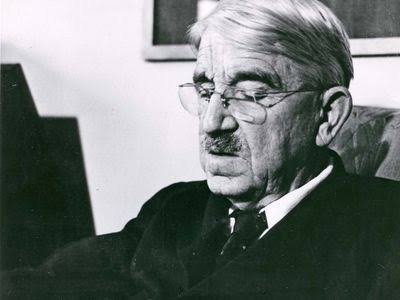
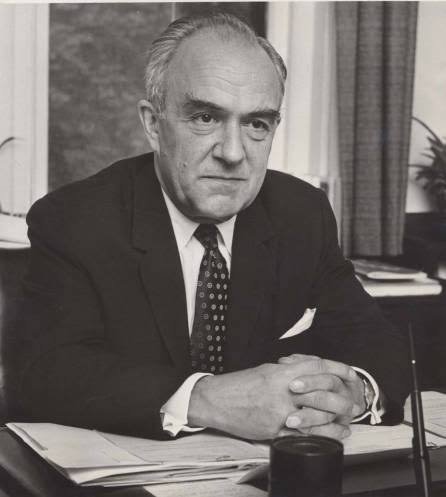
    Actually, the concept of pressure group originated from the United States as a subset of the group theory pioneered by David Truman and Arthur Bentley.
    Obaba: This is really getting interesting.

    Joan: (laughs) Yes, before you can understand the concept of pressure groups, you have to understand group theory.

    Obaba: (cuts in) What is group theory?

    Joan: Group theory is concerned with the study of how individual political actors assemble to form political groups that participate in politics and influence government. Pressure Groups are created by focusing on various social, political, economic, religious, vocational and other interests of the people.

    Obaba: Thank you so much Joan. What are the attributes/features of these groups?

    Joan: Well some of the features of pressure groups could be seen in the functions it performs.

    • It plays a vital role in establishing public relations with the government: through all these groups, the people’s scarcity and demands are brought to the notice of the government.
    • It keeps a close watch on the activities of the government.
    • They promote and protect the interest of their members: they seek to gain widespread public support in favour of group interests by influencing the government.
    • Pressure Groups also play a vital role in political socialization/education thereby arousing the consciousness of citizens. You know, they help to educate their members on the fundamental human rights and the implication of policies of the government.
    • They also serve as a platform for articulation and integration of different interests.

    Obaba: Interesting. So what qualifies to be a pressure group. What are tips for recognizing a pressure group.

    Joan: You know, like we said earlier on that the modes of mass representation are Political parties and Pressure Groups. So the first thing we should do is to distinguish between the two.

    A political party is established with the major aim of contesting and gaining political power. Pressure Groups are however not concerned with wielding political power but simply influencing the government. As the name implies, they simply apply pressure to the government in the process of policy formulation and implementation for the benefit of it’s members.

    And, mind you, there are various types/categories of pressure groups, such as Economic, Professional, Religious, Promotional and Anomic pressure groups.

    The workings, I mean operation, of pressure groups may differ depending on the category.

    Obaba: If I may ask, Joan, what’s an Anomic pressure group?

    Joan: Anomic pressure groups usually originate from a particular event, mostly in a bid to express their dissatisfaction in the country’s political system through protests, riots, assassinations, and so on.

    Obaba: So, the #endsars movement could be regarded as an Anomic pressure group, right.

    Joan: Oh, yes. And pressure groups have a lot of techniques which they use to achieve their aims and objectives. The most popular and universal of these is lobbying, then you have the use of ultimatum and strikes. In India, you have the Bandh and Gherao which are variations of strike.

    Obaba: Thank you Joan, it’s really been an enlightening conversation, I know our listeners also gained a lot from the discussion. See you next time.
  • Valentine, A Season Of Love.

    Valentine, A Season Of Love.

    A season of gifts and expression of love; exactly what humans need to remind them that there is still someone that cares about them. I would like to get something right, is February 14th only for lovers or to show love to people who lack a feeling of love around them?

    Come to think of it, in secondary schools, well at least my secondary school, we were usually made to pick random papers to get a Val (the boys would pick from a ball filled with the girls’ name and vice-versa). What we understood then was that you had to give gifts to those you knew nothing about to make them feel special. Now outside my school walls its entirely different, so different if I must say, it is no longer a gift to make a stranger happy but a must do gift for your lover.

    Don’t get me wrong it is a nice thing but don’t you think it would have been nicer to make it a time for gifting the stranger to make the person feel loved. Let’s go back in time a little, to settle our doubt and at least find out the true meaning of “VALENTINE”.

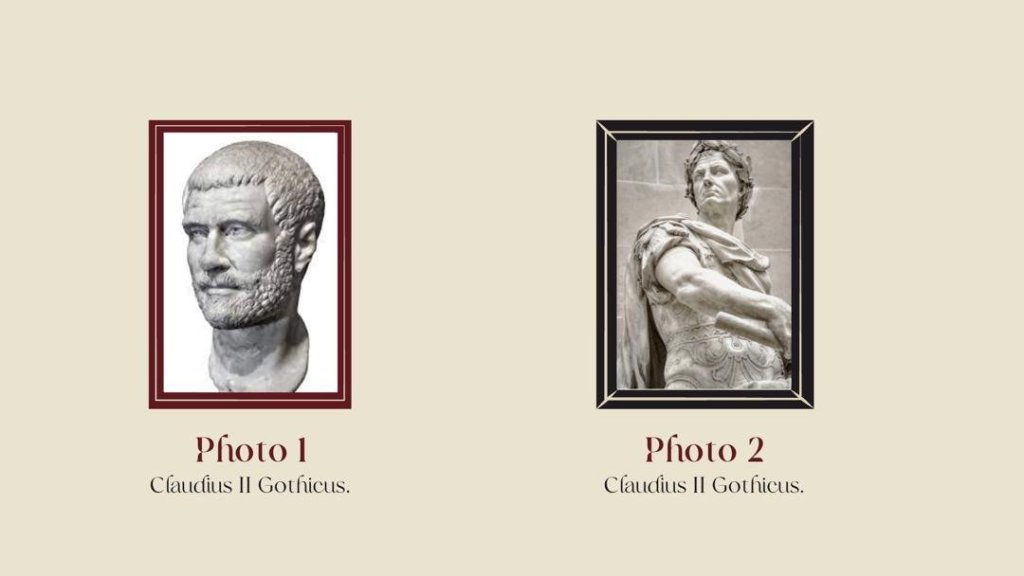
    I know that it has something to do with one of the many St. Valentine’s we have but the one that I am considering is the one that has February 14th as his feast day in the catholic church. So I made some research to confirm my doubts and of course put everyone in the light. There are a lot of stories surrounding this saint but this is the one that people hold on to till date. The day takes its name from a Roman Bishop, who was martyred {someone that died for the cause of Christ} about 270CE by the emperor Claudius II Gothicus.

    So the story is that marriage was against the law in Italy under Claudius who was against it, but valentine on the other hand believed in marriage and love, so he married couples who were in love in secret. The emperor believed that marriage made his soldiers weak, moreover, he also felt his soldiers were small in number and wanted to recruit more but he found out that St. Valentine had been wedding couples. He became very furious, and he jailed St. valentine.

    While in jail, Valentine became friends with his jailer, a judge, apparently the judge was interested in his faith and also learnt from him, he and his household were converted, he brought his blind daughter and asked him to teach her and read to her. The Emperor too became close to  him and told him to renounce his faith, instead of doing so he asked the Emperor to convert and told him he would not change his faith. Again the Emperor became very angry and condemned him to death, before he died he wrote a letter to his friend the jailers daughter and signed it “FROM YOUR VALENTINE” as it got to her he prayed to God that she be able to read it and not to be read to, guess what? The miracle happened, and so began the sharing of letters, heart shaped chocolate, flowers and teddy bears.

    I feel like I just wrote the story of how I was born and cleaned, but that’s by the way, so this story clarifies everything, but why is it that from this Saint people only pick out the aspect of letters and love? what about the sacrifice of himself for the sake of the gospel? Not that I condemn the fact that love is in the air, as people say, but I just feel from every story there should be a lesson learnt not just from one side but the two, at least that is why the story is told in full and not in bits and pieces.

    I also feel that the season should not be characterized by much pressure, as you all know people, most especially girls, await this day like the judgement day or their second birthday. They expect a lot, and when disappointed some break a relationship of two to three years. Now if we were to follow the origin, then you should expect nothing more than the letter “from your valentine”.

    As time went on it changed from just letters to flowers and letters, then from then it went to chocolates and then to stuffed animals and other things, so I ask after this what next? What other gifts or actions would be added to this day? Anyway, the day is to show love and care for each other that’s why the day is there, all I ask is that the day should not be used as an excuse for your actions. This year I think there should be a change, or what do you think?  

  • History is Sui Generis

    The idea of history and the past are two different things – the past has happened and cannot be changed, however, history is constantly redefined. Because it is an intellectual discipline it undergoes constant revisions because every generation rewrites history focusing on different interests relevant to the current trends (modern concerns).

    E.H Carr defines it as a dialogue between the historian and his facts, he argues that history is about facts and collecting as many as possible. In actual sense, the facts only speak when the historian calls on them hence the process of making history is heavily reliant on how the historian interprets his facts. Facts are collected, interpreted and written into a narrative. One major problem about history is the shortage or unavailability of facts and evidence needed to conclusively form a theory or narrative, however, this does not mean that, that thing did not happen at all.

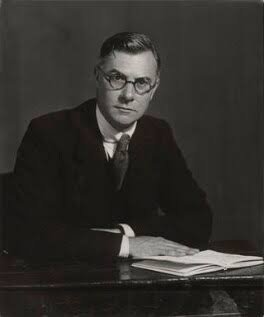
    Edward Harlett Carr (Famous historian and statesman)

    History is a community of arguments where a historian is held accountable by other historians. Hence you do not have ‘the definite history of something or someone’, rather you use the indefinite article ‘a’ to indicate you are simply adding your voice to an argument. The historian is engaged in a continuous process of moulding his facts to his interpretation and his interpretation to his facts. It is a continuous process, some facts are collected, a tentative interpretation is made, more facts are collected, the interpretation is revised.

    The facts of the past are only accessible through the present; the very words which the historian uses (words like democracy, empire, war, revolution) have current connotations from which he can not separate them. In actual sense, the beliefs and ideas of people concerning basic societal issues may differ from one generation to another. The past is logical to us only through the perspective of the present and we can only understand the present if we have knowledge of the past.

    The knowledge of history is crucial to the growth of any society as it helps to track the progress and advancement of societies over time, it serves as a yardstick for judging progress. It is therefore necessary to understand it as the lack of it leads to the death of a society – just like a human being who has his memory erased.

  • What Is History? (My view)


    Now, sitting to think about it, I realize I didn’t quite think that history might actually have its own history. You know how everything we do now has a reason and a beginning, something that was recorded or told to us by our grand parents under the light of the moon at night, something we read in books that gives us the reason why things are happening the way they are, but I have never heard or paid attention to the origin of history.

    I made some research about history and I found out that, it is gotten from the Greek word “Historia” which means “learning or knowing by inquiring”, and that the word History entered English Language in 1390. When I found this, some questions popped into my head, like, how do Historians {people who look into the depts of an event or a thing} find the etymology of such old words and also give dates to them? They are so good at what they do. History according to findings is said to be the systematic written account of events particularly of those affecting a nation, institution, science, or art, usually connected with a philosophical explanation of their causes, personally this definition is too long and as a lot of big words so here is a shorter on, History is the arrangement of past event, events that resulted to how we live our life presently. Apart from what we read online and in books could there be another hidden meaning to what History means? For me the only hidden thing I see in History is the fact that removing the “HI” in History leaves you with “STORY”, and story is what is told or written fiction or Non-fiction, real or not.

    History can not only be what had happened years back but also what has happened yesterday, eight hours ago, history is something that have lived and not what you are living or is about to live, there is is saying that goes thus “Yesterday is History, Tomorrow is a Mystery and Today, Today is a Gift that is why it is called Present”, It acknowledges the fact that whatever happened yesterday is past, even what happened a minute ago is still history. Now the history of historical study, it’s methodology and practices are called historiography, an historical theory {History of History}. I have not seen a thing that doesn’t have its own history, nationally, geographically, chronologically, even our culture, religion, and social life it’s characterized by it. History is to educate on the reason why things are meant to be done in such a way and who invented it and thought it wise to bring theories that have solved a lot of problems which may have led to anarchy in the world.

    History brings those people and their reasons and motives to light for us, in the present time, to appreciate, it also brings out past events as reference to settle present issues, just the way the judiciary does – once a case has been solved in the past and the same reoccurs in the present, the judge would go back to the records of that case to solve the present case. This is what they call judicial precedent.

    Come to think about it, what if there was never history, something to record events or to take notes of what had happened in the past, how would the world look like? How would things turn up?

  • What is History?

    This has been an age long debate even among historians (scholars of history). There is no absolute definition of the subject matter and what constitutes it.

    To some it is the rendition of events or stories of the past, the reason some people erroneously attribute the origin of the word to be from ‘his’ and ‘story’. To others, it is the chronicling, writing and rendition of global events hence the common phrase ‘history is made’ or the other one about a predecessor repeating history.

    In the subsequent article Feyintola would be airing her views on the subject matter of history. Stay tuned.

    Let’s hear your thoughts.

  • Un-invent

    If you could un-invent something, what would it be?

    From generations to generation, the genius of man has been portrayed in his outstanding inventions, in fact the measure of civilization has been based on rapid technological advancement in the area of medicine, commerce, natural sciences and industry. Of all these inventions, the most horrifying and horrid has been the instrument for terminating human life from the first trigger manufactured, to the dynamite, to the nuclear bombs and all. Don’t get me wrong, these inventions could have alternate uses especially for generating energy as in the case of nuclear plants. The challenge however is that strife has made man more willing to destroy his fellow man rather than tolerate and love.

    The greatest invention ever is the instrument of love while strife (the most lethal) continues to destroy and impede progress.

  • True Love

    What have you learned in your life about love?

    To understand love, 
    you may have to ask the mother
    who suffers so much
    in the hands of a difficult child,
    yet sacrifice so much
    to satisfy this kid.

    You may ask the Supreme Deity
    the wisdom in dieing for love
    yet your lovers do not bat an eyelid.
    Love is difficult, 
    it is strange,
    it's not all romance and all.
    It is realising the flaws and faults
    yet overlooking them.
    Love is not a feeling but a decision.
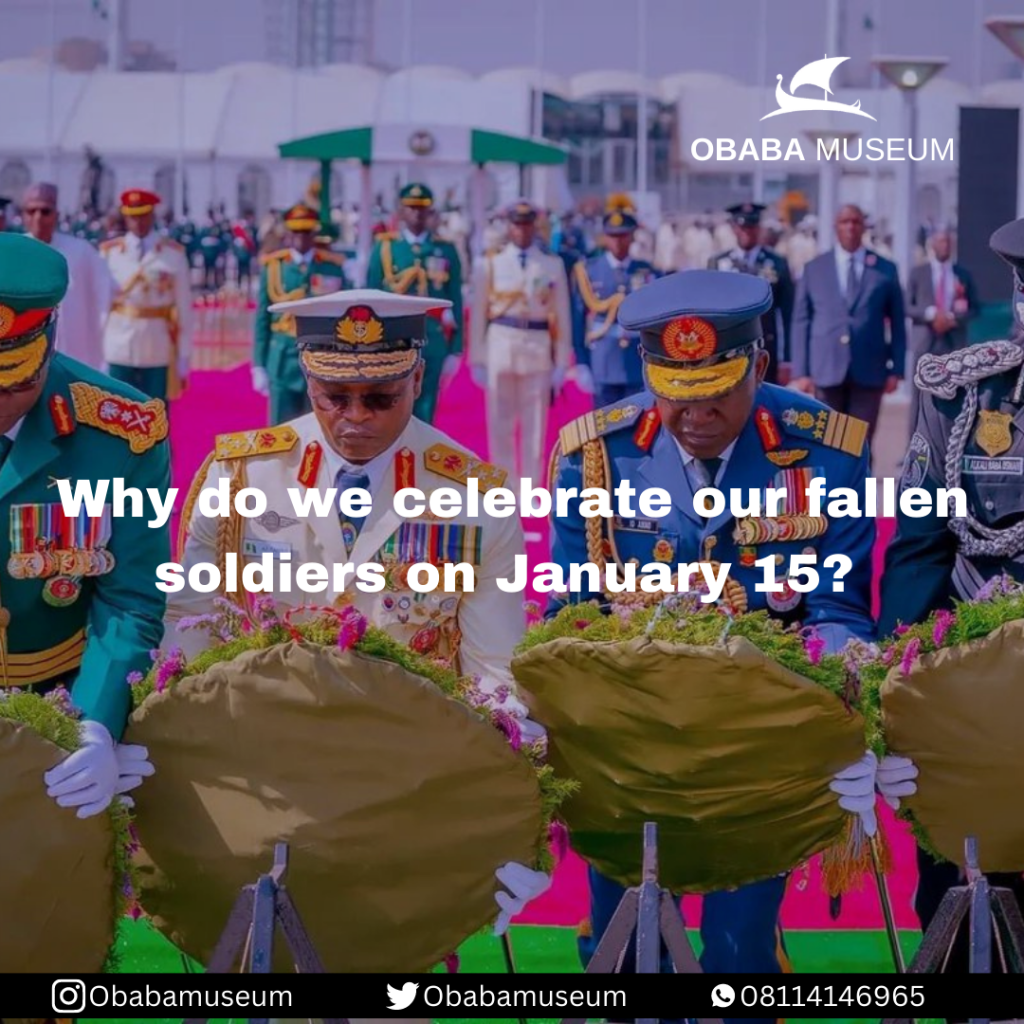
  • Why do we celebrate our fallen soldiers on January 15?

    Why do we celebrate our fallen soldiers on January 15?

    January 15! A day we pause to pay tribute to our fallen heroes in the Armed Force. Year in year out, various monuments and cenotaphs across Nigeria are adorned with colourful wreaths placed solemnly and with much caution, lest the rugged souls be alarmed. To many, this is just another day set aside to honour the departed and living soldiers who have paid and are paying the supreme price to keep the national peace and territorial integrity. However it is also a day when we pause to remember the first intervention of certain military officers in politics which left a number of senior military and government officials dead in a bloody coup. Of course the silver lining is that it also symbolise the official end of the Nigerian Civil War, an intranational conflict which threatened to destroy the country’s unity.

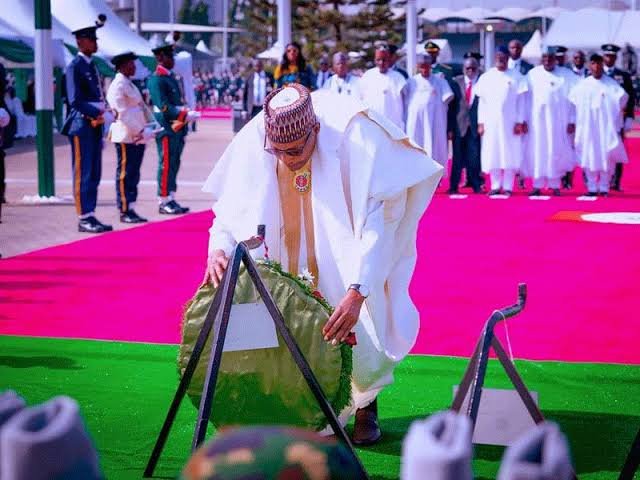
    Président Muhammad Buhari laying wreaths to commemorate the 2023 Armed Forces Remembrance Day on Sunday, the 15th of January 2023

    Being a former British colony, Remembrance Day was formerly celebrated on 11 November as Armistice Day marking the end of the First World War. Upon the surrender and renunciation of Biafran by Gen. Phillip Effiong, (Ojukwu’s deputy) on 15 January 1970, the holiday was moved off the calendar of the Commonwealth of Nations and was changed to 15 January in commemoration of the conclusion of the Nigerian Civil War that sought to tear apart the unity of Nigeria.

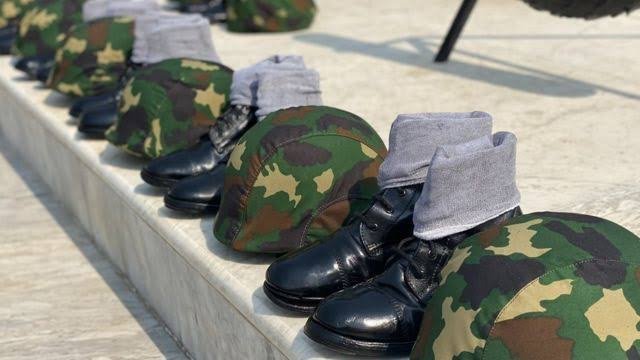
    Tomb of the unknown soldiers at Eagle Square, Abuja

    Armed Forces Remembrance Day (AFRD), is observed every 15th of January not only to commemorate the servicemen of the Nigerian Armed Forces (both living and dead) but also to honor veterans of World War I and II as well as the bloody Nigerian Civil War.

    It is a day set aside for sober reflections on the significance of the armed forces to the country.

    Tribute to the rugged men and women of the Armed Forces who sacrifice their safety and comfort so that we might sleep peacefully.

    Images: BashirAhmad/twitter
  • How Was Life like Before Electricity?

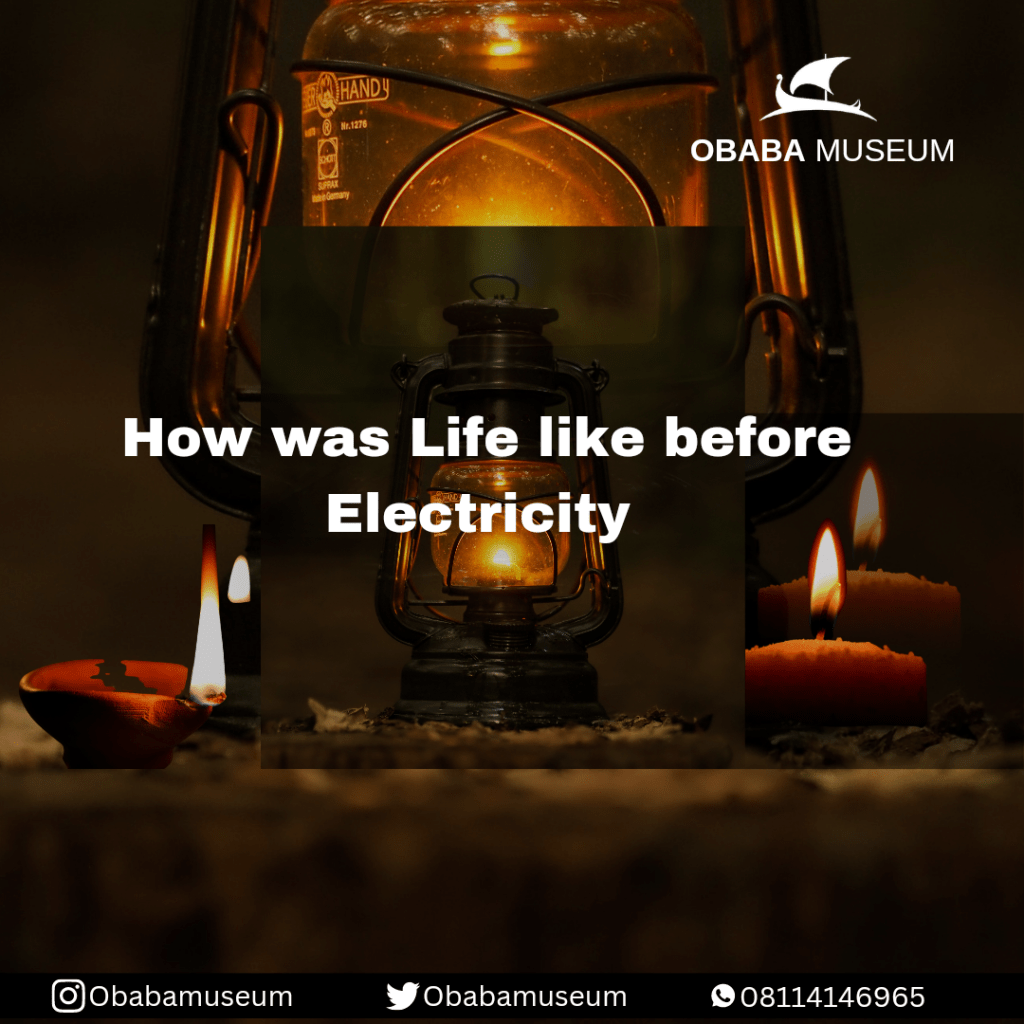
    How Was Life like Before Electricity?

    It’s a full moon tonight, it means we have the liberty to stay out longer and perhaps listen to a tale or two from grandpa. Grandpa Sam is well over a hundred years, his calm and croaky voice gives him the persona of a sage, dad tells me that grandpa was born in the late 19th century when there were no gas cookers, airplanes or smartphones. I wonder what life was like then.

    Vershima, my maternal cousin has just completed sixth grade, however her knowledge in history and science rivals that of first year undergraduates. She once made my uncle rethink his education when an innocent conversation got him mixing up a cow with a bull. Funny story it is but mum instructed me to speak no more about it. ‘Grandpa’ she says ‘what was life like before electricity?’ Tofunmi whispers to the other kids, ‘omo it’s really going to be a long night’. Though he openly denies it, we know that Vershima is grandpa’s favourite. It is understandable that they seem to blend well, she is very inquisitive and asks a lot of questions and those are the kind of people the elders love – I think there’s a Yoruba adage that talks about children dining with elders after they have properly washed their hands. Moreover in Tiv language her name means ‘the focused one’.

    My child you know a lot has changed in my lifetime, there has been quite a lot of changes in the way we eat, worship, dress, talk and even pass time. In fact the rapid rate of technological advancement is so overwhelming. Electricity generation started in Nigeria in 1896 but you know it was mostly confined to some select places where the British imperialists had established a foothold especially in industrial cities like Lagos, Jos, and Calabar, so not much Nigerians had access to electricity. In fact, it took many years after independence before majority of the cities in Nigeria were connected to the National grid.

    Well, since your question isn’t about history of electricity let me go back to your question, how was life like before electricity? Hmmm before electricity we had better sleep quality and a much simpler life, in fact, it is easier than can be imagined to live without electricity. I would suggest you try to live this way for a period. You will learn a lot about yourself and the practicalities of simple living we did a lot of innovation. Moreover with every advancement comes a new problem, the rapid rate of technological advancement seems to threaten interpersonal relationships. Today, despite having easier means of communication and connection, families appear to be more divided and distant. You’d probably agree with me that we had more onsite games and outdoor events to attend than you have today. I wish we could ditch our cellphones for sometime and appreciate the joy of physical touch, care and fellowship.

  • Celebrate Little Beginning

    Celebrate Little Beginning

    Welcome to 2023, it’s always a privilege to bask in the joy of starting the year on a clean sheet – quite a lot of people already prepared lists of things they would achieve or stop doing. As much as I may support the new year resolutions and all, I feel it shouldn’t come from a place of compulsion – either because it’s trendy or because you don’t want to be left out. Don’t get me wrong, it’s good to set goals, the focus however should be personal growth and development. The issue with this is many of us use those around as a yardstick to measure our progress the truth is many people around may not say it out loud that they envy certain aspects of your life so don’t let anyone or social media post/trend take your joy.
    I would like to share with you certain tips which would guide your engagement on the streets of Twitter, Facebook and the others.
    • Focus on Quality
    It’s better not to post at all than to post the wrong information, so before you post or retweet a thread, think through it and verify.
    • Be Charming and warm
    Do social media trolls come to mind? Lol, no one enjoys being disrespected or humiliated so maintain that calm and charm in your comments. Engage others respectfully and the sensible ones will reciprocate, you do not need to give popularity to those chasing clout.

    A special bonus for my business owners who want to boost following online. You know your account needs to be engaging and sharing constantly, you don’t need to share contents everyday but you should respond to relevant comments promptly. Mind you, your brand must relate with the common interests and challenges of your audience.
    Utilise social media analytics to make informed decisions on your brand.

    Thanks for reading through. Let’s know what you think in the comments.

    Welcome to 2023

  • Light and Lamps.

    Light and Lamps.

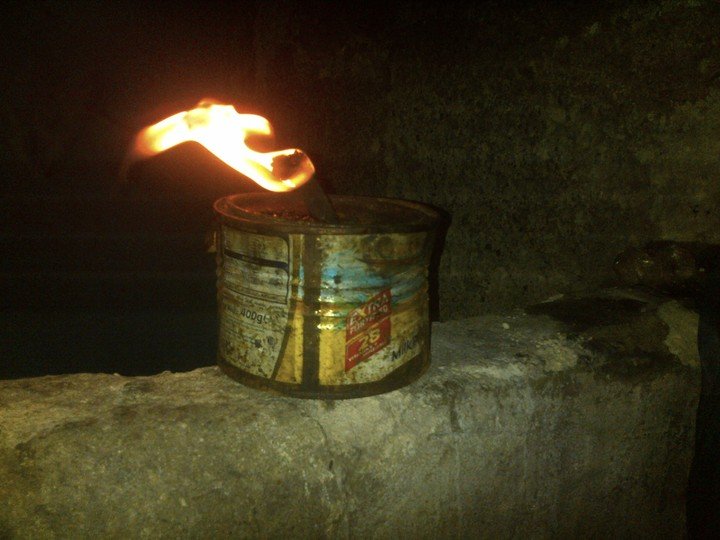
    If you live in Nigeria, You might be familiar with the two types of lamp in the images below.

    While having a conversation with Aunty Margaret she discussed with us two types of christians as relating to this lamps and with her permission we are making this post on it.

    The two lamps shown above are kerosene lamps but are erroneously called gas lamps. With one being called The Shakabula and the other simply called Gas lamp. They are used by small stalls or tabletop sellers as they are easy to afford and cost less than any other form of providing lighting.

    The Shakabula is housed in a bottle and has a wool attached to the mouth which the torch lights on. It starts instantaneously after being lit but releases a lot of CO fumes throughout. It’s bright only about a few metres for just a table and dies off quickly. It’s most noticeable feature are the fumes it releases so a lot of people stay far away from it.

    The Gas Lamp on the other hand is housed in a lantern-like metal. It has to be pumped for minutes before it eventually starts. It’s bright enough to light a room and lasts for hours. The light from it can be seen from metres away. It has a very clear and pure flame and releases no fumes. It is bigger than the shakabula by a lot and is mostly used by Mai Suya(Suya Men)

    Relating this to Christian life, not a lot of christians are like the gas lamp. These christians who are like it would have undergone in depth training in the word of God and biblical principles(time used to pump it and start it up), developed a life of purity (pure flames), influence a lot of people without making noise (bright light without smoke), are very valuable to the kingdom of God(More Expensive) and have increased their capacity to receive(larger size hence more kerosene). All these qualities enable the to be strong in the faith and hold on to the word for a long time.

    The shakabula Christian on the other hand are Christians who do not patiently indoctrinate the Christian values and principles as stated in the bible(starts up immediately), has an impure life and makes a lot of noise(pungent fumes), don’t influence a lot of people(dim light), are usually praised on earth but have no value in the kingdom of God (widely used little output).

    The difference in this christians is because most people just see Christianity as something to do not as a personality or way of life. Like our personalities ans our présent behaviours grow overtime with practice, our Christian life also grows over time with us practicing biblical values.

    Christianity to the Shakabula christian is like the seeds planted on a rock, the seed grows for a while and is very visible because it’s on a rock, but withers and dries eventually because it’s roots are not fully tied to the soil. In their later lives people tend to say of them ‘He/She used to be very active in the work of God’ but their fire has died as it is not well fueled.

    We can decide to be either of the two
    types of christians. The Christian who quickly catches fire without being fully rooted in principles of the scripture and dies out quick
    or
    we can be Christians who take time to grow and understand biblical principles and continue to grow in the faith.
    Which are you?
  • Nigerian Youth and the 2023 General Elections

    Nigerian Youth and the 2023 General Elections

    Although the proverbial half bread is better than nothing, one must not be disillusioned to the fact that the enthusiasm shown by Nigerian youth in mobilising for registration for permanent voter’s card (PVC) does not necessarily mean that the much acclaimed ballot-revolution is imminent. In the aftermath of the EndSars movement that took place in October 2020, the Nigerian youth have shown an increasing inclination towards politics and governance—something that was hitherto alien to them. This, one must concede, influenced the PVC registrations a great deal as youth-driven NGOs sprang up in different parts of the country, with the purpose of mobilising Nigerians, en-masse, for registration. This in itself is very commendable and is a further testament to the benefits of youth’s involvement in politics. However, this is not yet Uhuru.

    Travelling few months down memory lane, precisely to the primaries conducted in preparation for the 2023 general elections, one easily remembers the discrepancies that plagued that very exercise. We witnessed the blatant financial inducement of the celebrity status delegates and the indiscriminate manipulation and bypass of electoral laws and processes to favour particular individuals. Now, considering that the crop of gladiators going at the hierarchies of political offices in the 2023 general elections was projected from such a process riddled with such overt flaws, one cannot help but look to the future with little hope.

    Against this backdrop, Nigerian youths—and Nigerians in general—might fall victim of a phenomenon called “voting without choosing” where citizens exercise their democratic franchise but still end up shortchanged as a result of the largely similar array of persons they are allowed to choose from. This is particularly because the indirect primary system that many political parties adopted saw delegations—without the interest of Nigerians at heart—cast their vote for the highest bidders.

    Having established the problem, one is left with the task of proffering solutions. First, we must realise the certainty that Nigeria’s problems will not automatically fizzle out after the 2023 elections, regardless of which candidate emerges. Therefore, whatever devotion expressed in the build-up to the election must remain intact after because being partisan does not and should not end at the polls. Electorates must prepare to be conscious of the activities of any government it elects into power so it can hold that government responsible when it falters. They should continually listen in on ongoing conversations about government polices and take opinions on them. Taking a step further will be to organise into political parties and also aspire for offices.

    Nigeria’s problem has largely been poor leadership as well as an apathetic citizenry. It has, therefore, been encouraging to see Nigerians wake up to their civil duties in recent times. The core message of this article, however, is that the youth must brace themselves for further involvement in politics and governance because only such participation can ensure good leadership in the country.

  • The Blood Moon

    The Blood Moon

    Have you ever seen a blood moon? I saw one last week Thursday, the 8th of December 2022. It was a full reddish full moon. When I browsed the internet I discovered it is also known as a lunar eclipse, and is a natural phenomenon that occurs when the moon passes into the Earth’s shadow, causing it to appear reddish in color. This effect is usually caused by the way that sunlight passing through the Earth’s atmosphere is scattered, casting a reddish glow on the moon. Makes more sense when you picture the difference in the appearance of your room at night when you use the white bulb versus when you use the colored bulb.

    Blood moons are a fascinating and beautiful sight to behold, and they have been observed and studied by astronomers for centuries. In recent years, there have been several notable instances of blood moons, including the “super blood moon” of September 27, 2015, which was visible across much of the Americas, and the “super blue blood moon” of January 31, 2018, which was visible across North America, South America, and parts of Europe and Asia.

    During a blood moon, the moon can appear to be a deep, reddish color, and it is often said to have a eerie and otherworldly appearance. A lot of myths have been constructed around this phenomenum. Of course we know it is due to the way the light from the sun is refracted and scattered by the Earth’s atmosphere, creating a reddish hue on the moon’s surface.

    Despite their eerie appearance, blood moons are a completely natural and safe phenomenon. They occur when the moon passes directly behind the Earth and into its shadow, and they are visible from anywhere on the night side of the Earth.

    If you want to see a blood moon for yourself, the best time to look is during a total lunar eclipse, when the moon is completely immersed in the Earth’s shadow. These events are relatively rare, but they can be predicted and observed from any location on the Earth with clear skies.

    Overall, blood moons are a fascinating and beautiful aspect of our natural world, and they offer a unique opportunity for people to learn more about the moon and its relationship with the Earth. So the next time you hear about a blood moon, be sure to take a moment to appreciate this amazing natural phenomenon and take clear pictures like I did.

    Last week’s blood moon happened to be the second this year. However, it was said to be full to some parts of the world, partial and penumbral to the other parts. This red beauty usually lasts for thirty minutes to a couple hours. You can see one form wherever you are in the world every two years.

    So next year whenever it’s a full moon watch out it could be a blood moon or not.

  • What is Stress?

    What is Stress?

    Many years ago, I attended a leadership training conference where a psychiatrist spoke to us about the benefits and adverse effects of stress, he however concluded by saying that stress is what we define it as. Stressors differ from person to person and could simply just be a motivation for someone else. I would define it as the normal changes that occur with everyone either physically, emotionally or psychologically. How you respond to stress makes a big difference to your overall well being.

    Stress can be positive, a certain amount of it is required to stimulate productivity, it keeps us alert, motivated and ready to avoid danger however it becomes a problem when stressors continue without relief or periods of relaxation.

    TYPES OF STRESS

    Acute stress: This type of stress is short term and usually the more common form of stress which often happens when a person feels tensed about a recent argument, spending hours in traffic or meeting up with deadline.

    Chronic stress: this type of stress develops over a long period and is more harmful. It occurs when a person is having a daily hectic pace of life filled with lot of stressors.

    HOW CAN STRESS BE DIAGNOSED ?

    Stress is not measurable with tests. Only the person experiencing it can determine whether it is present and how severe it feels. However there are certain pointers to stress such as:

    • Headaches
    • Heart health
    • Depression and anxiety
    • Obesity
    • Gastrointestinal problems
    • Mood changes
    • Fatigue and tiredness
    • Difficulty sleeping
    • Dizziness
    • Frequent sickness
    • Headaches
    • Racing heartbeat
    • Low sex drives, etc.

    A major sign of stress is feeling of anxiety. Most people feel anxious at times, but this can become a concern, especially when it sticks around for too long a period of time thereby affecting their quality of life.

    There are however a lot of useful tips to coping with or managing stress:


    1) Maintaining positive mental attitude
    2) Making time for hobbies and interests
    3) Spending enough time with those you love
    4) Engaging in exercises such as dancing, swimming, jogging,etc
    5) Maintaining a healthy diet
    6) Seeking professional help
    7) Accepting the fact that there are events that you cannot control

    Thanks for reading through, we pray you always triumph over life’s fortitude. Feel free to

  • PREMENSTRUAL SYNDROME

    PREMENSTRUAL SYNDROME

    Have you ever wondered why Philomena always behaves that way when she is ‘ON’? All those mood swings and incessant change in behavior, abnormal food cravings and massive appetite . I’m sure you have been wondering why your woman changes towards you in those particular days of the month . Don’t worry I’m here to take you on a journey where you understand what happens behind the scenes.

    Premenstrual syndrome (PMS) has a wide variety of signs and symptoms, including mood swings, tender breasts, food cravings, fatigue, irritability and depression. It’s estimated that as many as 3 of every 4 menstruating women have experienced some form of premenstrual syndrome.

    Symptoms tend to recur in a predictable pattern. But the physical and emotional changes you experience with premenstrual syndrome may vary from just slightly noticeable all the way to intense. Still, you don’t have to let these problems control your life. Treatments and lifestyle adjustments can help you reduce or manage the signs and symptoms of premenstrual syndrome.

    Symptoms
    The list of potential signs and symptoms for premenstrual syndrome is long, but most women only experience a few of these problems.

    Emotional and behavioral signs and symptoms:
    •Tension or anxiety
    •Depressed mood
    •Crying spells
    •Mood swings and irritability or anger
    •Appetite changes and food cravings
    •Trouble falling asleep (insomnia)
    •Social withdrawal
    •Poor concentration
    •Change in libido

    Physical signs and symptoms:
    •Joint or muscle pains
    •Headache
    •Fatigue
    •Weight gain related to fluid retention
    •Abdominal bloating
    •Breast tenderness
    •Acne flare-ups
    •Constipation or diarrhea
    •Alcohol intolerance

    For some, the physical pain and emotional stress are severe enough to affect their daily lives. Regardless of symptom severity, the signs and symptoms generally disappear within four days after the start of the menstrual period for most women.

    CAUSES
    There is no exact hint as to what causes premenstrual syndrome, but several factors may contribute to the condition:
    • Cyclic changes in hormones. Signs and symptoms of premenstrual syndrome change with hormonal fluctuations and disappear with pregnancy and menopause.


    • Chemical changes in the brain. Fluctuations of serotonin, a brain chemical (neurotransmitter) that’s thought to play a crucial role in mood states, could trigger PMS symptoms. Insufficient amounts of serotonin may contribute to premenstrual depression, as well as to fatigue, food cravings and sleep problems.
    Depression. Some women with severe premenstrual syndrome have undiagnosed depression, though depression alone does not cause all of the symptoms


    • Life style factors : Certain habits might affect the severity of your PMS symptoms. Potential lifestyle factors that could worsen PMS symptoms include: Smoking, eating a lot of foods high in fat, sugar and salt, a lack of regular physical activity and a lack of quality sleep

    IS THERE A CURE?
    NO, There is no specific scientific cure for PMS, but there are treatments and coping strategies that may help. They include:
    – daily exercise
    – limiting caffeine
    – reduce stress with yoga
    – meditation
    – massage
    – listening to music
    – hot drink
    – taking analgesics
    – taking a hot shower and a lot more.

    Thanks for reading through let’s hear about your thoughts and experience in the comments.

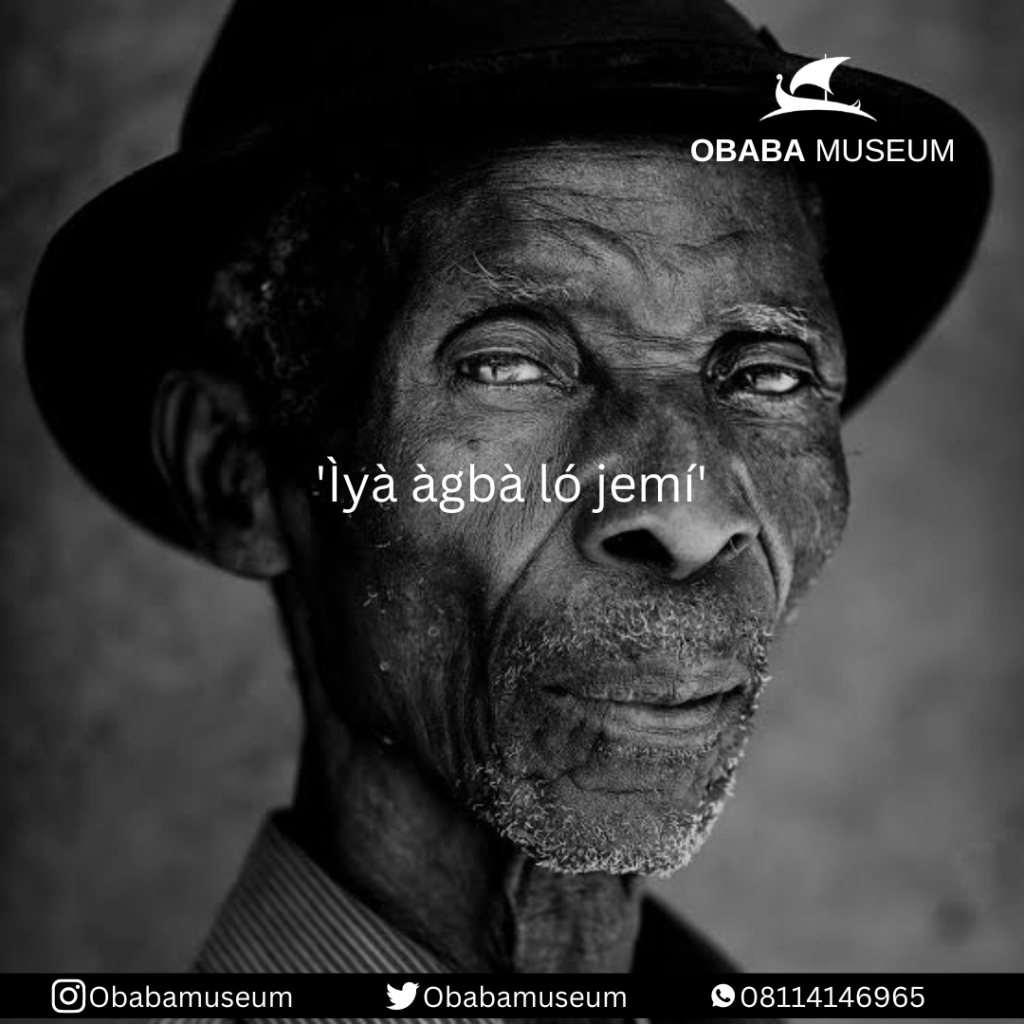
  • ‘Ìyà àgbà ló jemí’

    ‘Ìyà àgbà ló jemí’

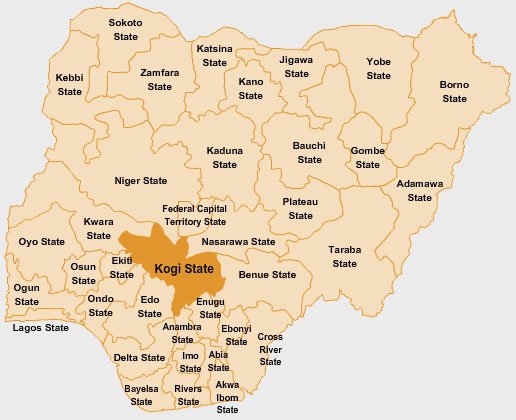
    For most people familiar with the Yoruba nation the popular Ijesha, Ijebu and of course the Eegun dialects are not strange, however most of you reading this would be surprised to hear there is also the okun. Yes, ‘Okun’ people geographically would be regarded as close cousins of the Ekiti people. They are the Yoruba speaking tribes in Kogi state and have quite an interesting culture, language and lifestyle. Follow the conversation closely.

    Okun people make up over 20% of the entire population of Kogi state and are spread across six local government areas in Kogi State, they are; Kabba-Bunu, Yagba-West, Yagba-East, Mopa-Muro, Ìjùmú and Lokoja local government Areas.
    They speak various Yoruba dialects such as Owé, Ìyàgbà, Ìjùmú, Bùnú and Oworo, but their language is generally called Okun partly because it’s the common word for greeting.
    The beauty of this is that a non Okun person might not be able to figure out the slight differences in the dialects because every speaker flaunts his dialect at will, with full assurance that the other Okun person will understand what is being spoken about. This is often true, except for slight variations in the accent the spoken dialects are basically the same.
    More so, almost all of them speak the common Yoruba fluently even without any prior exposure outside Kogi – interesting, Right?
    Their dialects and culture is largely influenced by various reasons such as:

    Diversity of the State

    Kogi state could be regarded as a culturally diverse region with a huge number of ethnic groups like the Ebira, Igala, Idoma, Bassa (small fraction of Nupe mainly in Lokoja and Bassa Local Government Area), the Ogugu subgroup of the Igala, Gwari, Kakanda, Oworo people (A Yoruba Group), Ogori, Bassa komo, and many more.


    In addition to it’s ethnic diversity, it’s next door neighbors are many and diverse. In Nigeria, Kogi has the highest number of neighbours, a total of ten states share boundary with Kogi such as; Ondo, Ekiti, Kwara, Niger, Benue, Nassarawa, Anambra, Enugu, Edo and the Federal capital territory.

    History

    History has also played its part in shaping the Okun identity. The Nupe raids of the 19th century and their interaction with the Hausas due to geographical zoning have left an indelible mark on the Okun people and their culture.
    According to oral source, Okun people migrated from Ile-Ife, the cradle of the Yoruba race when Yorubas were spreading to occupy more lands. Before spreading out, each and everyone was instructed to report to Ile Ife for a yearly meeting.
    The man, that led a group of young people to a location (now called YAGBA) in Kogi state did not return over a long period of time. When he eventually returned and explained that he lost larger part of his acquired land to some other migrants and slave raiders.
    He was blamed for the loss and in defense he said, ”ÌYÀ ÀGBÀ LÓ JEMÍ” meaning that the invasion and annexation of a large portion of his acquired land was because he did not have elderly people around him to give counsel. Since then, they started teasing him at Ile Ife, calling him Iya agba. They associated this name with him whenever they wanted to send messages across to him after he had returned to his occupied area, now called Yagba.


    Over the years, the Okun people have faced numerous challenges, ranging from geo political zoning, marginalisation and what could be regarded as the identity crisis.

    Their problem started during the colonial era when they were politically grouped into the Northern protectorate by Sir Frederick Lugard, the British High Commissioner at that time. The abolition of the provincial and regional administrative units in 1967 led to their merging with Ilorin to form old Kwara state. Then, Igala was merged with old Benue State. However, on the 27th of August 1991, Okun people were removed again and merged with Ebira, Igala from Benue state and some other tribes to form Kogi state. Despite their protest against merging them with completely different tribes, they were forced into this union. Their efforts to break away and form Okun State, which could facilitate close affinity with their Kiths and Kins in the South West, has not yet materialised.

    Okun people bear Typical Yoruba names just like other communities in South Western Nigeria. In fact, virtually all of their settlements are named in basic Yoruba language examples are: Ayegunle, Ayetoro, Kajola, Egbeda, Egbeda Ega, Okedayo, Oke-aba (Kabba), Odo Ere, Odo Eri, Ife-olukotun, Iyamoye, Agbaja, Igbo Nla, Obajana and Ikoyi.
    Even, groups that make up Bunupeople of Okun have Yoruba names like; Okemeta, Okemesan, Akumerindinlogun and Kiri.


    Some notable Okun indigenes are:
    Chief Kola Jamodu, Eyitayo Lambo, Pastor Sam Adeyemi, Smart Adeyemi, James Faleke, Dino Melaye, Shola Amoebi, Tunde Ednut, Jaywon, Nike Davies Okundaye, Sam Alle, Bayo Ojo, Joseph Ojo Omonehin, Dare Art Alade, Sunday Bada, Funke Akindele, and Victor Obaba.

    Thanks for reading through, I would like to hear your thoughts and opinion about this article. Please share them in the comments.

    The first edition of our magazine, The Explorer would be published this December, If you would like to, or know anyone who has a business and would like to advertise, we have some few spaces reserved. Contact us: 08114146965
  • Why Address Nations as Feminine?

    Why Address Nations as Feminine?

    In a world, fast-changing; it has become inevitable that humanity redefines rudimentary concepts, such as might have been considered acceptable in earlier centuries, but have now grown obsolete and unacceptable, when juxtaposed with what is obtainable in today’s society.

    As a follow-up to one of the recent publication on this blog, in this piece, I try to challenge the rationale behind the adoption of feminine pronouns as the official appellation for addressing nations. Not just to unnecessarily rouse sleeping dogs, but because this is an aberration that has laid strongly upon my conscience, and that I cannot do away with. 

    As already hinted at in the preceding article, all countries, with an exception of Germany, officially adopt feminine-pronoun appellations in referencing themselves. For instance; the line in the Nigerian pledge “…to defend her unity and uphold her honour and glory…” However, when viewed thoroughly through the feminist lens, the premise for that adoption quickly becomes questionable. 

    The feminist movement has, over the years, made arguments against the portrayal of the female gender as the damsel-in-distress figure—’the weaker vessel’. A concept that had been sold us as truth, through the inundation of the media and other means of socialization. First, it is imperative to state that this writer is strongly opposed to the idea of assessing individual capability on a set of extrinsic properties. Rather, at least in this writer’s opinion, the peculiar strengths of individuals must be taken into account when considering, if consideration is necessary at all.

    In a saner world, one who can lift tons of weight will not inherently be preferred over another who can solve complex problems with the mind. Factly, I consider the overt need to categorize humans along hierarchical lines of ‘strengths’ and ‘weaknesses’ a natural offspring of the patriarchal society we exist in.

    The above remains the critical premise for the crux argument of this article: that to liken a country to a damsel-in-distress needing masculine protection from foreign villain is an unforgivable abberation.

    To quickly contradict myself, the adoption of the appellations themselves is not bad. It is the motive behind the construct that I challenge. For instance, the application ‘motherland’ ascribes flourish and virtue to a nation and for me, is acceptable.

    But in a world, fast changing, we must continue to ask the difficult questions. And challenge every redundant construct that has been hitherto viewed dogmatically. 

    In conclusion, the use of feminine apellations in addressing nations do not need to be entirely revoked, at least in my opinion, only the motive for which they were first adopted needs to be revisited. And humanity at large, entirely re-orientated. 

  • Why your tongue becomes bitter

    Why your tongue becomes bitter

    If you live in Africa where Malaria seems to be a fundamental part of our immune system, one of your symptoms before or during the physical show of the illness might be having a bitter taste. This is usually a pointer to local(homemade) doctors that you have Malaria Fever or in a rare case Typhoid Fever.

    However, if you live in other parts of the world and you feel a bitter taste the reasons for you having it might be completely different. It could range from a temporary body reaction or allergy to a lifetime illness.

    Having a bitter mouth doesn’t necessarily have to mean bitter. This could also salty or metallic feel on the tongue even while eating. The medical term for any persistent alteration on the sense of taste is Dysgeusia. While there might be a lot of reasons for it, we would be looking at the major reasons in this post.

    Autoimmune response. One of the reason for bitter taste could be the bodies white blood cells or antibodies fighting of a virus and causing the bitter taste along with aches in various parts of the body like eyes, head and joints. Release of proteins by the body to capture harmful cells during certain illnesses could also cause bitter taste.

    While this is temporary for illnesses, it’s also a lifetime illness for some people and the reasons for it is still unknown. It has no cure for now and can only be managed. People with it go on to live to 80 years or more at times but with regular checkups and use of drugs.

    Dental Hygiene. Brush twice daily, with an antibacterial toothpaste. We might have heard either or both parts of this rule from our doctors or from toothpaste commercials. Most of us tend to do it but what we don’t do is brush it well. Some people spend so much time brushing and don’t brush some of the essential spots well, ( mostly the tongues and gums.) Bacteria that hang in there can cause bitter taste. It becomes worse when the patient smokes or uses tobacco. The accompanying dry mouth that comes with this can also double the effect of the bitter mouth.

    Pregnant women in their first trimester and women who are experiencing menopause most times have bitter mouth due to hormonal fluctuations.

    An unlikely cause of bitter mouth could also be anxiety and stress. The hormones released by the body during this emotional states could cause bitter mouth.

    For these of us who don’t like taking drugs, certain drugs might have come to mind when bitter taste is mentions because of their aftertaste. While this may be due to the bitter taste of the medicine, a prolonged bitter taste might be from the chemicals which were released by the drugs onto the tongue.

    There are a lot more causes of bitter taste ranging from nerve damage to oral infections and some nuts also (pine nuts, walnuts). However, most of these reasons have immediate cure, discontinuing a drug, better oral hygiene, stopping the intake of some substance, allowing the hormonal phase to pass etc.

    So, next time you have a bitter taste, don’t just conclude it’s a fever. Reach out to a medical practitioner to confirm your symptoms and prevent treating the wrong thing.

  • Called to Bar?

    Called to Bar?

    Being called to Bar is really a great celebration for aspiring lawyers, in Nigeria it happens after you graduate law school (I mean the 1 year law school after the first 5 years). I remember a lawyer friend who was fond of drinking got called to ‘bar’ recently and I wondered if it was an actual ‘Bar’, 😆.

    Jokes apart, how did lawyers come up with the term ‘bar’?

    By the early 14th century, the concept of the bar referred to a physical railing that separated benchers from the hall of the Inns of Court; the area past the bar held the judge, the barristers (attorneys), the witnesses giving testimony and the prisoners or those accused or liable. Passing the bar referred to the ability to enter that space, and the term barrister (which is what attorneys in England are called) loosely meant “a student of law who has been called to the bar” to advocate on behalf of another.

    Apparently, the early courtrooms were often roudy places, and the separation between public viewing and official legal affairs required more than just a physical barrier; in fact, the courtroom was typically overseen not only by the judge but also by a bailiff – an underling of the sheriff – or a similar authority figure (but these are etymologies for another day). So you now understand why judges use a gavel, right? Imagine routinely trying to restore order in a rowdy courtroom and you’ll get the idea.

    Likewise, the term ‘bench’, has a different meaning in legal studies.

    The historical roots of the term come from judges formerly having sat on long seats or benches (freestanding or against a wall) when presiding over a court. The bench was usually an elevated desk area that allowed a judge to view the entire courtroom. The bench was a typical feature of the courts of the Order of St. John in Malta, such as at the Castellania, where judges and the nominated College of Advocates sat for court cases and review laws.

    So you now know who the members of the bar and bench. Let your friends know too by sharing the link with them.

    Thank you.

  • Why are Countries Feminine?

    Why are Countries Feminine?

    “…to defend her unity, and uphold her honour and glory.”

    Nigerian Pledge

    The excerpt above is from the Nigerian National Pledge. This is just one out of the many instances in which countries are addressed as feminine in the English Language.

    Other Languages, European especially have masculine and feminine descriptions for inanimate objects. English which evolved from most of these languages seems to have dropped it somewhere in history.

    You might remember that vehicles( cars, ships, motorbikes), the Earth and other spatial objects also make use of the feminine descriptions.

    A mother is seen as the progenitor of life. Not underestimating the invaluable contribution of the Man. This causes every thing that seems to produce life referred to as a woman(The Earth, Our countries). Germany is the only country in the world that adresses their country as Fatherland.

    Now to Vessels, you’ll be wondering why the feminine associations. They have no way of being seen as a producer of life. Feminine will be a better way for romanticizing while masculine will be for showing Strength.

    It’s based on their differing biology. So they are being addressed as feminine for their beauty or the affection the owner has for it. This is why some vehicles are given pretty female names.

    A vessel or vehicle you love can be addressed feminine. However, the feminine word used is usually different depending on the countries.

    The English Language was born out of the need to have a central language among the various European settlers who spoke different languages. This reason is why most of the English words could always be linked to another language in terms of etymology.

    The Languages had both masculine and feminine inanimate words. There were too many confusing masculine and feminine words. A masculine word in Latin might be feminine in French so the new language ditched it altogether for easier communication but kept the emotionally appealing part.

    It’s also possible that chivalry also cemented the use of the feminine for countries. The men might have seen their homeland as somewhere to protect just like a woman and favoured the feminine way of addressing it.

    Whichever way it is, the feminine gives a certain level of respect to the inanimate objects addressed with it. Mother Earth, our motherland etc.

  • The Little Couple.

    The Little Couple.

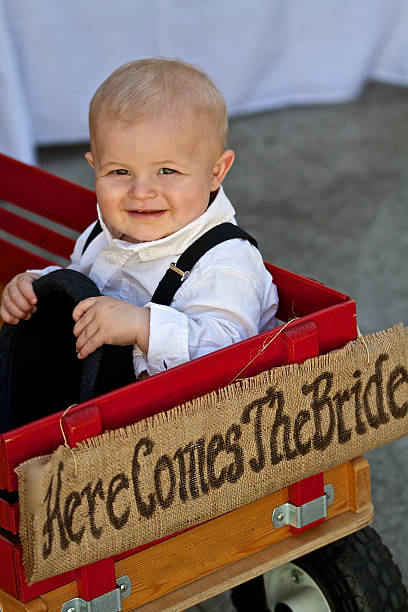
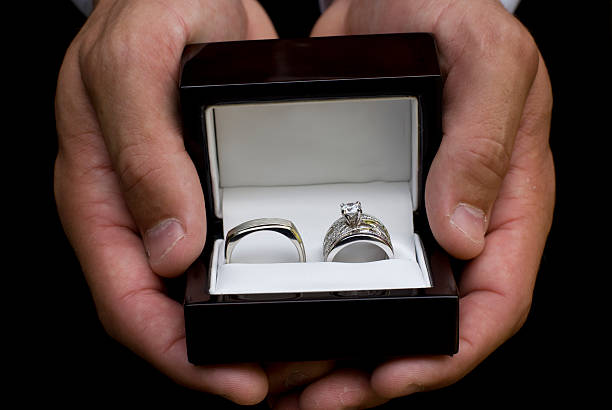
    During the weekend, I attended the wedding of a friend and you know there were no ring bearers, just flower girls (about two of them). My mind flashed back to my childhood, when I really featured in multiple weddings as the ring bearer, the role was simple, I dress up like a young groom and present the rings when the priest or pastor asks for them. Back then I usually thought the significance of the flower girl and ring bearer was to symbolise a fruitful marriage.

    Many of us are familiar with them, but what is their significance exactly? What do they represent and their roles in English weddings.

    This tradition can be traced to the ancient Egyptian era some say Romans, but we’ll go with Egyptians, they’re older. The mini couples were a necessary part of weddings then but for slightly different reasons than now. The reasons, like every tradition, modified with time. So let’s take a look at their peculiarities and what they represent.
    The Flower Girl. The flower girl is an earlier tradition than the ring bearers. The Egyptian flower girls carried more grains than flowers. This was sprayed in front of the bride to herald reproduction and procreation for the new couple.

    History has it that at a time garlic was used instead during the ages of superstitions to ward off supposed evil spirits in the marriage.

    With time, the grains evolved to flowers( I’ll say due to the rising cost of food and increase in human population, we can’t be wasting all those grains no more) sorry Egyptians, you guys had more food than your population, We don’t.

    Presently, the major role of the ‘girl that sprays flower’ today is to well, spray flowers or carry floral hoops( to signify endless love). They wear white and move in front of the bride to signify the bride’s innocence and transition, -more like a before and after- as marriage is seen as a transition into adulthood.

    Now for our little groom, Ring Bearer. The ancient Egyptians, -yeah we’re back to Pharaoh again- usually delivered the ring with swords. It goes without saying that task was not for a kid. The wealthy ones used pillows, so this is where the kid kind of came in sometimes.

    I have a feeling the kids used then are slightly older than our average ring bearer age now. Even wealthy Egyptians wouldn’t want to lose a precious ring, kids are carel… you complete the word.

    The Ring bearers are still from the pageboy family only slightly different tasks. So didn’t you wonder why the sword? I don’t know either, maybe we’ll ask Chisisi from Memphis when next we get around an Egyptian tomb.

    However, the pillows are quite clear; for the couple to achieve that which we have when we put our heads on pillows(hint: some frighten you to scream awake, some you don’t want to wake from).

    The dreams of every marriage at the point of wedding is ’till death do us part, in love and…’ so the significance of the ring on the pillow.

    The average age for the ring bearers and his floral counterpart since the victorian era has been 3-9 years of age. So, at most weddings they are usually using faux ring while the real deal is with the best man. The more adventurous and daring couples actually leave it with the ring bearers, though it’s usually tied to the pillow.

    Rumour has it, (rumour usually has a portion of truth in it though) that in the last some couples would have a particular number of children, ring bearers, flower girls and page boys. This is supposed to be inn accordance with the least amount off children they want to have.

    Recently, some couples give this roles to their elderly ones( mostly because there are going to be PG acts at the wedding which quite frankly kids shouldn’t be exposed to yet.

    The roles of this mini couples has been left for our younger family members or kids we are close to but it doesn’t have to be limited to that, so put that in mind when you’re planning your wedding.

  • Lessons Learned From My Father

    Lessons Learned From My Father

    Every 10th October of the year is usually quiet and sober for my mom and siblings. It was the day when we experienced our first baptism of heart break. Yeah I’ll tell you more, just hang on a bit.

    Nine years ago, while preparing for my SSCE (Senior School Certificate Examination) I was summoned to the principal’s office alongside my kid brother who was just starting secondary school. It was there we were informed that our Papa had transitioned to the great beyond. My mom explained that it was during his normal morning session at the gym that he slumped and didn’t make it to the hospital. Autopsy results show myocardial infarction as the cause of death. You know it kind of scarred my mom who began to develop a phobia for gyms.

    Well it’s been almost ten years since Dad left but there’s hardly no conversation at home everyday that leaves him out, such was his impact within the brief period of knowing him. Dad was very intentional about his kids and wife, he really got worried when any of us wasn’t happy and was emotionally sensitive so you couldn’t hide from him. He was just so easy to love and easy to emulate. I would share you some of the greatest lessons he taught me.

    The Fear of God must guide all your actions: My dad introduced us to God everyday, together with mom we were provided a lot of cassettes and picture books with biblical stories talking about certain lessons such as contentment, temperance and self-control, excellence and honour. My siblings and I remember quite a lot of these stories and we sometimes gist about them.

    Never Feel Inferior: While growing up I used to be very introverted and was wary of the public. I used to be very shy and doubtful of myself. My mom says it really took a while before I started talking and that I used to keep to myself a lot. It really took a while before I got over what you would call the imposter syndrome. My dad really took special care for me mentoring me and ringing it in my ear that I am a genius and not inferior in anyway. The confidence he instilled in me has made me great at speaking. It is quite surprising that I could stand before a crowd of students to teach.

    You can achieve whatever you set your heart to: The number 1 scripture that has stuck with me for years is Philippians 4:13. My dad always used to read out stories to us about ordinary people who went on to do extraordinary things. He would say ‘If they could become great despite their challenges, why can’t you.’ I remember one of the classical examples was Steven Hawkins, one of the greatest scientists who was confined to a wheelchair.

    Always be sensitive to other people’s feelings and needs: My mom tells me she was attracted to my dad because of how much he cared for others even when he had nothing. She would recount how he was easily moved with mercy for those in need. He could see through what others couldn’t and respond discreetly. He would meet the needs of others without telling others or broadcasting it (sometimes neither my mom nor I would know). This has subconsciously shaped my daily conduct, I really don’t feel fulfilled if I haven’t made someone smile.

    Don’t be quick to judge as you never know the full picture: My dad always warned me about accusing or judging others without making efforts to understand the reason for their actions. While everyone was busy speaking about how bad a person had behaved, he would show you five reasons why such a person had acted in such a manner and his non-judgemental approach won him so many mentees and friends.

    Always think through before speaking or acting: Growing up, I used to have a short temper and end up saying hurtful words to people. Whenever this happened, I would expect my dad to punish me but he would say something that would pierce like a needle which is ‘you ought to have grown beyond saying things you would later regret’. This has continued to guide my conduct in life, whenever I feel angry or displeased I just keep silent, pray silently and think.

    Thanks for reading through, feel free to share your thoughts in the comments.

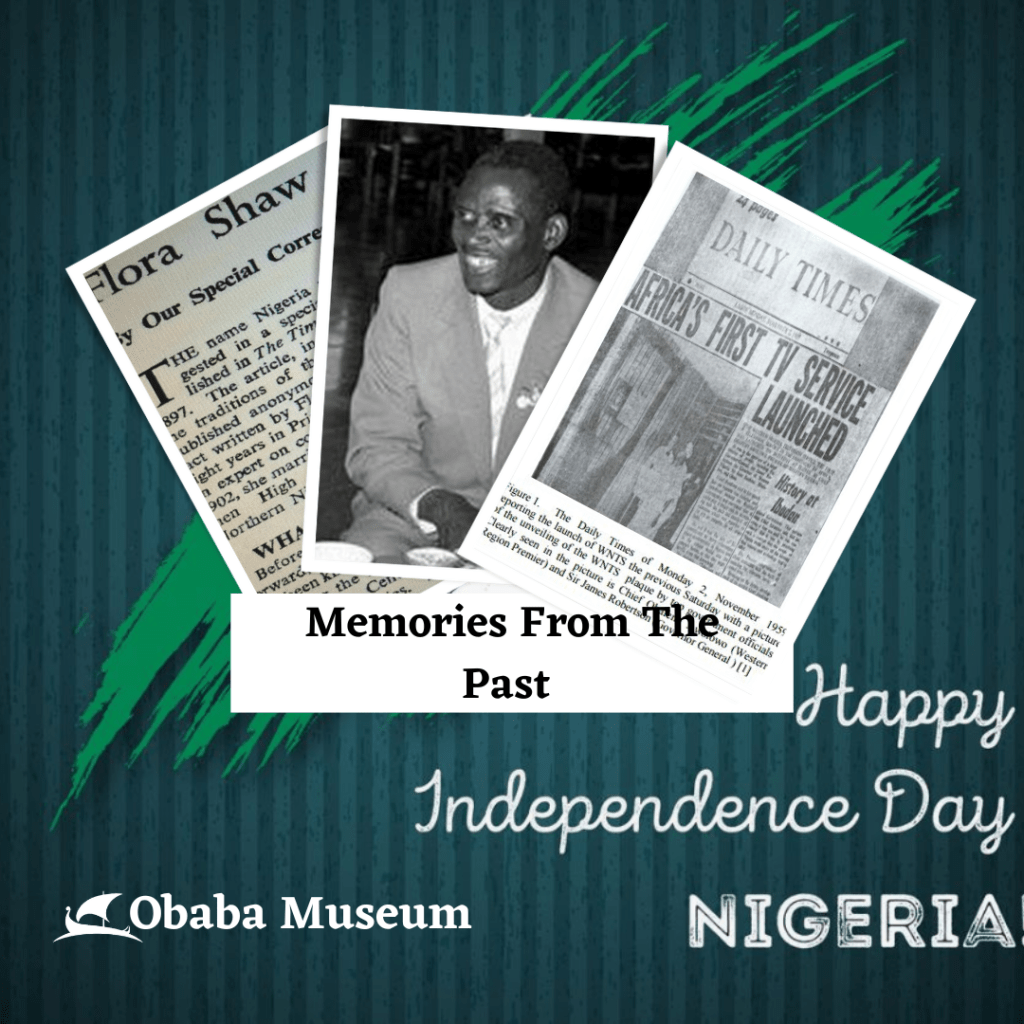
  • Nigerian Independence – Memories from the past

    Nigerian Independence – Memories from the past

    Last weekend, quite a number of people joined the presidency to mark the final independence day celebration of the Buhari led administration at the famous Eagle Square, the same venue for inaugurating new Nigerian heads of state since the 1990s. At least we got to see an Independence day celebration at the Eagle Square for the first time in a long while.

    This year’s independence day was quite different, all over the country and even in cities at the United Kingdom there were various solidarity marches especially by the ‘ObiDients’. It seemed people were really more interested in voting in the next president than marking the Independence Day. In fact, the current political atmosphere suggests an increase in political participation amongst the adult population. Someone said the youths are now more focused on productivity and nation building so much that a popular reality show in Nigeria lost a great deal of following.

    The journey of 62 years has been quite a bumpy ride for Nigeria and Nigerians but as the line in the anthem says, ‘the labour of our heroes past shall never be in vain’. Let’s take a trip back in history and consider some facts about the state now known as Nigeria.

    In the year 1900, the British Government assumed formal control over the areas now known as Nigeria but to secure this arrangement, they purchased it from the Royal Niger Company at the cost of £865,000, so in Dr. Cartel’s words, ‘Nigeria started off as a business deal.

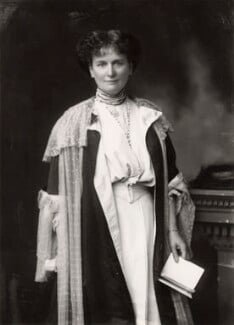
    The nation formally came into being on January 1, 1914 when it was amalgamated into one territory known as Nigeria, incidentally the name was coined by the girlfriend of the Governor General, Flora Shaw who also happened to be a British reporter.

    Flora Shaw

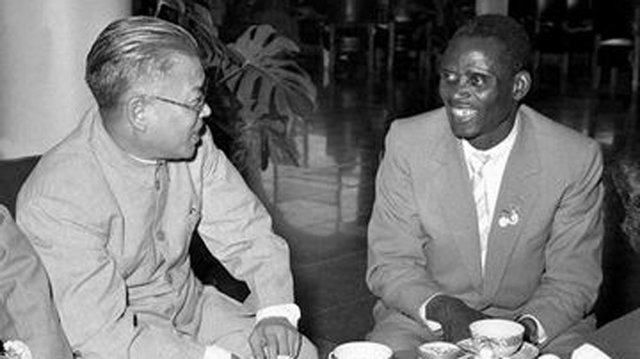
    In 1945, Michael Imoudu led the first general strike that almost grounded the economy of the government.

    Michael Imoudu (Right)

    In 1953, Chief Anthony Enahoro, an Action Group member, became the first person to move the motion for Nigeria’s independence, this motion was rejected by the members of the Northern People’s Congress and eventually degenerated into a bloody riot at Kano where a lot of Southerners were killed.

    Anthony Enahoro

    By 1957, the Western and Eastern region were granted self governing status.

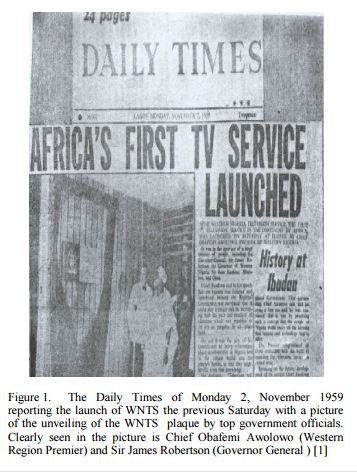
    On Saturday, the 31st of October 1959, the WNTV, Africa’s first television station was established by the Western region, today it is known as NTA.

    On Saturday, the 1st of October 1960, Nigeria was granted Independence although, it would not become a full fledged sovereign nation till 1963 when it became a republic.

    The first anthem Nigeria we Hail Thee was composed by Lilian Jean Williams, a British resident in Nigeria. It was changed in 1978 to the current anthem Arise o Compatriots. The lyrics are a combination of words and phrases taken from five of the best entries in a national contest. The words were put to music by the Nigerian Police Band under the directorship of Benedict P. Odiase (1934–2013). The Nigerian national anthem lyrics were created by five people: P. O. Aderibigbe, John A. Ilechukwu, Dr. Sota Omoigui, Eme tim Akpan and B.A. Ogunnaike.

    On October 1960, Nigeria became the 99th member of the United Nations, Sierra Leone became the 100th a year later on the 27th September 1961.

    On October 1, 1996 the last batch of states (6 of them) were created by General Sani Abacha, they include: Ebonyi, Bayelsa, Nasarawa, Zamfara, Gombe and Ekiti. So that means they also celebrated their 26th anniversary over the weekend.

    Did you know that Nigeria is surrounded by Francophone countries?

    Yes all four neighbours of Nigeria are French speaking countries colonized by France. This explains why we had to ditch the British Right hand drive for the left hand common with the French to facilitate interstate transport.

    Which of these facts did you find interesting? Let’s

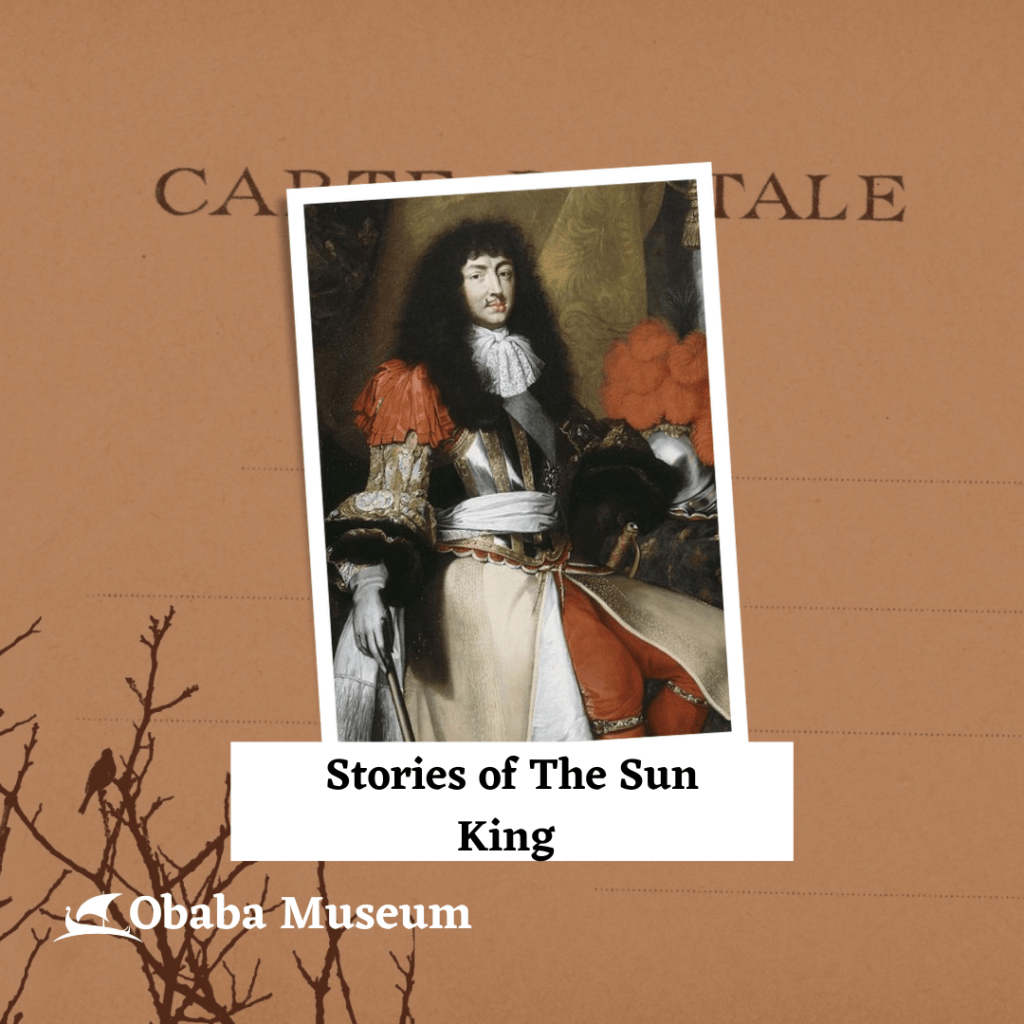
  • Stories of the Sun King

    Stories of the Sun King

    If you followed the last post, you already know so much about his sexual prowess and of course, his ascension to the throne at a very young age. Today we would be dropping some bizzare facts you never heard about him. Sit tight and grab your popcorn or chin-chin.

    A state in the US is named in his honor

    Louisiana was named after King Louis XIV of France in 1682. The French explorer Rene-Robert Cavelier claimed the territory for France and named it in honor of the king. Actually, Louisiana remained a French colony until 1762, when it was ceded to Spain in the Treaty of Fontainebleau. However, the Spanish did not make any significant changes to the colony, and it remained under French control until it was officially sold to the United States. The sale was finalized in 1803, and Louisiana became a part of the United States joining the union in 1812. Today, Louisiana is known for its rich culture and diversity. From New Orleans to Baton Rouge, there is much to explore in this fascinating state with a past influenced by its French heritage.

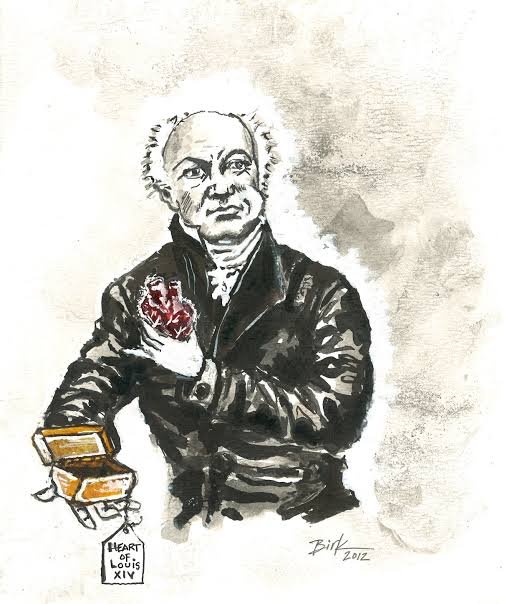
    A sketch of William Buckland with a mouthful of the king’s heart

    His heart was eaten by an Englishman

    About a century and a half after his death, it is said that Louis XIV’s heart became a meal for the eccentric Englishman William Buckland. He was known for his unorthodox methods and strange eating habits. As a geologist and paleontologist, he liked to understand perfectly the specimens that passed through his hands and even used to taste their flavor. While he was dining with company at a country house in Oxfordshire, England, he was presented with the heart. According to the raconteur Augustus Hare, Buckland exclaimed “I have eaten many strange things, but have never eaten the heart of a king before”, and casually washed it down his throat before anyone could stop him. Surprisingly, this event never had any negative consequences for Buckland’s career, and he remained a respected scientist in the UK.

    Louis XIV was a great Ballet Dancer

    Besides being a great politician and military leader, he was also an accomplished artist and dancer. His passion for ballet began when he was just a teenager. He played the Rising Sun in Le Ballet de la Nuit (The Ballet of the Night). From there, he took the name the “Sun King” which would accompany him throughout his life.

    Additionally, he was also a good dancer in social settings. At the French court, it was customary to offer long evenings of dancing. The king could participate, and it was a great honor to be able to dance with him.

    He was an art lover

    He was one of the most effective patrons of the arts in history. During his reign, the arts flourished as never before, with some of the most iconic works of art being produced during this period. Louis XVI supported a wide range of artists, from painters and sculptors to architects and musicians. Actually, he patronized many famous artists, such as Molière and Jean Racine. Moreover, he encouraged them to push the boundaries of their respective disciplines, resulting in some truly groundbreaking works. In addition to supporting established artists, Louis XIV also invested heavily in the training of young talent. He supported art academies throughout France so that the country could compete with Italy as the artistic hub—and it set the stage for the golden age of French art.

    He is rumoured to have had a twin brother

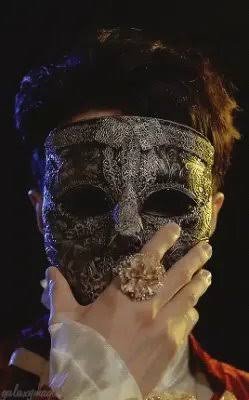
    There are many mysteries surrounding the life of Louis XIV, one of the most enduring is the story of his alleged twin brother, who was supposedly kept hidden away and made to wear an iron mask.

    The most popular version of the story is that shortly after Louis XIV was born, his father, was presented with a second baby. Fearing that twin brothers would threaten his kingdom, the king ordered that one of the babies be sent away to be raised in secret. The child was then made to wear an iron mask so that no one would ever know his identity. For years, rumors circulated about the existence of the imprisoned twin, and many people believed that the man in the iron mask was actually Louis’s long-lost brother. While there is no evidence that he has family ties with Louis XIV, the story has captivated hearts and minds for centuries. In any case, there will always be doubts about the true identity of this man whom the king forced to hide his identity.

    Which of these facts threw you off balance? Let’s know in the comments.

  • King Louis xiv – The Sun King

    King Louis xiv – The Sun King

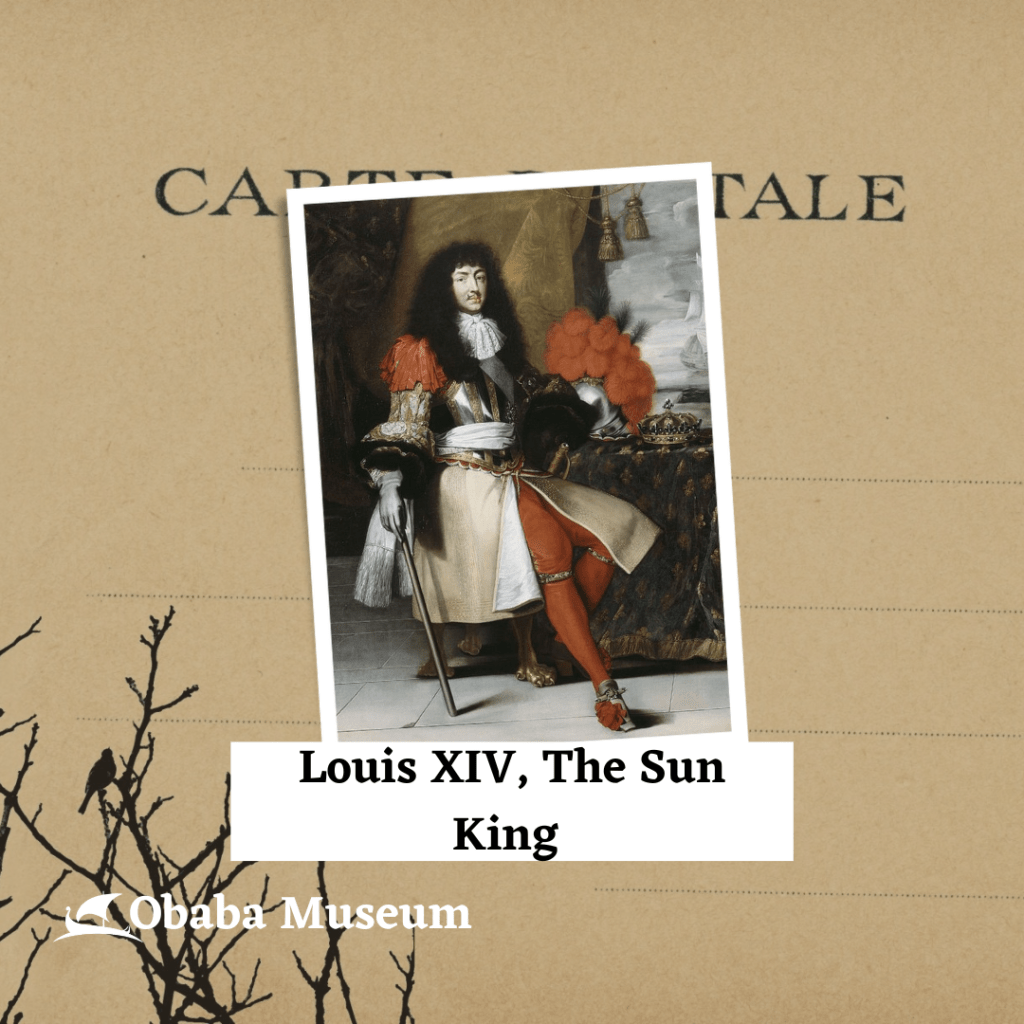
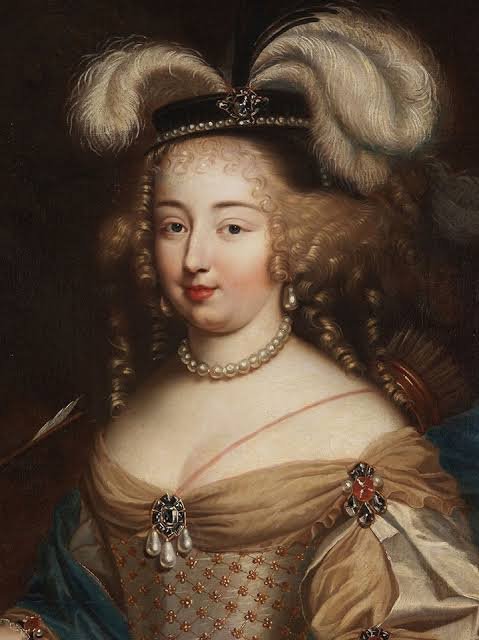
    Remember in the last article, we told you that Queen Elizabeth was the second longest reigning monarch in Europe, second only to King Louis XIV. The truth is she would have broken his record if she lived on for two more years, however she still lived longer than he did. While Louis ascended the throne at the age of 4, Elizabeth became Queen at 26. The focus for today is on Louis XIV popularly dubbed the Sun King, and we would be dropping some random facts about this powerful King. Let’s begin!

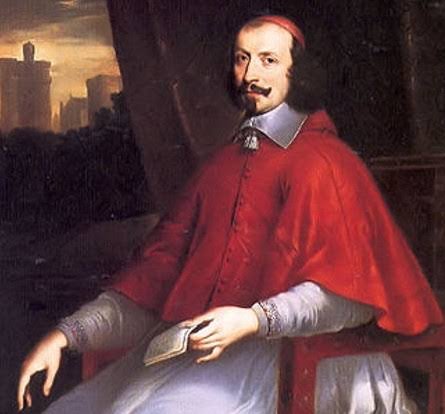
    We already said he’s the longest reigning monarch in Europe – he ruled France from 1643 until his death in 1715 (that’s a total of 72 years and 110 days). After the death of his father (Louis XIII), Louis XIV became king at the tender age of 4 (his father was king at 9). It would have been custom for Louis XIV’s mother, Anne of Austria, to become Queen Regent of France until her son was of age. However, Louis XIII apparently lacked faith in his wife’s ability to rule. In his will, Louis XIII arranged for a regency council to rule on his son’s behalf, appointing Anne head of the council to ease her disappointment. Anne however orchestrated an annulment of the council and took over as Queen Regent with the support of her chief minister, Cardinal Jules Mazarin of Italy.

    Cardinal Jules Mazarin

    The royal family was driven out of Paris twice because of Anne and Mazarin’s radical policies, giving Louis XIV a deep distrust of Paris and its people as he grew older that was why he built another one at Versailles. In 1682, Louis XIV officially moved his court to the lavish palace at Versailles, 13 miles outside of Paris. Europe’s grandest palace became a center of political power and a symbol of the king’s dominance and wealth.

    Another fact most historians and political scientists are aware of is that Louis XIV believed he was a direct representative of God. His parents christened him Louis-Dieudonné, meaning “Louis, the gift of God.” If that wasn’t enough to go to his head, Jules Mazarin instilled in him the impression that Kings are divinely chosen. Hence, Louis XIV adopted the sun as his emblem, associating himself with the Greek and Roman sun god Apollo. He even played Apollo in a royal ballet. Like the planets revolve around the Sun, Louis XIV believed that France revolved around himself, he commonly uttered the phrase “c’etat est moi”(The state is me). He is known as a despot who held absolute powers as a monarch. He went far to commission scholars like Jean Bodin to convince the people of France why the Sun King should be Sovereign over the land. Of course Bodin’s work further gave an intellectual backing to Louis desire to centralise power in France (you could read more about Bodin in his book, Les Livres de la république).

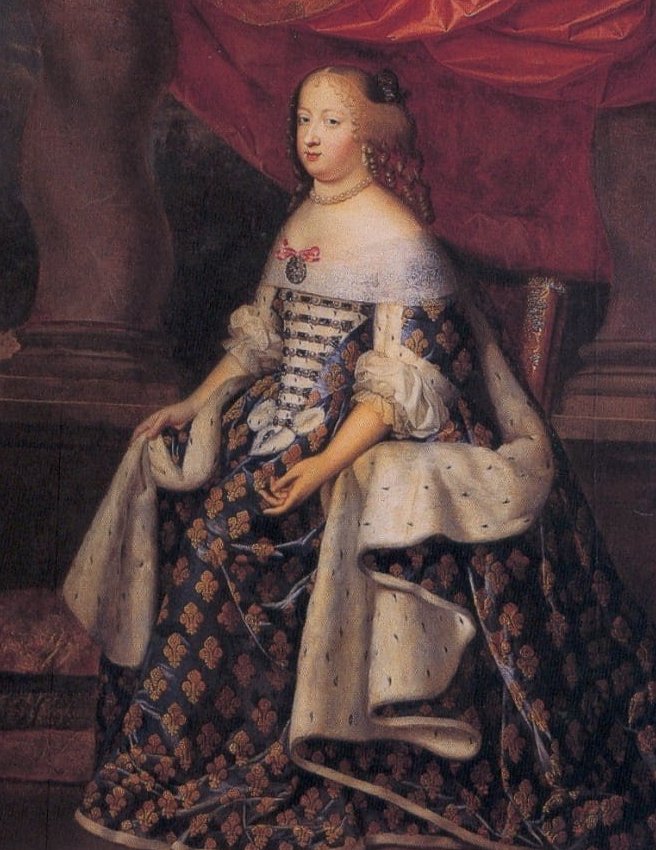
    Marie-Thérèse

    Do you know that the princess Louis XIV married was his first cousin? The king’s first true love was Mazarin’s niece, Marie Mancini, but both his mother (the queen) and the cardinal frowned upon their relationship. Louis XIV was ultimately directed into a marriage that was a political, rather than a romantic, union by wedding the daughter of Spain’s King Philip IV, Marie-Thérèse, in 1660. The marriage between the two first cousins ensured ratification of the peace treaty that Mazarin had sought to establish with Hapsburg Spain. This may explain why the randy king has countless affairs producing various known kids from different women. In fact, one of Louis XIV’s mistresses bore more of his children than his wife.
    Marie-Thérèse (his wife) gave birth to six of the king’s children, but only one, Louis, survived past the age of five. Louis XIV, however, had a healthy libido and fathered more than a dozen illegitimate children with a number of mistresses. Mistress Louise de La Vallière bore five of the king’s children, only two of which survived infancy, while her rival Madame de Montespan, who eventually became the king’s chief mistress, gave birth to seven of the monarch’s children. Louis XIV eventually legitimized most of his children born to mistresses in the years following their births.

    Madame de Montespan

    In our next episode we would be giving you some more bizzare facts about the Sun King. Stay tuned and on the bright side of life.

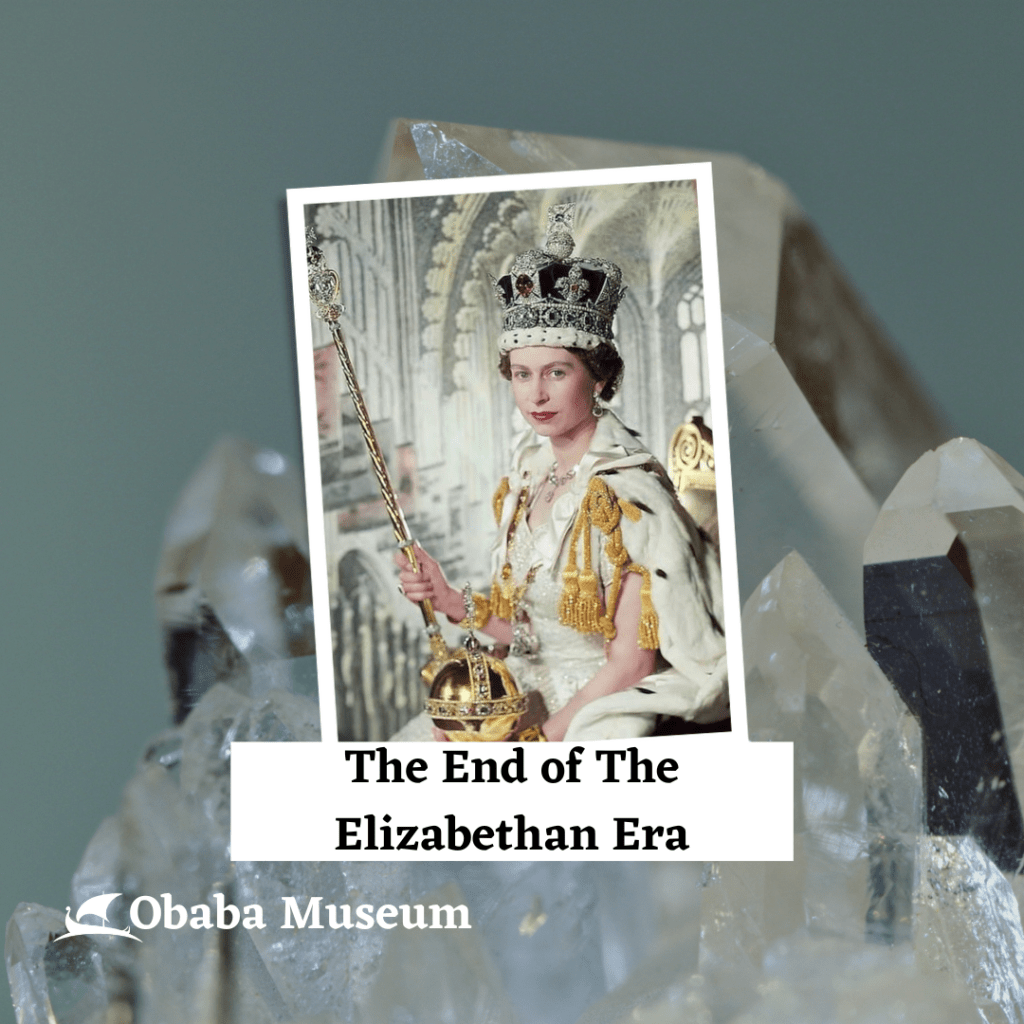
  • The End of The Elizabethan Era.

    The End of The Elizabethan Era.

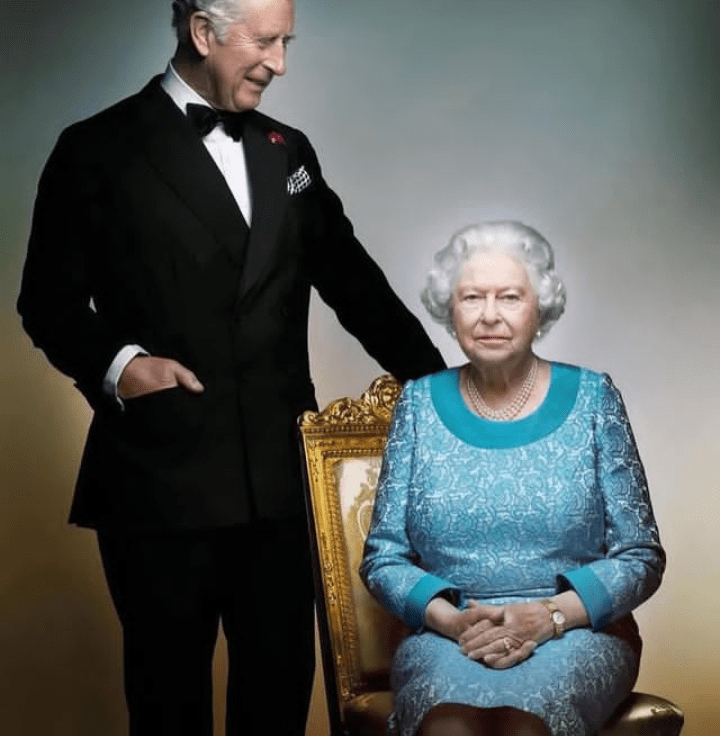
    It wouldn’t be an exaggeration to call her the foremost monarch as the Queen of the United Kingdom and Northern Ireland , the leader of the Commonwealth and ruler of fifteen sovereign states. It’s been top of the news since she died on the 8th of September 2022. Exactly 214 days after she celebrated her platinum jubilee on the throne.

    This makes her not only the longest reigning British monarch but also the longest living British monarch and the second longest reigning monarch second only to Louis XIV of France.

    The Queen ascended the throne on the 6th of February 1952, taking over after the passing of her Father King George the VI. King George VI who was the second son of King George V inherited the throne from his Elder brother King Edward VIII who had abdicated the throne in order to marry the two time divorcee American socialite Walls Simpson .

    Thus Elizabeth inherited the throne and decided to use Elizabeth also as her Regnal name making her Queen Elizabeth II(Elizabeth the second). Some notable events during her reign are;

    • rapid décolonisation from the 1960s,
    • being the first British monarch as ruler of Australia and New Zealand to visit the countries.
    • Visiting most of Britain’s Colonies
    • First British monarch to visit Communist countries, Yugoslavia(1972) and China(1986) and also Post communist Russia in 1994.
    • British monarch who has seen the most prime ministers, a total of fifteen.

    Dying two days after appointing the next prime Minister Liz Truss in Scotland, Opération London Bridge was commenced in addition to Operation Unicorn because she had died in Scotland.

    It might be a bit unfair though but slightly logical to say the Queen’s death although due to old age was hastened by the death of her husband, Prince Philip who died just about a year ago at 99.

    Following her death, in order to show respect for the monarch, on the day of her death and the day of the funeral, the British stock exchange, businesses, banks and shops would close for the day. The funeral is estimated to be 12 days after her death.

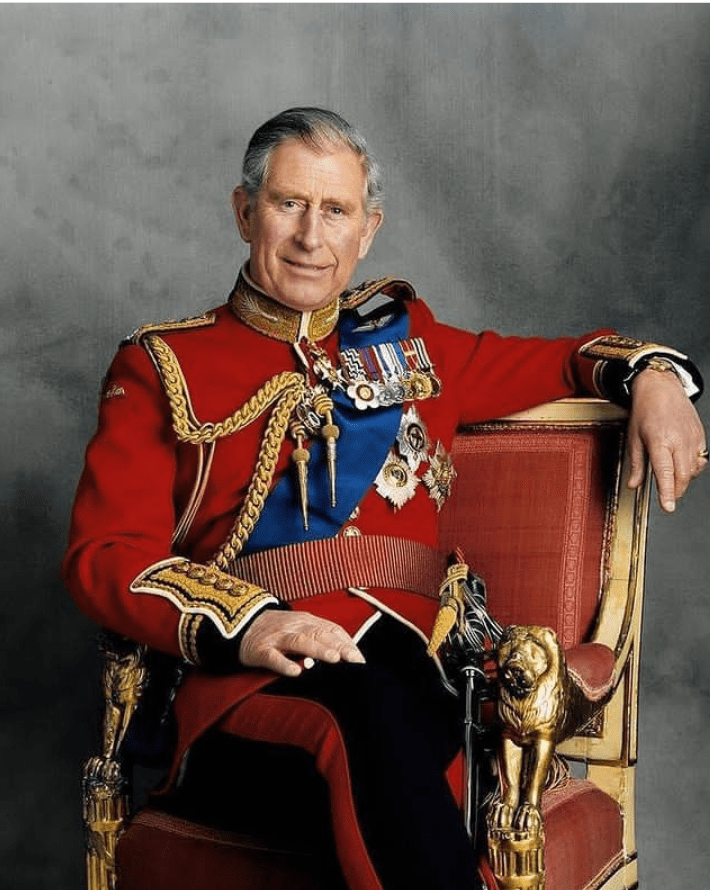
    Prince Charles, the Queen’s first son becomes King on the day of her death (although his coronation will be a year later) and makes his first speech as King on that day. Also, all currencies, stamps and any other national document with the Queen’s name becomes changed to the new King’s

    The Queen’s reign of 70 years makes it even older than a majority of British citizens. However, King Charles has been handling most of the Queen’s duties including leading the Commonwealth about a year ago so it’s expected that it would be a smooth -though not completely hitch-free- transition for the people of Britain and the whole world though it would take some time to finally get used to the New Monarch.

    With this we can say welcome to the ‘Charlesian’ Era definitely wouldn’t be as long as the Queen’s but hope it’s a peaceful era and pray it brings good tidings.

    Charles III is proclaimed King
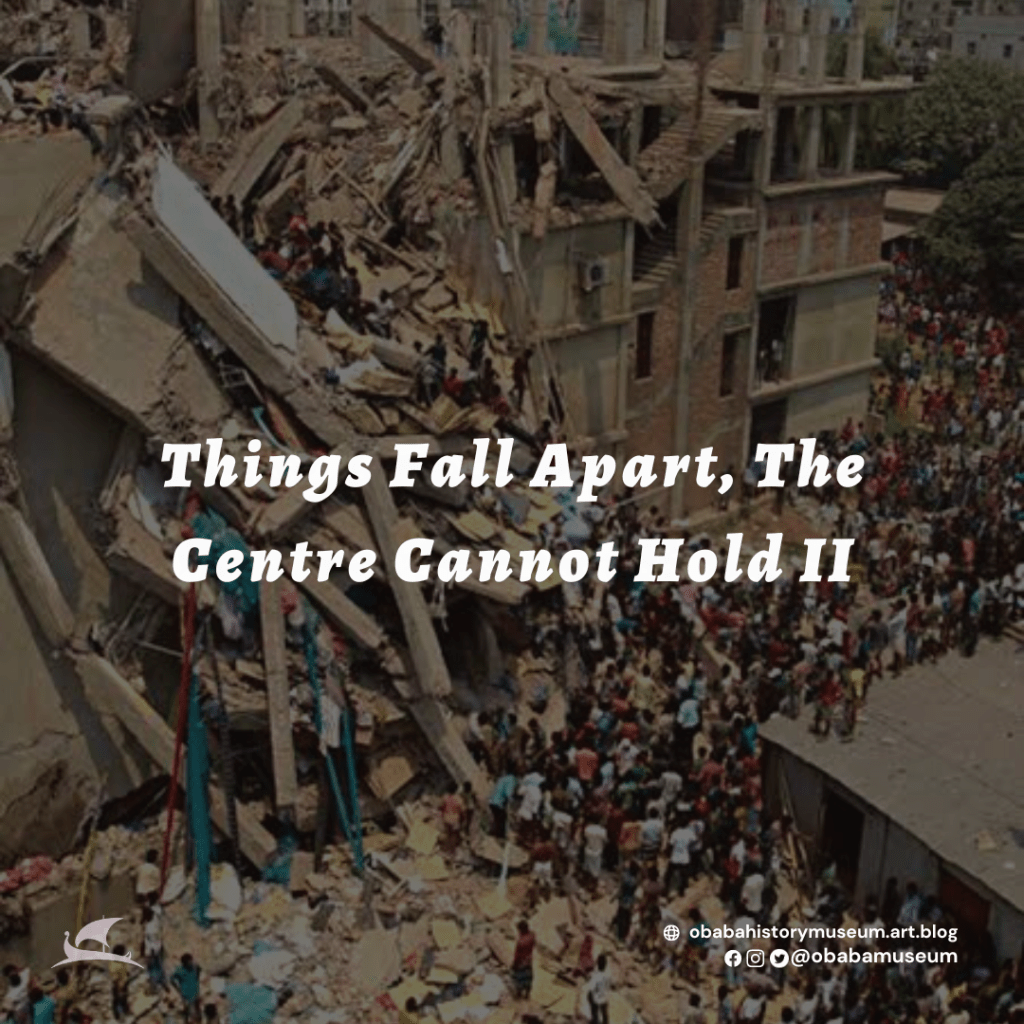
  • Things fall apart; the center cannot hold.

    Things fall apart; the center cannot hold.

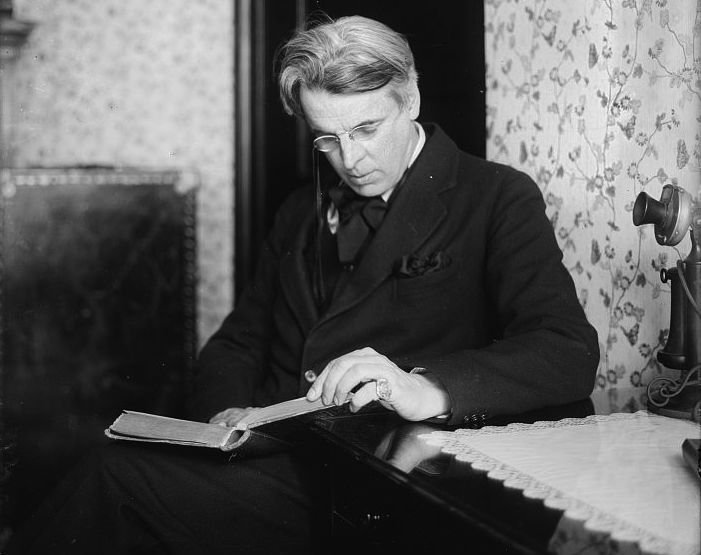
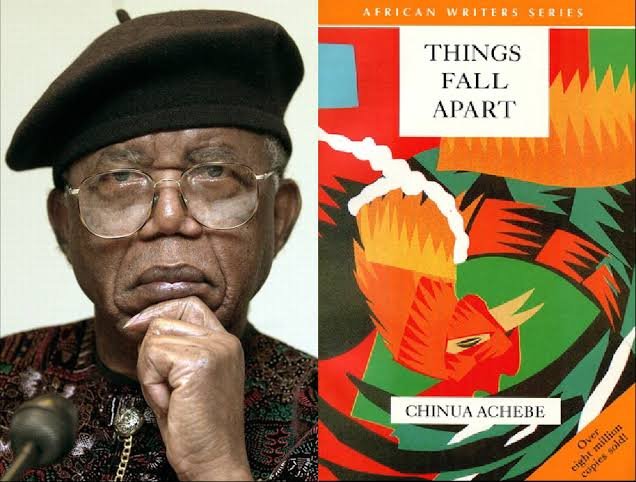
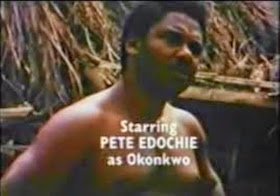
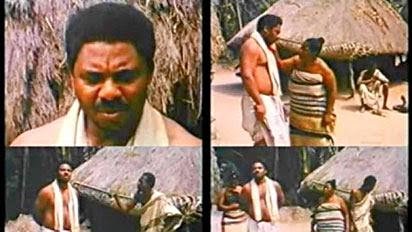
    The singular literary work that popularized the poetic line used as the title of this piece—written by the late Chinua Achebe—addressed the putrefaction that beset the pre-colonial Igbo traditions and heritage upon the introduction of western culture.

    Quite contradictory is the role reversal that, in my opinion, occurred regarding education in Nigeria.

    It continues to trouble me that the colonials, who enslaved the African continent for selfish greed, still gave a liberating education to the continent, and in a disconcerting contrast, our self-governing Kakistocrats have crippled education on all levels.

    In retrospect, the brilliant author of the literary work referenced in the first paragraph was a product of the white-man education in Africa, further buttressing—when placed side-by-side with the average standard of education at each level—that devastating decay—induced by the neglect of education by the crop of leadership in Nigeria—has eaten deep into the same sector.

    In truth, the dilapidation has been rapid and consistent since education became relegated in the country. This, in my opinion, solely hinges on the absence of visionary leadership in the state. This is my view. Let’s hear yours!

  • Things Fall Apart, The Centre Cannot Hold II

    Things Fall Apart, The Centre Cannot Hold II

    This line most probably resonates with most Africans because of Chinua Achebe’s novel Things Fall Apart which describes anarchy supposedly caused by the infiltration of another race. It may or may not come to you as a surprise that Chinua Achebe himself borrowed it from William Butler Yeats’ Poem, The Second Coming.
    The poem chronicles the disarray and pseudo-apocalyptic period after the second world war.

    The pillars and foundations holds the house as the beams holds the bridges. What now holds the pillars, foundations and beams?

    Education they say is should to be the foundation of any society that would love to develop.
    Apparently our foundation has been long destroyed and the educational structure keeps falling.
    Our beams have broken, there is no passage to the future we seek.

    From underpaid primary school teachers to overworked secondary teachers to underappreciated, underpaid, overworked and underequipped university lecturers. Strikes after strike after strike like a building that is being stopped before any major milestone is completed.

    Is the faulty educational system a product of the white man’s influence to limit the development of Africans or mismanagement on the part of the gatekeepers?


    Let’s hear your view.

  • Things Fall Apart, The Centre Cannot Hold

    Things Fall Apart, The Centre Cannot Hold

    ‘🎶🎶Things Fall Apart when the centre cannot hold, mere anarchy is loosed upon the land.
    Things Fall Apart when the centre cannot hold, Things Fall Apart, Fall apart, fall apart…🎶’


    You may be wondering why I started with a song, right?
    Well, many of us familiar with the tune probably watched the movie ‘Things Fall Apart’ (An adaptation of Chinua Achebe’s Novel) produced in the 80s with favourite Nollywood actor, Pete Edochie, starring as Okonkwo (the central character).
    Achebe paints a vivid picture of the Pre and Post Colonial Igbo Society. He argues that things began to fall apart when anarchy was released in the land as a result of the white man’s arrival. His(the white man) arrival in any form often symbolized disruption, disorder, disunity and disarray either as a missionary, District Officer or Soldier.


    Why all these story? I just wanted to explain what happens when a nation/individual decides to forsake it’s history, culture, norms and values. Change they say is the only constant but you know it’s either for better or worse. At what point did Nigerian citizenship become a disadvantage? Well, just sit tight, grab a popcorn, drink or whatever and let’s find the ‘Y’ in historical timeline ‘X’.


    Today we are told if you would love to get a dollar note you should be ready to part with N650 at least but just like yesterday the value of the dollar could really not stand the might of the Naira. Few days ago my dad recounted tales of his days at university where scholarship in a government institution was prestigious, in fact you really would not regard private universities. But today makes it 150 plus days of total shutdown in all government owned higher institutions of learning quite a lot of students have moved on.
    Was the white man really the emblem of anarchy or simply a figurehead of a well organized crime to disrupt the centre? It’s left for you and I to judge. Let’s hear your take.

  • Obaba Museum is 1

    Obaba Museum is 1

    Today our blog turns a year, it’s really a joyous occasion especially when you consider how much we’ve done within a year.
    Today’s celebration is low-key but it brings the feeling of nostalgia; feels just like yesterday when we published the first article titled How The Man o’ war began then followed it up with series of bangers.

    Going through our blog, you would see quite a lot to interest you be it in the field of technology, history, health, politics, inspiration and many more.
    We just want to say a big thank you to all our friends and well wishers, we couldn’t have come this far without your love and support.

    Happy Anniversary
    It’s our first anniversary, we would like to know your first encounter with Obaba Museum. Let us know in the comments.

  • A GLOBAL LANGUAGE.

    A GLOBAL LANGUAGE.

    According to the Harvard Review, English is the fastest spreading language in human history, the impact can be felt economically, socially and subsequently globally. In fact, the impact made, heighten the language above all other languages, both the ancient and modern mode of expression and communication are being subjected to extinction as time itself, favoured the advent of English language.

    Historically, English as a language has come a long way some sources claimed English language itself really took off with the invasion of Britain during the 5th century. Three Germanic tribes, the Jutes, Saxons and Angles were seeking new lands to conquer, and crossed over from the North Sea. It must be noted that the English language we know and study through various English language courses today had yet to be created as the inhabitants of Britain spoke various dialect of the Celtic language. During the invasion, the native Britons were driven north and west into lands we now refer to as Scotland, Ireland, and Wales. The word England and English originated from the Old English word Engla-land, literally meaning “the land of the Angles” where they spoke English.

    Another source tagged it to have sourced from a family of languages mostly spoken in Europe and western Asia from Iceland to India around 5,000 years ago by nomads that once roamed the European plains.

    Many arguments, debates and talks have been watered on English language which had positively aid the growth of the lingua Franca, a status that can be justified since most countries adopt English language as their first choice of foreign language. Currently, it has been estimated that about a third of the world’s population, some two billion persons, now use English as a language.

    If you ask me, I believe it deserves all possible accolades, despite its origin (England) it has become the dominant language of the United States, the United Kingdom, Canada, Australia, Ireland, New Zealand, and various island nations in the Caribbean Sea and the Pacific Ocean. It is also an official language of India, the Philippines, Singapore, and many countries in sub-Saharan Africa, South Africa, West Africa and of course my great nation, Nigeria.

    Now, we should bear in mind, as beautiful as it might sounds, phonetically (the Briton can be my judge), English has passed through mutation, change, evolution, and adaptation all due to time.

    Why and how does it evolve?
    Language changes for several reasons. First, it changes because the needs of its speakers change. New technologies, new products, and new experiences require new words to refer to them clearly and of course efficiently. But the biggest change to ever occur is colonization and migration. Americans would agree with me on that, since they fared well in honouring the pronunciation of English but then, the fact remains they adapt and adopt it from their colonizer which is Britain. And for, migration, the mass movements of English speakers across the Atlantic from Europe, to the Americas, Asia and then Africa all for the purpose of settlements or business ventures. 

    Surely, time will always play a vital role in the change, mutation, evolution, and adaptation of English language, because to me, apart from other extinct languages, English language although old, is here to stay.

  • The Chronicles of Human Language

    The Chronicles of Human Language

    Today, we have about 7,151 living languages in the world, but not without proper consideration that this number is in flux. Due to the dynamicity of the world, over 40% of languages are now endangered. Regardless of the many languages, Humans have grown ample respect for English language, a language which had  taken its place as one of the world’s predominant form of communication with its influences extending over as much as 2 billion of the global population. Despite the diversity of human minds, due stereotypical usage of these languages and other factors, there are common reoccurring questions to be answered. Questions like, how the first word of our ancestors sounds like?  What are the oldest languages in the world? How old is English language?


    Languages have always been enumerated highly, because of its vital role in advancement and human evolution. Imagine a world without any means of communication, but thanks to annals, historians, linguists and archaeologists, disseminating the dern of language has been made easy and fun. Going by archaeological proofs, the oldest dead language in the world is the Sumerian language. Dating back to at least 3500 BC, the oldest proof of written Sumerian was found in today’s Iraq, on an artifact known as the Kish Tablet. Thus, given this evidence, Sumerian may be considered as one of the earliest language in the world.

    Sumerian was gradually replaced by Akkadian as a spoken language around 2000 BC, but it continued to be used as a literary, ceremonial, scientific and sacred language until the 1st century AD. Unknown to the modern world until the 19th century when Assyriologists began deciphering its cuneiform inscriptions, written Sumerian can be divided into several time periods: Archaic Sumerian (31st–26th century BC), Old or Classical Sumerian (26th–23rd century BC), Neo-Sumerian (23rd–21st century BC), Late Sumerian (20th–18th century BC) and Post-Sumerian (after 1700 BC).
    It should be noted that Sumeria belongs to  group of  dead languages i.e extinct languages, “one that is no longer the native language of any community”, even if it is still in use, like Latin.

    Other very dead languages include but not limited to;
    • HURRIAN  – oldest proof of written Hurrian dates back to the 21st century BC;
    • PALAIC – attested in cuneiform tablets in Bronze Age Hattusa – circa the 16th century BC;
    • HIEROGLYPHICS – its earliest known complete written sentence has been dated to about 2690 BC;
    • AKKADIAN – first attested texts from around the mid-3rd-millennium BC;
    • ELAMITE – the earliest Elamite writings use a pictographic Hurrian  – oldest proof of written Hurrian dates back to the 21st century BC;
    • HITTITE – the oldest known text in the Hittite language was written by Anitta, a king that reigned in the 17th century BC;
    • MYCENAEAN GREEK – the most ancient attested form of the Greek language with the earliest writings dating back to 1450 BC.


    Furthermore, aside Sumerian and many other dead languages, Humans should be exposed to the fact that some languages  not withstanding how old they have gotten, having been born, grown and mutated by time, they still find life on the lips of people and hence exist till today. Likes of them are short-listed below;
    Sanskrit (3500 years old)
    Greek (3400 years old)
    Coptic Egyptian (2200 years old)
    Hebrew (3000 years old)
    Chinese (3200 years old)
    Aramaic (3100 years old)
    Arabic (2800 years old)
    Farsi (2500 years old)
    Irish Gaelic (1500 years old)

    The list isn’t exhaustive as we know that not all spoken languages ever made it to writing. Next week, we would be looking at the history of the English language.

  • The August Visitor

    The August Visitor

    The first time I heard this phrase a ‘runaway’ uncle had come visiting. It was really surprising and unexpected that dad exclaimed, ‘to what do we owe this August visit?’ Do you remember the first time your heard someone being addressed as August visitor? Let’s know in the comments.

    Most times it is usually used as an adjective to qualify people who visit once in a blue moon or those who seldom visit. Before we go into how this phrase came about, let’s burst your bubble – August visitor actually means a distinguished, highly regarded and respected visitor, not just any random person. You’ll agree with me that most visitors actually don’t fall under this category, I guess the phrase became more associated with sarcasm then.

    In Nigeria, any visitor that visits without a prior notice is also tagged an August Visitor, because despite not planning ahead of their coming, they are usually treated with utmost courtesy and warmth, as you would every other visitor.

    So how did the phrase come about?

    History has it that the month of August was named after the first Roman Emperor, Emperor Augustus Caesar because several of his major victories were recorded in the month of August. He was an important and regal person this made people extend warm hospitality to any Guest they received during the month of August. In Europe, August is also the peak of the summer season and is referred to as the most comfortable month of hospitality for them.

    When I read this, I began to wonder what was August called before Augustus influenced it’s renaming.🤔

    A colourised statue of Augustus Caesar

    Apparently, August was called Sextilis (also spelt Sextillus) because it was the sixth month of the original ten-month Roman calendar. Another unique thing about August is that it’s not just the name of a month. The word “August” itself has meaning and usage in English; according to the Merriam-Webster’s dictionary it means to be ‘marked by majestic dignity or grandeur’. So yeah if you were born in August you sure possess this grandeur.

    Thanks for reading, please share your own story in the comments.

  • Hatinators Vs Fascinators

    Hatinators Vs Fascinators

    Last week we started a gist on the Fascinator trend and how we’ve started hearing about another one called a Hatinator. I wonder if there’s really any difference but be the judge.

    The term hatinator became popular in the early 2010s describing a headgear which combines the features of a hat and a fascinator. Think of them more as hybrids between hats and fascinators. They are small decorative hats fastened to the head with bands, combs or clips just like a fascinator. They may not be as big as your regular hat, but are bigger than fascinators. Still confused? Take a look at the image below.

    L-R Queen Elizabeth II wears a hat, the Duchess of Cambridge wears a hatinator, and Princess Eugenie wears a fascinator.

    There really are no too obvious different between a Hatinator and Fascinator, in fact some fashionistas would tell you that the so called Hatinators are just another style of fascinators. However we decided to give you some few tips to distinguish between the two headgears.

    The Size

    Most fascinators are moderately sized to match your outfits but Hatinators almost simulate an actual hat with large rims.

    The Circumference

    Fascinators are simple and chick designs curated simply to fascinate the ‘wearer’ and the ‘beholder’ as the name implies. Hatinators on the other hand are usually larger than the circumference of the head.

    Thanks for reading, we hope you’re able to distinguish between the two when next you spot one or are there other tips to distinguishing between them, feel free to share in the comments.

  • The Fascinating Story of Fascinators

    The Fascinating Story of Fascinators

    Today, I wanted to get a fascinator for a friend, I got to see various styles from plumes to wide rim hats. Then I started thinking what’s the history behind this fashion accessory? When and how did it become a trend? Well let’s try to get answers. Sit tight and enjoy the ride.

    As far back as we can remember head gears have always been a symbol of status be it royal crowns, tiaras, berets or military hats. Women of almost every civilization have recognized the value of adorning their hair with various decorations. Native Americans used feathers, Ancient Egyptians wore gilded wigs, ancient Chinese wore special hair pins and specially shaped combs and ancient Hebrews powdered their hair with gold dust. 

    The Renaissance period however introduced a new era of power dressing. Merchants were expanding consumer markets in courts and cities by making chic accessories, including hats and hairpieces. Suddenly, the word ‘fashion’ was gaining usage across languages. And with increased wealth, self-image became less functional and more frivolous.

    Marie Antoinette

    With the 18th century came the world’s most iconic hair decorator: Marie Antoinette, the wife of Louis XVI. This queen craved beauty, prestige, luxury, and most importantly, attention. Her lavish spending habits may have been inappropriate considering France’s financial status at the time, but Antoinette’s hairstyles did succeed in igniting a spark of fashion creativity among the European upper classes. She regularly decorated her hair with outrageous trinkets, including miniature landscape gardens, animals, feathers, and even a scaled model of La Belle-Poule, a victorious war battleship. At this time France was a great influence in European fashion and art, and British ladies began picking up ‘few fashion tips’ in hair adornment from their French counterparts.

    The 1940s, saw the rise of ‘doll hats’ – feminine, miniature hats perched on the front of the forehead or nestled into an updo. In the 1980s, London-based milliners (hat makers) Stephen Jones and Philip Treacy popularized fascinators as we know them today within elite circles. Throughout the decade, Jones’s Covent Garden salon attracted royal clientele and celebrity clients like Princess Diana, Grace Jones, and Isabella Blow. Both Jones and Treacy are still renowned and active milliners today.

    Princess Diana

    Fascinators do have a several desirable qualities. For one, they can elongate your silhouette by adding the illusion of height. Being perched on the side or front of your head, they can also preserve a gorgeous blowout (unlike a wide-brim hat). Often made from sinamay or crinoline fabric and embellished with decorative trimmings such as organza, feathers, flowers and beads and for a more dramatic effect, some fascinators may also have a birdcage veil. The fascinator creation is attached to a fixing, usually a comb, clip or headband so it can be easily worn and fixed to the head.

    If you get yours custom made, fascinators can be true works of art and expressions of your personality. When understood this way, who wouldn’t want to wear a chic and creative piece of art. 

    I now hear we now have hatinators which is almost the same thing but just join us next week to hear the full gist.

    Thanks for reading through, cheers🥂.

  • Power Of Decision Making

    Power Of Decision Making

    Decision making is really more complicated than it seems to the eyes.

    At certain intervals in life there is always an avenue to make decisions. Most people ended up in their current state based on certain decisions they had made in the past. Emotions are sometimes determined by some decisions you made at some points in life; I mean you being happy or regretful could often be associated with some decisions you made.

    Let’s take a student trying to choose an academic field of study for example; there is always a need to choose wisely at this stage and it’s always a very crucial one because it tends to contribute to his or her entire life academically, socially and some times financially. Let’s assume he or she made a wrong decision and chose a non compatible field of study, there will definitely be some anomaly in the career journey which may have adverse effect on the not just the student’s life but the society and world at large. Just imagine a half baked doctor conducting a major surgery, yeah you guessed right.

    Most people especially the aged, are victims of regrets due to poor decision making. You would always find the elderly sharing with the young ones several mistakes they made in decision making and trying to advise the young ones to try and learn from those mistakes.

    In the country these days several news have been going around especially in regards the upcoming general election to determine the next person that will rule the nation for “4years or more”. That’s really a long period if you think about it! We can say Nigerians are about to witness a crucial decision making, or better still about to choose between several alternatives. Whether their decision will lead to the country‘s growth or downfall within that 4years of ruling is left to choice.

    Decision making may sound like a mere matter of choice but it is way more than that. Virtually every aspect of our lives is controlled by decision making. To Succeed or to fail, to be financially stable or ruined by poverty, and many aspects of life are always a result of the quality of decisions made.

    Decision making can either change your life positively or negatively, it is all dependent on you. Many youths out there are chosing the wrong priorities which may seem harmless at the moment. Some are so determined to abandon schooling to chose a carefree life. The heavens could not be blamed concerning them, they chose to be that way and sooner or later they realize that they themselves are the architect of their fortune or misfortune.

    To the youth, it is high time we started being more intentional about decision making. If for nothing to avoid regret and to serve as a good example to the younger generation.

  • How Vaccination works.

    How Vaccination works.

    Recently we’ve seen a lot of controversial views on the recent COVID-19 vaccines; many individuals are suspicious and unwilling to take some few shots of the vaccine, which they feel, hasn’t been too reliable in protecting them from more severe strains of the virus (let’s not even talk about the various conspiracy theories associated with it).

    With our basic knowledge in biology we understand vaccines to be useful tools for combating infectious diseases. They generally contain weakened or inactive parts of a particular organism (antigen) that triggers an immune response within the body.

    Still confused as to how this works? Let’s explain further.

    A vial of the COVID-19 vaccine

    Most vaccines contain a weakened or docile form of a virus or bacterium, or a small piece of the virus/bacterium that cannot cause disease. This small piece is called an antigen. When a person gets a vaccine, their immune system recognises the antigen as foreign. This activates the immune cells so that they kill the disease-causing virus or bacterium and make antibodies against it. It also activates immune cells – called T-cells and B-cells – in the blood, in the bone marrow and throughout the body. Hence, if later on the person comes into contact with the actual virus or bacterium, their immune system will remember it (so you could actually relate it with training for actual battle). The implication is that the immune system can then produce the right antibodies and activate the right immune cells quickly, to kill the virus or bacterium. This protects the person from the disease.

    Different vaccines bring about different levels of protection. How long protection lasts also depends on the disease it protects against. Some vaccines can only protect against a disease for a short period and may need booster doses; for others, immunity can last a lifetime.
    Newer vaccines now contain the blueprint for producing antigens rather than the antigen itself. Regardless of whether the vaccine is made up of the antigen itself or the blueprint so that the body will produce the antigen, this weakened version will not cause the disease in the person receiving the vaccine, but it will prompt their immune system to respond much as it would have on its first reaction to the actual pathogen. This explains some temporary side effects you may or may not experience after taking the COVID shot, there really is nothing to worry so, ‘Lets get vaccinated!’

    Thanks for reading through. Let’s know what you think in the comments.

  • Diary of a ‘Fitfam’

    Diary of a ‘Fitfam’

    It was in 2015, I was in my third year at the university and had earlier gained some weight. I calculated my BMI (Body Mass Index) and it was about 27. The ideal BMI is between 18–24 kg/m². So, I had to lose about 6–8kg and I knew it wouldn’t be an easy task.

    I was unsuccessful in my weight loss journey from 2015 to 2017 despite the various exercises I was engaged in during that period. I did lose 2kg at one point, which I later gained back and lost again within that timeline.

    It was in 2018 that I realised that by not paying attention to my diet, I would be unable to achieve much result. I made a resolve there and then to work on my diet and I decided to try out three things:

    1. To eat with a small plate.

    2. To drink more water while eating.

    3. To reduce my carbohydrates and eat more proteins.

    I was a student then and didn’t have much money to buy lean meat like chicken (not to be fried) and fish,  I resorted to increasing my beans intake. 🙂

    Initially, using the small plate to eat (in order to reduce the food quantity) wasn’t easy. For the first 2–3 weeks, I would usually eat one serving spoon extra. After a while, I got used to the small quantity of food and I no longer needed to “fill” my stomach with water while eating.

    At a point in time, I took my mind off losing weight to eating healthy by maintaining the small quantity of food and  increasing my vegetables and protein intake.

    It was sometime in 2021 that I remembered how large my belly fat used to be and the very significant change that had taken place.

    Sometimes, weight loss shouldn’t be the ultimate goal. It could take months or a few years to achieve some goals. Rather, healthy eating and exercising should be maintained as a lifestyle in order to prevent a lot of diseases that can make one’s old age miserable. While doing this, weight loss is usually achieved effortlessly.


  • Kingdoms Built by The Desert

    Kingdoms Built by The Desert

    For a good number of years, trade moved back and forth across the Sahara with goods exchanging hands in West Africa, however West Africans did not really benefit from the Saharan trade because the routes were often controlled by Berbers from North Africa.

    One of the major articles of trade was Gold, arguably the most expensive and wanted commodity in human history. Of course it was an abundant natural resource in the possession of West Africans which eventually made the control of the trade routes go into the hands of West Africans. The ability to control the trade routes to their advantage brought about the birthing or rise of three great empires; Ghana, Mali and Songhai.

    GHANA KINGDOM

    The Ghana Empire was also known as Wagadou or Awka existed from 300 to 1100 AD. The word Ghana means King of gold. The Ghana empire was founded by the Soninke people and was based in the capital city of Koumbi Saleh.

    Ghana was rich in gold and salt- two valuable articles of trade. People wanted gold for its beauty and salt to preserve their food and of course make their food tasty. As trade in gold and salt increased, Ghana’s rulers gained power, they built up armies equipped with iron weapons that were superior to other nearby cities. As time passed by, Ghana took control of trade merchants. Merchants from the north and south would meet in Ghana to exchange goods. Gradually, Ghana took firm control of West Africa’s trade routes, almost all trades between Northern and Southern Africa passed through Ghana.

    Eventually, the rulers of Ghana started forcing traders to pay taxes. Every trader who entered Ghana had to pay a special tax on the goods he carried and another on the goods he took with him when leaving. They gained an incredible amount of wealth from the trade and used the wealth to build an army and an empire.

    As the kingdoms of Ghana extended into the Sahara, increased contact with Arab traders from the east brought the Islamic religion to Ghana. In the 1060s, a Muslim group called the Almoravids attacked Ghana in an effort to force its leaders to convert to Islam. They weakened Ghana’s empire by cutting off many trade routes. Without its trade, Ghana was nothing and the empire eventually fell. The influence of Islam however remained strong. Despite its collapse, the empire’s influence can be felt in the establishment of numerous urban centers throughout its former territory and beyond. In 1957, the British colony of Gold Coast under the leadership of Kwame Nkrumah named itself Ghana in honour and remembrance of the historic empire although, they never shared the same geographical boundary or location.

    MALI KINGDOM

    Mali was along the upper Niger River. This area’s fertile soil helped Mali grow and control the trade on the river. The empire grew rich and powerful through the control of the trade.

    Mali’s rise to power began under a ruler named Sundiata. He won back his country’s independence and conquered nearby kingdoms, one of which was Ghana. However, Mali’s most famous ruler was Mansa Musa (Musa Keita). Under his leadership, Mali reached the height of its wealth, power, and fame.
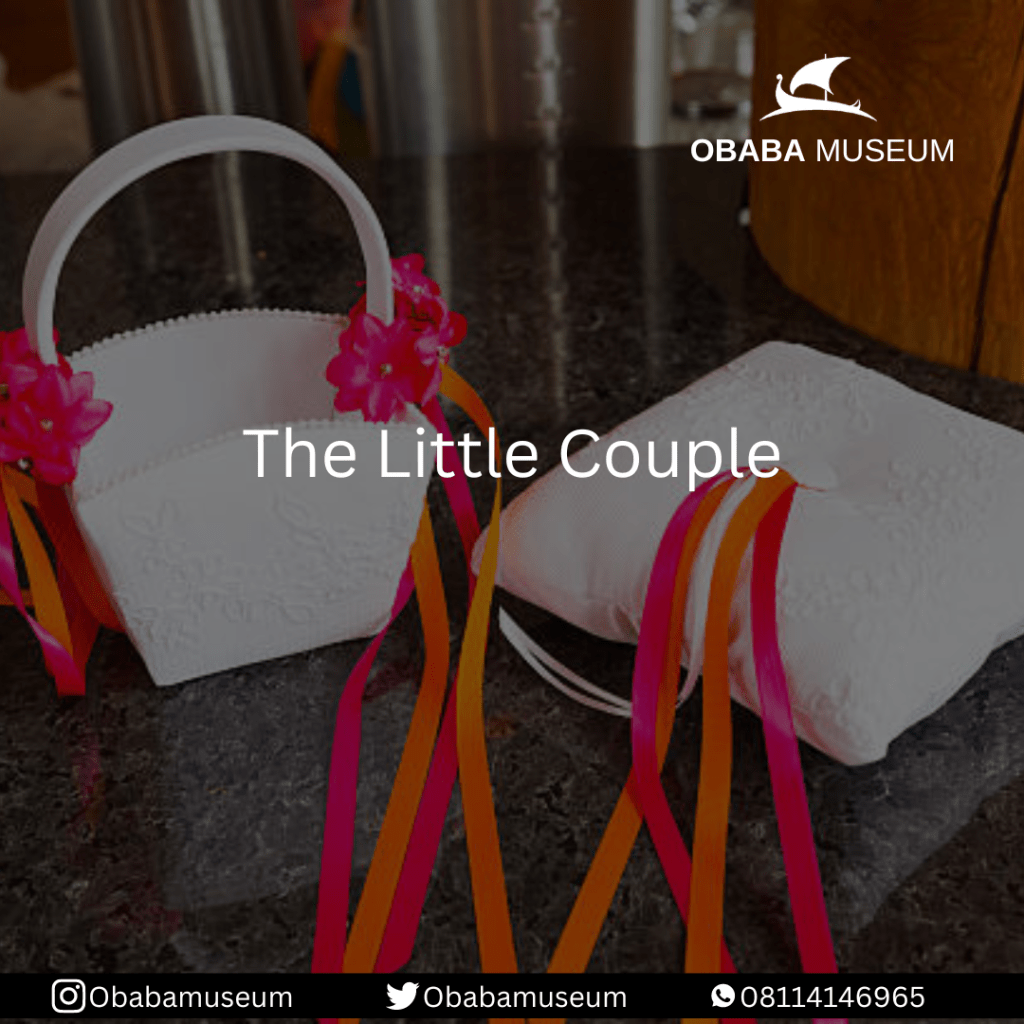
    Mansa Musa ruled Mali from 1312 to 1337. During that time, Mali added many trade centres including Timbuktu, Djenne, and Gao, to its empire. Traders came to Timbuktu from the north and the south to trade salt, gold, shells, and many other goods. Religion was very important to Mansa Musa. In 1324 he left Mali on a Hajj, or pilgrimage to Mecca. Making this journey at least once in their lifetime is the spiritual duty of all Muslims. As he journeyed to Mecca, Mansa Musa introduced his empire to the world. The stories of Mali’s wealth and religion spread far and wide. Because of Mansa Musa’s influence, Islam spread through a large part of West Africa.


    A portrait of Mansa Musa

    Mansa Musa wanted all Muslims to be able to read the Qur’an. Therefore, he stressed the importance of learning to read and write the Arabic language and he sent scholars to study in Morocco. These scholars later set up schools in Mali for studying the Qur’an. To encourage the spread of Islam in West Africa, Mansa Musa brought back artists and architects from other Muslim countries to build mosques throughout lands.

    The architectural advances in cities like Timbuktu as well as an organized government, an emphasis on education, and expansion of trade all combined to make Mansa Musa Mali’s most successful ruler. Unfortunately, Mansa Musa died and poor leadership weakened the empire. By 1500 nearly all of the lands the kingdom once ruled were lost. Only a small area of Mali remained.

    SONGHAI KINGDOM

    In the 1300s, Mansa Musa had conquered a rival kingdom of people called Songhai who also lived along the Niger River. As the Mali Empire weakened, the Songhai grew in strength. They took advantage of Mali’s decline and regained their independence conquering most of Mali.

    One of Songhai’s greatest rulers was Muhammad Ture​, who chose the title Askia the Great​. Like Mansa Musa, Askia the Great was a devout Muslim who supported education and learning. Under his rule, the cities of Gao and Timbuktu flourished. They contained great mosques, universities, schools, and libraries. People came from all parts of West Africa to study mathematics, science, medicine, grammar, and law.

    Askia understood that an empire needed effective government so he created a professional army, and to enhance the empire, he set up five provinces, each led by a governor who was loyal to him. He also created specialized departments to oversee various tasks, much like modern day government offices do.

    Soon after Askia the Great lost power, the empire of Songhai declined. Songhai was invaded by the Moroccans, the kingdom’s northern neighbors. The Moroccans wanted to control the Saharan salt mines. They had superior military power and were able to take over Timbuktu and Gao. Changes in trade patterns completed Songhai’s fall.

    Of course many other empires also rose up due to their ability to control the Trans Saharan trade routes, however we listed the

  • JUNE 12: The Stolen Mandate

    JUNE 12: The Stolen Mandate

    June 12 has now officially come to mark a day of celebration in Nigeria. Nigerians celebrate June 12 as Democracy day, symbolic in marking the transfer of political power from the military to an elected civilian government in 1999. Of course it also marks the start of the longest continuous civilian rule since Nigeria got independence from colonial masters in 1960. Democracy day is a tradition that has been held annually since the year 2000 however June 12 was not always a thing.

    Gen Abdusallami Abubakar hands over to Chief Olusegun Obasanjo, May 29 1999

    Initially, May 29 was the official democracy day in Nigeria marking when Olusegun Obasanjo took office as the president of Nigeria in 1999 officially ending several decades of military rule in Nigeria since 1966. Of course there was a short period of democracy from 1979 to 1983, however, the apparent helplessness of the civilian government gave way for another coup. On June 6, 2018 a little bit over a week after May 29, 2018 had been celebrated as democracy day, the Federal Government of Nigeria led by President Muhammad Buhari declared June 12 as the new democracy day and he gave his inaugural speech for his second term on June 12, 2019.

    Buhari posthumously awards Chief MKO Abiola

    You must be wondering, why June 12? On June 12, 1993 an election which is said to be Nigeria’s ‘freest’ and ‘fairest’ election took place. The election involved two parties – Social Democratic Party (SDP) represented by Moshood Kashimawo Abiola and National Republican Convention (NRC) represented by Bashir Tofa. Nigeria was practicing a two party system then. Although it was said that the election was the ‘freest’ and ‘fairest’, the military head of state, Ibrahim Babaginda annulled the election on the grounds of rigging. On June 11, 1994, Abiola declared himself as the President of Nigeria which led to his arrest on the grounds of treason, under the command of General Sani Abacha on June 23, 1994.

    Abiola was detained for four years and he died on July 7, 1998, his supposed day of release. In order to celebrate a man who fought for Nigerian’s democracy, president Buhari declared June 12 as the new official day for democracy celebration, although, before then the south Western states of Nigeria had been celebrating June 12 as ‘Abiola’s Day’.

  • THE SHIP OF THE DESERT

    THE SHIP OF THE DESERT

    “The Ship of the Desert” is a phrase you may have heard especially if you followed our last article on The Trans Saharan Trade. Of course if you followed closely you realize that camels were popularly regarded as the ship of the desert. They are regarded as so due to the fact that they move smoothly through the desert in Africa with ease (at least compared to other beasts of burden). They carry people as well as cargo in desert just like the ships at sea. They were used mostly by the Trans Saharan traders from North and West Africa. People have been using Camels for over 4,000 years mostly for transportation and it is said that camels came into North Africa from Arabia through Egypt and the Sudan, coming into widespread use by 300BCE.

    Now why would these traders choose the camel? I mean there are other animals that can carry load and walk through the desert right? Yes, other animals may be able carry load and walk through the desert but the camel was chosen because the desert is usually hot and dry, and they seemed more suitable due to many distinguishing features chief amongst which is their ability to carry much more load than other animals. Wares/articles of trade were often loaded and transported in caravans of camels.

    According to Abu Abdullah Muhammad popularly known as Ibn Battutah, a famous Muslim explorer, the average size per caravan was 1000 camels but some caravans were as large as 12000 camels. The caravans were guided by highly paid Berbers who knew the desert well enough to ensure a safe journey.


    Unlike other pack animals, the camel can go for months without food and about 15 days without water. This is because they have a large store of fat in their hump which can easily be broken down to food. Another cool feature of the camel is its legs. The camel walks on a broad pad which connects its two toes. This cushion – like pad spreads when the camel places its foot on the ground enabling it to firmly grasp the earth. This pad also stops it from sinking on the loose sand of the desert, making movement easier and faster. They can move between 8 and 10mph in 18 hours.

    That’s not all; camels can close their nostrils just as humans can blink their eyes. This helps them close out sand that sometimes blows fiercely in the desert. Their long eyelashes and ear hairs also stand as a barrier against sand. If sand gets into their eyes, they can get it out using their third transparent eyelid. These features helped the camel withstand the harsh climate conditions in the desert.

    When you consider all the traits, you just have to agree that they are truly the ship of the desert!

    Thanks for reading through, let’s know what you think in the comments.

  • The Trans Saharan Trade

    The Trans Saharan Trade

    From 500AD to 1450AD, a massive trading community stretched throughout the Sahara desert. This community linked wealthy empires of West Africa and the Mediterranean region. Sit tight and enjoy some little facts about the Saharan Trade.

    The Sahara desert is known to be the largest desert in the world. It measures about 3.5 million square miles from the Nile River to the Atlantic ocean. The word SAHARA is gotten from an Arabic word SAHIL which means coast or shores.

    Traders used huge caravans of camels to transport goods across the desert. Caravans we’re more like convoys of Camels 🐪 following each other, just imagine a convoy of trailers, lol. The desert could be likened to an ocean where merchants transport goods with ships. The ‘ship’ in this case would be the camel and the captain of the ship the Berbers who were skilled and experienced in handling the camel.

    A typical Berber

    The camel was most suitable for this job due to some features; they have a large store of fat in their hump which enables them to survive for several months without food and about 15 days without water, they can drink up to 145 litres of water in one sitting. The camel is said to be able to carry about 330 – 900 pounds of load comfortably.

    A Camel Caravan

    The camel is said to have gone extinct during the stone age but it appears it simply went out of use as it later resurfaced in North Africa around 300BCE. The arrival of Islam really facilitated the Trans-Saharan trade. In fact the religion and culture of Islam was most effectively spread by trade at least in it’s early phase.

    After the Arab conquests of 600BCE, the Berbers converted to Islam as well as many West African Merchants. Arabic provided a common language and value system, making it easier for traders to communicate and record trades. Powerful Islamic empires and Muslim retailers in the North United a whole lot of Afro-Eurasia into one trading system and trade grew.

    The combination of increased trade and other factors including Islam created a golden age for the empires of West Africa. This enabled travellers and scholars to move around the world thereby creating new trades.

    Thanks for reading through. Let’s know what you think in the comments 🐪👳.

  • ‘Ignorance Na Bastard’

    ‘Ignorance Na Bastard’

    MR KOLA: I’m tired of all this, I’m seriously done with you. You have to leave my house today.

    MRS KOLA: Honey, I’m sorry, it’s not my wish to keep losing babies at infancy.

    MR KOLA: Woman! get out of my house. I am seriously tired of wasting my seeds on you. You keep taking in and there’s no evidence of fruitfulness, when will you yield? After 5 years of marriage, you succesfully gave birth to a kid and eversince the rest has been series of miscarriages and still birth. I would love to have more kids and you’re obviously standing in my way. Am so done with you. Whenever you to take in it either comes out earlier than expected as miscarriage or it comes out dead at delivery… I’m tired woman…

    (he keeps ranting whilst his wife pleads. Meanwhile the altercation draws in the attention of their neighbor, MR KING)

    MR KING: Oga calm down, I take God beg you make u chillax. What is the problem please?

    MR KOLA: Is it not this witch who keeps getting pregnant with nothing to show forth. After our first child she has been sucking others up to sacrifice them at their coven…

    MR KING : Hmmm, Mr. Kola with the few I know about you people since I moved in two months ago to this compound I know you have a 4 year old son. May I know where his delivery was done?

    MR KOLA: the Iya Agbebi down the street took the delivery.

    MR KING: Do you know your RHESUS status at all?

    MR KOLA: What is that?

    MR KING: Hmmm I think I’m getting the source of this problem. If you don’t mind, I will take samples of blood from yourself and your wife. I will run the test at work tomorrow and get back to you.

    One more thing sir; till then let your wife in please, she might not be at fault.

    MR KOLA: Hmm no wahala, I respect you a lot so I will let her in.

    (the next day at work Mr. King runs the test and found out that the husband’s blood group is B+ and the wife is B-. Meaning the problem they’ve both been having is that their contrasting RHESUS FACTOR, this is what has been responsible for the miscarriages – Indeed ignorance na bastard.

    Back at home Mr King calls both of them)

    MR KING : Mr. and Mrs. Kola. The problem of your miscarriages and still birth is caused by your ignorance of RHESUS FACTOR.

    Rhesus (Rh) factor is an inherited protein found on the surface of red blood cells. If your blood has the protein, you’re Rh positive. If your blood lacks the protein, you’re Rh negative. Rh positive is the most common blood type. Your test shows that you Mr kola is RHESUS positive and your wife is RHESUS negative.

    You were able to have your first child because your wife’s immune system has not been sensitized to the presence of the positive RHESUS FACTOR not until delivery his delivery. Supposing you gave birth to him in a hospital, tests would have been conducted on both of you to know your RHESUS statuses and the recommended RhoGAM shots would have been given during pregnancy or at delivery to your wife to stop her body’s immune system from recognizing Rh+ so it wouldn’t have affected subsequent births like it did.

    Please take back you wife and show her some love it was never her fault. When next she is pregnant kindly register her for antenatal at a reputable hospital where she will get adequate treatment and not in any quack’s place that will just take delivery. You see its not her fault neither is she a witch. Shes not been sucking up your kids, it just ignorance on your path.

    ADVICE

    Do all compatibility tests before marriage, seek and follow medical advice. Register antenatal at a reputable hospital.

    NOTE: I have no intention to castigate any body’s work. It’s simply to educate and enlighten us all.

    From the hands that care ##KING##

  • The Real Jolof

    The Real Jolof

    The Ghana vs Nigerian jollof continues to attract global attention on social media with many Twitter duels on which nation has the best party jollof. But does Jollof rice really have a standard recipe?

    Today, I will like to show you another angle, relax and follow the gist.

    Few years ago, while attending a lecture on West African history, the lecturer mentioned something about Jollof rice being indigenous to the Tukulor Wolof (Jolof Empire). I initially thought it to be a joke but later realised this wasn’t one. I really took a lot of time to do my personal research into the culture and peculiarity of the People of Jolof. Here are some amazing facts to note.

    The origins of Jollof rice could be traced to the 1300s in the ancient Wolof Empire (also called the Jolof Empire), which extended to parts of modern day Senegal, The Gambia and Mauritania. Rice farming flourished in this region, hence, the Jollof began as a dish called thieboudienne, prepared with rice, fish, shellfish, and vegetables. As the Empire grew, the Wolof people dispersed across the region and settled in different parts of West Africa, taking their sumptuous rice dish with them.

    Thieboudienne (the real Jollof rice)

    Today, virtually every West African country has at least one variation of Jollof, which both divides and unites the region. Each nation and family adds their own twist and interpretation, which perhaps is the root of the fierce competition taking place across the social media. 

    The major rivals seem to be Ghana and Nigeria. Of course, we also have Sierra Leone, Liberia, and Cameroon featuring in the food beef. The Gambia and Senegal are quite laid-back and rarely enter the Jollof controversy; after all, they gave it to the world. One major issue with the Jollof rice is the variety in available recipes with as many similarities and differences; and with the common oral traditions of passing down recipes, what else could be expected?

    These two nations (Ghana vs. Nigeria) have been rivals in quite a lot, especially football (lol, that’s a story for another day). But as much as citizens of both nations pick Twitter fights, they seem to admire each other’s culture.

    Of course, foreigners are sometimes forced to pick sides between the two types of Jollof, I think there shouldn’t really be a beef as to which is better, we should rather see it more in the light of enjoying variety. One main difference in the Jollof recipe is the type of rice used. Ghanaians use aromatic basmati rice, which gives it extra flavour, while Nigerians use long grain rice, believing that it is best for absorbing flavour. Both countries enjoy this gentle teasing, seeing it as a battle of wits where each tries to wear the other down with words.

    Ironically, the feud actually brings Nigerians and Ghanaians together, certain people have described it is a love language between both countries similar to the dynamic of siblings teasing each other. Many non-African celebrities have given their verdict on whose jollof is preferable. Sometime in October 2021, while discussing with Nigerian celebrity, Yemi Alade, Ed Sheeran said he loves Ghanaian jollof, though he hadn’t tried the Nigerian one, lol.

    If you ask me, I would say neither has a superior recipe for cooking Jollof, it simply is a question of who is cooking and who intends to eat it. The Senegalese Jollof (Thieboudienne) sef no too appeal to me (just kidding o 😂).

    Thanks for reading through, let’s know what you think in the comments.

  • Why you can’t lose that weight (part 2)

    Why you can’t lose that weight (part 2)

    Do you remember the 3 key areas for weight loss we mentioned in the previous article? Diet, physical activity level and exercise? I knew you would😊!

    Today we will be learning about physical activity and exercise.

    Physical activity involves the movements we make while carrying out our daily activities. For example, the movements we make while going to work/school/ the market, during recreation, while we are within our work place, like walking, swimming, strolling, dancing and so on.

    Movements that involve large muscles in our bodies, like those in our legs, break down more calories (e.g walking, jogging). So for some individuals whose occupations involve sitting in a spot for long hours, (e.g bankers), have higher tendencies of being overweight. This is because of their low physical activity level.

    These individuals consume a lot of high calorie foods or snacks but cannot burn most of the calories due to their sedentary lifestyle. This leads to weight-gain, and in some cases – Obesity.

    There are recommended levels of physical activity (according to WHO) for different age groups. It is recommended that one looks up these recommendations and put them to practice.

    On the other hand, one may wonder the difference between physical activity and exercise. Exercise is planned, it is intentional and specific. This means that the exercise plan is designed to achieve the specific aim that the client wants.

    For instance, if the client wants to lose belly fat, the plan would be to engage the individual in abdominal exercises and aerobics. The aerobics would burn the underlying fat why the abdominals would help tone-up the muscle.

    Clients who would like to build their muscles e.g biceps 💪 , chest muscles, the muscles in their legs or even their butt, would engage in more of resistance or weight-lifting exercises.

    Hence, while most exercises target certain areas of the body, physical activities work on the general body most times.

    In all, increase your physical activity level today ( if it is low) and you may consider registering at a gym to kick-start your exercises. Most important, your diet should be balanced with proteins and vegetables. Your calorie intake (especially the carbohydrates) should also be low.

  • Why You Cannot Lose That Weight

    Why You Cannot Lose That Weight


    Weight loss can be a tiring journey especially when you have no result after putting in so much “effort”. Could it be that you aren’t doing it the right way? 🤔


    Well, for weight loss to be possible, your output needs to be more than your input, in terms of calories. That’s why your physical activity level (i.e., your routines and occupation), exercise and your diet are key.


    Your diet works on your input, while exercise and physical activity work on your output.


    For today, let’s talk a bit about diet. My next post will be on how to reduce belly fat using a personal case study. 


    Diet, in terms of portion control, is very important for any individual that wants to lose weight. One of the guides in portion control is to reduce the carbs (carbohydrate); so, junks are a “no-no”.

    But how can individuals who have formed unhealthy eating habits loss weight?

    For example, eating 3 chocolate or sugar-glazed doughnuts, 2 cupcakes with yummy icing 😋 accompanied with a 75cl bottle of carbonated drink every day.

    I must say that there are some individuals who are so strong-willed and determined that they could actually wake up one morning, decide to totally stop such a habit and actually keep to it (especially after weighing the pros and cons).

    To such individuals, I say, “I truly admire your spirit, go for it and hit your targets like the pro that you are.”


    But to the majority, who usually do not have such measure of strong will, I say, “Let’s take it gradually; slowly, you will get there but you also have to be systematic, patient and determined until you also reach your target.”


    So, instead of consuming 3 chocolate or sugar-glazed doughtnuts, 2 cupcakes with yummy icing accompanied with a 75cl bottle of carbonated drink daily, you could reduce it to 2 donoughnuts (1 plain and the other chocolate or sugar glazed), 1 cupcake with icing and 50cl bottle of carbonated drink daily for the first week.


    By the third week, you could request for plain donoughnuts (not chocolate or sugar glazed) and the cupcake can also be plain.
    By the fifth week,you could reduce the donoughnuts to 1 rather than 2.
    You can then proceed to make the reductions weekly rather than bi-weekly.


    This way, you are able to slowly wean yourself off the addiction but you must be determined and you must be intentional.
    You must also be focused and not allow mockery from individuals discourage you from attaining your goal, or in worst case scenerios, make you give up your weight-loss journey. Some people may mistake your gradual process as being unserious but that shouldn’t stop you.

    We hope this article has been helpful to you. If it has, let us know in the comment section. Have a great day… achieving your goals 💪.

  • On Aburi We Stand!

    On Aburi We Stand!

    The phrase ‘On Aburi We Stand’ is very common amongst scholars and students of the Nigerian Civil War historiography. This phrase is often cited by supporters of the Biafran nation as it implied that Ojukwu had done a great job at Aburi, especially with the resolutions reached in the Accord. Gowon’s betrayal of the contents of the agreement could be regarded as the immediate cause of the war. By so doing, he demonstrated that, indeed, the fears of Ojukwu and the Igbo nation were genuine. Before we discuss the standoff that led to the phrase ‘On Aburi We Stand’, let’s quickly take a look at the resolutions reached at Aburi and how Gowon went against them.

    In the previous article, I made it clear that the Aburi Peace Conference was a meeting of the Supreme Military Council of Nigeria. Below is the official minute of the resolutions reached.

    ‘On Aburi We Stand’: Ojukwu unveils Biafran currency and postage stamps, January 29 1968

    FINAL ABURI COMMUNIQUE
    The Supreme Military Council of Nigeria resumed its meeting in Ghana on the 5th
    of January, and continued and concluded discussion of the remaining subjects on
    the Agenda. The Council reached agreement on all the items.
    On the powers and functions of the Federal Military Government, the Council
    reaffirmed its belief in the workability of the existing institutions subject to
    necessary safeguards.
    Other matters on which agreements were reached included the following:

    • Re-organisation, administration and control of the Army
    • Appointments and promotions to the senior ranks in the Armed Forces, the Police, Diplomatic and Consular Services as well as appointments to super-scale
    posts in the Federal Civil Service and the equivalent posts in the Federal Statutory
    Corporations. On the question of displaced persons, the Supreme Military Council
    agreed to set up a committee to look into the problems of rehabilitation and
    recovery of property. In this connection, the Military Governor of the East assured
    the Council that the order that non-Easterners should leave the Eastern Region would be reviewed with a view to its being lifted as soon as practicable.
    Agreement was also reached that the staff and employees of governments and
    statutory corporations who have had to leave their posts as a result of recent
    disturbances in the country should continue to be paid their full salaries up to the
    end of March 31, 1967, provided they have not found alternative employment.

    The Council agreed that the Ad Hoc Committee on the constitutional future of the country should be resumed as soon as practicable and that the unanimous
    recommendations of the committee in September 1966 will be considered by the
    Supreme Military Council at a later meeting.
    The Council unanimously agreed that future meetings of the Council should be
    held in Nigeria at a venue to be announced later.
    The entire members of the Supreme Military Council expressed profound regret for the bloodshed, which has engulfed the country in the past year and avow to do all
    in their power to ensure there is no recurrence of the unhappy situation.
    The members of the Supreme Military Council place on record their profound
    appreciation and gratitude for the constructive initiative and assistance rendered by the Chairman of the National Liberation Council, the Government and people of Ghana.

    Statement by the Supreme Council on the Reorganisation of the Army,
    and the Approval of Senior Appointments, and its Declaration on the use of force
    I. The Supreme Military Council now meeting in Ghana has agreed on the
    following reorganisation of the Army:
    • The Army is to be governed by the Supreme Military Council the Chairman of
    which will be known as Commander-in-Chief and Head of the Federal Military
    Government.
    • There will be a Military Headquarters on which the Regions will be equally
    represented and which will be headed by a Chief of Staff.
    • In each Region, there shall be an Area Command under the charge of an Area
    Commander and corresponding with the existing Regions.
    • All matters of policy, including appointments and promotions of persons in executive posts in the Armed Forces and Police shall be dealt with by the Supreme
    Military Council.
    • During the period of the Military Government, Military Governors will have
    control over their Area Commands in matters of internal security. The following
    appointments must be approved by the Supreme Military
    Council:
    • Diplomatic and Consular posts.
    • Senior posts in the Armed Forces and the Police.
    • Super-scale Federal Civil Service and Federal Corporation posts.
    • Any decision affecting the whole country must be determined by the Supreme
    Military Council. Where a meeting is not possible such a matter must be referred
    to Military Governors for comment and concurrence.

    II. We the members of the
    Supreme Military Council of Nigeria meeting at Accra on 4th day of January, 1967,
    hereby solemnly and unequivocally: DECLARE that we renounce the use of force as a means of settling the present crisis in Nigeria, and hold ourselves in honour
    bound by this declaration. REAFFIRM our faith in discussions and negotiation as
    the only peaceful way of resolving the Nigerian crisis. AGREE to exchange
    information on the quantity of arms and ammunition in each unit of the Army in
    each Region, and also on the quantity of new arms and ammunition in stock.

    If you take the time to read the minutes of the meeting, you will notice that Ojukwu was very prepared. He spoke at length each time he had the opportunity to speak and spoke quite intelligently. Obviously only himself knew the constitutional implications of the document they had signed. When it became clear that the Aburi Accord was a major victory for Ojukwu and the Eastern province, Gowon decided to abandon the agreement because, according to him, Ojukwu
    went to Aburi prepared while others were not (yes, Gowon actually said that).

    In response to Gowon, Lt. Colonel Odumegwu Ojukwu, Military Governor of the Eastern Region of Nigeria, declared that the region would no longer recognise Lt. Colonel Yakubu Gowon as Head of the Federal Military Government on March 2, 1967. Lt. Colonel Gowon assumed full powers as Commander-in-Chief of the armed forces and head of the military government on May 27, 1967. Lt. Colonel Gowon proclaimed a state-of-emergency on May 28, 1967. Lt. Colonel Odumegwu Ojukwu, Military Governor of the Eastern Region, declared the independence of the Republic of Biafra in Southern Nigeria on May 30, 1967. This began the 30-month long Civil War popularly known as the Biafran war.

    The phrase ‘On Aburi We Stand’, was the title of Ojukwu’s broadcast delivered on the 27th of February, 1967 (a month after the signing of the Accord). Thanks for reading throug&h. If you enjoyed this piece, kindly give us a like and comment below. Do have a lovely day.

  • Prelude to War: The Aburi Accord

    Prelude to War: The Aburi Accord

    In our last article we explained Decree 34 as a precursor to the counter coup and by extension the Civil War. Already quite a number of Easterners in the Northern Region were being massacred, in fact about 115 individuals, mostly ethnic Ibos, were killed in political violence between May 28 – June 2, 1966 due to the unpopularity of the Decree promulgated by an Ibo Head of State. Hence the Counter Coup which was Mainly led by Northern officers ousted Gen. Ironsi and replaced him with an officer of Northern Origin, Lt. Col Yakubu Gowon. It is important to understand that Gowon was more than 3 ranks below Ironsi, therefore following the regular hierarchy of the military, he shouldn’t have ascended power but one thing was clear, ethnic and emotional sentiment had once again prevailed not just in Nigerian politics but also in the military. Foremost amongst these Coup plotters were, Lt. Col. Muritala Mohammed and Lt. Col. Theophilus Y Danjuma who later ousted the same person they brought in nine years later.

    Lt. Col. T. Y. Danjuma
    Lt. Col Muritala Mohammed

    The counter coup therefore launched fresh rounds of massacres, about 30 individuals were killed in political violence in Lagos between July 29-August 1, 1966, infact within the same period Nigeria had no Head of State for three days (July 29-31) till Gowon was sworn in on August 1. Realizing that their safety could no longer be guaranteed, some 250,000 ethnic Ibos fled the Northern Region to the Eastern Region.

    The military governor of the Eastern region, Lt. Col. Odumegwu Ojukwu, had already become somewhat disillusioned with the military government, in fact he refused to recognize Gen. Gowon as Head of the National Military Government due to the circumstances surrounding Gowon’s appointment. He had persistently refused to attend meetings of the Supreme Military Council (SMC) anywhere outside the Eastern region. A major argument of Ojukwu, was that his personal safety could no longer be guaranteed outside the Eastern region. According to the Daily Times, dated Tuesday, August 2, 1966, Ojukwu had, in a speech broadcast across the Eastern region, suggested that negotiations be held to allow the people of Nigeria determine the nature of their future association. Series of Conferences were held within the country with the objective of redefining the form of government acceptable to all sections of the country; the various regions took different positions with the Eastern region opting for a confederation. At the end it became clear that Ojukwu was planning the secession of the East from the federation, however, Gen Gowon kept looking for a way to pacify Ojukwu which would at the same not threaten the authority of the Federal (central) government. In search of a place agreeable to Ojukwu, the military leaders met at Aburi, Ghana the result of what popularly became known as the Aburi Accord. The Chairman of the Ghana Liberation Council, Lt. Gen. J.A Ankrah presided over the gathering.

    The Aburi peace conference, lasting two days, was the final attempt by both parties, that is the Federal Military Government of Nigeria and The Government of the Eastern region, to find a solution to the ethnic cleansing perpetrated against the Easterners resident in the north amongst other issues of national importance. We understand that many Nigerians who at one point in time heard about this meeting do not really know the specific details of issues discussed, in order to clear the air we took special care to highlight them.

    The Aburi Peace Conference could be regarded as a meeting of Nigeria’s Supreme Military Council at Ghana. In attendance were Gowon, who was Supreme Military Commander at the time, His Vice President, Commodore Joseph Edet Akinwale Wey, Governors of the four regions and Lagos State – Lt.-Col. David Ejoor, Lt.-Col. Hassan Katsina, Lt. Col. Chukwuemeka Ojukwu, Colonel Robert Adebayo, and Major Mobolaji Johnson. They were joined by their secretaries and the Permanent Secretary of the Federal Cabinet Office, S. Akenzua, who would ascend the throne of Benin as Oba Erediauwa 1.

    According to official records of the minutes of the meeting kept by all sides, many issues formed the agenda, but only three of these would have ramifications on the future of Nigeria, and consequently, the civil war. The Armed Forces’ recruitment scheme had given the North an unfair advantage that became evident after the first coup. Ojukwu believed a re-organisation of the armed forces was necessary. Some decrees also vested absolute power on the federal government, Ojukwu and many of the regional governors wanted this condition to be reversed. The Kaduna pogroms that had displaced many Igbo from around the country were also, of course, a matter of necessity, on the table. In the aftermath of the July 29 counter coup many officers and civilians of non-northern origin, particularly the Igbo were being targeted for massive maiming and massacre.

    After initial pleasantries, Gowon took charge of the meeting. Gowon and Ojukwu addressed suspicions that they were stockpiling weapons for war  – a plane had crashed near Enugu carrying new weapons from a foreign supplier. The Federal Government was also amassing weapons in Kaduna, deliveries from purchases valued at over three million pounds. The council then adopted a declaration proposed by Lt.-Col. Ojukwu, that all members renounce the use of force to settle the Nigerian crisis.

    Even though Gowon was the head of the Supreme Military Council, he showed an unusual willingness to agree to nearly all requests made by Ojukwu and the other regional governors. In fact, in the eyes of the other governors, especially Ojukwu, Gowon’s posture raised questions about whether his concessions were genuine, or the meeting was simply a ploy to bring the regions to the negotiating table as part of ‘due process’, to explore the option of dialogue, especially since most of the recommendations and agreements reached were never implemented.

    One major defect of this peace accord was that both parties misunderstood the terms of agreement. While Gowon and other members of the SMC saw this as a meet up with Ojukwu to douse tensions in Eastern Nigeria and other regions, Ojukwu saw it as a platform for constitutional amendment.

    Thanks for reading through. Let’s know what you think in the comments.

  • Decree 34 and The Counter Coup

    Decree 34 and The Counter Coup

    The story of Nigeria’s Civil war popularly know as the Biafran war, is a sensitive matter which has not really been settled. The remote and final causes of the war are even more pronounced in Nigeria today. It is more baffling that most major narratives/accounts of the Civil war have been written by ‘Biafrans’ themselves. This is a deviation from the usual trend you would expect where the Victors usually write the history of war. Why is it that not much consideration is being given to permanently settle the Biafran question?

    Let’s trace some of the issues which eventually led to the outbreak of the war.

    The counter coup of July 29 1966, mainly sponsored by Army officers of Northern origin, brought in Lt. Col. Yakubu Gowon a man from current day Plateau state. His installation as head of state allegedly brought in some ethnic balance within the army as he did not belong to any of the major ethnic group like the Hausa, Yoruba or Igbo. The coup of January 15, 1966 had been tagged an Igbo Coup due to the fact that many of it’s casualties were of northern origin and most of it’s major perpetrators from the East. In fact, four out of the five Majors who spearheaded it were of Igbo origin. The counter coup therefore launched sprees of vengeful killing against Igbo people resident in the North.

    R-L: Lt. Col Ojukwu, Gen. Gowon at Aburi, Ghana, 1967. (Gen Ankrah looks on)

    Ironically, the Northerners who had dominated the Post independence politics in Nigeria feared the domination of another ethnic group. In fact a major strong argument of Lt. Col Ojukwu, the military governor of the Eastern region, was that Gowon did not merit the appointment he had taken on as the new head of state. Ojukwu argued that there were more suitable and qualified senior officers in the Army. An example was Brigadier-General Babafemi Ogundipe the Chief of Staff and next in line to Major-General Ironsi. The truth however was that the Northern hegemony in Nigerian politics had already been established underground. In fact there were really no northern officers who were willing to take orders from the Yoruba General.

    Brigadier-General Babafemi Ogundipe

    One of the immediate triggers of the Counter coup was Decree 34 which abolished Federalism and introduced the Unitary system of government. In effect power was being concentrated in the central government and all appointment would be rather on merit than Federal character. Of course the allegiance of citizens would no longer be to their respective states but to the central government. The Decree was promulgated on May 24, 1966 by then Head of State, Major General Ironsi and was called Unification Decree even though some critics (particularly northerners) at that time labelled it the De-unification Decree.

    Major General Aguiyi Ironsi

    There was widespread demonstration in many parts of Northern Nigeria at that time. On his return to Kaduna on May 27, Col. Hassan Katsina was besieged with demands for an explanation. It was feared that in a unified service, Northerners would be at a disadvantage. It was no consolation that the Decree provided for the delegation of appointments and promotions, except the most senior, to Provincial Civil Service Commissions.
    Col. Hassan Katsina

    Although General Gowon, the next Head of State, revoked Decree 34 on August 31, 1966 through Decree 9, a huge semblance of the Decree is still effective in Nigerian federalism today, however, the difference is that the Northerners are now more at an advantage than other sections of the country.

    Thanks for reading through. In my next article I would show you the effects of the counter coup and how it eventually led to the civil war. We would love to know your view, kindly drop your comments below. Do have a lovely day

  • Sleep Disorders You’ve Never Heard Of

    Sleep Disorders You’ve Never Heard Of

    Sleep disorders are sleeping patterns that often negatively affect the health of an individual. They vary in terms of symptoms and characteristics. Some major sleep disorders are discussed below:

    Insomnia

    Insomnia is characterized by the recurring difficulty to fall or remain asleep despite motivation and means to do so. People with Insomnia also experience excessive daytime sleepiness and other cognitive impairments while they are awake. Insomnia is considered a chronic condition when patients exhibit symptoms at least three times per week for at least three months. Based on recent statistics, up to one- third of adults live with some form of insomnia. Some types of Insomnia include:

    • Sleep-onset Insomnia:  Occurs when people have difficulty falling asleep, even when they are tired.
    • Sleep maintenance Insomnia refers to difficulty staying asleep during the night.
    • Mixed Insomnia is a hybrid condition characterized by sleep-onset and sleep maintenance insomnia symptoms.

    Sleep Apnea

    Sleep Apnea is a common sleep-related breathing disorder that occurs due to blockage of the upper airway. People with this condition often wake up choking or gasping for air. Heavy snoring is another common symptom. Like other sleep disorders, Sleep Apnea can cause excessive daytime sleep fatigue, as well as various cognitive impairments. Most Sleep Apnea cases fall into one of the following two categories:

    • Obstructive Sleep Apnea (OSA) is caused by a physical obstruction that blocks the upper airway. This obstruction may be attributed to large tonsils or adenoids, fluid buildup from advanced heart or kidney failure, or genetic syndromes that affect facial structure such as cleft palate. Obese people with fat deposits around their neck are also at a higher risk of OSA, and sleeping on the back can lead to Apnea episodes if the tongue falls back into the throat. For many patients, Continuous Positive Air Pressure (CPAP) therapy is the most effective treatment.
    • Central Sleep Apnea (CSA) occurs when the brain stops sending signals to the muscles that control breathing, leading to choking episodes during the night. As with OSA, obesity is a common risk factor for CSA. The condition may also affect people who have experienced a stroke, brain infection, and other medical problems with the brain stem, as well as those who take narcotic painkillers and other sleep-inducing medications. CPAP (Continuous positive airway pressure) therapy is often prescribed for CSA, though some patients find Bi-level Positive Air Pressure (BiPAP) therapy more effective.

    Narcolepsy

    Narcolepsy is a sleep disorder that makes people feel excessively tired during the day despite getting an adequate amount of rest the previous night. This can lead to the irrepressible urge to sleep, culminating in “sleep attacks” that typically last for a few minutes. Over time, Narcolepsy can also cause sleep-onset and sleep maintenance problems. The condition known as Narcolepsy Type 1 often includes Cataplexy, or a sudden loss of muscle tone that causes people to fall or slump over as they nod off. Sleep attacks also occur with Narcolepsy Type 2, but Cataplexy is not present.

    Restless Leg Syndrome (RLS)

    RLS is a type of sleep-related movement disorder that affects people. Also known as “Willis-Ekbom Disease”, RSL is characterized by throbbing, itching, and other painful sensations in the legs and powerful urges to move the legs while they are at rest. People with RLS typically experience the strongest symptoms in bed, putting them at an increased risk for sleep-onset and sleep maintenance problems. There is no cure for RLS, though lifestyle changes, moderate exercise, and nighttime stretching can help some patients manage their symptoms.

    Excessive Daytime Sleepiness (EDS)

    EDS is defined by feelings of intense grogginess during the day that can compel people to sleep at inopportune times. People who feel excessively groggy during the day may also be more prone to errors and accidents. A wide range of medical and psychological conditions can lead to EDS, such as Diabetes, Hypothyroidism, Chronic Pain, Depression, and Anxiety. Other causes include certain sleep disorders like Sleep Apnea and Periodic Limb Movement Disorder. EDS is believed to affect up to 18% of the world’s population.

    Parasomnia

    A Parasomnia is a sleep disorder that causes abnormal behavior while sleeping. The behavior can occur during any stage of sleep, including the transition from wakefulness to sleeping and vice versa. Examples are :

    Sleepwalking

    Sleepwalking, or Somnambulism, is when you walk around while sleeping. It’s a common Parasomnia. It might also involve sleep talking or doing normal activities around the house.

    Often, sleepwalking occurs early in the night, although it can happen during daytime naps.

    Sleep Talking

    Another common Parasomnia is Sleep talking, also known as “Somniloquy.” It happens when you talk while asleep.

    Sleep talking can involve a wide range of talking, from mumbling to full conversations.

    Unlike Sleepwalking, Sleep talking can happen during any part of the night. The talking is usually easier to understand in the lighter stages of sleep.

    Nightmares

    Nightmares are troubling, intense dreams that cause anger, anxiety, or fear. If the nightmares frequently occur, it’s called “Nightmare Disorder.”

    This Parasomnia can make it difficult to fall back asleep. In some cases, multiple Nightmares may happen in a single night.

    Generally, Nightmares occur during REM (Rapid Eye Movement) sleep, when you’re more likely to dream.

    A night terrors, or sleep terror, causes you to suddenly wake up in a terrified state. The terror can last from 30 seconds to 5 minutes.

    Night Terrors

    Night Terrors are also associated with:

    • crying
    • screaming
    • fast heart rate
    • sweating
    • skin flushing

    Unlike Nightmares, Night Terrors usually involve little to no dream activity. Night Terrors also typically happen in non-REM sleep.

    Bedwetting

    Bedwetting, or Nocturnal Enuresis, is involuntarily urinating during sleep. It’s most common in children, especially in kids younger than 6 years old.

    Usually, Bedwetting occurs when the bladder has more urine than it can hold. Some cases don’t have an underlying cause, while others are due to conditions like urinary tract infections.

    Confusional Arousal

    Confusional Arousal is when you wake up in a very confused state. You might have trouble understanding what you’re doing or where you are.

    Other symptoms include:

    • slow speech
    • poor memory
    • crying
    • slow reaction time

    Teeth Grinding (Sleep Bruxism)

    In Sleep Bruxism, you clench or grind your teeth while sleeping. These behaviors can cause:

    • tooth pain or sensitivity
    • jaw, face, or neck soreness
    • earache-like pain

    What are the best treatments for sleep disorders?

    Depending on the type of sleep disorder you have (with respect to their underlying causes), your doctor may recommend a medical treatment that can include:

    • Sleeping pills or Melatonin supplements
    • Allergy or cold medication
    • Medications for underlying health issues
    • An assistive breathing device or surgery (usually for Sleep Apnea)
    • A dental guard (usually for Teeth Grinding)
    • Tonsillectomy in case of enlarged tonsils which might be obstructing breathing

    Apart from the above, making lifestyle adjustments can also improve your quality of sleep, especially when combined with medical treatments. You may want to consider:

    • Adding more vegetables and fish to your diet, while reducing sugar intake
    • Exercising to reduce stress and anxiety
    • Establishing a regular sleeping schedule and sticking to it
    • Drinking less water before bedtime
    • Limiting caffeine intake, especially in the late afternoon or evening
    • Cutting back on tobacco and alcohol use
    • Eating smaller, low-carbohydrate meals before bedtime

    In all, making good effort towards tackling these sleep disorders will go a long way. Remember, health is wealth!

    FROM THE HANDS THAT CARE

    ##KING##

Design a site like this with WordPress.com
Get started