In our last article we explained Decree 34 as a precursor to the counter coup and by extension the Civil War. Already quite a number of Easterners in the Northern Region were being massacred, in fact about 115 individuals, mostly ethnic Ibos, were killed in political violence between May 28 – June 2, 1966 due to the unpopularity of the Decree promulgated by an Ibo Head of State. Hence the Counter Coup which was Mainly led by Northern officers ousted Gen. Ironsi and replaced him with an officer of Northern Origin, Lt. Col Yakubu Gowon. It is important to understand that Gowon was more than 3 ranks below Ironsi, therefore following the regular hierarchy of the military, he shouldn’t have ascended power but one thing was clear, ethnic and emotional sentiment had once again prevailed not just in Nigerian politics but also in the military. Foremost amongst these Coup plotters were, Lt. Col. Muritala Mohammed and Lt. Col. Theophilus Y Danjuma who later ousted the same person they brought in nine years later.
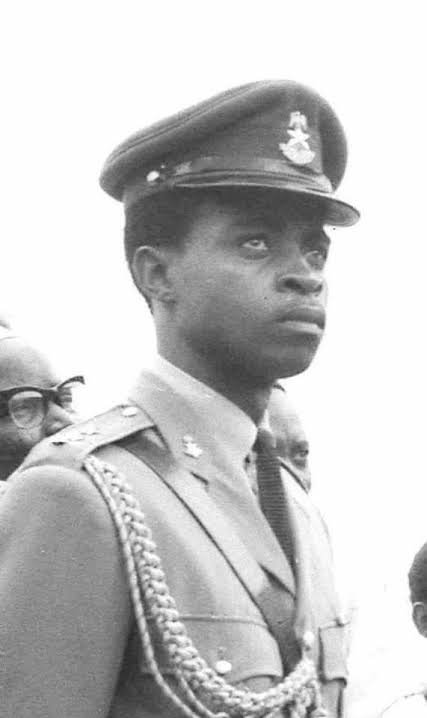
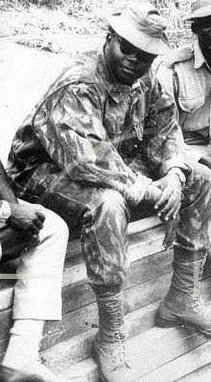
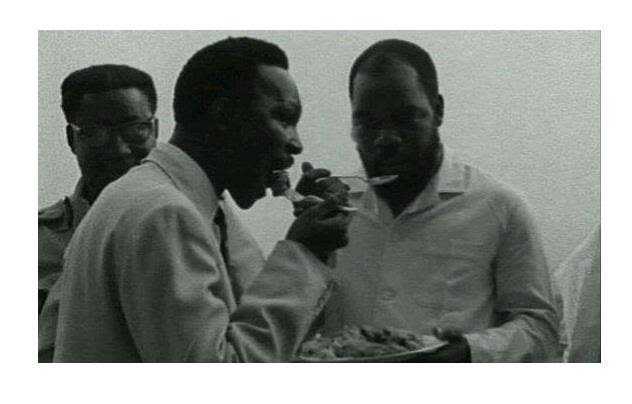
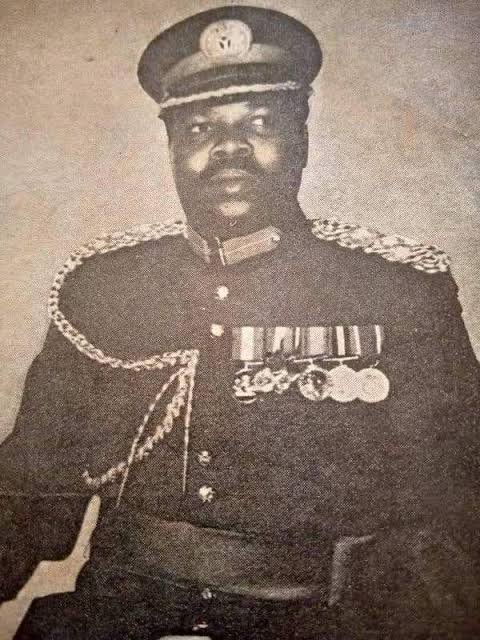
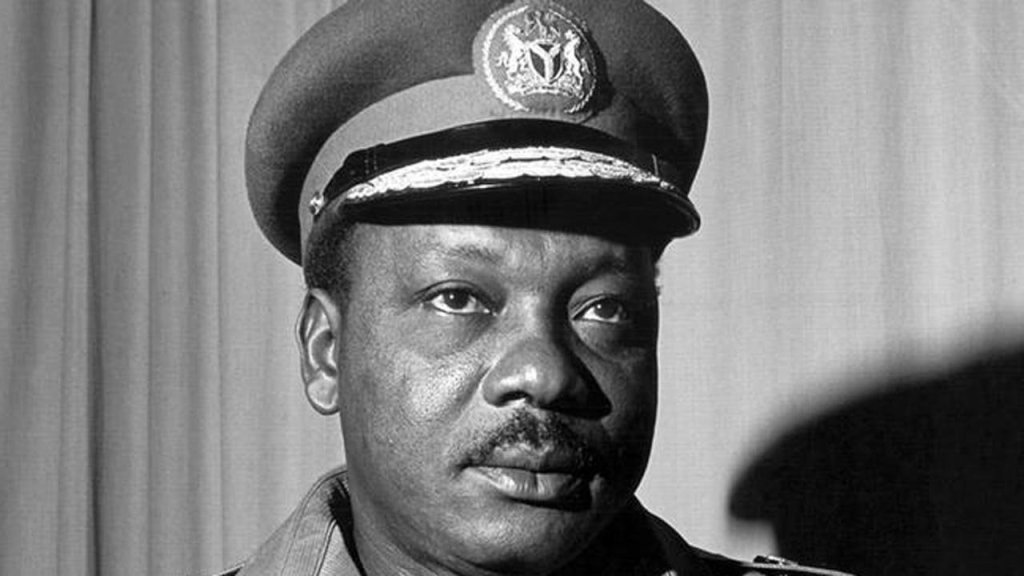
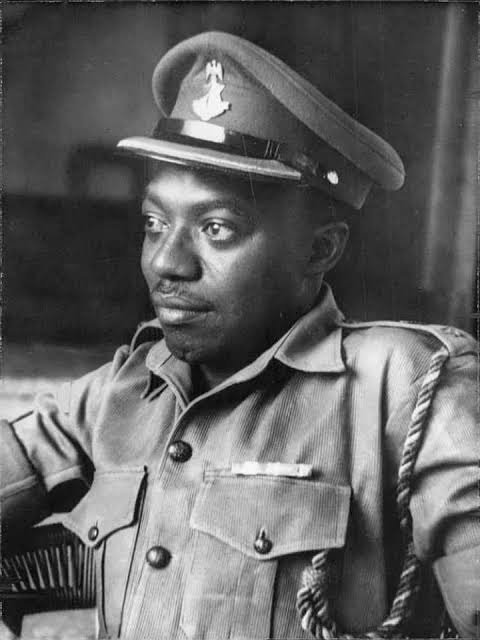
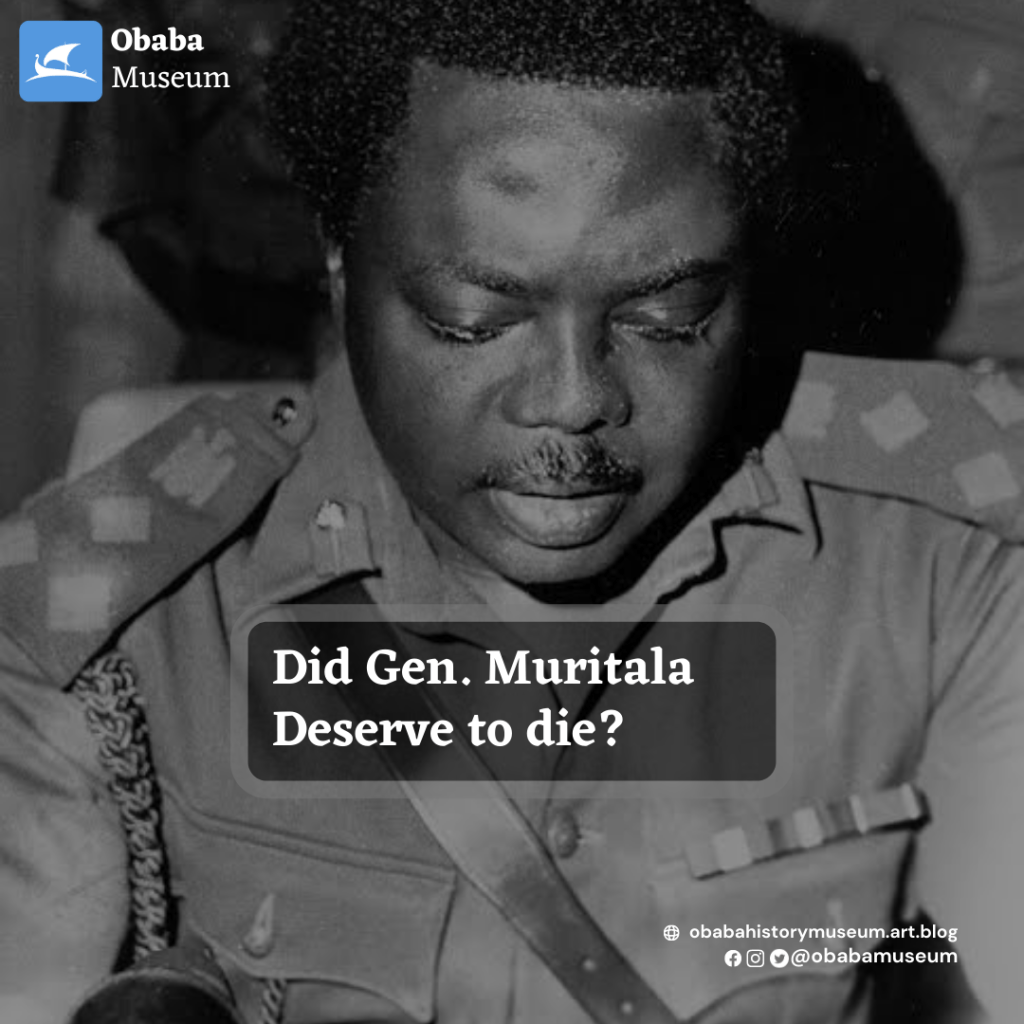
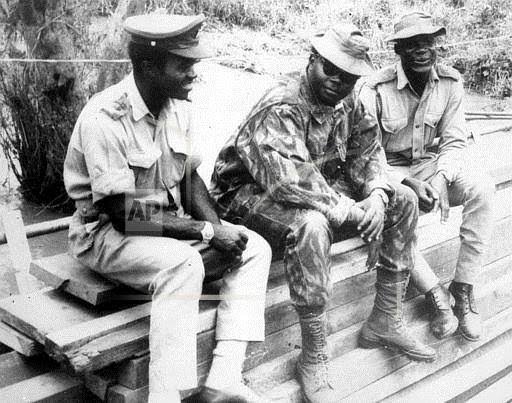
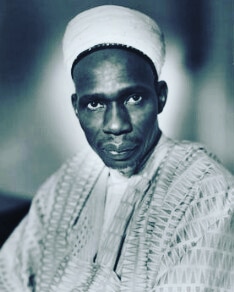
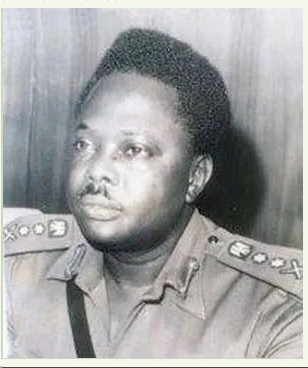
Lt. Col. T. Y. Danjuma Lt. Col Muritala Mohammed
The counter coup therefore launched fresh rounds of massacres, about 30 individuals were killed in political violence in Lagos between July 29-August 1, 1966, infact within the same period Nigeria had no Head of State for three days (July 29-31) till Gowon was sworn in on August 1. Realizing that their safety could no longer be guaranteed, some 250,000 ethnic Ibos fled the Northern Region to the Eastern Region.
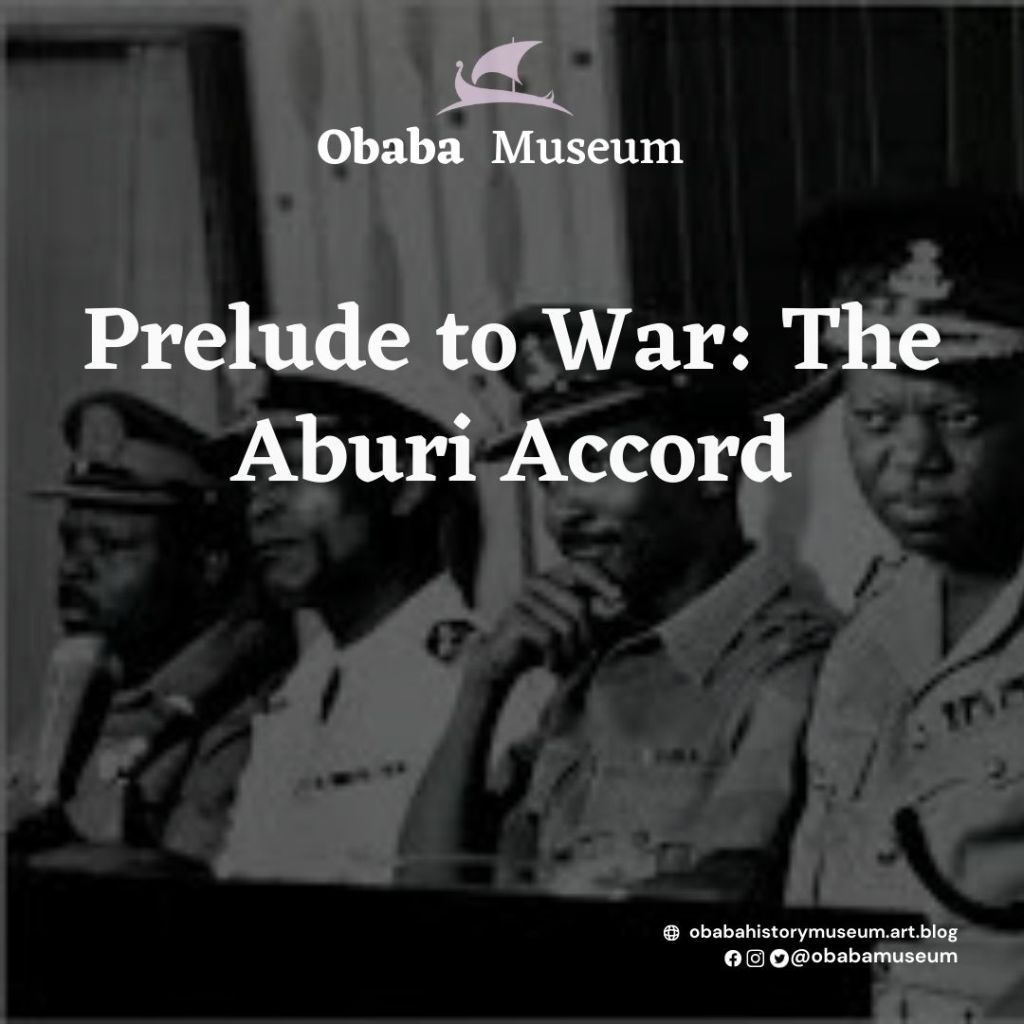
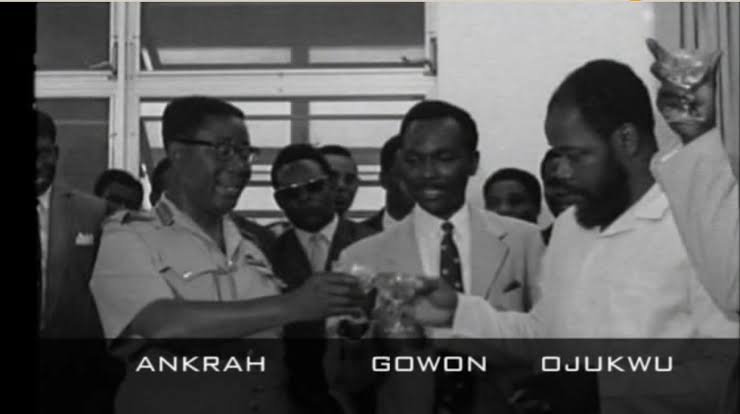
The military governor of the Eastern region, Lt. Col. Odumegwu Ojukwu, had already become somewhat disillusioned with the military government, in fact he refused to recognize Gen. Gowon as Head of the National Military Government due to the circumstances surrounding Gowon’s appointment. He had persistently refused to attend meetings of the Supreme Military Council (SMC) anywhere outside the Eastern region. A major argument of Ojukwu, was that his personal safety could no longer be guaranteed outside the Eastern region. According to the Daily Times, dated Tuesday, August 2, 1966, Ojukwu had, in a speech broadcast across the Eastern region, suggested that negotiations be held to allow the people of Nigeria determine the nature of their future association. Series of Conferences were held within the country with the objective of redefining the form of government acceptable to all sections of the country; the various regions took different positions with the Eastern region opting for a confederation. At the end it became clear that Ojukwu was planning the secession of the East from the federation, however, Gen Gowon kept looking for a way to pacify Ojukwu which would at the same not threaten the authority of the Federal (central) government. In search of a place agreeable to Ojukwu, the military leaders met at Aburi, Ghana the result of what popularly became known as the Aburi Accord. The Chairman of the Ghana Liberation Council, Lt. Gen. J.A Ankrah presided over the gathering.
The Aburi peace conference, lasting two days, was the final attempt by both parties, that is the Federal Military Government of Nigeria and The Government of the Eastern region, to find a solution to the ethnic cleansing perpetrated against the Easterners resident in the north amongst other issues of national importance. We understand that many Nigerians who at one point in time heard about this meeting do not really know the specific details of issues discussed, in order to clear the air we took special care to highlight them.
The Aburi Peace Conference could be regarded as a meeting of Nigeria’s Supreme Military Council at Ghana. In attendance were Gowon, who was Supreme Military Commander at the time, His Vice President, Commodore Joseph Edet Akinwale Wey, Governors of the four regions and Lagos State – Lt.-Col. David Ejoor, Lt.-Col. Hassan Katsina, Lt. Col. Chukwuemeka Ojukwu, Colonel Robert Adebayo, and Major Mobolaji Johnson. They were joined by their secretaries and the Permanent Secretary of the Federal Cabinet Office, S. Akenzua, who would ascend the throne of Benin as Oba Erediauwa 1.
According to official records of the minutes of the meeting kept by all sides, many issues formed the agenda, but only three of these would have ramifications on the future of Nigeria, and consequently, the civil war. The Armed Forces’ recruitment scheme had given the North an unfair advantage that became evident after the first coup. Ojukwu believed a re-organisation of the armed forces was necessary. Some decrees also vested absolute power on the federal government, Ojukwu and many of the regional governors wanted this condition to be reversed. The Kaduna pogroms that had displaced many Igbo from around the country were also, of course, a matter of necessity, on the table. In the aftermath of the July 29 counter coup many officers and civilians of non-northern origin, particularly the Igbo were being targeted for massive maiming and massacre.
After initial pleasantries, Gowon took charge of the meeting. Gowon and Ojukwu addressed suspicions that they were stockpiling weapons for war – a plane had crashed near Enugu carrying new weapons from a foreign supplier. The Federal Government was also amassing weapons in Kaduna, deliveries from purchases valued at over three million pounds. The council then adopted a declaration proposed by Lt.-Col. Ojukwu, that all members renounce the use of force to settle the Nigerian crisis.
Even though Gowon was the head of the Supreme Military Council, he showed an unusual willingness to agree to nearly all requests made by Ojukwu and the other regional governors. In fact, in the eyes of the other governors, especially Ojukwu, Gowon’s posture raised questions about whether his concessions were genuine, or the meeting was simply a ploy to bring the regions to the negotiating table as part of ‘due process’, to explore the option of dialogue, especially since most of the recommendations and agreements reached were never implemented.
One major defect of this peace accord was that both parties misunderstood the terms of agreement. While Gowon and other members of the SMC saw this as a meet up with Ojukwu to douse tensions in Eastern Nigeria and other regions, Ojukwu saw it as a platform for constitutional amendment.
Thanks for reading through. Let’s know what you think in the comments.
The story of Nigeria’s Civil war popularly know as the Biafran war, is a sensitive matter which has not really been settled. The remote and final causes of the war are even more pronounced in Nigeria today. It is more baffling that most major narratives/accounts of the Civil war have been written by ‘Biafrans’ themselves. This is a deviation from the usual trend you would expect where the Victors usually write the history of war. Why is it that not much consideration is being given to permanently settle the Biafran question?
Let’s trace some of the issues which eventually led to the outbreak of the war.
The counter coup of July 29 1966, mainly sponsored by Army officers of Northern origin, brought in Lt. Col. Yakubu Gowon a man from current day Plateau state. His installation as head of state allegedly brought in some ethnic balance within the army as he did not belong to any of the major ethnic group like the Hausa, Yoruba or Igbo. The coup of January 15, 1966 had been tagged an IgboCoup due to the fact that many of it’s casualties were of northern origin and most of it’s major perpetrators from the East. In fact, four out of the five Majors who spearheaded it were of Igbo origin. The counter coup therefore launched sprees of vengeful killing against Igbo people resident in the North.
R-L: Lt. Col Ojukwu, Gen. Gowon at Aburi, Ghana, 1967. (Gen Ankrah looks on)
Ironically, the Northerners who had dominated the Post independence politics in Nigeria feared the domination of another ethnic group. In fact a major strong argument of Lt. Col Ojukwu, the military governor of the Eastern region, was that Gowon did not merit the appointment he had taken on as the new head of state. Ojukwu argued that there were more suitable and qualified senior officers in the Army. An example was Brigadier-General Babafemi Ogundipe the Chief of Staff and next in line to Major-General Ironsi. The truth however was that the Northern hegemony in Nigerian politics had already been established underground. In fact there were really no northern officers who were willing to take orders from the Yoruba General.
Brigadier-General Babafemi Ogundipe
One of the immediate triggers of the Counter coup was Decree 34 which abolished Federalism and introduced the Unitary system of government. In effect power was being concentrated in the central government and all appointment would be rather on merit than Federal character. Of course the allegiance of citizens would no longer be to their respective states but to the central government. The Decree was promulgated on May 24, 1966 by then Head of State, Major General Ironsi and was called Unification Decree even though some critics (particularly northerners) at that time labelled it the De-unification Decree.
Major General Aguiyi Ironsi
There was widespread demonstration in many parts of Northern Nigeria at that time. On his return to Kaduna on May 27, Col. Hassan Katsina was besieged with demands for an explanation. It was feared that in a unified service, Northerners would be at a disadvantage. It was no consolation that the Decree provided for the delegation of appointments and promotions, except the most senior, to Provincial Civil Service Commissions.
Col. Hassan Katsina
Although General Gowon, the next Head of State, revoked Decree 34 on August 31, 1966 through Decree 9, a huge semblance of the Decree is still effective in Nigerian federalism today, however, the difference is that the Northerners are now more at an advantage than other sections of the country.
Thanks for reading through. In my next article I would show you the effects of the counter coup and how it eventually led to the civil war. We would love to know your view, kindly drop your comments below. Do have a lovely day
Sleep disorders are sleeping patterns that often negatively affect the health of an individual. They vary in terms of symptoms and characteristics. Some major sleep disorders are discussed below:
Insomnia
Insomnia is characterized by the recurring difficulty to fall or remain asleep despite motivation and means to do so. People with Insomnia also experience excessive daytime sleepiness and other cognitive impairments while they are awake. Insomnia is considered a chronic condition when patients exhibit symptoms at least three times per week for at least three months. Based on recent statistics, up toone- third of adults live with some form of insomnia. Some types of Insomnia include:
Sleep-onset Insomnia: Occurs when people have difficulty falling asleep, even when they are tired.
Sleep maintenance Insomnia refers to difficulty staying asleep during the night.
Mixed Insomnia is a hybrid condition characterized by sleep-onset and sleep maintenance insomnia symptoms.
Sleep Apnea
Sleep Apnea is a common sleep-related breathing disorder that occurs due to blockage of the upper airway. People with this condition often wake up choking or gasping for air. Heavy snoring is another common symptom. Like other sleep disorders, Sleep Apnea can cause excessive daytime sleep fatigue, as well as various cognitive impairments. Most Sleep Apnea cases fall into one of the following two categories:
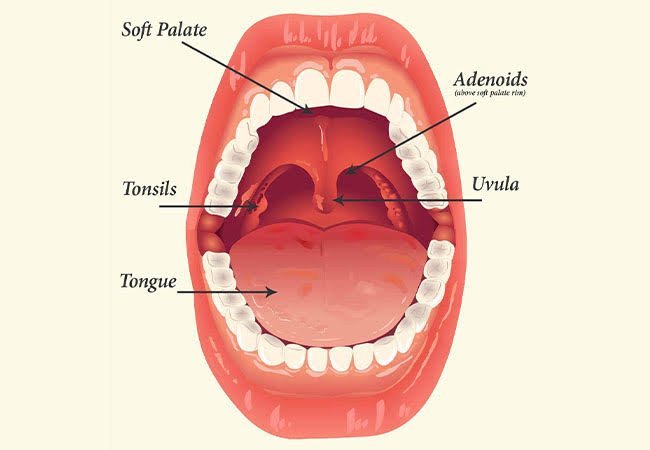
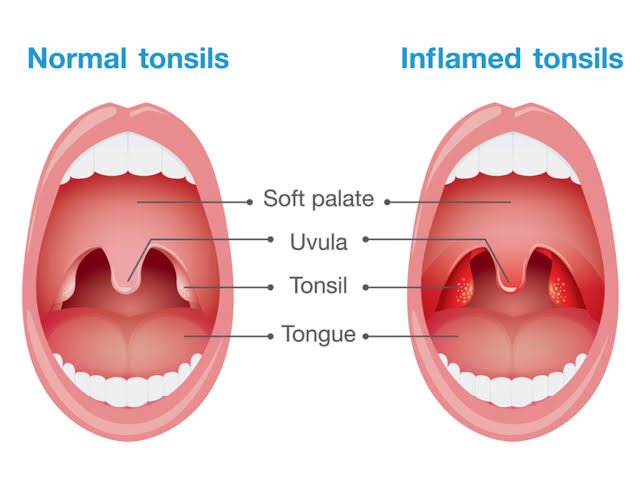
Obstructive Sleep Apnea (OSA) is caused by a physical obstruction that blocks the upper airway. This obstruction may be attributed to large tonsils or adenoids, fluid buildup from advanced heart or kidney failure, or genetic syndromes that affect facial structure such as cleft palate. Obese people with fat deposits around their neck are also at a higher risk of OSA, and sleeping on the back can lead to Apnea episodes if the tongue falls back into the throat. For many patients, Continuous Positive Air Pressure (CPAP) therapy is the most effective treatment.
Central Sleep Apnea (CSA) occurs when the brain stops sending signals to the muscles that control breathing, leading to choking episodes during the night. As with OSA, obesity is a common risk factor for CSA. The condition may also affect people who have experienced a stroke, brain infection, and other medical problems with the brain stem, as well as those who take narcotic painkillers and other sleep-inducing medications. CPAP (Continuous positive airway pressure) therapy is often prescribed for CSA, though some patients find Bi-level Positive Air Pressure (BiPAP) therapy more effective.
Narcolepsy
Narcolepsy is a sleep disorder that makes people feel excessively tired during the day despite getting an adequate amount of rest the previous night. This can lead to the irrepressible urge to sleep, culminating in “sleep attacks” that typically last for a few minutes. Over time, Narcolepsy can also cause sleep-onset and sleep maintenance problems. The condition known as Narcolepsy Type 1 often includes Cataplexy, or a sudden loss of muscle tone that causes people to fall or slump over as they nod off. Sleep attacks also occur with Narcolepsy Type 2, but Cataplexy is not present.
Restless Leg Syndrome (RLS)
RLS is a type of sleep-related movement disorder that affects people. Also known as “Willis-Ekbom Disease”, RSL is characterized by throbbing, itching, and other painful sensations in the legs and powerful urges to move the legs while they are at rest. People with RLS typically experience the strongest symptoms in bed, putting them at an increased risk for sleep-onset and sleep maintenance problems. There is no cure for RLS, though lifestyle changes, moderate exercise, and nighttime stretching can help some patients manage their symptoms.
Excessive Daytime Sleepiness (EDS)
EDS is defined by feelings of intense grogginess during the day that can compel people to sleep at inopportune times. People who feel excessively groggy during the day may also be more prone to errors and accidents. A wide range of medical and psychological conditions can lead to EDS, such as Diabetes, Hypothyroidism, Chronic Pain, Depression, and Anxiety. Other causes include certain sleep disorders like Sleep Apnea and Periodic Limb Movement Disorder. EDS is believed to affect up to 18% of the world’s population.
Parasomnia
A Parasomnia is a sleep disorder that causes abnormal behavior while sleeping. The behavior can occur during any stage of sleep, including the transition from wakefulness to sleeping and vice versa. Examples are :
Sleepwalking
Sleepwalking, or Somnambulism, is when you walk around while sleeping. It’s a common Parasomnia. It might also involve sleep talking or doing normal activities around the house.
Often, sleepwalking occurs early in the night, although it can happen during daytime naps.
Sleep Talking
Another common Parasomnia is Sleep talking, also known as “Somniloquy.” It happens when you talk while asleep.
Sleep talking can involve a wide range of talking, from mumbling to full conversations.
Unlike Sleepwalking, Sleep talking can happen during any part of the night. The talking is usually easier to understand in the lighter stages of sleep.
Nightmares
Nightmares are troubling, intense dreams that cause anger, anxiety, or fear. If the nightmares frequently occur, it’s called “Nightmare Disorder.”
This Parasomnia can make it difficult to fall back asleep. In some cases, multiple Nightmares may happen in a single night.
Generally, Nightmares occur during REM (Rapid Eye Movement) sleep, when you’re more likely to dream.
A night terrors, or sleep terror, causes you to suddenly wake up in a terrified state. The terror can last from 30 seconds to 5 minutes.
Night Terrors
Night Terrors are also associated with:
crying
screaming
fast heart rate
sweating
skin flushing
Unlike Nightmares, Night Terrors usually involve little to no dream activity. Night Terrors also typically happen in non-REM sleep.
Bedwetting
Bedwetting, or Nocturnal Enuresis, is involuntarily urinating during sleep. It’s most common in children, especially in kids younger than 6 years old.
Usually, Bedwetting occurs when the bladder has more urine than it can hold. Some cases don’t have an underlying cause, while others are due to conditions like urinary tract infections.
Confusional Arousal
Confusional Arousal is when you wake up in a very confused state. You might have trouble understanding what you’re doing or where you are.
Other symptoms include:
slow speech
poor memory
crying
slow reaction time
Teeth Grinding (Sleep Bruxism)
In Sleep Bruxism, you clench or grind your teeth while sleeping. These behaviors can cause:
tooth pain or sensitivity
jaw, face, or neck soreness
earache-like pain
What are the best treatments for sleep disorders?
Depending on the type of sleep disorder you have (with respect to their underlying causes), your doctor may recommend a medical treatment that can include:
Sleeping pills or Melatonin supplements
Allergy or cold medication
Medications for underlying health issues
An assistive breathing device or surgery (usually for Sleep Apnea)
A dental guard (usually for Teeth Grinding)
Tonsillectomy in case of enlarged tonsils which might be obstructing breathing
Apart from the above, making lifestyle adjustments can also improve your quality of sleep, especially when combined with medical treatments. You may want to consider:
Adding more vegetables and fish to your diet, while reducing sugar intake
Exercising to reduce stress and anxiety
Establishing a regular sleeping schedule and sticking to it
Drinking less water before bedtime
Limiting caffeine intake, especially in the late afternoon or evening
Cutting back on tobacco and alcohol use
Eating smaller, low-carbohydrate meals before bedtime
In all, making good effort towards tackling these sleep disorders will go a long way. Remember, health is wealth!
Recently, I’ve had a lot of baby pictures. My friends say they look great on me and that I would make a great dad. But one thing those babies and I share in common is being cute and clean, argue with your phone😂, lol. I just realized that there are quick decisions you subconsciously make upon sighting a baby which often determines whether or not you’d want to carry them.
The Baby’s hygieneand Demeanor
Have you seen a cute little baby, so clean and smiley, you’re so captivated by his/her sight that you can’t resist smiling back and sometimes approaching them for quick greetings 😊. On the other hand you see another with dirty clothes and flu running down the nostrils and you silently pray that he/she doesn’t run towards you, not that you’re scared of baby dirt but some mothers are just poor at giving adequate care to their kids. Most times the baby’s hygiene is a reflection of the mom.
The Mother’s Demeanor
This reminds me of an occasion when myself and ‘a baby in arms’ were smiling and waving to ourselves from a distance then suddenly an angry looking mom turned her face towards me, omooo, I quickly looked the other side and continued my long walk to freedom. There are quite a lot of babies we salute simply because their moms are friendly and smiley. Reminds me of a nursing mom at my local church, she’s always smiling. In fact, the positive energy is so contagious, that her baby takes a double dosage of it.
Is the baby well padded?
I remember one of those occasion where I was carrying this cute little baby and all of a sudden, he soiled my clothes with watery poo😂. Sorry for the graphic description. But this is another factor we mostly consider before carrying them, does the baby have his/her diaper on, so there isn’t any awkward moment.
Is Your Energy Level a match with the Baby’s?
Like me, if you do love babysitting, you definitely have come across one whose energy level surpasses yours, Nigerians would say ‘power pass power’😂. I’ve had my fair share especially due to my likeability amongst the baby population, lol. I Remember one of such times; a baby kept clinging to me when I wanted to drop her 😆, she didn’t want to go back to her mom yet (omo see wahala o🤣), I had to just carry her about and act like a dad, lol.
The Age and Weight of the Baby
Most people are scared of newborns due to the fragile nature, I personally feel so emotional 🤧🤗 when I see a very tiny baby, especially those ones who don’t open their eyes too often. So not many people have that emotional strength to carry newborns for long. On the other hand there are certain babies who grow so fast, you wonder if you’re actually carrying an eight months old and not a two years old🤣(reminds me of my kid bro). Well that shows good nutrition.
These are few things I’ve observed, if there are others you feel I haven’t mentioned please share them in the comments section.
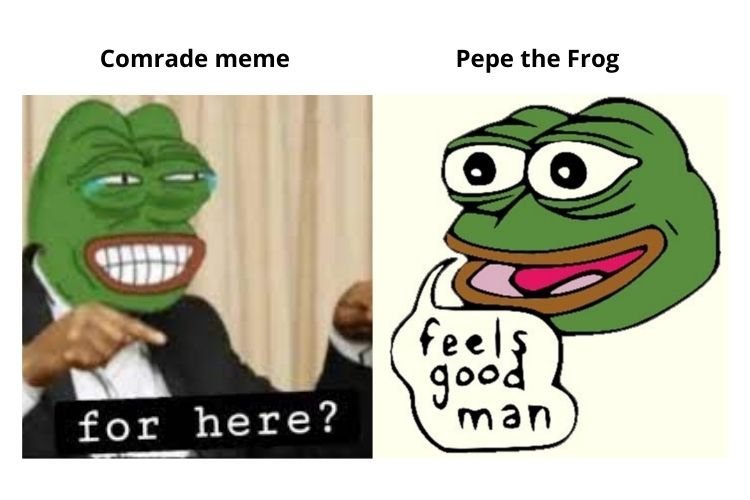
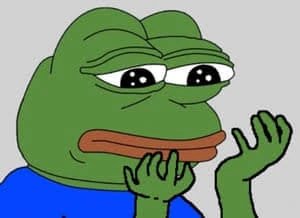
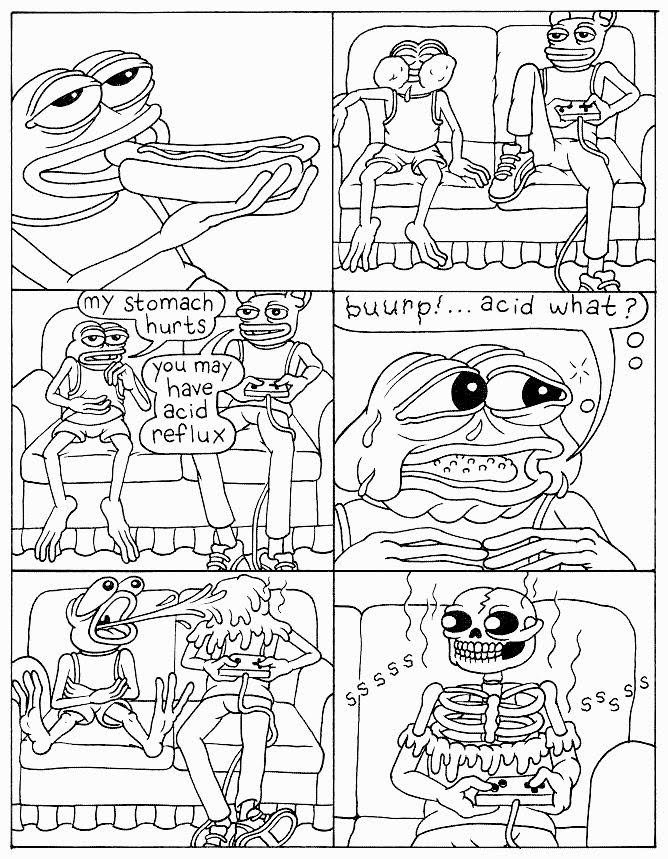
It’s really funny how the green frog🐸 has gone viral on the internet, in fact, there is hardly any meme lover who doesn’t have one with the frog who most of us know as ‘comrade’, I’m laughing hard typing this. Well it’s really getting out of hand, majority of my WhatsApp stickers feature our ‘comrade’ and the funny thing is there are quite enough stickers available for any message you would like to convey. If you ask me, I would tell you that memes and stickers are now becoming preferable to emojis.
But how did our comrade become so popular overnight, who’s the creator of this frog character?
Well we’re about to give answers. Just sit tight, relax as we begin the gist.
I recently decided to trace the origin of our comrade only to find out his real name is Pepe the frog. He became an internet meme when his popularity grew across different social media like Myspace, Gaia online and 4chan in 2008. On 4chan, various illustrations of the frog creature have been used as reaction faces, including Feels Good Man, Sad Frog, Angry Pepe, Smug Frog and Well Meme’d. By 2015, he had become one of the most popular memes used on 4chan and Tumblr.
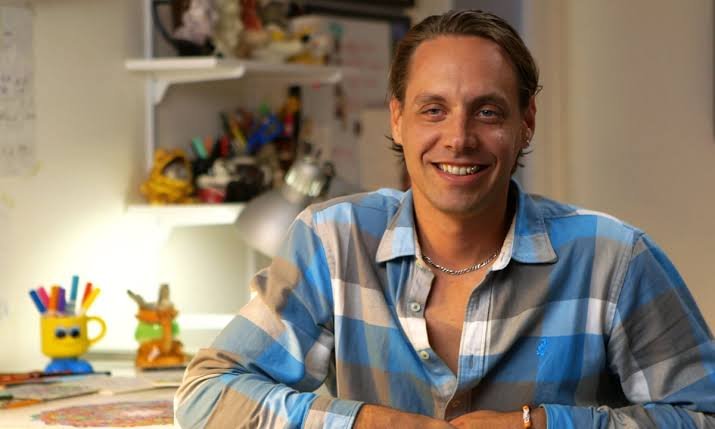
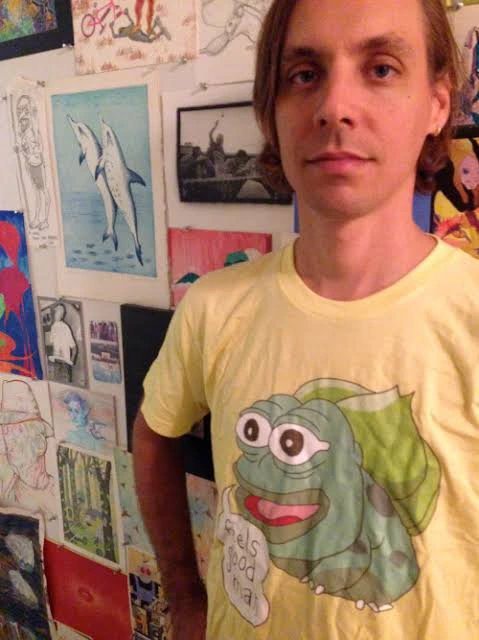
Matt Furie (Creator of ‘Pepe the Frog’ character)
Pepe the frog was created by an American artist and cartoonist Matt Furie in 2005. It gained it’s meme usage from his comic Boy’s Club #1. The comic featured Pepe, Brett, Andy and Landwolf. He shared his comic in a series of posts on Myspace in 2005.
In 2014, some images of Pepe were shared on social media by celebrities like Katy Perry and Nicki Minaj. When Pepe became popular, 4chan users started referring to the particularly unique version of the sticker as “Rare Pepes”. In 2015, Pepe was number 6 on Daily News and Analysis list of the most popular and important meme on Twitter.
Pepe stickers can now be seen on WhatsApp since the creation of sticker makers. They come in handy especially in expressing feeling or thought without having to type or engage in any verbal communication (of course a picture is worth a thousand words, lol).
Thanks for reading through, we hope you enjoyed the read.
We know you have at least 6 different types of comrade sticker on your WhatsApp favourite list. Comment down below your favourite sticker with a picture of it.
Getting enough sleep is essential for helping a person maintain optimal health and well-being. When it comes to an individual’s health, sleep is as vital as regular exercise and eating a balanced diet.
Sleep can be explained as a state of altered consciousness during which an individual experiences minimal activity and general slowing down of the body’s psychological processes. Below are highlighted facts about the importance of good sleep:
IMPORTANCE OF GOOD SLEEP
1. Promotes better productivity and concentration
2. Lowers weight gain risk
4. Greater athletic performance
5. Lowers risk of heart diseases
3. Helps to promote better calorie regulation
6. Improves social and emotional intelligence
8. Lowers inflammation
7. Prevents depression
9. Leads to a stronger immune system, etc.
Sleep needs vary from person to person, depending on their age. As a person ages, they typically require less sleep to function properly.
The breakdown of sleep is as follows:
Newborns (0–3 months): 14–17 hours
Infants (4–12 months): 12–16 hours
Toddler (1–2 years): 11–14 hours
Preschool (3–5 years): 10–13 hours
School age (6–12 years): 9–12 hours
Teen (13–18 years): 8–10 hours
Adult (18–60 years): 7-plus hours
Adult (61–64 years): 7–9 hours
Adult (65+ years): 7–8 hours
As well as the number of hours, the quality of sleep is also important. Signs of poor sleep quality include:
Waking up in the middle of the night.
Still not feeling rested after sleeping for an adequate number of hours.
Some things a person can do to improve sleep quality are:
Avoid sleeping in when you have had enough sleep.
Going to bed around the same time each night.
Spending more time outside and being more active during the day.
Reducing stress through exercise, therapy, or other means.
In Summary
Sleep is a vital, often neglected, component of every person’s overall health and well-being. Sleep is important because it enables the body to repair and be fit and ready for another day. Getting adequate rest may also help prevent excess weight gain, heart disease, and increased illness duration. So, no matter how busy your day may get, make it a duty to sleep well.
Dyslexia has been around for quite a long time and has been defined in different ways. In 1968, the World Federation of Neurologists defined dyslexia as “a disorder in children who, despite conventional classroom experience, fail to attain the language skills of reading, writing, and spelling commensurate with their intellectual abilities.” The International Dyslexia Association offers the following definition of dyslexia:
Dyslexia is a specific learning disability that is neurobiological in origin. It is characterized by difficulties with accurate and/or fluent word recognition and by poor spelling and decoding abilities. These difficulties typically result from a deficit in the phonological component of language that is often unexpected in relation to other cognitive abilities and the provision of effective classroom instruction. Secondary consequences may include problems in reading comprehension and reduced reading experience that can impede growth of vocabulary and background knowledge.
Dyslexia is the most common learning disability in children and persists throughout life. The severity of dyslexia can vary from mild to severe. The sooner dyslexia is treated, the more favorable the outcome. However, it is never too late for people with dyslexia to learn to improve their language skills.
Dyslexia can go undetected in the early grades of schooling. Children can become frustrated by the difficulty in learning to read. It is important to note that other problems can disguise dyslexia such as a child may:
Show signs of depression and low self-esteem
Have behavior problems at home, as well as at school that often manifest
Become unmotivated and develop a dislike for school, and their success may be jeopardized if the problem remains untreated
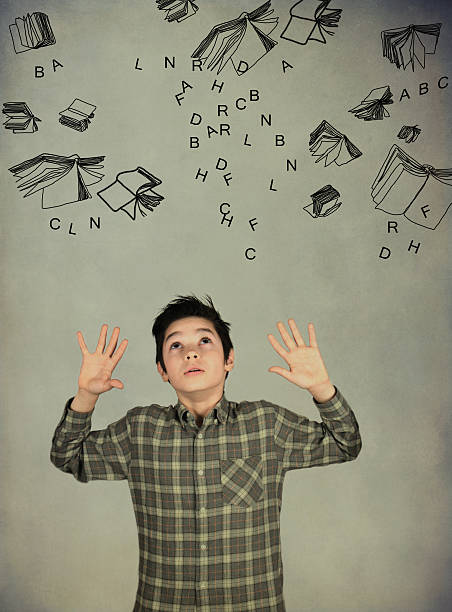
Children with dyslexia have difficulty in learning to read despite traditional instruction, at least average intelligence, and adequate motivation and opportunity to learn. It is thought to be caused by impairment in the brain’s ability to process phonemes (the smallest units of speech that make words different from each other). It does not result from vision or hearing problems. It is not due to mental retardation, brain damage, or a lack of intelligence.
The causes of dyslexia vary with the type. In primary dyslexia, much research focuses on the hereditary factors. Researchers have recently identified specific genes identified as possibly contributing to the signs and symptoms of dyslexia. This research is very important because this may permit the identification of those children at risk for developing dyslexia and allow for earlier educational interventions and better outcomes.
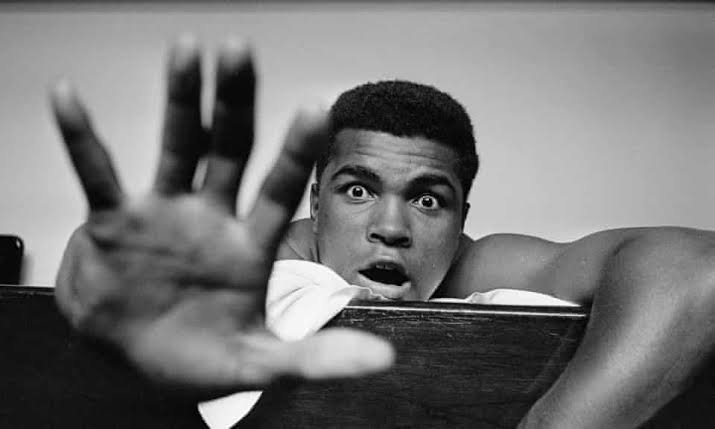
Muhammad Ali
If you’re still reading, thank you! As a reward, we would be giving you some mind-blowing facts about dyslexia High-performing dyslexics are very intelligent, often out-of-the box thinkers and problem-solvers. One important thing to Note; you don’t outgrow dyslexia, once you’re diagnosed, it is with you for life. However many great celebrities you know today have dyslexia, in fact the great Muhammad Ali is one of the people you would never had suspected due to his great oratory and boxing skills. Yes, it also left me in shock, lol.
Many great personalities in history were dyslexic, some include; Winston Churchill, Steve Jobs, Thomas Alva Edison, Walt Disney, Albert Einstein, Leonardo Da Vinci and many others. Even Tom Cruise, the popular stuntman in the movie ‘MissionImpossible’, is dyslexic. So if you have a dyslexic friend, colleague or child, you could actually be looking at a super hero.
Thanks for reading through, we hope you enjoyed the ride. Please let’s know what you think about this in the comments.
If you’re sick of hearing about the NFTs, you’re not alone; I’m so tired of the ‘overhype’ that’s why I decided to undertake my own research and simplify it so that even people with non-technical knowledge can grasp it.
So, what exactly is NFT?
It means Non- Fungible Token. Something that is non fungible cannot be replaced, recreated, or copied by another person. The majority of us assumed NFTs were all about images, and we were accurate. NFTs, on the other hand, cover all types of digital content, including movies, audios, and images. Let me now provide a lengthy explanation.
NFT (Non Fungible Token) is a unit of unique data that uses technology ( based on unique data identification) to enable digital assets (films, games, photos, audio, and so on) to be saved, recorded, and validated on crypto currency blockchains, especially the Ethereum blockchain.
What’s Blockchain? Blockchain is a way ofrecordinginformation in a way that makes it difficult/ impossible to change, hack, or cheat the system.
There are two things we usually talk about when discussing NFTs; Smart contracts and Assets.
Smart contract Imagine you design a program and you give it an instruction to send your images to your client only when they pay 50$. This is an instruction set and the program won’t initiate any transactions until that requirement has been met. This is almost how a Smart Contract works. A Smart contract is a computer program that automatically carries out (execute in technical language) instructions, or documents important actions according to the set ‘Terms of contract/agreement’.
Assets This could be regarded as the digital product itself, do I really need to explain further 🤔? Okay, it’s usually regarded as the art; usually NFT creators are called artists and their artworks are the most common product sold on the platform.
Note: Only the smart contract is stored on the blockchain, the artwork/asset isn’t because storing that much data is too expensive and requires much labor.
What Makes NFT So Funny – It’s how they operate, which leads to the next question.
How do they function? The content/asset is owned by the person who purchases the non-fungible token, yet it can still travel through the internet. An NFT can gain popularity in this way since the more it is seen online, the more value it creates (that’s what they said o). When the item is sold, the original creator receives a 10% cut, with a tiny portion going to the platform and the rest going to the current owner. On an NFT marketplace, creators mint their works such platforms include; Opensea, superRare, Foundation etc.
The act of minting is the creation of a smart contract on an asset, such as NFT, which will be stored in the blockchain. The smart contract:
1. identifies the creator of the artwork;
2. ensures that the artwork’s creator and other parties are paid royalties each time it is sold.
What are the sources of income for these platforms? The smart contract provides them with a modest percentage of royalties. This method, however, is not without flaws, and some parties may end up with no royalty.
Relevance of NFT Its main importance is that it makes owning and selling digital contents easy
Obstacles and Challenges
1. Minting Fees: The cost of minting an NFT as an artist is pretty high, and guess what? The cost of minting rises as the Ethereum network becomes more crowded and more labor is required. Gas fee is the financial expense of this effort. It currently costs between $60 and $150, depending on the complexity of the project. On average, it costs around $70. Platforms like as Polygon have recently opened up options for something called Lazy. minting. This minting may be done for as little as $5, but there are other stories to go along with it.
2. Theft: some artists who chose not to generate NFT or who lacked the resources to do so have had their work minted by unknown parties, and only a few sites truly authenticate the originator of a piece before selling it.
3. There is inadequate data to determine if NFTs assist only a select few or the entire population.
My next article is going to be on the difference between NFT and Crypto currencies. Thanks for reading through, hope you enjoyed the ride🤗. Let’s know what you think in the comments.
“Not through speeches and majority decisions will the great questions of the day be decided—that was the great mistake of 1848 and 1849—but by iron and blood (Eisen und Blut).”
Otto Von Bismarck( September 1862)
In a bid to foster the unification of Germany, German Tactician and diplomat Otto Von Bismarck made this statement after he had assumed the office of minister president and Foreign Minister of Germany.
Whenever military power or force is being suggested in a parliament, this statement is often cited. In today’s post, we want to explore that statement and see how much development are really achieved – or like the Chancellor said ‘questions’ are really answered- by wars.
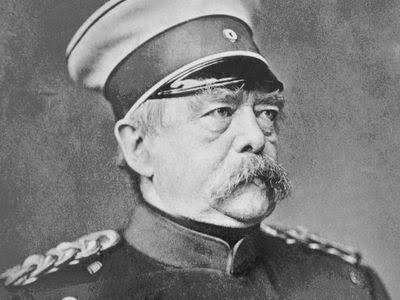
Otto Von Bismarck (The Iron Chancellor)
According to New York Times, humans have only been at peace for 8% of recorded history. With wars being so common, we’ll only be citing three events of wars for this post; the two world wars and the Nigerian civil war.
While this post doesn’t seek to glorify wars or trivialize the adverse effects on society, It aims to show that they are a necessary evil and as far as man stays on earth would most likely continue to occur.
The first war we will be using as a case study is the great war otherwise known as world war 1. This war was started as a result of brewing tensions between various European countries. The assassination of the Austrian Archduke and his wife by a Bosnian Serb could be seen as the official starter to the war. This war was named ‘The Great War’ as it was the war involving the most amount of nationalities known to man at that time.
As a result of this war, the map of Europe was changed forever. New countries, boundaries and territories were appeared. There was also quite a lot of development in science and even greater advancement in technology. Some of the changes include; tanks, aerial combat and traffic control, chemical and biological weapons, mobile X-Ray machines and many more in contrast to the traditional warfare characterized by swords, muskets, calvary and so on.
This was the war that also saw the declining influence of the British Empire as a world power and the birth of the United States. After the war, more people saw life as fleeting, hence, consumerism increased paving the way for more advertising agencies and research into consumer psychology.
Prior to the war, people were quite conservative and suspicious of technological advancement. However the war placed high urgency and necessity for rapid innovation in science and technology. The researches and technological developments made during the war allowed for a wider acceptance of innovations like KDKA the first commercial radio broadcast was now widely accepted.
The idea of daylight saving time is one interesting concept that became prominent and popularized by German soldiers who were able to increase military efficiency by saving more time.
The Second World War was even more popular than the first and wreaked more hovoc in Europe. In fact by the end of the war in 1945, the economy of Europe was in shambles. As a consequence Colonial rule could no longer be sustained, hence, many Asian and African countries became independent.
Despite the devastation in Europe, the Second World War brought even more Technological advancements than the first. Some of these were the foundations for modern day computers and mobile phone network. Among them are the Enigma machine, The Tunny, and the Lorenz Cypher which were developed by German engineers to share tactical information in codes. The Bombe, Turingery and Collosus were counter devices built by the British to decode and gain access to this intercepted German messages. The first officially recognized computer -The ENIAC- was also built for the war but wasn’t used as the war ended before it was fully developed. However it was used during the American- Vietnamese war.
In medicine, the world witnessed novel developments in vaccines and medication, some of which were the mass production and integration of Penicillin into medicine, utilization of blood plasma for medication in the major theatres of war.
In a bid to increase devastation and strike force of the military, various scientists were sponsored to carry out research on possible inventions such as Jet Engines, Controlled Nuclear Reactions (by Enrico Fermi while working on the atomic bomb),etc. The war also inadvertently gave birth to what would become known as Silicon Valley by two war time electrical engineers, Hewlett and Packard who subsequently established the the HP company. America’s role in the war also solidified her position as a new world power with the Soviet union also becoming a World Power.
The rise of both powers sparked mutual suspicion and competition which still characterise the America and Russia diplomacy today. Both nations have an advanced military and large stockpiles of nuclear weapons even as we speak today.
Industrially, the wartime period had the least unemployment rate as there were quite a ton of jobs. Don’t forget that this was a period of innovation in all fields due to the fact that it was in a bid to survive. In war situations, it could be the difference between life and death.
In Peace Keeping, the world learnt great lessons from the failures of The League of Nations. The United Nations succeeded the League which was not effective enough to prevent a second war. The European Union (firstly named European Coal and Steel community then the European Economics Community) was also formed to allow for an effective Balance of Power in Europe.
Another case study would be the Nigerian Civil War which began in 1967 and ended by January 1970. The war portrayed the speed with which a race could develop in wartime especially when it had more to lose from defeat. The Igbo people of Nigeria were one of the major players in this war and though they lost the war, they recorded laudable developments during that period. The knowledge and methods learnt then are still being applied and built upon not just in South-easterned Nigeria but even in Lagos, Nigeria’s major economic hub. This makes them one of the most innovative and industrially advanced tribe in Nigeria.
“Anyone who has ever looked into the glazed eyes of a soldier dying on the battlefield will think hard before starting a war.”
Otto Von Bismarck.
While I don’t agree with war, seeing that much of human existence has been plagued by it, I would say that it is still a necessary evil for human development. However, it can also be seen as a great way of ‘rebooting’ a country or even the world. Permit me to use this allusion for war; It is like a technological device or system which has been overloaded, working non-stop for a period of time then it shuts down unexpectedly or it freezes and has to be forcefully shutdown while multiple files are open and running. A lot of files, documents and programs would be closed and lost but when the system restarts, you can be assured that it would work better than it had before it was shutdown.
Like the system above, the outbreak of a war, be it accidentally or intentionally, is necessary as a reset for human systems as it closes down obsolete ones and opens up new ones. Sadly, a lot of lives, places and systems would be lost, however humans haven’t found a way to reset their structures and progress without it.
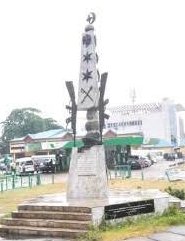
On the 13th of February 1976 (Forty six years ago) Nigeria’s Third military Head of State was assassinated on his way to work. It was a Friday morning just a day to valentine. He was without adequate security detail and was attacked while stuck in Lagos traffic. Today a national monument is erected at the exact spot where the General was shot. For those really familiar with Lagos, the small roundabout facing the old Federal Secretariat in Obalende, Lagos, circles a massive structure. This monument designed in the form of a military epaulette bears the rank of a four star general with two rifles below and the Islamic crescent above. This massive structure is called a cenotaph, commissioned over two decades ago at the spot of the gruesome act, to commemorate his assassination.
The cenotaph of Gen. Muritala at the spot where he was assassinated.
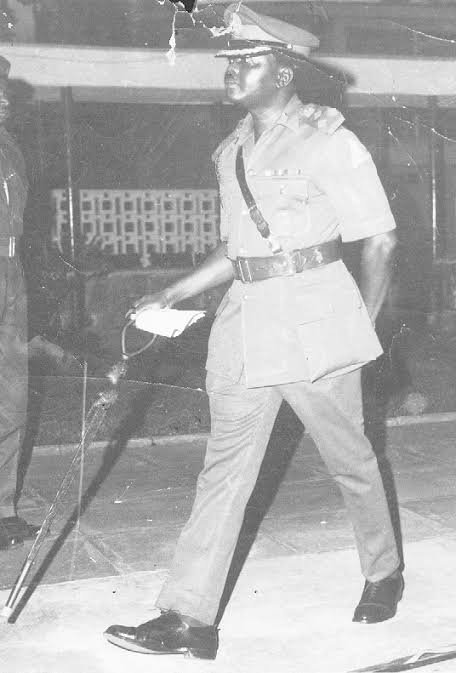
During his regime Nigeria presided over a period of rampant economic prosperity. He was one of the most charismatic figures in Post Civil War Nigeria; he was promoted to the rank of brigadier general in 1971, aged 33, becoming one of the youngest generals in Nigeria. In the coup d’état that brought him to power on July 29th 1975, he introduced the phrases ‘Fellow Nigerians’ and ‘with immediate effect’ to the national lexicon. Subsequent military coup address would be laced with these flowery lexicons.
In a short time, Muritala Muhammed’s policies won him broad popular support, and his decisiveness gave him the status of a folk hero. He was in fact the most widely celebrated Military Head of State among the common man in Nigeria. At the same time, his regime transitioned from being authoritarian into consensus decision-making with himself as the leader of a military triumvirate, alongside Generals Olusegun Obasanjo (the Chief of Staff Supreme Headquarters) and Theophilus Danjuma (Chief of Army Staff). The dictatorship softened and Muritala unveiled plans for the demilitarization of politics.
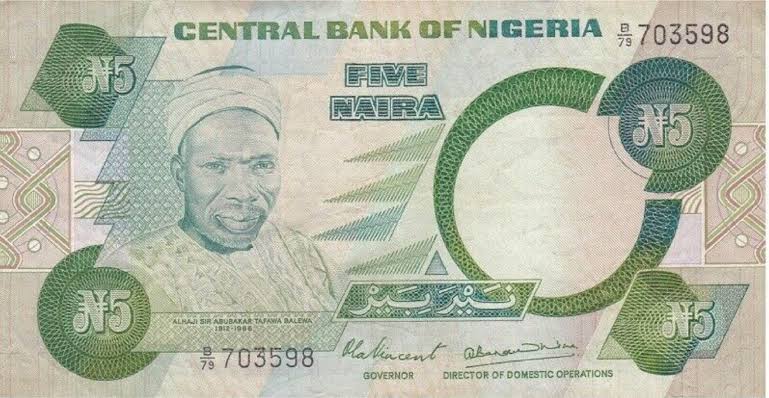
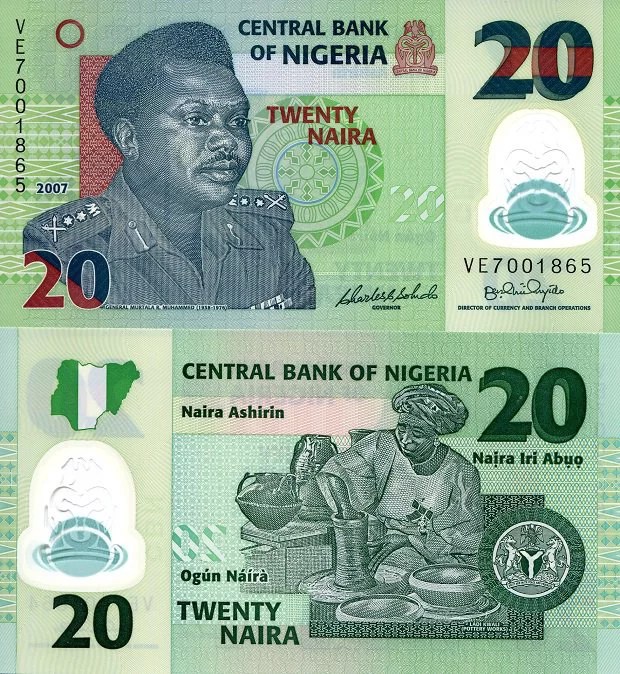
On October 1, 1978, two years after his death, he was declared a national hero alongside Alvan Ikoku, Sir Tafawa Balewa and Sir Herbert Macaulay. His portrait adorned a new twenty naira note introduced by his successor, Gen. Olusegun Obasanjo.
Muritala’s revolutionary personality is usually a topic for debate especially amongst the Igbo ethnicity, let me explain. Many Nigerians know him for his role in active leadership however there are few dark secrets you never got to know about him. One is his involvement in the Counter coup of July 29, 1966 alongside Theophilus Danjuma and other northern officers. The Federal troops under his command thundered into Asaba on the 5th of October 1967 to orchestrate what would later be known as the Asaba Massacre. The Biafrans had fallen back as the immediate commander, Col. Joe Achizia (a son of Asaba), opted to retreat to Onitsha rather than fight with nothing but a lorry load of cutlass. He blew up the Niger Bridge, paralyzing the battalion under Muritala’s command. Out of frustration and annoyance Federal troops gathered all male adults and teenagers to the village square for public execution. It turned horrendous on the 6th and became hellish on the 7th. It was regarded as a punishment for aiding Biafrans. About 1, 000 persons died in Asaba in those gruesome three days.
His involvement in the killings at Asaba severely betrayed his imperfection and lowered his cult-like status by many degrees.
Thanks for reading through, let’s know what you think in the comment section.
Few days ago, I met a lady who seemed friendly and smiley. I asked for her name which sold her out as Yoruba. However, her specific city of origin was somewhat unique. It was something I had never heard before. She said she was from Okuku in present day Osun, Nigeria. I told her I would definitely do a little finding on this settlement as there was really not much she knew about it. Perhaps we could both travel down there for a field research.
Immediately I got home, I searched the term ‘Okuku’ online and found a lot of other meanings, one of which was the Edo bridal hairstyle. Fortunately I finally found an article on a brief history of the settlement and how the name came about. Grab a seat and enjoy the gist.
Like most Yoruba settlement, Okuku town traces descent from Ile-ife, Oladile, the founder of Okuku was said to be a descendant of Oduduwa. It is said that he left Ile-Ife at the same time with Alara, Ajero and Orangun to settle and take possession of virgin lands. After series of conquests, they all settled leaving Oladile who remained a ‘lone wolf’.
Alara settled in Aromoko-Ekiti, Ajero settled in Ijero-Ekiti, and Orangun settled in Ila. Oladile was instructed by the Ifa oracle not to settle until he came across an exceptionally thick clump of palm trees. Eventually he found a completely uninhabited spot in a thick palm forest, near River Otin. He named the place “Iko-Ikin (Iko – a thick clump, Ikin – palm nuts), over time the word eventually metamorphosed to” Kookin”. In no time, Kookin grew to be a large and prosperous town because of new immigrants who trooped in from Further North. Legend has its that it grew to be an Iron Works Centre courtesy of its access to iron from the mines at Isundunrin near Ejigbo (in current day Osun, Nigeria).
Two tragedies informed the name Okuku as it became known as today: around 1790, Kookin fought and lost a battle called ‘Ijesha-Arara’ (Dwarfs Ijesha) with the warriors of Ijesha. There were few people who survived the war. As if that wasn’t enough, their disaster was compounded by water poisoning consequently upon drinking from Omi Amuku (Amuku River).
Oba Jala Okin led the survivors to a few kilometres towards Northern side of the ruins of Kookin to found another settlement which came to be called ‘Okuku’, derived from Oku to ku ku (Transliterated to mean remains of the dead). The peace of the new-found Okuku was disturbed once again by the Ilorin-Ibadan wars. It was not until after the war that Okuku once more enjoyed peace following Captain Bower’s Imposition of Peace in 1893. The Olokuku of Okuku Chieftaincy Declaration October, 1956, gave recognition to four ruling houses: 1 – Edun 2 – Oyewusi 3 – Oyeleke 4 – Oyekanbi Now, Okuku is the headquarters of Odo-Otin local government in Osun State, Nigeria. It is the nearest major town on the boundary between Osun and Kwara states. Among its immediate neighbours are Ikirun, Inisa, Ila-Odo (nearest to Kwara state) , Iba, Ijabe, Igbaye, Ekusa, Oyan and Erin-Ile (Kwara state)
Thanks for reading through. I’m sure you learnt something new today. If you would like to read more articles like this, subscribe to get notified whenever we publish. Don’t forget to leave a comment, let’s know what you think.
There are many questions we think about daily, often times we keep these questions at the level of imagination but you know it’s really a good idea to just share them so you could get answers or, at least, a good explanation/speculation. Today we would be treating the topic of the international passport, its origin and why it became a requirement for international journeys. Other related questions would also be addressed and if there are more questions you would love us to treat, feel free to drop them in the comment section below.
Let’s get started!
Picture of a Nigerian Passport
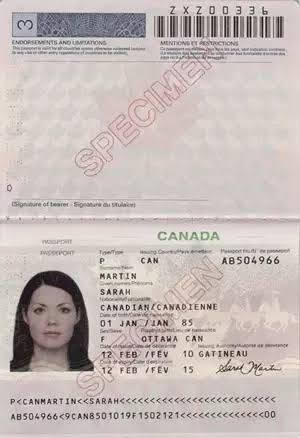
For the purpose of our gist, a passport is a travel document issued by the government to its citizens in order to verify the identity and nationality of the bearer for international travels. They generally come in small booklets that usually contain the bearer’s BioData, photograph and signature. There are several types of passports depending on the status of the bearer in their home country.
Front page of a Canadian Passport containing the details listed above.
But why do we even need a passport to travel around the world? What really necessitated the need to hold an official travel booklet which must be stamped on arrival or departure from an international border? Let’s do a brief throwback.
It’s 1920, the First World War ended barely two years ago, the League of Nations (equivalent of today’s United Nations) proposes the idea of a worldwide passport standard at the Paris Conference on Passports & Customs Formalities and Through Tickets of 1920.
During World War I, European governments had introduced border passport requirements for security reasons, and to control the emigration of people with useful skills. Prior to the war, even as far back as the biblical times, there had been the existence of international travel documents, permitting aliens to pass through or even reside in foreign lands. The Bible mentions Nehemiah’s procurement of such a travel document from the ancient Persian king Artaxerxes requesting the governors of the lands beyond the Euphrates to grant him safe passage to Judah. The purpose of Nehemiah’s visit, incidentally, was to rebuild the walls of Jerusalem. This is the oldest recorded mention of such a travel document dated around 445BC. Beyond the biblical mention of this letter, we do not have an existing copy or clue of its format or appearance.
However in the next episode, we would be featuring the earliest available records of travel documents.
To get notified as soon as it drops, subscribe/follow our blog.
MAN: You are leaving my house today for your father’s house!
WIFE: My dear husband what is my offence please?
MAN: you still have the audacity to talk back after four female children? You have not given me an heir and you want to keep staying in my house? You must be joking …
KING : My brother calm down and let’s discuss this issue.
Your wife is not guilty for giving you female children, you are the determinant on this matter.
MAN: een een! What do you mean?
KING: Chillax, Let’s talk about sex, Seriously. Not intercourse though – more about how genetic sex is programmed during development.
Sexual identity has been a trending topic lately, and unsurprisingly so, we are only now beginning to fully understand how mammalian sexual identity has evolved, and its dependence on the sex determination systems that allow biological development of sexual characteristics in different organisms.
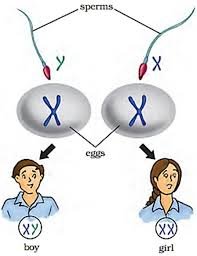
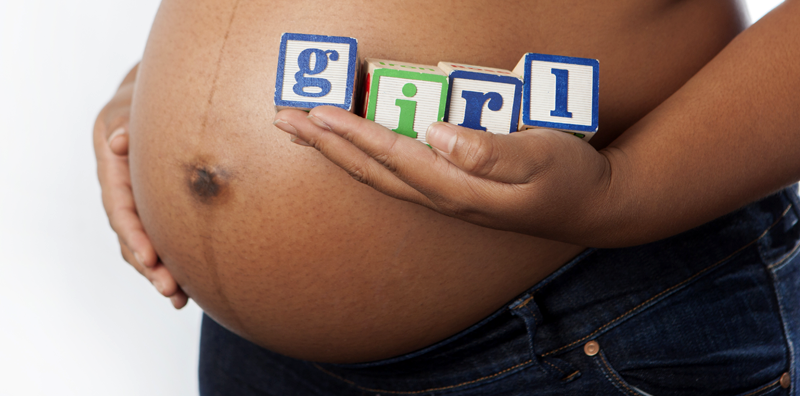
Biological sex in healthy humans is determined by the presence of the sex chromosomes in the genetic code: two X chromosomes (XX) makes a girl, whereas an X and a Y chromosome (XY) makes a boy. In this way, it is the presence or absence of the Y chromosome in a healthy human that differentiates boy from girl, you get the gist?
MAN: Hmmm 🤔
KING: Yeah, Humans have one pair of sex chromosomes. Women have two “X” chromosomes, while men have an “X” and a “Y”. The presence or absence of the “Y” chromosome is what determines the sex of a baby. When a healthy human is conceived, it receives one sex chromosome from the mother and one sex chromosome from the father. Since the mother only has X chromosomes to give, it should be obvious that it is the father’s cells that determine whether the baby will genetically be a boy or a girl. The father’s genetic code is delivered to the newly conceived individual by sperm cells which are generated in the father’s gonads by the process of meiosis.
Since women only have “X” chromosomes, all their eggs only have “X” chromosomes. However, because men have both an “X” and a “Y”, each of their sperm will carry one or the other. That means that the chromosome in the sperm that fertilises the eggs will determine the baby’s sex. So, ultimately the father determines the sex of the baby, even though he cannot control whether an “X” or “Y” reaches the egg first.
So man, you are responsible for the sex of your children, it’s what you released into her that she gave back to you. It is “garbage in garbage out”. Please pull your wife closer and show her love. It was never her fault.
MAN: Thank you very much KING, I have been fighting an unjust fight with a woman who loves me unconditionally. My wife I’m sincerely sorry, I had been ignorant for so long…
KING: Once a couple finds out they are expecting a baby, it is only natural for them to be curious if they will have a boy or a girl. HOWEVER BE INFORMED, STOP CAUSING UNNECESSARY BREAKS IN YOUR HOMES. Male or female, they are both the hand work of The Creator.
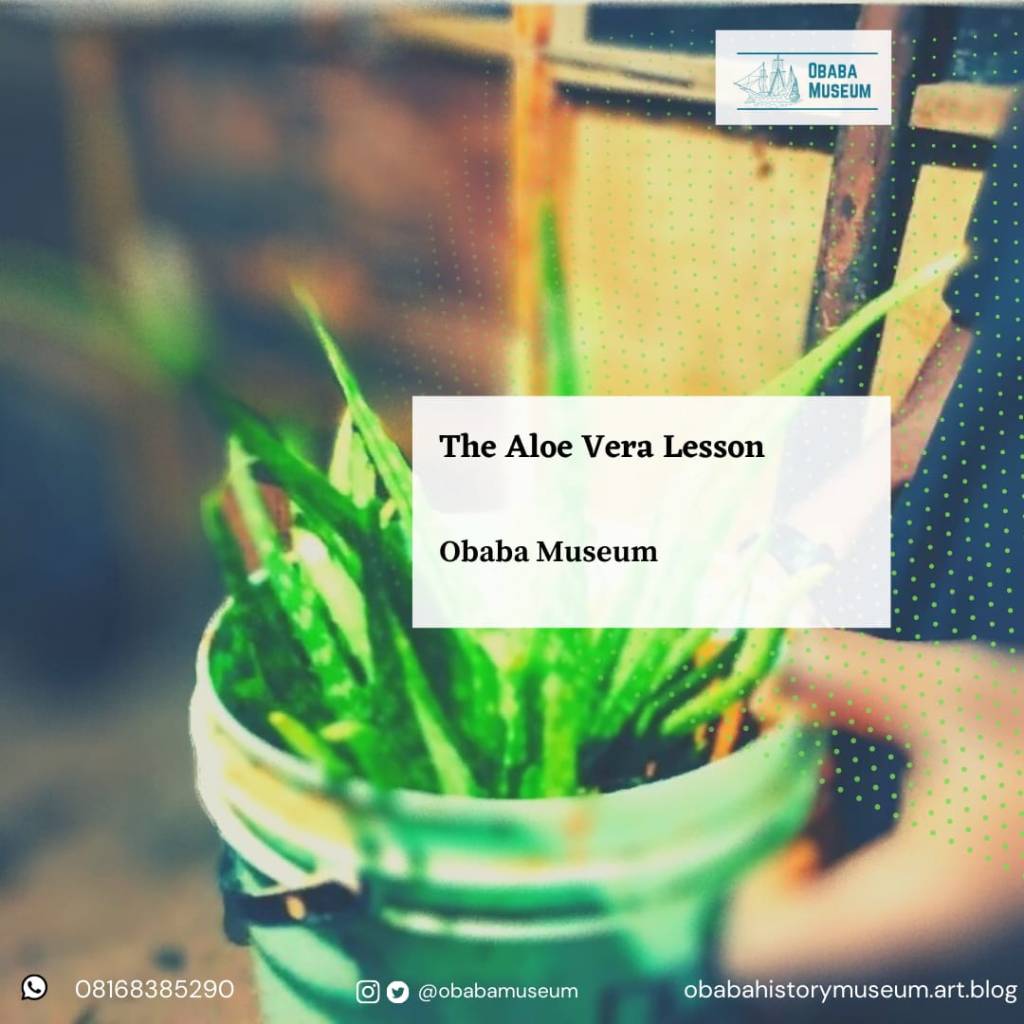
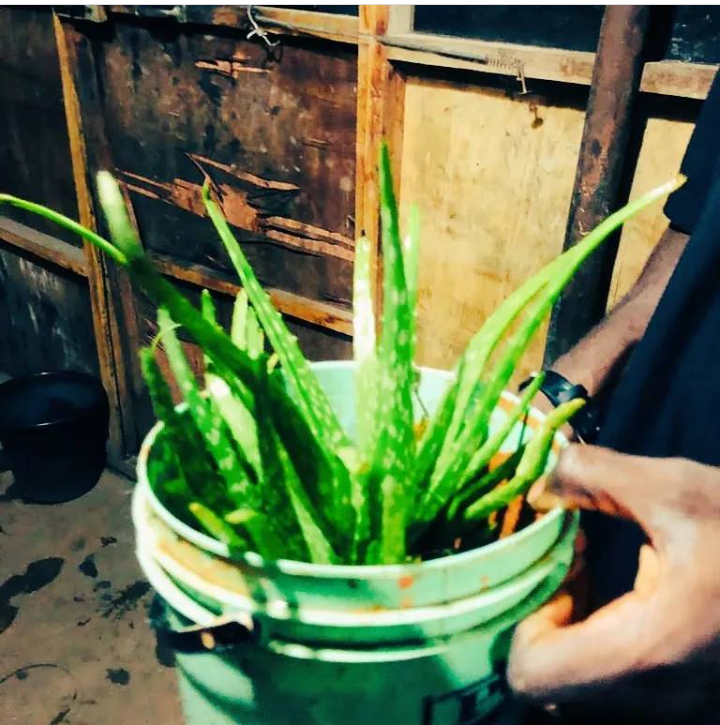
Sometimes ago I picked up the bucket containing my Aloe Vera plant. It felt really good to see how healthy it looked. I was so thrilled with the sight that I told my sister to take a snapshot of my Aloe with a healthy green look☺️. Flashback to the previous year when I planted it, I had concluded after few months that the shoot was death, I had in fact given up on it but just decided to leave it in the bucket because it was given to me by a big sister I love and respect so much. I was surprised to see after a long while that it had grown and spread out pretty well.
A deep reflection on this little incident made me realise that God uses various things especially nature to speak to us. There are many things I observed from the Aloe Vera asides the quality of perseverance and endurance. When our current circumstance feels like a wreck, the promise and hope of a great future is enough motivation to keep pushing.
It is a known truth that people only reward results, not the process. You rarely see pictures of goldsmiths online refining a raw gold bar. But you definitely have seen a lot of pictures of people rocking gold jewelry and bling on the social media. In relationships likewise, people are oblivious to the fact that every happy couple or housemate are just better at forgiving each other’s excesses. Just like the Aloe, patience, trust and faith are vital ingredients to growing and sustaining relationships.
Not the kind of post you were expecting, right? But thanks for reading anyway.
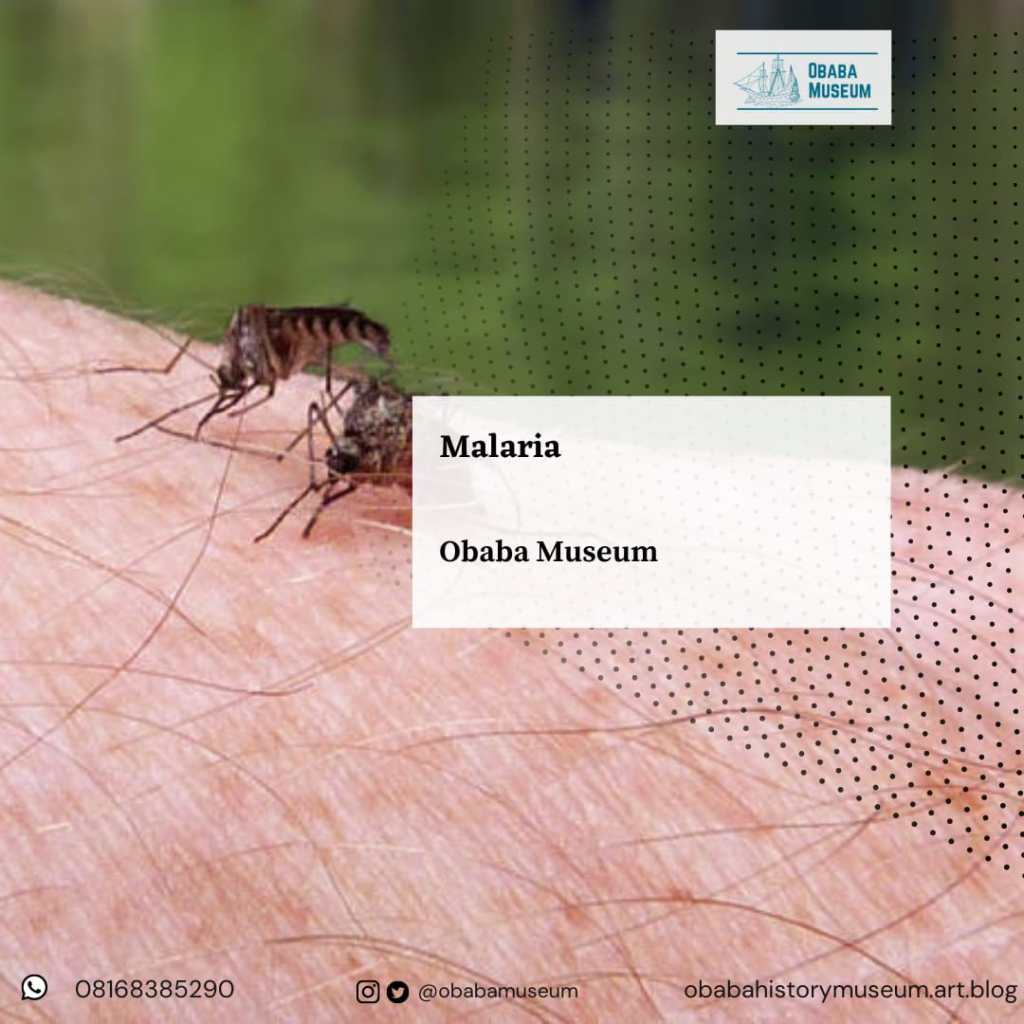
The word malaria often triggers mixed emotions and reactions. Many Africans are quite familiar with it, and most of them even self medicate in a bid to combat this deadly disease. There’s a very high chance you’ve also gotten drugs to treat it without prescription. As simple as it appears, malaria has killed more people than all the great wars ever fought on earth. Of course, the vector of this deadly disease is the tiny mosquito just like you thought.
Malaria is a serious disease caused by its parasite (Plasmodium falciparum, P. vivax, P. ovale, and P. malariae). You contract it when an infected mosquito bites you. It is a major cause of global deaths and a serious problem in most developing countries with warm climates, especially within Africa and Latin America. If you live in or travel to these countries, you are at risk of contracting the disease if you don’t have the knowledge needed to prevent or treat it. There are four different types of malaria caused by four related parasites. The most deadly type occurs in Africa, south of the Sahara Desert.
Malaria symptoms include: chills, flu-like symptoms, fever, vomiting, diarrhea, and jaundice. It can be life-threatening, however, a blood test could give you a correct diagnosis. The type of drug administered for treatment often depends on the kind of malaria you have and where you were infected.
Malaria can be prevented with following the tips:
See your doctor for medicines that protect you.
Wear insect repellent.
Cover up.
Sleep under mosquito nets.
Eradicate stagnant water by clearing up your drainage.
Pour insecticide on breeding spaces like dirty stagnant water or drainages to kill mosquito in it larvae and pupa stage.
Spray insecticide in your homes to kill them or use mosquito coils wisely (beware of asthmatic patients).
There are wide variety of drugs that can cure malaria ranging from:
Chloroquine phosphate
ACT Arthemeter and lumenfantrine
Sulphadoxine-pyrimethamine
All these drugs are in various forms, dosage per age, brand names, and prices. We have them as injections too.
Do well to take care of yourself: eat well, exercise, and prevent mosquito bites as much as possible. Prevention, they say, is better and cheaper than cure.
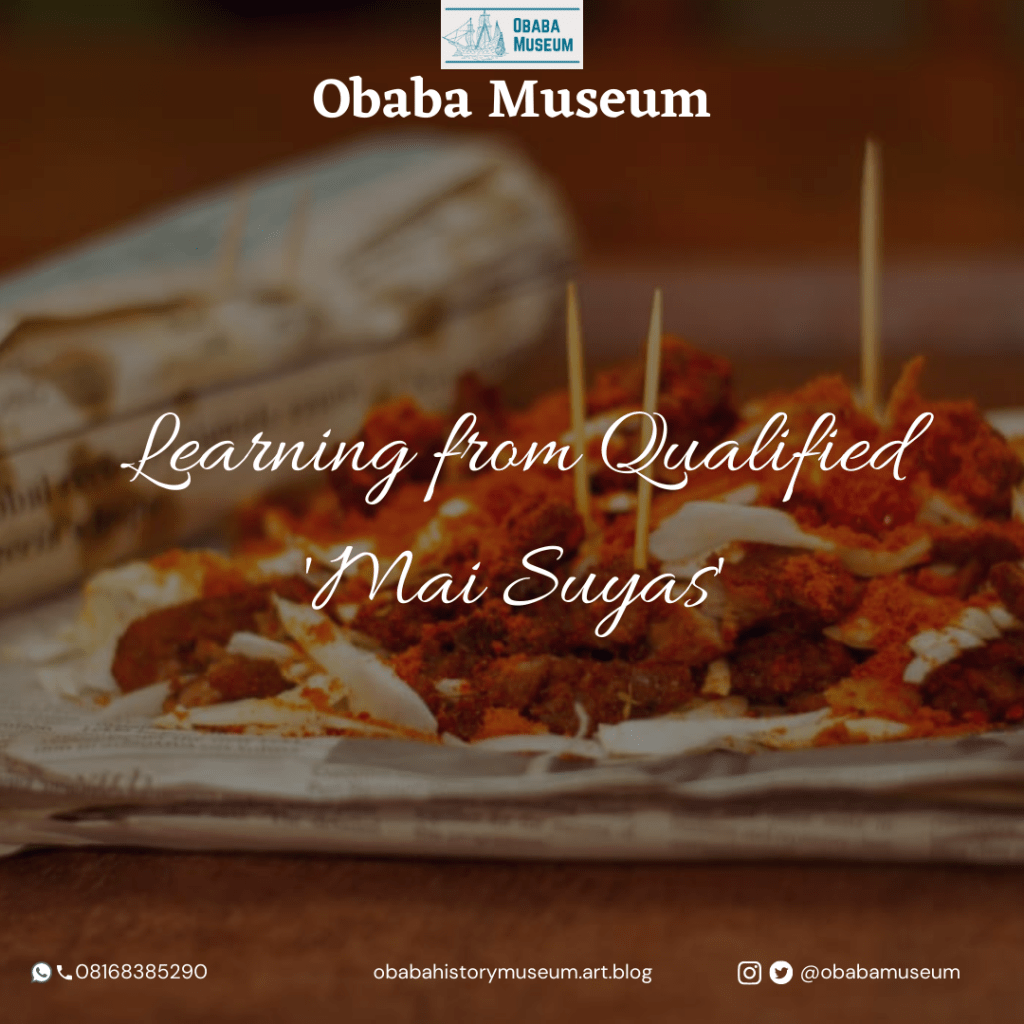
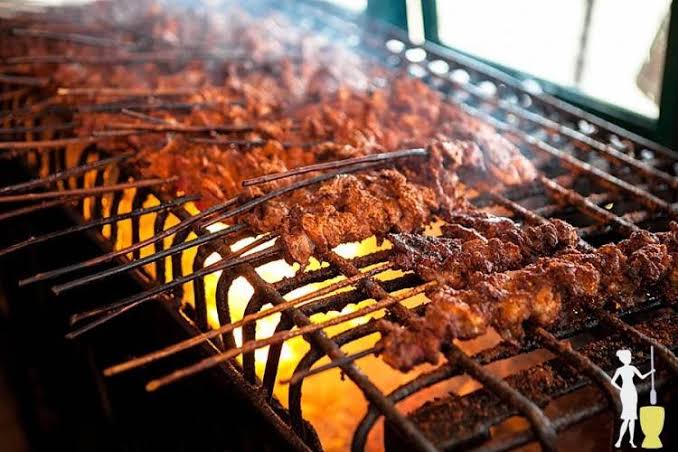
Few months ago, a lady and I were walking down the street, I had gone to pay her a visit and was leaving for my place. By the time we got to the junction it was evening already and I could see a Suya man setting up for evening sales. Different thoughts flashed through my mind, for the first time I started connecting different ‘dots’ to understand the full ‘matrix’.
I started wondering why I had never really paid close attention to the business strategies used by this skilled skewers of Suya. We all know that Suya spots are common locations carefully situated at major intersections and junctions. I think I just jogged your memory; you sef don dey reason am😂. While on campus, I remember that all Suya joints were either in front of the junction, beside, around or close to a junction. Though most people do not realise, these guys are certified and may even be more qualified than most Harvard MBAs. Think of this, you’ve really had a long stressful day at work, probably even spent some few hours in traffic then as you’re about to get home your nose picks up the signal of seasoned meat, you turn and sight a stand carefully adorned with tasty red meat diced and arranged in a very visible position on the grill. These Suya custodians understand that junctions are very strategic markets, the reason they are so valuable is that they give the needed exposure and visibility even from a distance. They also provide ease of access to customers who can easily bump in regardless of traffic.
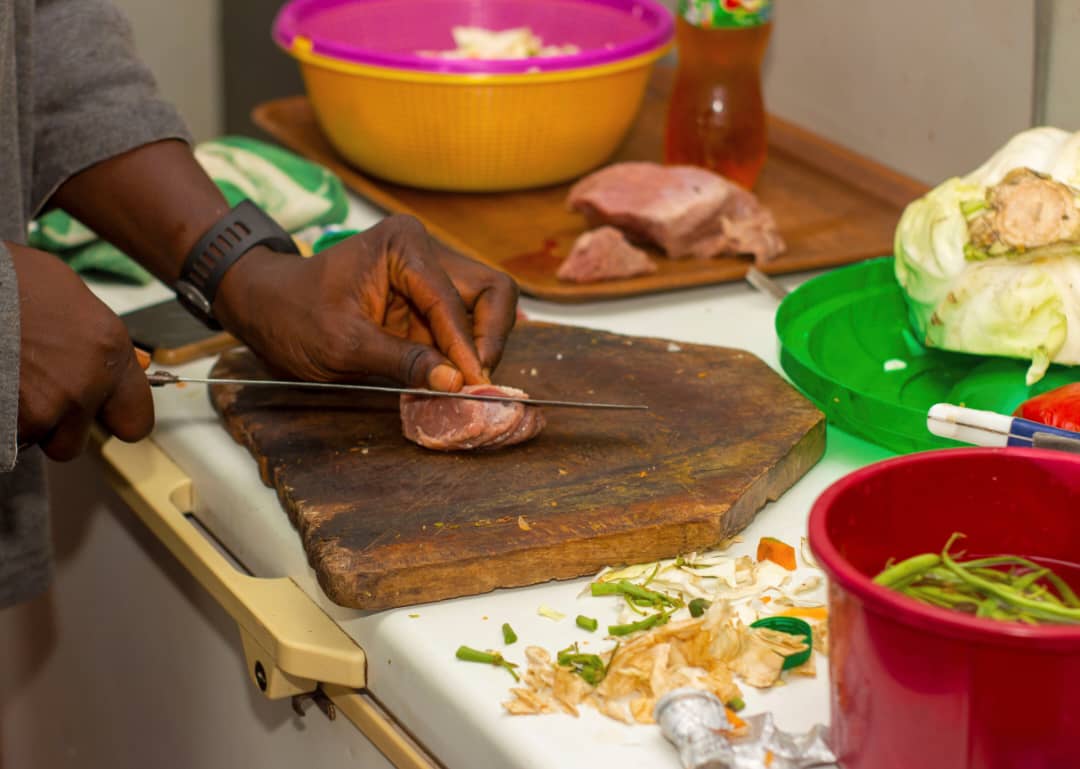
Come back by 10pm to that same spot and you’d be amazed. Yes, Suya still never finish. Now I ask you How many sellers sell out Suyas every night? You just guessed right again. They know to maximize their assets, from meat to even the gas lamps. Have you ever seen a suya man preparing his meat for the evening sales during the day? They spend a lot of time sharpening their knives to make precise cuts. They use these knives to achieve laser like cuts, reducing the thickness of the beef to the barest minimum. Every pound of beef counts as profits and profits can be maximized just by spreading out the beef. Let me give you a related story. When we were kids, I remember we used to separate wafers by their layers just to make them last longer and make one wafer feel like five!? That’s the similar style the Suya guys use. How well you maximize your assets may just be the difference between your profits and your losses.
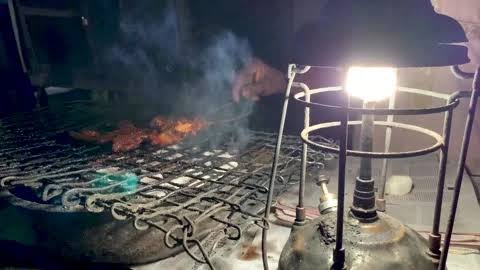
They also understand the need to stand out; the use of kerosene gas lamps gives them added visibility at night. On social media, we know that to stand out and reach more people, your content should have a catchy title, that you should make good use of imagery and a great command of language. In order words, you should stand out from the crowd, set yourself apart.
Well, at least whenever you are out at night and you feel like treating yourself to a pack of suya, just look for the street corner with a spot of bright light and there you have your suya, no sign, no logo, just good old gas lamps.
We would like to hear your experience and observation from Suya stands around, kindly let us know in the comment section.
Many of us think so little of ourselves, that if we were to, even for a second, realise how people perceive us, we would be dazed at how high they’ve placed us in their minds.
I remember a discussion I was having with a lady some time ago. I asked her, ‘do you ever feel intimidated?’ She looked up, surprised at my question, then sighed and said, ‘yes.’ I further asked, ‘about what?’ She answered and said, I’m fat, and each time I see slim and wonderfully shaped people, I feel downcast and inferior.’
Do you feel the same way too? Maybe not particularly about your physique, it may be about your performance in comparison with others, or your dressing, composure, or achievements.
Let me tell you this: hidden in you is a treasure you must bring out. If you keep looking at other people’s achievements, you’ll definitely neglect yours and keep it buried till eternity.
Watch out, there’s something people admire you for, if only you’d sit, meditate and reflect. They may not necessarily come out and say, ‘I like this about you.’ It may be in the way they prefer you over others to handle specific tasks and responsibilities. Some superiors, colleagues or even subordinates love committing things into your hands because they know you’ll handle it pretty well, even though there are tons of other qualified people. That, dear one, is your uniqueness, your ‘beauty.’
So, in a genuine response, I told her, ‘I actually admire you.’ Wide eyed, she asked, ‘for what?’ I smiled and honestly told her, ‘I love your eyelashes, they’re long and cute. I admire your self-confidence; the way you find it so easy to relate with people.’
She couldn’t find anything good about herself because she had this philosophy that her fatness had swallowed her real beauty. Yet, I was able to tell her some of the treasures she possessed, and I’m still sure she has some still hidden in her.
Don’t let anyone ride you. The new year is almost here, try as much as possible to believe in yourself no matter what. Bring out your hidden treasure, don’t compare, and very soon, you will announce yourself to the world. Just believe! Once you believe in yourself, you’ll influence others not only to believe in you, but also in themselves.
It has really been an eventful year, and pretty fast if you would agree with my friends. One thing I was quick to observe as a kid was the fact that the space between Merry Christmas and Happy New Year is just a week. So that means Christmas today would mean you have roughly seven days before the year ends. Could it be that the person or institution responsible for popularizing the celebration of Christmas on the 25th, wanted to make it exactly a week to the New Year festivities? I also wonder how Christmas came to be popularized in the church as there really is no exact biblical reference for the word, Christmas or even the date. Before we get lost in the loop of unending questions, let’s quickly go through some amazing facts about Christmas. Sit back and enjoy as we take you on an interesting ride.
Christmas is celebrated all over the world, as a religious holiday or as a time of celebrations by Christians and non-Christians alike. The traditions are different based on geographical space, but they nearly always include common practices which includes a lot of feasting, giving gifts, cards, and enjoying church or public festivities such as singing Christmascarols and songs. It’s also not uncommon to see beautiful display of fireworks even weeks before the 25th.
Some of the traditions that are used for Christmas are older than Christianity. Our modern Christmas is a product of hundreds of years of both secular and religious traditions from around the globe, most of them centered on the winter solstice. Many European cultures celebrated festivals centred on the winter solstice, one of these traditions known as Yule probably derived from the Germanic jōl or the Anglo-Saxon geōl, which referred to the feast of the winter solstice. Early Europeans celebrated light and birth in the darkest days of winter. Many peoples rejoiced during the winter solstice, when the worst of the winter was behind them and they could look forward to longer days and extended hours of sunlight.
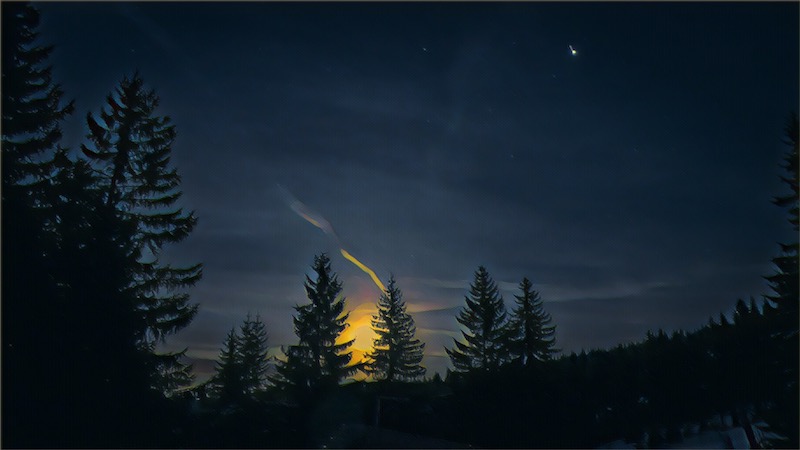
Winter Solstice; usually the shortest day and longest night of the year.
Christians mark Christmas as a festival celebrating the birth of Jesus, hence, the English term Christmas meaning ‘mass on Christ’s day’. There is however many evidence to show that end of the year festivities had long been in vogue, even predating the birth of Jesus. Many historical evidence suggest that the church simply christianized some of the existing pagan practices.
In Scandinavia, the Norse celebrated Yule from December 21, the winter solstice, through January. In recognition of the return of the sun, fathers and sons would bring home large logs, which they would set on fire. The people would feast until the log burned out, which could take as long as 12 days.
The precise origin of assigning December 25 as the birth date of Jesus is unclear. The Bible provides no clues in this regard. December 25 was first identified as the date of Jesus’ birth by Sextus Julius Africanus in 221AD and later became the universally accepted date. One widespread explanation of the origin of this date is that December 25 was the Christianizing of the dies solis invicti nati (‘day of the birth of the unconquered sun’), a popular holiday in the Roman Empire that celebrated the winter solstice as a symbol of the resurgence of the sun, the casting away of winter and the rebirth of spring and summer. Indeed, after December 25 had become widely accepted as the date of Jesus’ birth, Christian writers frequently made the connection between the rebirth of the sun and the birth of the Son.
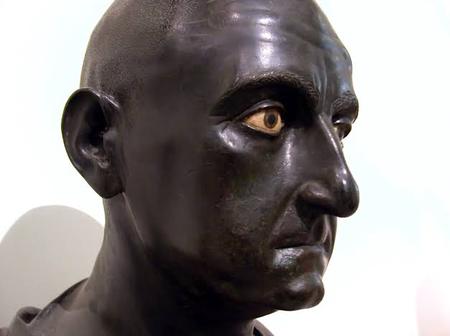
A sculpture of Sextus Julius Africanus
Certain christian sects such as the Deeper Life and Jehovah Witness do not subscribe to the celebration of Christmas due to it’s perceived pagan origin. The unavailability of a proper record of Christ’s birth has also given rise to variations in the perceived period of his birth.
Ironically, the message of Christianity forbids discrimination. In the gospels, Christ makes it clear that he came not for the saved but for the sinners. Hence the argument of whether or not the date chosen to celebrate Christ is correct is inconsequential compared to what we make out of it.
Let’s take a walk down to, let’s say, four years back, in the early hours of September 2017 somewhere within Agodi Gardens, Ibadan, Nigeria. An old man, in a bid to make ends meet, meets His brutal death. This reminds me of the Yoruba prayer asking God to prevent us from being eaten while searching for what to eat.
What happened in the early hours of September 30, 2017 will forever leave me thinking about Death’s extreme cruelty. Let’s jog our memories: you perhaps, heard the news or read it in the papers, that man that was torn in pieces by lions at Agodi Gardens. Yes, my write-up is focused on that unfortunate incident. I call it my ‘dedicative thoughts…’
If it were to be that we all chose the way that we would die, death would be a more pleasurable experience. It is said, ‘man is a free moral agent. He has the right to choose his fate.’ If this is the case, why is Death an exception? We hear expressions like, ‘snatched by the cruel claws of Death, visited by Death, so must follow’, etc. Why does man remain helpless when relating with Death?
The prohibition of man to determine his death experience has led to catastrophic incidents, eerie situations, and pitiable events. The gaudy events of the early hours of the last day of September 2017 will forever be etched in my memory. This very incident will forever leave me thinking, though not as strong in years to come, how cruel and ruthless Death is. I do not have exact graphic images, but my imagination has proved indispensable. I stare at it as though I were present, gazing directly at the savagely mutilated body of a septuagenarian who left his house some hours before to make ends meet for himself and family.
How would he have reacted if someone had told him that the lions that he had been feeding for 5 years were the same agents Death was going to employ on its behalf that same day?! The reports read, ‘Man attacked by lions, dies later from injuries.’ Justice! He was eaten by lions! What injuries could he have sustained to later die from?! If only he had that chance! At least, he would have kicked the bucket in a hospital, surrounded by people who cared.
He was the unfortunate meal for hungry lions who dealt with him the same way they tear apart goats. They didn’t ask him, ‘any last words?’ Of course, he died… that’s how we will continue to report: ‘ The old man is dead.’ How he died is another story entirely.
I wept, but the dead is not here to see. The only thing one can hope for is rest in the other world. I pray for consolation for his family- no wife, six children!
Time will pass, people will forget, the sands of time will bury it deeply, but his family will never forget.
As for the messengers of Death, Death demanded their lives too- gunned down and burnt up. Funny, one would have expected a reward. This isn’t enough. The dead isn’t back, but that’s the most justice can serve, even in the eyes of his family.
Tradition had to be put aside because his remains required a coffin; a horror if put on display. Old man, I’m sorry you had to die this way.
I wonder what his last words would have been if he had been given the chance. Maybe they would have been, ‘ Happy Independence Day…in advance!’
A minute silence would show a great respect to the departed. That’s part of humanity. Here, I drop my pen.
DEDICATED TO THE DECEASED: BABA OLORUNWA (FAREWELL FOREVER) and THE FAMILY OF THE DECEASED.
Apart from the wedding ring on her finger, a major badge that quickly sells her out as a married lady is the prevalent culture of replacing her maiden name and adopting her husband’s last name. New trends have had couples meshing or blending their names while some women even reject their husbands’ name and retain their maiden name.
Let us quickly trace the origin of the popular culture of newlywed ladies adopting their husbands’ surnames and how it has evolved over time. However, we need to first understand the relevance of surnames and how they became adopted as a standard for naming.
One of the major reasons humans started using surnames was the need for distinct identification. There were usually too many people with similar names; hence, surnames became necessary to differentiate them or even give them more specific identity. These surnames were usually associated with individual peculiarities distinguishing them from their numerous namesakes. The names could often be associated with their occupation. Examples are: Smith which identifies with the occupation of blacksmithing or goldsmithing; Clark, a clerk; Archer, etc.
A personal feature was also a valid reason for a last name: Grant, for example, symbolised the size of an individual—how large or grand they are; Little to depict one’s little or petite size; Rousseau depicting a redhead.
Specific geographic origins also played a vital role in naming. For example, someone from Wales could take Wallace as a last name. Similarly, one from the woods or fields could take the additional name Woods or Fields.
Identifying you with your father’s name was another means of creating a last name: Richardson (son of Richard), McArthur (Scottish origin, son of Arthur), O’Brien (Irish Origin, grandson of Brien), Powell (son of Howell, Welsh Origin), Dimitrioupolos (Son of Poulos, Greek Origin).
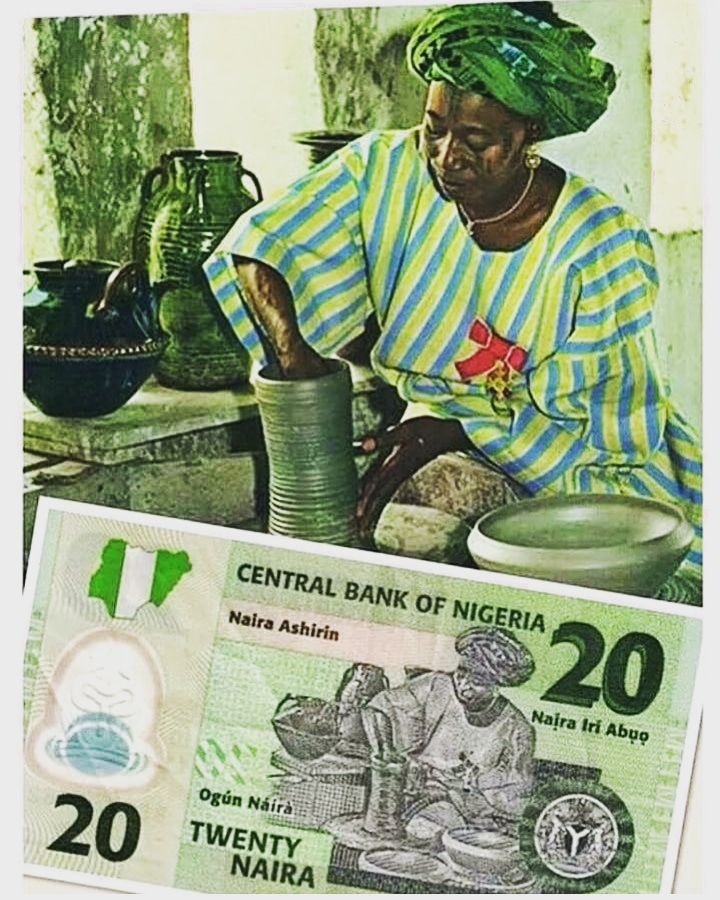
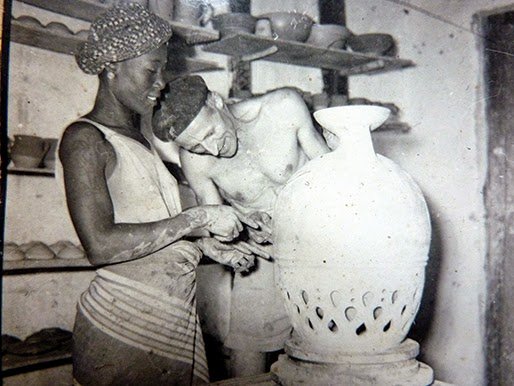
It is assumed that Africans officially did not use surnames till the entry of the Europeans. However, there were surnames used to differentiate between people with similar first names, like the name of the village (Ladi Kwali from the town of Kwali, Abuja), the social status of the family (Ade meaning Crown, for anyone related to royalty examples include, Adebisi, Adejoke,etc), a myth surrounding the child (Ababio, a reincarnate), and Ibn (Son of in Arabic). Hence, the claim that surnaming is European, is an unverifiable myth. When Africans were colonised and westernised, there was a need to use the surnames for records and most just used their fathers’ names. So, Aremu whose father’s name is Adigun would be Aremu Adigun by default.
However, these surnames were only hereditary. Occasionally, a father and a child may have different surnames depending on the parent or the child, if either wants to change it.
Surnames being used as family names, entrenched as hereditary and considered as worth keeping can be traced to the middle ages with aristocratic families using it as an insignia of prestige and/or to preserve official family records.
Women taking their husbands’ surnames was not really a global thing till the patriarchal ‘doctrine of coverture’ brought by the Normans after their conquest of the British society. This doctrine said that women were considered one with their husbands, with the husbands being the ‘one’.
Coverture means to be covered by. So, this doctrine implied that women were now covered by their husbands and they were originally ‘covered’ by their fathers from birth and are not permitted to change their surnames throughout their lives, only from their fathers’ to their husbands’. A court in 1340 was quoted saying ‘when a woman took a husband, she lost every surname except wife of’.
What this implies is that a married woman has no identity apart from being married and has lost all her ability to function as an individual in society. This doctrine extended to activities women could perform in society. Women were not permitted to participate in legal activities of any kind or own properties and real estate. Basically, anything they owned or wanted to own was considered an extended belonging of their husbands since he ‘owns’ them after marriage.
This doctrine got a facelift sometime around the 14th century when it got scriptural backing from the church. This changed the reason then for which women took their husbands’ surnames from ‘coverture’ to ‘unity’. They became one flesh and blood, spiritually and legally united. Like I said, this was just a facelift not a change of the rules as women still couldn’t do anything legally and the husband was still considered the ‘one’ in the marriage. Take it as mixing black hue with white on a canvas. You get a new colour but it’s still going to be called black, not black and white or whitish-black.
It’s worth noting, however, that this practice was peculiar only to England and its colonies (including the USA), as the French, Netherlands and some other places let the women take their own names or mesh it with their husbands’ names to give new compound names which were sometimes hyphenated.
By the 17th century, women adopting their husbands’ surnames had become a fundamental part of English tradition. However, by the end of the century, women had started clamouring for a review of this old tradition, albeit indirectly.
It started with the pioneer feminist writer Mary Wollstonecraft who, after her marriage to her husband philosopher William Godwin, refused to change her name and instead signed her name as Mary Wollstonecraft femme Godwin. By the 18th century, women had started petitioning the parliament to pass an act to allow women continue using their maiden names after marriage.
This would start off the advocacy for equality of women’s right which continues to this day.
Recently, Women are no longer obligated to use their husbands’ surnames if they can come to a consensus with their spouses. Some husbands have even decided to use their wives’ surnames instead and other couples have meshed their names either to produce a new conjugated name with a hyphen or form a new name altogether.
A research conducted by Simon Duncan a professor at the University of Bradford, UK into the practice of male name taking has revealed that a lot of women still agree to this practice for two major reasons. These are not wanting to break tradition which is, in a way, still subconsciously ingrained in patriarchal power and, secondly, the idea of ‘a good family’ and show of commitment as a unit especially when kids will be involved.
The rise of the LGBTQIA movement in recent years also threatens the continuation of this tradition. Whether in the next half century women will still be using their husbands’ surnames or not is uncertain but one thing is sure, the percentage of women using their husbands’ surnames or even getting married would have reduced drastically to less than a quarter of the population who use it now.
Thanks for reading through, let’s know what you think in the comment section.
Out of utter confusion, I sought help for the questions on my mind , With things happening around me, which seemed not so right, But who to show me the way, No one then…
I searched the East and West, To find answers to the questions my soul asked, But didn’t get one North and South too, But all to no avail…
Out of curiosity, I tried the 5 times a day form of worship (Islam), Facing the kibla in reverence and ablution for purity, Still no answer pleased my soul there, I sought the knowledge of the use of light (Eckankar), Seating like a monk and chanting ‘hu’ in meditation, But I never saw the light I sought for there,
At a time I followed Abd Ru Shin (Grail message), But even got more confused, I gave our African tradition a try, They all were scary and imputed grave fear in my heart.
Hun (sighs) I left the shrine and went to several churches, I was annoyed cos most were money minded and didn’t give the needed word, Those that gave the word, did so with a tone of judgement and condemnation, I started loosing hope, resigning to fate and finally doubting His existence, I became disillusioned with His existence; an atheist you may call me, But how foolish I was cos He sure does exist.
Well I never totally gave up, I decided to try one more time, That day I entered where the saints were gathered, In true reverence for God and love for one another, In peace and harmony, Tranquillity came upon my soul as I heard the word, Which took my fears away,
and answers that my soul sought were coming, The truth I sought for all this while was unravelled, I believed, through the revelation of this truth and became saved, No more fear of hell but expectant joy of heaven, No more damnation but salvation, No more condemnation but redemption, I no longer belong to the Prince of Deceit cos now I am a saint.
When you see or think of the military, there are common practices which naturally flashes through your mind, in fact some of those cultures are jokingly imitated by the civilian populace; one of these traditions is the military salute. Of course even the salute has many variations depending on the arms (swords, rifle, etc.) being held in the course of saluting, but our focus today is the general salute you do with your bare hands.
Photo Credit: Man o’ war OAU Archive
Saluting is generally regarded as a gesture of respect, mutual trust and a sign of comradeship among service personnel. It’s not limited to junior officers, all serving personnel are required by tradition to salute and reciprocate in necessary circumstances, but because of strict adherence to rank, the junior is required to make the first gesture. It is a sign of regimental discipline and a vital aspect of the drills (what you regard as marching or parade) thus, the appropriate situation and timing of a salute is one of the first thing all military officers are educated on during their drills. Although it is usually required when officers are outdoors and in their uniform and head gear, certain military handbooks prescribe the necessity of saluting indoors in instances of reporting to a superior officer or acknowledging his/her arrival.
It would really be difficult to trace the specific origin of the general salute but there are common theories which rationally explains the reason for saluting and how the culture itself had evolved over time. The most probable theory is that it originated and evolved in the Roman empire and British Navy respectively.
The likely standard of Roman salute. (Note there are no pictures to back the claim of this trend in 509 BCE)
In Roman Republic (around 509 BCE) assassinations were said to be very common, so citizens and subordinates were required to approach officials with their fighting hand, the right hand, raised to demonstrate that it was not carrying or concealing a weapon. Others say that the Romans would slap their chest and raise their arm in tribute to demonstrate allegiance.
Another origin story is that men in armor and horseback would hold the saddle with their left hands and raise the visors of their helmets with the right hands to greet their lords or commanders. According to the Met museum, ‘this gesture would have made a person both recognizable as well as vulnerable.’
Still, it wasn’t until the 1600s that the English military records the formal mention of the salute, calling it a formal act that was ‘to be by removal of headdress.’ After metal helmets fell out of favour, soldiers wore hats similar to those of civilians. Like civilians they raised their hats when greeting a superior.
Grenadier hats
The salute however probably had to undergo further development in response to a change in military headgear. By 1700 grenadiers were wearing tall, conical hats held in place with secure chinstraps that were difficult to raise in greeting. The men began to merely touch their hats as if intending to raise them. Soon other soldiers adopted the shako, busby or bearskin, all of which were held in place by a chinstrap. They, too, stopped raising the hat and instead merely touched its brim. This action was formalised as the salute in European armies by about 1780, and from them spread to the rest of the world.
Another explanation is that during the 18th Century because of concerns over excessive wear to headgear or hats becoming more cumbersome the salute was changed limiting the constant movement of headgears. A 1745 British order book states: ‘The men are ordered not to pull off their hats when they pass an officer, or to speak to them, but only to clap up their hands to their hats and bow as they pass.’
With time the British Army developed a salute with the palm facing outwards, also used by the Royal Air Force. The Royal Navy, however, adopted a version with the palm facing downwards, thought to be because many men working on ships had dirty palms and to display them was disrespectful. One popular tale cites Queen Victoria as the one behind the downward-facing-palm, after she was saluted with a grimy hand. This tradition has been adopted by many military installations all over the world with the Navy salute being the most commonly favoured.
The Nigerian Airforce, Navy and Army Salute respectively
Various countries have different legal ramifications behind certain salutes. In Germany, for example, the straight-arm ‘Nazi/Hitler’ salute is illegal and punishable by up to three years in jail. It is therefore not uncommon for tourists to be detained for performing the salute for photos.
So while there are really no general formal rules forbidding civilians from saluting military officers, you should keep in mind that it is better not to salute at all than to give a sloppy salute. Hope you enjoyed the gist? Let’s know what you think in the comment section below and don’t forget to follow our page to get notified when we drop a new post.
How ruthless! How wicked to see a fellow human being in dire need and walk away when you simply could lend a helping hand. This is a clear instance of a dog eating a dog. It was nightfall and the clouds had come to a consensus to unleash fire and brimstone. It had just begun to rain heavily when I saw an unkempt woman trekking briskly with three children, all under the age of 7. From all indication, this woman was trying to beat rainfall to her destination, not necessarily for herself but her children. Unfortunately, the rain thwarted her effort, leaving her with no other option save, spending her last penny on “Okada” at least to reduce the battering effect of the rain on her children (it would be worse off if she insistently chose to trek home with them).
From her looks, this woman was probably a widow, and if she wasn’t, she and her husband were terribly stricken by poverty. Her initial decision to trek amidst the red signals from the dark clouds was perhaps in a bid to save her last penny for a makeshift dinner after the hustle and bustle of the day. From a distance, I stood taking cover under the outer roof of a small kiosk that could barely shield a goat from being harassed by the rain, but I preferred it to walking home and getting soaked in the rain. I stood helplessly seeing this woman and her kids being battered by the rain. I saw the affection in her eyes for her children as she bent over them in a bid to shield them from the incessant stings of every drop falling from the sky. Then she beckoned to a passing “Okada”, who stopped abruptly close to her and her children. After telling the rider her destination, despite her predicament and that of her children, all that oozed out of the rider’s mouth was; ‘Madam, na 200 naira. If you no go go, leave am’, then he zoomed off, leaving the poor woman and her children at the mercy of the rain.
From where I stood, I felt a cold chill run down my spine. On a normal day, her destination should cost no more than 50 naira for a trip on a bike. This woman was even willing to let go of her last 100naira but the “Okada” man blatantly refused seeing that it was raining and she had no choice.
While I stood in shock observing that this man, who could also be classified under the category of the poor in the society, showed no sympathy for his fellow human, I came to the conclusion that the poor are the major tools for oppressing their poor fellows. Why do we take advantage of horrible situations to extort and exploit our fellow country men? I asked myself. Where has humanitarian compassion been relegated to? Has the spirit of philanthropic gestures deserted us forever? How did we get here? We should be eager to volunteer or assist in evacuating people to safety with our personal resources amidst crises, invasions, natural disasters and other forms of danger that pose as threats to life and not just focus on commercializing our resources to extort one another. Why charge three to four times higher than the normal price in terrible situations? Sometimes, when I look at the irredeemable state of humanity, I blame it on the wickedness of man to his fellow man.
Humanity can be redeemed with a change in our attitudes towards one another and that change begins with every individual.
Looking great is a desire for almost everyone, we sometimes try out a lot of tips to stay healthy which often times are not effective. The issue with physical fitness is the predominance of numerous myths which are in constant circulation. Do you know that the most essential workout routine deals with your leg? However it turns out to be the most avoided training. The mere thought of having to subject yourself to such a rigorous and tiring workout routine is enough to send chills down your spine. Some would rather hide at the corner and do additional upper body exercises then make excuses like not wanting big thighs and so on. However training your legs is very important to your overall health and well-being, in fact you should never skip a leg day.
Leg workouts aids strength building, speed, and stability. Strong leg muscles would help keep your body balanced, if you focus solely on your upper body you are simply cheating your body. Here are some benefits of training your legs.
Build more Muscles Building your legs boosts testosterone levels and growth hormone. Testosterone is a steroid hormone that is naturally produced in your body and plays a key role in men’s health by regulating fertility, muscle mass, fat distribution, and red blood cell production. Compound workouts, such as squats and deadlifts, which use large muscle groups, help elevate your Testoterone levels.
Anatomy of the gluteus muscles
Aids Rapid Fat loss Did you know that your gluteus maximus (aka, your butt) is the largest muscle in your body? Working these bigger muscles requires more energy, which means your body will have to burn more calories as it increases your metabolism. Training sessions like these increase your heart rate because you combine strength training with cardio exercises. That’s why everyone gets tired few minutes after a leg routine.
It Improves your Overall Strength Believe it or not, your legs and core supplies majority of the energy you use during heaving lifting. Even when you’re bench-pressing, it is your lower body that is engaged to help provide a stable platform to pump from; that’s why when you’re tired and trying to push at all costs, you seem to be engaging your legs. By strengthening your leg muscles you’ll also lower your risks of injuries because virtually all leg programs are compound hence you strengthen other muscles parts asides your legs.
Helps prevent/reduce the risk of Back Injuries You should know that lower back pain is oftentimes caused by weak stabilizing muscles. That’s why by training your lower body muscles, you will minimize the risks of lower back injuries.
Promotes better Muscle Conditioning and Body Composition Muscle Conditioning means more energy, more muscle mass, agility, in fact it’s the grammar you use to say someone is physically fit. If you lack conditioning, you may not really be able do much big lifts. Performing exercises, like deadlifts, however, will strengthen your legs, glutes, core and lower body, while developing all-over muscle and mobility. Remember, core strength supports the body in almost every movement. And the deadlift – the King of Exercises – is the key core strength building workout.
Maintains Proper Body Symmetry and strengthens the joints Have you seen a very huge guy, big biceps and triceps, six packs and all only to look down and see thin, weak legs🤣 – you might have seen such pictures countless times. It happens when people pay all their attention to upper body workouts, but ignore their legs. Your body should look symmetrical. You would agree that it is much more attractive that way. Besides, our body works like a unit, every exercise engages several muscle groups. That’s why there should be a balance for your muscles to function properly; your lower body also faces high amounts of physical load, so if it’s undertrained, it may lead to a number of health issues such as Arthritis and Osteoporosis.
Of course it also Boosts your Self Esteem and confidence Going through all this difficult routine and completing it gives you this psychological boost and sense of self worth. It is in fact an anti depressant not only because of the previous reason but because it also release endorphins(the happiness hormones). Now that we all agree that building the lower body is necessary to our overall physical well-being, here are some workout routines you could select for your leg day below.
It’s important to maintain a proper posture while deadlifting
✓Deadlifts
Often regarded as the King of all workouts, deadlifts. Just like squats, they are effective exercises for gaining lower body strength. It targets your upper and lower back, glutes, and hamstrings.
Lunges
✓Lunges
Lunges engages your thighs, butt, and abs. It engages your quadriceps and hamstrings at the same time, making it a great exercise for strong legs.
✓Squats
Squatting is one of the best exercises to tone legs. It also helps in toning the butt, hips, and abs. So yeah ladies 😜 it’s a win win, better figure and greater strength.
Other exercises include; calf raises, cycling, power walks, running and Burpees. Thanks for reading through, we hope you get to incorporate more leg exercises in your workout routine.
Regular exercise is good for your health. What just flashed through your mind right now? Many of us simply equate the exercise lexicon to ‘jogging’ or ‘lifting weights’. While they could also fall under the fitness routine, they account for just a minute aspect in the world of fitness.
Do you know that most people do not really exercise correctly? When we say correctly, we mean doing the exercise or training routine appropriate for your body type. One of the best hints for physical fitness is understanding your body type and your areas of strength and weakness; this would help you to plan the programs that would best suit your personality.
Before we move to the various types and benefits of exercises, let’s take a brief look at the three common body types.
Ectomorphs: These are basically skinny people, they have a high metabolism and it’s almost impossible for them to increase body mass (bulk up or get fatter) no matter how much they eat.
Mesomorphs: This comprises people who have that natural athletic look, they just always look fit without even working out most times (you know those of them na). It’s very easy for them to burn any fat they gain.
Endomorphs: These are the people you would regard as fat. It seems really hard for them to burn that annoying fat. Sometimes, you even eat very little and still seem to get fatter.
These are the basic body types, and no one is purely one. We are a combination of two or even the three, with some traits being more predominant for some people (some skinny people really have a more mesomorphic trait).
Basically, for you to burn fat, build muscle, get that toned and perfect figure, you need to know your body type and how to manage it well.
Exercising has many benefits, including improving your overall health and fitness, and reducing your risk for many chronic diseases. There are many different types of exercise; it is important that you pick the right types for you. Most people benefit from a combination of them:
Endurance, or aerobic, activities increase your breathing and heart rate. They keep your heart, lungs, and circulatory system healthy and improve your overall fitness. Examples include brisk walking, jogging, swimming, and biking.
Strength, or resistance training, exercises make your muscles stronger. Some examples are lifting weights and using a resistance band.
Balance exercises can make it easier to walk on uneven surfaces and help prevent falls. To improve your balance, try tai chi or exercises like standing on one leg.
Flexibility exercises stretch your muscles and can help your body stay limber. Yoga and doing various stretches can make you more flexible.
Fitting regular exercise into your daily schedule may seem difficult at first. But you can start slowly, and break your exercise time into chunks. Even doing ten minutes at a time is fine. You can work your way up to doing the recommended amount of exercise. The rate of exercise you need depends on your age and health.
Other things that you can do to make the most of your workouts include
Choosing activities that work all the different parts of the body, including your core (muscles around your back, abdomen, and pelvis). Good core strength improves balance and stability and helps to prevent lower back injury.
Choosing activities that you enjoy. It’s easier to make exercise a regular part of your life if you have fun doing it.
Exercising safely with proper equipment, to prevent injuries. Also, listen to your body and don’t overdo it.
Giving yourself goals. The goals should challenge you, but also be realistic. It’s also helpful to reward yourself when you reach your goals. The rewards could be something big, like new workout gear, or something smaller, such as making yourself a nice health meal and fruit smoothie.
Diabetes is a chronic disease most of us may have heard of, in fact I remember as kids when we were consuming a lot of sugar uncles and aunts would ask if we wanted to invite diabetes. Today we want to explore this disease and find out if too much sugar is really the cause. Relax and follow calmly.
Diabetes occurs either when the pancreas does not produce enough insulin or when the body cannot effectively use the insulin it produces. Insulin is a hormone that regulates blood sugar levels and stores excess glucose for energy. After you eat, carbohydrates break down into glucose, a sugar that is the body’s primary source of energy. Glucose then enters the bloodstream. The pancreas responds by producing insulin, which allows glucose to enter the body’s cells to provide energy. If one is diabetic, it means the glucose levels will continue to rise after he/she eats because there’s not enough insulin to move the glucose into the body’s cells and over time this leads to serious damage to many of the body’s systems, especially the nerves and blood vessels.
There are three common types of diabetes;
Type 2 diabetes :Diabetes mellitus (formerly called non-insulin-dependent, or adult-onset) results from the body’s ineffective use of insulin. The majority of people with diabetes have type 2 diabetes. This type of diabetes is largely the result of excess body weight and physical inactivity. Symptoms may be similar to those of type 1 diabetes, but are often less marked. As a result, the disease may be diagnosed several years after onset, after complications have already arisen. Until recently, this type of diabetes was seen only in adults but it is now also occurring increasingly frequently in children.
The pancreas is an organ located in the abdomen. It plays an essential role in converting the food we eat into fuel for the body’s cells.
Type 1 diabetes: Diabetes insipidus (previously known as insulin-dependent, juvenile or childhood-onset) is characterized by deficient insulin production and requires daily administration of insulin. Neither the cause of Type 1 diabetes nor the means to prevent it are known. Symptoms include excessive excretion of urine (polyuria), thirst (polydipsia), constant hunger, weight loss, vision changes, and fatigue. These symptoms may occur suddenly.
Gestational diabetes Gestational diabetes is hyperglycaemia with blood glucose values above normal but below those diagnostic of diabetes. Gestational diabetes occurs during pregnancy Women with gestational diabetes are at an increased risk of complications during pregnancy and at delivery. These women and possibly their children are also at increased risk of type 2 diabetes in the future. Gestational diabetes is diagnosed through prenatal screening, rather than through reported symptoms.
Prevention Since diabetes is a disease characterized by high blood sugar levels, many believe eating sugar can cause it. While it’s true that eating large amounts of added(unnatural) sugar may increase your risk of diabetes, sugar intake is just one piece of the puzzle.
Simple lifestyle measures have been shown to be effective in preventing or delaying the onset of type 2 diabetes. To help prevent type 2 diabetes and its complications, people should:
achieve and maintain a healthy body weight;
be physically active – doing at least 30 minutes of regular, moderate-intensity activity on most days. More activity is required for weight control;
eat a healthy diet, avoiding unnatural sugar and saturated fats; and
avoid tobacco use – smoking increases the risk of diabetes and cardiovascular disease.
Diagnosis and treatment Early diagnosis can be accomplished through relatively inexpensive testing of blood sugar.
Treatment of diabetes involves diet and physical activity along with lowering of blood glucose and the levels of other known risk factors that damage blood vessels. Tobacco use cessation is also important to avoid complications. Interventions that are both cost-saving and feasible in low- and middle-income countries include:
blood glucose control, particularly in type 1 diabetes. People with type 1 diabetes require insulin, people with type 2 diabetes can be treated with oral medication, but may also require insulin;
blood pressure control; and
foot care (patient self-care by maintaining foot hygiene; wearing appropriate footwear; seeking professional care for ulcer management; and regular examination of feet by health professionals). Other cost saving interventions include:
screening and treatment for retinopathy (which causes blindness);
blood lipid control (to regulate cholesterol levels);
screening for early signs of diabetes-related kidney disease and treatment.
DIET FOR DIABETES What foods can I eat if I have diabetes? You may worry that having diabetes means going without foods you enjoy. The good news is that you can still eat your favorite foods, but you might need to eat smaller portions or enjoy them less often. Your health care team will help create a diabetes meal plan for you that meets your needs and likes. The key to eating with diabetes is to eat a variety of healthy foods from all food groups, in the amounts your meal plan outlines.
The food groups are predominantly;
Vegetables
nonstarchy: includes broccoli, carrots, greens, peppers, and tomatoes
starchy: includes potatoes, corn, and green peas
fruits—includes oranges, melon, berries, apples, bananas, and grapes
grains—at least half of your grains for the day should be whole grains which includes wheat, rice, oats, cornmeal, barley, and quinoa. examples: bread, pasta, cereal, and tortillas.
Protein lean meat,chicken or turkey without the skin, fish ,eggs, nuts and peanuts dried beans and certain peas, such as chickpeas and split peas meat substitutes, such as tofu dairy—nonfat or low fat milk or lactose-free milk if you have lactose intolerance yogurt and cheese
Eat foods with heart-healthy fats, which mainly come from these foods: oils that are liquid at room temperature, such as canola and olive oil nuts and seeds heart-healthy fish such as salmon, tuna, and mackerel avocado Use oils when cooking food instead of butter, cream, shortening, lard, or stick margarine.
avocado, salmon, nuts, seeds, and olive oil. Choose healthy fats, such as from nuts, seeds, and olive oil.
What foods and drinks should I limit if I have diabetes? Foods and drinks to limit include
fried foods and other foods high in saturated fat and trans fat foods high in salt, also called sodium sweets, such as baked goods, candy, and ice cream beverages with added sugars, such as juice, regular soda, and regular sports or energy drinks Drink water instead of sweetened beverages. Consider using a sugar substitute in your coffee or tea. If you drink alcohol, drink moderately—no more than one drink a day if you’re a woman or two drinks a day if you’re a man. If you use insulin or diabetes medicines that increase the amount of insulin your body makes, alcohol can make your blood glucose level drop too low. This is especially true if you haven’t eaten in a while. It’s best to eat some food when you drink alcohol.
Rather than the drugs and injections . Make your diet your drug and exercise your life style. Thanks for reading through, feel free to drop a comment.
In the last episode, we talked about the two great figures featured on the Twenty Naira note, today you’ll see much more and even the original Pictures used on the Naira notes. Let’s begin!
The Ten Naira note alongside the Five Naira and one Naira, was reintroduced on July 1979 with new portraits. On October 1, 1978 General Murtala Mohammed, Alvan Ikoku, Sir Tafawa Balewa and Sir Herbert Macaulay were declared national heroes during the regime of General Olusegun Obasanjo. The February of the previous year (1977), a new twenty Naira note with the portrait of General Murtala, had been introduced as part of the activities marking the one year anniversary of his assassination. By the 2nd of July 1979 the portraits of Alvan Ikoku, Sir Tafawa Balewa and Herbert Macaulay were featured on the Ten, Five and One Naira notes respectively.
A portrait of Dr Alvan Ikoku
Alvan Ikoku (1900-1971) is still someone many Nigerian masses see daily, because at least, in most areas of the country, you should still be able to purchase a sachet water (pure water) for Ten Naira but do you really know his significance in Nigerian history?
Dr. Ikoku was an activist, nationalist, politician and statesman. One great thing about Dr. Ikoku is his reputation for pioneering education in Nigeria, in fact, it is safe to say that his greatest contribution was in the area of education. He established one of Nigeria’s very first private secondary schools, Aggrey Memorial College in Nigeria in Arochukwu, Abia State in 1931. At Aggrey, he introduced carpentry as a subject, where he called it ‘the Education of the Hand.’ The most interesting aspect of this is that the students were able to make their desks, lockers, chairs, bookshelves and tables all by themselves. Almost all his children studied at Aggrey college too. The school was at the forefront of technical and entrepreneurial education, as well as the teaching of indigenous languages. He did not just run the school but also taught some of the subjects. After the 1946 constitutional changes, which allowed more Nigerians to be in the legislative chambers, Ikoku was one of the persons nominated into the Eastern Nigeria House of Assembly. In 1947 he became part of the Legislative Council in Lagos as one of three representatives of the Eastern Region.
He contributed to making the colonial government implement the decisions of Nigeria Union of Teachers (NUT) and also pushed for some of its educational ordinances to be amended in the 1950s. He later became the president of the union in 1955. In 1962, he advocated for the Education Bill of Rights for primary school education to be free for six years across the country and also for indigenous languages to be taught in schools. The bill in the first republic did not scale through, but in 1976 the Federal Military Government adopted it as a policy for the country. He served on various educational bodies in the country, including the West African Educational Council (WAEC) and Council of the University of Ibadan, among others. Dr. Ikoku died on November 18, 1971, seven years later, he was declared a national hero and featured on the ten Naira note a year later.
Fulani milk maids captured by John Hinde.
At the back of the ten Naira notes are pictures of two Fulani milkmaids carrying calabashes filled with Fura da nono. It has been discovered that this picture was captured by John Wilfrid Hinde an English photographer, whose idealistic and nostalgic style influenced the art of postcard photography. Hinde took the picture of the Fulani milk maids between 1960 and 1970. Fura da nunu/nono is a special treat. Fura da nono is very popular in the Northern states where it can be taken any time of the day. Nono is the Hausa word for cow’s milk while Fura is millet flour usually moulded into balls; the two are usually sold together by the Fulani maids. However many people prefer to use plain yogurt to mix with the fura and drink. Well most of my friends add a lot of sugar to their millet cereal lol, I forgot to tell you millet cereal is the closest English translation I know for fura da nono.
Fura da nono.
The Five Naira note features, on its front view, Sir Abubakar Tafawa Balewa (1912-1966), Nigeria’s first and only Prime Minister. He is most popularly known as a Nigerian politician, and the only prime minister of Nigeria but do you know that he originally trained and served as a teacher? Nicknamed the Golden Voice of Africa because of his oratory skills, he arguably could be described as one of Nigeria’s greatest speakers (you need to check out some of his videos to confirm).
Sir Tafawa Balewa, the Golden voice of Africa
Tafawa Balewa had very humble origins. He was born on October 1, 1912 in the village of Tafawa Balewa, in modern-day Bauchi State. His father, Yakubu Dan Zala, was a slave who rose in service of the Madaki of Bauchi and became a district head. He took the name of his birthplace together with his name Abubakar. Tafawa Balewa derives its name from two corrupted Fulani words: ‘tafari’ meaning ‘rock’ and ‘baleri’ meaning ‘black’. He was his father’s only child and contrary to the belief of most Nigerians he had no Hausa origin, his father was in fact of Bageri ethnicity, and his mother Fatima Inna was Fulani.
He attended Koranic school and learnt the first chapter of the Qur’an by heart at a very young age. For his Western education he attended Bauchi Provincial School. According to his teacher and classmates he was shy, quiet and not really an outstanding student. He later enrolled at Katsina Teacher Training College (1928-1933) and graduated with a third class certificate, performing best in English. He became a teacher and having passed the Senior Teacher’s Certificate examination he would go on to become headmaster of the Bauchi Middle School. Alongside a handful of northern teachers he obtained scholarship to study at the University of London’s Institute of Education from 1945 to 1946, where he received a teacher’s certificate in history. Upon returning to Nigeria, he became an Inspector of Schools for the colonial administration before entering politics. In 1946 the Bauchi Native Authority had selected Tafawa Balewa as their representative to the Northern House of Assembly and the House of Assembly in turn selected him to become a member of the Nigerian Legislative Council. In the North’s first elections in 1951, Tafawa Balewa won seats in the Northern House of Assembly and in the House of Representatives in Lagos, where he became a minister in the Central Council. By 1952 he became Minister of Works and in 1954 was made Minister of Transport and the Senior Minister and leader of the NPC in the House of Representatives. In 1957 he became the first prime minister of Nigeria, a position he held until his death in 1966. Balewa was initially suspicious of Nigerian unification and feared that the Northern Region would be dominated by the better educated and dynamic South. He was quoted to say
‘the southern tribes who are now pouring into the north in ever increasing numbers…do not mix with the northern people in social matters and we…look upon them as invaders. Since 1914 the British government has been trying to make Nigeria into one country, but the Nigerian people themselves are historically different in their backgrounds, in their religious beliefs and customs, and do not show themselves any sign of willingness to unite. So what it comes to is that Nigerian unity is only a British intention in the country.’
He would later change his ideology to adopt a more federal outlook following a visit to America in 1955. He later remarked
‘in less than 200 years, this great country (America) was welded together by people of so many different backgrounds. They built a mighty nation and had forgotten where they came from and who their ancestors were. They had pride in only one thing —their American citizenship… I am a changed man from today. Until now I never really believed Nigeria could be one united country. But if the Americans could do it, so can we.’
Many Nigerians believe he wasn’t too effective as a leader due to the subservience to his party leader, the Premier of Northern Nigeria, Sir Ahmadu Bello. Hence he was viewed by the indigenes of Southern Nigeria as an agent for the extension of Northern politics/interest, this turned out to be one of the factors leading to his abduction and assasination by some disgruntled sect of the army.
As Prime Minister of Nigeria, Tafawa Balewa, from 1960, doubled as the country’s foreign affairs minister till 1961, when his government created an official Foreign Affairs and Commonwealth Relations ministerial position in favour of Jaja Wachuku who became, the first substantive Nigerian Minister of Foreign Affairs and Commonwealth Relations (later External Affairs) between 1961-1965.
Nkpokiti dance Troupe
The Nkpokiti Dance Troupe is featured at the back of the Five Naira note, it was established in 1959 by Chief Festus Okoli. History has it that when all the states in Nigeria converged in Lagos in the year 1970, at Lagos to celebrate the end of the war, the Nkpokiti group, made use of that opportunity and took their dance to another level. They won three thousand pounds which was the grand prize together with a gold gong. The group performs mind blowing acrobatics and balance techniques which has made it feature in many national and international magazines.
A portrait of Sir Herbert Macaulay on the one Naira coinFirst issue of the One Naira note with portrait of Herbert Macaulay in 1979
Herbert Macaulay (1864-1945) was a Nigerian political leader, he was also a civil engineer, journalist and accomplished violinist. He is usually regarded as the father of nationalism in colonial Nigeria due to his stance against racism and colonial rule in Nigeria. Born in Lagos, he clearly belonged to a distinguished missionary family with roots in the abolition movement and Sierra Leone colony his father was the Reverend Thomas Babington Macaulay, prominent Lagos missionary and educator, and his maternal grandfather, Samuel Ajayi Crowther, first African bishop of the Niger Territory. He joined the civil service in September 1881 as a clerical assistant but obtained a scholarship to study at England in July 1890 where he trained to become a civil engineer (the first Nigerian in this profession) and a land surveyor.
After completing his tertiary education, he returned to Nigeria where he was made the surveyor of Crown lands in Lagos. However, he soon became dissatisfied with this employment because of the two-tier system that existed in the government service at the time. The two-tier system was one whereby British civil servants enjoyed better conditions and higher salaries than their African counterparts. This led him to venture into private practice in 1898, the same year, he got romantically involved with Caroline Pratt, the daughter of an African Police Superintendent and they later married but she died the following year in August 1899 with the marriage producing no offspring. He went on to marry Maria Pase although there are several records that show he had other mistresses who had children for him. Though he was barred from elective public office, Macaulay made his mark in politics through journalism, political organisation and various advisory capacities. He groomed and maintained an interest in the history and concerns of black people throughout the world. In 1921, Macaulay passionately led protests in Lagos over water rates, land issues, and mishandling of the railway finances. In 1922, he helped a Lagos chief in his legal battle with the colonial government who had forcefully taken some of his lands for government purposes. The highest court in England heard the case and returned the land to the chief. This victory inspired Macaulay to establish in 1923 Nigeria’s first political party, the Nigerian National Democratic Party whose members were the first to sit in the Legislative Council.
In 1927, he teamed up with his friend, Dr John Akilade Caulcrick to buy the Lagos Daily News, the first daily newspaper founded in 1925. He used the platform of the paper for his battles against the government and his African political opponents. His features and editorials were often critical of the colonial government in relation to racial segregation, taxation and politics. Macaulay set a high tempo for nationalist movement in Colonial Nigeria and provided a framework on which subsequent nationalists would build on.
Next week we’ll be concluding this series by taking a look at the personalities on the 100, 200 and 500 Naira notes with particular emphasis on their influence on politics in colonial and independent Nigeria. Thanks for reading through today.
Kindly let us know what you think in the comment section.
Have you heard about the legendary football match, between Nigeria and India where the latter allegedly beat Nigeria 99 to 1. No one however knows for sure, the year this game was played or where exactly it happened, just the legend. I wouldn’t want to spend too much time narrating the story but the version I heard as a child was that the Indians scored with every shot on target because the Nigerians could not see the Indian players on the pitch and when they shot, the ball either transformed into a lion or multiplied into seven with the Nigerian keeper going for the one he thought was the real one thereby catching air or diving towards the opposite direction of the ball.
At other times, (just like in the legendary movie ‘Shaolin Soccer’) the ball transformed into a fire and the keeper had to run for cover to save himself from being burnt. This humiliation continued till Samuel Okwaraji (or Teslim Balogun) risked his life to score a goal for Nigeria. It was said that while other players were already terrified by the Indian players who were using voodoo on the field, Okwaraji manned up and decided to give Nigeria its first and only goal in the game which cost him his life. When he got the ball, it mysteriously transformed into a big stone but he kicked it in however just to secure a goal for his country. The goal created wide jubilation as the Indians had agreed to concede defeat if Nigeria was able to score a goal. Consequently, FIFA banned India from soccer. Many of you reading this would agree with me that this story, despite being mythical, held sway for a very long time partly due to the fact that access to information was not as widespread as it is today. And since evidence/fact is central to history, this event can only qualify as a common Nigerian Folktale. In fact the common question many of us kept asking for was the evidence in videos and pictures, but at least you have the popular ‘Shaolin Soccer’to watch lol🤣.
The only element of truth in this story is the painful death of Sam Okwaraji and it occurred on a Saturday, 12th August 1989, during a 1990 World Cup qualifier match, between the Green Eagles and the Angolans. The tragic event occurred at the National Stadium, in Surulere, Lagos. Okwaraji collapsed in the 77th minute of that match and later died at age 25 of congestive heart failure. An autopsy showed that he had an enlarged heart and high blood pressure.
How come this myth circulated so much that it became a National tale?
Well the issue is not really about it’s spread but it’s origin. It’s still difficult to trace the origin of this story but there are numerous factors which obviously contributed to the spread of this story which, I must confess, was a masterpiece of folktale. The major actors were carefully chosen to sustain the spread of the rumour, lol, I know you’re probably trying to understand what I just said, let me explain. Sam Okwaraji, the player who was said to have died for example generated a lot of controversy among the Nigerian populace especially since he collapsed on the football pitch during a qualifying match. The fact that he could not be resuscitated quickly due to the faulty ambulance that won’t start, in fact a lot of people who were viewing from home had more questions as the TV went off for a while, so my best guess is that some mischievous tale bearers who were present physically at the stadium decided to contort some exaggerated stories to explain what happened after the Television went off. Well that’s just a speculation, I’m not establishing another rumour o.
Another controversial actor in this story is India, I mean the Indian soccer team. Many of us would agree that they have not really featured in world cup tournaments for a very long time, in fact, you rarely hear anything about them in the world of international soccer but this isn’t because of the match against Nigeria but because their team has not really been able to qualify for the world cup as they do not often meet the criteria.
Since the first World Cup Tournament was held in Uruguay 1930, India only qualified for the World Cup Tournament once in 1950 and this was because, the slots available from Asia, just like Africa, were limited. The Philippines, Indonesia and Burma who also got the invites withdrew before the qualification round, leading to India automatically earning a spot. After a while, India also backed out and this exit has been a subject of controversy. While some have said it was because FIFA has refused India to contest barefooted, others believed that the Indian team backed out because the nation couldn’t afford to take its team to Brazil where the I950 Cup was hosted.
Another reason this lie could thrive for long was the fact that credible information was not readily available at our finger tips. It not like every Emeka, Audu and Ojo could visit Google in a matter of minutes and tell our ominous fabricators that they should stop spreading toxic lies. Honestly I feel that this lie was concocted by an elder of a community because, let’s be honest who questions the words of the elders in Nigeria you know, what an adult sees sitting down a child will never see even if he consults Google, lol.
Thank God today affords us the avenue to reach and verify information in nanoseconds, even with the prevalence of rumours and fake news, it’s much easier today to demystify such tales. Hope you enjoyed the story, thanks for reading through. Let’s know what you think in the comment section.
It’s Saturday and the afternoon of the first day of October 1960. Lagos Race Course (Now Tafawa Balewa Square) is the scene for Nigeria’s great day with thousands awaiting the climax of events which had began building up from the previous day. Elaborate preparations had been made, across the country, for this historic occasion. The previous day, 30 September, the United Kingdom had sent its congratulations to the Nigerian Prime Minister Alhaji Sir Abubakar Tafawa Balewa. The Queen’s representative, Princess Alexandra of Kent had also been welcome to Nigeria by a downpour of rain but even further endeared herself to the Nigerians lined up on the street when she orders that the roof of the car be left open to the worst the clouds could possibly offer. Later in the day the weather is clear.
Princess Alexandra of Kent strolling to take her seat at the Race Course, the Eve of Independence
Many dignitaries had also gathered at the Race Course to keep vigil for the great Day ahead. At exactly 12 midnight, the floodlights were dimmed and the light came up again, ushering a new Green White Green flag replacing the Union Jack previous flying on the flagpole. The National anthem follows. The independence parties are not limited to the capital city of Lagos; other regions of the country also organised various events to usher in independence, but that of Lagos is of course the biggest.
Sir Tafawa Balewa with Princess Alexandra of Kent on the Eve of Independence. Jaja Wachukwu looks on.
Only very few Nigerians have access to Television sets. So, to be part of the celebrations, many people troop in to the Race Course in Lagos and their various regional capitals. The celebrations begin by noon with the opening speech by Prime Minister Tafawa Balewa
PM Tafawa Balewa delivers the independence Day Speech
‘…Today is Independence Day. The first of October 1960 is a date to which for two years every Nigerian has been eagerly looking forward. At last, our great day has arrived, and Nigeria is now indeed an independent sovereign nation. Words cannot adequately express my joy and pride at being the Nigerian citizen privileged to accept from Her Royal Highness these Constitutional Instruments which are the symbols of Nigeria’s Independence. It is a unique privilege which I shall remember forever, and it gives me strength and courage as I dedicate my life to the service of our country…’
Princess Alexandra formally opening 1st Nigerian Parliament on the 3rd of October 1960
On the next day, which is a Sunday, Princess Alexandra attends the morning service, as part of thanksgiving, at the Cathedral Church of Christ, Lagos. By Monday, 3rd of October, she formally opens Nigeria’s Independence parliament before a distinguished assembly of people and diplomats. Dr Nnamdi Azikiwe, President of the Nigerian senate and Governor-General-designate, reads out the letters meant for the opening of the parliament.
The Princess later drives out of Lagos saying an official farewell to Nigerians. Later that day, she arrives Ibadan to begin a two day official visit to the Western Region in connection with the independence celebrations and Her Royal Highness is being met by Sir. Adesoji Aderemi, the Governor and Chief S.L. Akintola, Premier. The West African Games which the country waited for in anticipation was finally declared open by the Prime Minister, Alhaji Sir Tafawa Balewa at the National Stadium, Lagos. It’s such a memorable day for all Nigerians who are filled with high hopes and aspiration for their new country, little did they know that less than 7 years later, the attempt to build a strong United and virile nation would lead to much bloodshed.
The history of subsequent governments in Nigeria had also been replete with chaos, abuse of power and further blood shed. As we celebrate Nigeria’s independence from colonialism today, we must remember the bravery and patriotism of all Nigerians who lost their lives in their line of duty and also those civilians who were massacred recently at the Lekki Tollgate.
Last week we began a series on the various personalities featured on the Naira notes with particular emphasis on the twenty Naira note. I know I also promised to explain why the twenty Naira note is the only note with the green colour today, I’ll definitely keep to that promise, the only issue is that this week’s series is more of a trip down history lane😳 I would be taking part 2 of that series next week. I wouldn’t want to bore you with too much background history but this week I want to briefly show you how the Nigerian currency looked even before the introduction of the first set of Naira notes. Sit tight, relax and enjoy the gist or do I say display 🤔 because you’d be seeing a lot of throwback pictures o😂.
On October 1912, twelve years after the British assumed formal responsibility for administering the region known today as Nigeria, the West African Currency Board (WACB) was established (an equivalent of the Central Bank). The Colonialists needed a standard currency to aid economic exploitation as various currencies had existed in the various colonies they now administered. Examples of such currencies included Manilla of various shapes, cowrie shells, gold bars, and so on. Another major reason for the establishment of the WACB was that by 1910 the amount of silver coinage in circulation in the West African Colonies Nigeria, Gold Coast (Ghana), Sierra Leone and Gambia was almost equivalent to that in circulation in the United Kingdom and given the fact that cash transactions had began to replace barter and other forms of currency more money was needed in circulation. The Board was responsible for the control and supply of currency in the Gold Coast (Ghana), Nigeria, Sierra Leone and Gambia.
For centuries, cowrie shells were a popular form of currency. It is believed that the Arabs introduced it to the West African region during the Trans Saharan Trade.
Credits: MUSÉUM NATIONAL D’HISTOIRE NATURELLEManilla of various shapes and sizes were used in various regions of precolonial west Africa.
The first cash notes issued by the Currency Board were 2, 10 and 20 shillings. A centre at Lagos was used for the circulation of currencies in the various colonies till each colony attained self government and independent status. In Nigeria, the Currency board was responsible for the circulation and control of currency till July 1959 when the Central Bank of Nigeria (CBN) was established.
First issue of the 2, 10 and 20 shillings
Many currency notes have been issued by the CBN since 1959 till date, in fact studying the history of currency development may confuse you a bit if you do not get your sources right. The first currency notes issued by the CBN in 1959 were in the denominations of Five pounds, One pound, Ten Shillings and Five shillings, coins in the denominations of Two shillings, three Pence, One Penny and One half Penny were also issued the same year. Well looking critically at these new currency notes, the only visible change was the name of the issuing body; instead of the WACB you now had the the CBN and the Federation of Nigeria imprinted to indicate the independent status of Nigeria
In 1965, the currency notes were changed to reflect the country’s republican status. So instead of ‘Federation of Nigeria’, you now had ‘Federal Republic of Nigeria’ imprinted on each notes. The denominations of Five pounds, One pound, Ten Shillings and Five shillings were reissued in different colours from those of 1959. The coins in use were still the same ones issued in 1959. The notes all had the same pictures in the front but differed in the illustrations at the back.
As a war strategy, the shillings notes were changed to reflect different colours the one below was introduced in 1968.
In 1968, Nigeria was fighting a civil war, hence as a war strategy, new currency notes were issued as an economic strategy to control the use of the country’s currency by the Biafrans during that period. The currency notes were in denominations of Five (5) Pounds, One (1) Pound, Ten (10/-) Shillings and Five (5/-) Shillings while the coins issued in 1959 remained the same. Nigeria made a great leap in changing to its own decimal currency on January 1, 1973, both notes and coins experienced this change. It was named Naira by Chief Obafemi Awolowo. This could be regarded as the real history of modern currency in Nigeria. Naira and kobo was rolled into the Nigerian economy with bank notes and coins. In 1973, we had ½, 1, 5, 10 and 25 kobo issued in coins, and 50kobo ₦1, ₦5 and ₦10 issued in bank notes. Yes you heard me right, 50kobo and 1 Naira were first issued in notes; the 50kobo notes were withdrawn from the market in 1978 and reintroduced as nickel plated coins in 1989.
Okay, here’s the reason why the twenty Naira note is the only Naira note with the national colour, green. By July 1979 when the One, Five and Ten Naira notes were reintroduced in addition to the Twenty Naira previously introduced in 1977, the Five and Twenty Naira notes bore the colour Green, perhaps due to the fact that both notes bore the portraits of former Heads of Government (PM Tafawa Balewa and Gen. Murtala Mohammed) It was during the Buhari-Idiagbon regime in 1984 that the colours of the Currency notes were changed in an attempt to control money laundering. It was alleged by the government then that many politicians had been involved in hoarding raw cash embezzled during the previous administration. The changes of just the colours of each currency notes rendered such monies (yes I deliberately used this word ‘monies’) useless.
The first issue of the Five Naira note
I know this week’s episode wasn’t really what you were expecting but next week, I shall conclude the episode we started last week thanks for reading through, let me know what you think in the comment section and put down your suggestion for my next post.
Hello 👋 thanks for always reading through and also contributing. This week we’ll be starting a series on the iconic images featured on the Naira notes and the story behind them. Before we proceed I just wanted to ask you, whose picture appears on the five Naira note? You probably haven’t seen it in the past five months😭😂 due to the constant inflation in the local economy. Unlike before where you could get a good bunch of candy🍬 with 5 Naira or even a loaf of bread for N20, today the relevance of icons imprinted on our currency is gradually coming to question. Let’s not even talk about the coins because that’s a story for another day.
As at 1977 when it was introduced, it did not have the portrait of Hajiya Ladi Kwali.
We’ve decided to start with the twenty Naira note today due to the fact that it’s the oldest paper money still in circulation today or to be safe, as at the time of writing this 😉. You may wonder why is the twenty Naira note the only green Naira note today? Just relax and follow through.
On 11th February 1977, a new banknote with the value of twenty naira (₦20) was issued. It was the highest denomination introduced at the time as a result of the growth of the economy; and partly due to inflation. The banknote was the first in Nigeria to bear the portrait of a prominent Nigerian citizen, the late Head of State, General Murtala Ramat Muhammed (November 8, 1938 – February 13 1976) who was the torch bearer of the Nigerian Revolution in July, 1975. The note was issued on the 1st anniversary of his assassination as a fitting tribute to a patriotic son of Nigeria. On October 1, 1978 he was declared a national hero alongside Alvan Ikoku, Sir Tafawa Balewa and Sir Herbert Macaulay who respectively adorned the Ten Naira, Five Naira and One Naira notes issued on the 2nd of July 1979. Late Gen. Murtala Mohammed was one of the most charismatic figures in Post Civil War Nigeria, he was promoted to the rank of brigadier general in 1971, aged 33, becoming one of the youngest generals in Nigeria. In the coup d’état that brought him to power on July 29th 1975, he introduced the phrases ‘Fellow Nigerians’ and ‘with immediate effect’ to the national lexicon. Subsequent military coup speeches would be patterned with these flowery lexicons. In a short time, Murtala Muhammed’s policies won him broad popular support, and his decisiveness gave him the status of a folk hero. He was in fact the most widely celebrated Military Head of State among the common man in Nigeria.
His father, Mallam Dako Mohammed, was an indigene of Igbe Village, in Auchi current day Edo State, but Murtala himself was born in Kano to a mother from the Kano royal family. The general loved his mother so much that on assumption of office as Head of State in 1975, he dropped his middle name, Rufai and chose Ramat, in her honour. He also married Hafsatu Ajoke, a Yoruba lady in 1963.
Nigeria under Murtala presided over a period of rampant economic prosperity. At the same time, his regime transitioned from being authoritarian into consensus decision-making with Murtala the leader of a military triumvirate, alongside Generals Olusegun Obasanjo (the Chief of staff Supreme Headquarters) and Theophilus Danjuma (Chief of Army Staff). The dictatorship softened and Murtala unveiled plans for the demilitarization of politics. In 1976 barely seven months into his rule Murtala without having time to see his plans implemented was assassinated in a failed coup d’ètat attempt, and was succeeded by Olusegun Obasanjo, who, in fulfilment of the solemn promise made by his predecessor, led the Nigerian transition to democracy with the Second Nigerian Republic on October 1979.
The new version of the 20 Naira released in polymer featured Hajiya Ladi Kwali.
On February 28, 2007, new versions of the 20 Naira note was released in polymer, this new note, in addition to the portrait of Gen. Murtala, featured at the back the picture of Hajiya (Dr) Ladi Kwali, a talented potter from the village of Kwali in the Gwari area of what is now called the Federal Capital Territory, FCT. She was born in 1925 and though she never had a formal education, she was one of the most influential women of art. Growing up in a community where pottery was indigenous to the women folk, she first trained with her aunt in her village located in what is now the Kwali Area Council of the Nigerian Federal Capital Territory. Her talent was recognised early by the Emir of Abuja (now Suleja), Alhaji Suleiman Barau, who collected her pots for display in his palace where they caught the attention of the potter Michael Cardew during his 1950 tour in Colonial Nigerian.
After M. Cardew founded the Pottery Training Centre (PTC) in Abuja in 1952, L. Kwali became its first female trainee in December 1954. She completed her training in January 1959 and was employed at the centre. Although M. Cardew taught her wheel-throwing, L. Kwali used the centre’s stoneware clay to create pots using the traditional free-hand modelling technique in which she was adept, Cardew also learnt some of this traditional techniques from her. The rendition of schematised figures of scorpions, fishes, birds, snakes, chameleons, crocodiles and lizards on her pottery was a signature of Ladi Kwali.
Ladi Kwali working on a pottery with Michael Cardew
Ladi Kwali was conferred numerous awards and tires during her lifetime. She was a Member of the Most Excellent Order of the British Empire, she was also received the National Honour of Officer of the Order of Niger in 1981. Although she could neither read nor write, she was awarded a doctorate degree by Ahmadu Bello University in 1977. Her story is one which shows true greatness in an African woman.
Yeah, you’re wondering how valuable a car could be right?
Here’s your world’s most expensive car purchased with 500 humans in 1834. This is just one of the few horrors of the Trans Atlantic Slave Trade where human beings were reduced to mere commodities. It is estimated that during the period of this triangular trade, nothing less than 10 million African slaves were transported outside Africa but that’s a story for another day. Well I know you must be itching so badly to hear the name of this woman who wielded so much power and control over slaves that she could give out 500 of them for a single car she never drove, hmmm.
Here’s what we’d do, I’ll give you a bit of her bio then you guess her name. Fortunately her name is very popular in Lagos, Nigeria, in fact the first hint is that a very strategic monument is named after her.
Let’s begin!
She was the first Nigerian woman to buy a car in 1834 but never drove it; she simply leased it out to the white men in Lagos. She was born in Abeokuta in 1805 (216yrs ago). She was a wealthy slave trader and sold many slaves to the Europeans, of course she traded in arms and ammunition and became one of the most influential female figures to wield so much power and affluence in Yorubaland. She built a financial empire through arms and salt trade and of course her most booming business, slaving. She married Adele, an exiled Oba of Lagos years after the death of her first husband. This marriage was strategic to her economic and trade interest and being an opportunist, she gained economic and political power through the marriage and was able to build a business empire through the trade of salt and tobacco from Europe for slaves from Abeokuta.
In 1835, her husband Adele returned to his throne but died two years later making her a widow for the second time. She then helped install Adele’s son, Oluwole as the new king and married Yesufu Bada, his military advisor. She continued to grow her business and created a monopoly in the palm oil business and in slave trade. The ammunition she got from selling slaves were used in the Yoruba wars of the 1840s and 1850s. Her business acumen in this area made her very rich and powerful it was even particularly strange then that a woman would deal in arms so this woman was a real hustler. The constant tragedy of her story is usually the death of her benefactors, I wouldn’t understand if it was just fate, curse or …? Well the thing I want to say is that death soon struck again. The Oba of Lagos Oluwole died. This time around she got her brother-in-law Akitoye to become king and he rewarded her with stores in downtown Lagos. She was rumoured to own over three hundred personal slaves.
After slavery was repudiated in 1845 by European nations and commercial crops the new items of commerce, she expanded her empire by controlling the major items of commerce. She was the major channel in Lagos between European merchants and Traders. Her monopoly and control of power was broken in May of 1856 when she challenged the British Consul Benjamin Campbell after he railed against her secret slave trade with Europeans. She was exiled from Lagos and returned to her original homeland, Egba.
Tinubu Square, Lagos
So if by this stage you’re still wondering who this powerful lady is, her name is Madam Efunroye Tinubu, an economic powerhouse and a dominant figure in 19th century Nigeria she died as the Iyalode of Egbaland in 1887. And if you’re wondering who Tinubu Square was named after, she’s the one and of course she’s in no way related to the former governor of Lagos state, and now President Bola Ahmed Tinubu, the naming is simply a mere coincidence.
Thanks for reading through feel free to share and comment. ✌🏿🤪
Last week, we took a ride down memory lane; we discussed African folktales and how these tales occupy a greater part of our childhood memories. The fact that each story was usually replete with a lesson to learn, or that it usually contained an explanation to a particular phenomenon that can truly be related with or that the main characters are animals with specific traits makes these stories all the more interesting. Hence, we continue from where we stopped last week. Remember we promised to tell the story that explains why the tortoise’s shell is rough and uneven .Try to look back to the time you saw a tortoise either in a picture or live. You might have vivid or vague memories of the unevenness and rough nature of the shell. Why’s that? Well, here’s the story that explains it all.
Long long ago, in the animal kingdom, there was a great famine. Children were hungry, families were starving and there was no hope of getting food anytime soon. What made the matter even worse was that the birds of the air did not have to suffer the famine with the other animals because there was a regular feast in heaven that only they could attend because they could fly. Each time they came back from the feast, they reported joyously what happened and how well they feasted. The likes of the eagle, vultures, pigeons, among others looked robust and healthy, making other animals jealous and envious. Among the animals that observed the birds was Tortoise. Each time he saw them, it was torture to him and he wished he could fly. “I have to think of a way to make myself fly so I can attend the next feast,”, Tortoise thought to himself as he sat outside his house one day. Then an idea struck him! “I’ll plead with the birds to lend me a feather each , then I’ll glue the feathers to my body, so I can fly! ” He did a little dance of joy because he had finally found a solution.The next day, he got prepared and set out to each bird’s house. Each time a bird asked him, “why should I lend you a feather?” , he replied in the most innocent way possible that he had been starving and so that he won’t die of hunger, the birds should be merciful and allow him attend the feast by giving him the feathers. Fortunately, tortoise succeeded in convincing the birds. So, he collected as many feathers as possible and went back home happy.
On the day of the feast, he glued all the feathers to his body, making him look all colourful and radiant, then he set out with the birds. Typical of tortoise, he had a very cunning plan and before they took off the ground, he stated to the birds that he’ll bear the name “All of you” for the special occasion. The birds agreed unknowingly and they took off in the air. After a while, they got to the location of the feast. There was a large table containing different sumptuous meals that made Tortoise’s mouth water. They took their seat at the table and just as they were about to start eating, tortoise stood up and asked their host, “who has this food? ” The host replied, “it’s for all of you.”Tortoise looked at the birds and deviously stated that since his name was All of you and they had agreed to it before the journey, the feast was meant for him alone. Greedily, he ate and ate and ate all the food till he was full and his stomach bulged, leaving only scraps for the birds. This angered the birds so much that they snatched their feathers from him leaving him bare and unable to fly back.They proceeded to fly to the earth and refused to carry Tortoise with them, leaving him stranded. Before the birds left , he managed to convince Parrot to tell his wife, Yannibo when they got to earth to arrange soft things on the ground so that when he jumped from heaven, he would have a soft landing. Tortoise was oblivious of the fact that Parrot had a plan of his own too. When Parrot got to earth, he told Tortoise’s wife the complete opposite of what Tortoise said so that instead of arranging soft things on the ground, she arranged hard objects like rocks, iron, and so on. Finally Tortoise jumped from heaven and instead of landing on soft ground, he landed painfully on hard surface making his shell shatter all over. He realised Parrot had beat him in his game His wife ran frantically over to him and helped glue the broken pieces of his shell together but even after he healed, the shell never went back to the smooth nature It once had. So maybe next time you see a Tortoise, take a long hard look at its shell and be reminded how it came about the roughness. You might even see some of the scars that the rocks and iron gave him! Having said all, were you able to learn any lessons from this story? Kindly share them in the comment section. Thank you!
When you were a child, what was your favorite bedtime story? As a child, I remember watching Tales by the Moonlight 🌒 on NTA(Nigerian Television Authority) Anchored by aunty Nkem. The programme, which featured children in nursery and primary schools gathering around the elderly and wise Aunty Nkem was an attempt to rekindle and popularise the art of storytelling under the moonlight, in a typical Nigerian village setting. This was an art adopted by parents and elders of old, not only to entertain and educate but also to teach and inculcate morals in the young ones right from the cradle.
Before the advent of television and Internet which changed the way we live, relax and entertain, folktales were very interesting means of passing time. As a little boy, I remember sitting attentively with my kid sister in front of the veranda listening to the popular story of Tortoise and the birds and of course many other tales our mom used to tell us while we were waiting for dad to arrive from work or while we gathered outside to receive fresh air and view the moonlight.
Long before people could turn to books for instruction and amusement, they relied upon storytellers for answers to their questions about life. In fact religious priests and counsellors to the royal court often used storytelling to convey a difficult message or to communicate indirectly. Most African nations (kingdoms) had village historians who preserved and passed along cultural beliefs and experiences from one generation to the next. Many folktales were used to explain things that were difficult to understand, to discipline (or frighten) children, or to provide a moral lesson.
Today, with the assault of social media platforms like Facebook, Snapchat, tiktok WhatsApp and Instagram, the culture of moonlight Tales seems to be facing extinction. Today, the average teenager in Nigeria has probably never heard a folk tale featuring Ijapa (tortoise), the cunning one. Today’s social media generation neither gives a damn about Ijapa and his antics nor could they recount any of the folktales told after him. I recently stumbled on the Instagram page of Jimi Solanke, one of Nigeria’s greatest story tellers and was happy to see that Baba is still utilising the social media to tell stories to a wider audience. One great advantage of African folktales is that it is mostly didactic (it teaches morals) and warns about character weaknesses. In most cases, the protagonist, or main character, is jovial, kind, and overzealous but has a major flaw such as greed, naivety, and pride. These shortcomings soon become weaknesses often exploited by the antagonist, or main adversary, a trickster. In our own case, Tortoise fits this role perfectly. He usually had a reputation for leading the protagonist to his or her demise.
In some cases, we have situations of repercussions where the cunning tortoise paid dearly for his actions. I remember one of such fables about tortoise which practically all friends within my age range are familiar with. This story is about Tortoise and the birds and how a greedy act of his made him end up with an ugly rough shell. I’ll be featuring this wondrous story on my next post. Stay tuned 😜
Have you wondered why there really isn’t an appropriate interpretation for the word, Yoruba despite the value descendants of Oduduwa place on naming?
Perhaps, you may have noticed that naming is of great value to the various peoples now collectively regarded as the Yoruba. For example names of individuals are usually based on foretelling or a consequence of the circumstances surrounding their birth, for example parents may name their child Owolabi hoping the child will bring wealth/good fortune to the family, or Adebisi, meaning one who was added to the crown or was born after the parent took titles. You would notice also that the naming of most Yoruba towns were derived from historical events or qualities and attributes, a vivid illustration is Abeokuta-Abe Okuta Olumo which was a place abode under the Olumo rock, Eba-Odan – Ibadan, and Ibi ti Ile ti yo – Oyo and other neighboring towns like Ile ibinu-Benin. However, these factors appear not partake in the word Yoruba. The question therefore is why do the ‘Omo Oodua’ still retain the name. Stay tuned as we trace the origin of this strange appellation now used to characterise the descendants of Oduduwa.
The Yorubas are one of the three largest ethnic groups of Nigeria, concentrated in the southwestern part of the country. Although a smaller, scattered group live in Benin and northern Togo. They speak a language of the Benue-Congo branch of the Niger-Congo language family.
In their book, ‘The Yoruba from Prehistory to the Present’, Falola and Usman argue that the word Yoruba was already in use in the interior of the Bight of Benin probably before the 16th century. Ahmed Baba also used this term in reference to the Oyo Empire. You should understand that up until the 1800s, there is little evidence to confirm that the Yoruba regarded themselves as Yoruba, the term was often an external label. They usually referred to themselves based on their subgroups and geo-location, for example, the Egbas, Ife, Okun, etc.
The name Yoruba was the Hausa name for Oyo people, it was popularized by Hausa usage. As a result of bitter experiences in trade with the Oyo Kingdom where they usually felt cheated and short-changed they developed a stereotypical tag where they referred to the people of Oyo as ‘Yaribanza’ which means cunning, dubious or unreliable. This was later corrupted to Yorubawa or Yoruba. The extension of the term to all speakers of dialects related to the language of the Oyo dates to the second half of the 19th century. It is greatly due to the influence of Bishop Samuel Ajayi Crowther, the first Anglican bishop in Nigeria. Crowther himself was an Oyo Yoruba who compiled the first Yoruba dictionary as well as introducing a standard for Yoruba orthography. The accounts of Crowther coupled with its usage by Colonial officials gave credence to the name.
The Egbas are know to have resisted that label by the Hausa/Fulani as there are alternative names like ‘Aku’, derived from the first words of Yoruba greetings (such as Ẹ kú àárọ? “good morning”, Ẹ kú alẹ? “good evening”) which has survived in certain parts of their diaspora as a self-descriptive, especially in Sierra Leone and Okun which usually refers to the Yoruba speaking nations within present day Kogi state, Nigeria.
The native term the Yoruba people call themselves, is “Ọmọ Káàárọ̀-oòjíire,” literally meaning, ‘The People who ask ‘Good morning, did you wake up well?’ Of course the cultures of greeting is one of the striking features of the Yoruba culture, they are known for their many different greetings in many situations. Another term used is, ‘Ọmọ Oòduà,’ meaning ‘Children of Oduduwa,’ referencing the semi-legendary king who is believed to be the founder and ancestor of the modern Yoruba people. The Yorubas usually regard themselves also as ‘Omoluwabi’ which is a philosophical and cultural concept that’s native to them. The concept signifies character, courage, hard work, humility, respect and honour. In clear terms an Omoluwabi is a person of honor and integrity who believes in hard work, respects the rights of others, and gives to the community in deeds and in action. I don’t know o, but if you ask me, I would say that the Omoluwabi is a preferable tag to the Hausa/Fulani imposed name.
Thanks for reading through, feel free to share and comment.
References
Aribidesi Usman and Toyin Falola, ‘The Yoruba from Prehistory to the Present’.
Noah Yusuf(2020) ‘Yoruba names as a Reflection of People’s Cultural heritage’.
If you attended public higher institutions in Nigeria like OAU, my Alma mater, it is very likely you came across some young uniformed men who had a reputation for waking you up early in the morning with their chants while jogging. There is however a lot you may not know about this organisation. Relax as I take you on a trip down memory lane.
One Saturday evening, March 31, 1973 Sasa Ita Offiong Nsemoh and Ebiri Oteiri Okoro, two students of the University of Ife resident at Ifewara campus, conceived the idea to establish a student organisation which would enable other students to benefit from their vast knowledge of teamwork, fitness and strategy as they had both participated as combatants in the Biafran Army during the Nigerian Civil war (1967 – 1970). Prior to the establishment of the Man o war club in University of Ife, no University had previously attempted to establish such a student organisation in line with the Citizenship and Leadership Training Centre.
Far back, in 1951, the Man o war Bay had been established in Southern Cameroon around Lake Victoria and Mount Cameroon by Alec Dickson based on the principles of the Outward Bound School established at Britain ten years earlier. In her book New Nigerians, Mora Dickson explained that by 1955, the Man o war Bay had begun to receive acceptability among Nigerian Youths who had been inspired by the need for adventure and physical training. One of the earliest schools where the club was established was Hope Wadell Training Institute at Calabar. Both Sasa Ita Nsemoh and Ebiri Oteiri Okoro had attended the Hope Wadell Training Institute for their secondary education. Ebiri Oteiri Okoro explained that during the period which he studied at Hope Wadell Training Institute, he had been involved in many skills and activities such as carpentry and wood carving (mandatory vocational courses), camping and tours which he undertook as a member of the Boys Scouts. However, he took a special interest in the Man o war club. He was also involved in a number of other physical activities such as Kung-fu where he acquired a black belt. However, the Nigerian Civil war which broke out in 1967 interrupted his secondary education and at the age of 19, he was enlisted into the Biafran Army and due to his martial art skills, his first assignment was the training over 100 fighters in physical drills and guerilla warfare. Throughout the 30 Months war, he distinguished himself as an excellent soldier and rose to the rank of Substansive Captain of the Biafran Army.
Following the end of the Nigerian Civil war and his discharge from the Biafran Army effected by the signature of Colonel Olusegun Obasanjo, the then GOC, 3 Marine Commando Division, he returned to school to complete his secondary education.
By 1971, both Himself and Sasa graduated from the Hope Wadell Training Institute and had become students of the University of Ife by 1972. It was the various experiences first as man o’ war members in the Hope Wadell Training Institute and as Combatants in the Biafran Army that inspired them to establish an organisation that would build youths -especially University Students- to be self-reliant, discipline and physically fit. The response of The Vice Chancellor, Professor Hezekiah Oluwasanmi was positive, he gave consent to the idea and immediately agreed to be the sponsoring authority of the Club. The Emir of Kano, the Ooni of Ife and the Obi of Onitsha also agreed to become Patrons and sponsoring authorities of the Club. And so by 5th May, 1973, the largest crowd ever seen around the campus during that period met and resolved to establish The man o’ war Club, University of Ife. That same Month, the man o’ war Club was registered by the Director of Student Affairs (DSA), Mr. Okunlola as a prominent student organisation within the school. The Club also got registered by the Citizenship and Leadership Directorate as a field arm of the Centre.
By January 21, 1974, the Club was allocated a wide expanse of land for its training base, by the estate management of the school. Subsequent Vice Chancellors continued to render monetary and moral support to the man o’ war club, which was fondly regarded by lecturers then as the school’s ‘standing army’ due to their ideals of discipline and community development. The Director of the Centre, R. A. Elegbe maintained a cordial relationship with the club throughout his tenure and even supplied membership badge and white crested vests to the club.
The then Vice Chancellor, Prof. Hezekiah Oluwasanmi and a army officer from the 2nd Mechanized Division at Ibadan addressing some Patriots on the Training base.
It did not take long for the Nigerian Army to start giving logistic support to the Ife man o’ war Club. The 2nd Mechanized Division of the Nigerian Army at Ibadan was of great support to the club and even suggested that it become a Cadet Club which will be under the direct administration of The Nigerian Army. Ebiri Oteiri Okoro, the Commander-in-Chief (C-in-C) of the club however declined the recommendation.
R-L: Ebiri Etiri Okoro and Major General Martins Adamu inspecting a Guard of honour
Two individuals from The 2nd Mechanized Division of The Nigerian Army are of significance, i.e. General Martins Adamu, the then GOC of the Division, who by 1978 was said to have donated not less than 360 yards of Army Green Khaki for clothing man o’ war Officers and also supplied vans and buses to facilitate the Operation Know Your Country Tour (OKYC). Colonel Anthony Aboki Ochefu, the Provost Marshal of the Nigerian Army was quoted by Ebiri Okoro to have persistently rendered support to the club during its early years of establishment. With the establishment of man o’ war club at University of Ife. Many other students at other universities were inspired to replicate same in their various places of study. By 1976, another unit was established at University of Lagos, Ado Bayero University in November, 1977 and University of Ibadan by 1984.
NUMOWCHIN
Upon assumption of office as Chief Coordinator, Pat Oluwatudimu began making consultations across various higher institutions with the aim of establishing a body that would unify all man o war clubs in higher institutions of Nigeria. By 1981 with a total number of 20 representatives from various clubs, the National Union of man o war Clubs in Colleges and Higher Institutions of Nigeria numowchin was established with the general motive of fostering friendship and cooperation among students of various higher institutions. Pat. Ife Adewumi the then Commander in Chief at man o war club in University of Ife, was elected as the first Supreme Commandant, or as you would better understand, National President of the union. However, in recent times, this union has continually faced various internal tensions and reduced acceptability amongst students of higher institutions.
By 2000, efforts to reconcile the aggrieved parties in numowchin failed as the club at Auchi Polytechnic was alleged to have neglected due process in taking over the instrument and symbols of the union from the club at the University of Jos (The agreed Headquarters). This action has been described by many Statesmen and man o war historians as the coup which totally dismembered the numowchin .
In recent times efforts have been made to revive the union. In a Passing out Parade (POP) ceremony held at the Federal University of Tecnology, Akure (FUTA) in 2006, the Chief Coordinators from the man o war clubs at the University of Ibadan, Obafemi Awolowo University and Federal University of Technology Akure, all agreed that it was necessary to make deliberate efforts to revive the NUMOWCHIN. On the premise of this discussion, the NUMOWCHINSouthWest Forum was birthed. Up untill recent times various conventions have been held under this body with the sole aim of uniting the various clubs within the region. Similar and simultaneous efforts are also currently going on across the other Geopolitical zones in Nigeria, all which are designed to serve as the precursors for unifying the NUMOWCHIN on the national scale once again.
References Obaba V.O (2019), A History of the Man o war Club in Nigerias Higher Institutions: Case Study of Obafemi Awolowo University, Ile-Ife, Nigeria, 1973-2011.
The Pact(1977), Being the Constitution of the manowar Club, University of Ife, Ile-Ife