Tag: politics

  • Demo – Crazy (The Conspiracy)

    Almost all Nigerians know the significance of June 12, but not many know what was already unfolding behind the scenes, even before any vote was cast.

    Lets rewind

    Its May 18, 1993, the secret base is Suite 1034 of Abuja Sheraton Hotel. According to the veteran journalist, Richard Akinnola, this room had served as a rendezvous for key actors opposed to the June 12 election. They included both military and civilian stakeholders central to the whole judicial plot. While Arthur Nzeribe and Abimbola Davis (ABN Director of Operations) did the whole ABN civilian optics, Brigadier-General Haliru Akilu (intelligence chief) and Clement Akpamgbo (Attorney-General of the Federation) worked things out from the security and legal ends, respectively.

    Former Director, Defence Intelligence Agency (DIA), Brigadier-General Halilu Akilu (rtd)
    Source: Daily Trust
    Clement Akpamgbo, SAN (Former Attorney-General of the Federation)
    Source:igbopeople.org

    But what was the objective?

    June 12 must not produce a legitimate winner, and all this must be done naturally. The goal was to make it look as though the government tried to transition to civilian rule but was faced with electoral malpractices and legal challenges.

    From that meeting, the plan began to take shape. A suit would be filed to stop the election just days before it was scheduled to hold. But even that had to be carefully staged. The plaintiff could not just be anyone; they had to look neutral, at least.

    But even neutrality had to be manufactured. It couldn’t look like a Northern elite trying to stop a Southern candidate or as though the military was protecting its own interests.

    So the meeting produced a consensus on the identity of the plaintiff.

    Abimbola Davis
    Source: Punch Newspapers

    Enter Abimbola Davis, a Yoruba man, lowkey, respectable and detached enough to file a case against the election without immediately raising suspicion (or so they calculated).

    Next problem? The judge.

    A case like this could not be left to chance; if the plaintiff had done his bit, his lawsuit needed to land before someone who would ‘cooperate’. Don’t forget that Babangida’s Decree 13, promulgated on January 1 that year, clearly states that no court ruling can “affect the date or time of the holding of the election. But of course, a judge could find a way out. So, the actors brought in a female for gender balance, at least women are known for their integrity.

    That’s how Justice Bassey Ikpeme joined the plot. And once the pieces were in place, everything began to move fast.

    June 10, 1993 (Two days to the election).

    Most Nigerians were winding down for the night. Some already asleep. Others sitting in darkness (typical NEPA outage), saving whatever energy they had left for what was supposed to be a defining day.

    But somewhere else, the lights were very much on. At exactly 9:35pm, Justice Bassey Ikpeme, a close associate of the Justice Minister, Akpamgbo, delivered what many still regard as one of the most suspicious rulings in Nigeria’s democratic history. One wonders whether it was truly a judicial decision or simply a verdict dictated from the Villa and announced through the bench.

    Not only did she attempt to stop an election that was barely hours away, she also made sweeping pronouncements at an early stage of the case, even though the NEC had not been called in. For many observers, this was no ordinary legal dispute. It looked less like justice and more like a script already written, with everyone merely playing their assigned roles.

    Even though this ruling contravened Babangida’s Decree 13, it became the legal seed upon which the annulment later grew.

    By Wednesday, June 16, when Prof. Humphrey Nwosu announced that NEC would suspend further release of the presidential results until further notice, he was already moving within a trap whose full dimensions he may not have recognised.
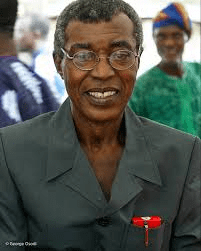
    Dr. Beko Ransome-Kuti
    Source: Instagram @gosodi

    The next day, Thursday June 17, pressure mounted. Two separate court orders reversed the earlier stoppage, while a Lagos High Court judge, Justice Moshood Olugbani, ordered NEC to release the results within 24 hours. Dr Beko Ransome-Kuti, chairman of the Campaign for Democracy, also issued his own ultimatum: release the results within a day, or the movement would do so itself.

    Watching the whole theatrics going on, the same Nigerians who had dressed up happily that Saturday morning suddenly went quiet with that familiar thought at the back of their minds: so this is how it ends again?

    Unlike the first and second republics, this time was different. Nigerians had seen their votes with their own eyes. They had stood in the queues, waited under the sun, and watched the counting. So they knew exactly what had happened. The coming days would be tense with various debates about what was coming

    Then on June 23, 1993, the pretence ended.

    The Babangida regime annulled the June 12 presidential election. Just like that. No regard for the millions who had come out peacefully to vote. Suddenly, the midnight court orders began to make sense. What looked random had been carefully coordinated long before any election. The whole electioneering process and move for democracy was a farce, June 12 was only acceptable if it produced the result they wanted. Once it did not, democracy itself became the problem.

    And that is where Nigerians must pay attention today. Because these things rarely begin with tanks on the streets. They begin quietly. A blocked reform here, a compromised electoral institution there, and a court suddenly eager to intervene in party affairs.

    It’s a circle, politicians today are testing how far they can go, and the citizens remain distracted until it is too late. Back then, it was NEC. Today it is INEC. The letters may have changed, but the lesson did not.

    When those meant to protect elections begin to look uncertain, or those in power start gathering too much confidence before votes are cast, Nigerians should remember June 12. Because conspiracies do not always announce themselves. Sometimes they arrive dressed as procedure, legality and politics as usual.

    June 12 remains less a memory of 1993 and more a warning for 2027.

  • Demo – Crazy in the 90s (Option A4)

    You’ve heard about the option A4, right?

    And no, I’m not talking about the printing papers (chuckles).

    If you studied government or history in your O levels, you’d probably associate it quickly with the electoral system of Nigeria’s 3rd Republic.

    In the option A4 system, voters openly queued behind the picture of their proffered candidates in an election. This system was introduced by Prof Humphrey Nwosu, the chairman of the National Electoral Commission.

    Prof Humphrey Nwosu
    Source: The Cable

    In essence, there was no way to stuff ballot boxes because everyone could count the actual votes in real time. There couldn’t have been a better Two Factor Authentication.

    Back to Saturday, June 12, 1993

    The day had taken so long to finally arrive, for the government had cancelled earlier attempts and had even prevented the creation of political parties. After a series of political manoeuvring, the government had decided that there would only be two democratic parties, the Social Democratic Party (SDP) and the National Republican Convention (NPC). The justification for these two parties was Socialism and Capitalism – a little to the right, a little to the left.

    Source: Historyville

    You know it sounds so funny that Abiola, a staunch capitalist, became the flag bearer of a socialist party. Well that’s a story for another day.

    The whole drama which had ensued led to a lot of complaints and doubts. They had seen this type of movie before. It felt all too familiar.

    But something about this day felt different. No one had known that this day wound remain etched in Nigerian history for years to come.

    (Moshood Kashimawo Olawale Abiola on June 12, 1993 casting his vote)

    When it was time to vote, people didn’t hide inside little booths (like we do today). They lined up openly behind the picture of the candidate they supported because it felt honest. Although voter turnout was higher in the South than in the North, it was otherwise peaceful. Over 14 million people voted. A few hours later, the counting began, and nerves began to spread. The name Moshood Kashimawo Olawale Abiola started spreading from mouth to mouth. He was winning not just in his region of origin (the South-West), but across regions and even in parts of Northern Nigeria. It felt unusual because for once, religion and ethnicity seemed less powerful than choice.

    And for a moment, we believed that, perhaps this time, the story might end differently. But while the election results were being collated, something dramatic was unfolding.

    The next day (Sunday), the 13th June, results began to trickle in. Of the 30 states in existence, it appeared that SDP candidate Abiola had cleared 19 of them and the Federal Capital Territory, with over 8 million votes, while his opponent, Tofa of the NRC, had won just 11, with about 6 million votes.

    Source: Max Siollun, retrived from https://maxsiollun.wordpress.com/2008/06/14/june-12-1993-election-full-results/ (Accessed 20 April 2026)

    For a while the nation was kept in suspense. Citizens eagerly awaited the official anouncement of election results by Prof Nwosu (NEC Chairman).

    By wednesday, June 16, to the shock of many Nigerian voters, Prof Nwosu declared that NEC had decided not to release the final results of the presidential election ‘until further notice,’ as the ABN, under the auspices of Chief Arthur Nzeribe, had taken NEC to court, and had gotten an Abuja High Court injunction to restrain it from announcing the results.

    In essence, the election Nigerians had eagerly waited for was inconclusive.

    (Arthur Nzeribe, the man behind the annulment of the June 12 election)

    But what followed next?

    To be continued

  • The Rebel Soldier who Became a National Symbol

    The Rebel Soldier who Became a National Symbol

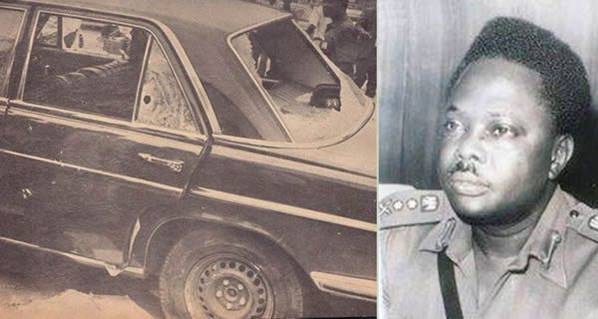
    On 13 February 1976 (a day to Valentine’s Day 50 years ago), General Murtala Ramat Mohammed was ambushed and killed in Lagos on his way to work by troops loyal to Lieutenant Colonel Buka Suka Dimka. He was on his way to Dodan Barracks with no serious security, asides the service pistol his ADC bore. Along Federal Secretariat Road, his vehicle was blocked. Shots were fired at close range. Within minutes, the Head of State was dead and left on the highway to the full view of bystanders.

    A picture of General Muritala’s official vehicle moments after he was assassinated C. February 1976.
    Source: Nairaland

    Fifty years later (in 2026), the interpretation of that event remains divided. Some argue that Murtala’s death was almost predictable. That a man who participated in coups, commanded troops in a civil war, and removed a sitting Head of State could not realistically expect a quiet political retirement. Others insist that he had become a necessary reformer and that his assassination interrupted what might have been a structural turning point in Nigeria’s political development.

    There is also a third claim, more speculative but persistent: that Murtala governed with the urgency of someone who knew he might not last. He moved quickly because he understood the volatility of the institution that produced him.

    But before we draw conclusions, we need to ask a more grounded question: How did he get there?

    Before 1976

    Murtala did not emerge suddenly as Head of State the previous year. By the time Gowon was overthrown, he had already been inside the core of Nigerian military politics for nearly a decade. Like Gowon, he belonged to the early generation of post-colonial officers. Born in Kano in 1938, Murtala attended Barewa College in Zaria, a school that produced a generation of northern political and military elites. Like Yakubu Gowon too, he trained at the Royal Military Academy, Sandhurst. On paper, he was a product of the British military tradition of discipline, hierarchy, and loyalty to the chain of command.

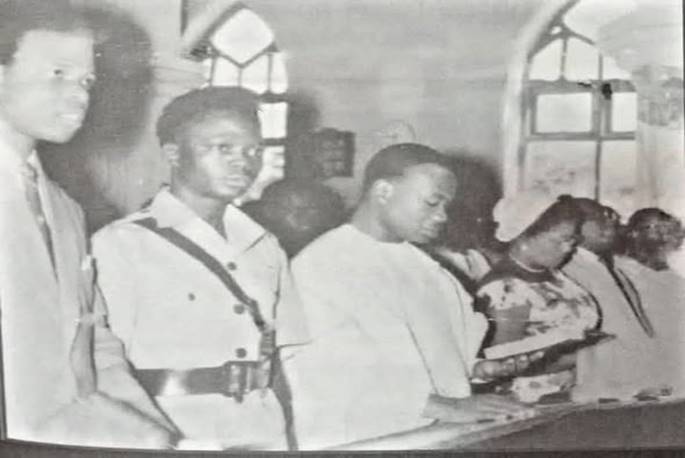
    This rare image captures Lieutenant Murtala Ramat Mohammed in 1962, pictured in military uniform while attending a church service as a young Nigerian Army officer. At the time, he was serving as Aide-de-Camp (ADC) to Dr. Moses Adekoyejo Majekodunmi, the Administrator of the Western Region during Nigeria’s political crisis of the early 1960s.
    Source: Folaranmi Ajayi (Facebook, 2026)

    But there is an important distinction. While Gowon absorbed institutional caution, Murtala absorbed structure, but not restraint. By the mid-1960s, he had developed a reputation for bluntness, impatience, and emotional intensity. Even early colleagues noticed that he only respected discipline when it aligned with his judgment. When it did not, he was prepared to challenge it. The pattern was already forming.

    His First Instance of Open Rebellion

    Murtala’s first clear break with military hierarchy came in July 1966. After the January coup brought General Johnson Aguiyi-Ironsi to power, tensions inside the army intensified. Many northern officers believed the political balance had shifted dangerously, and General Ironsi did little to assuage those fears. His promulgation of the Unification Decree, which replaced the federal system with a unitary structure, deepened that suspicion.

    At this point, Murtala was no longer a passive bystander, he was one of the officers who coordinated the counter-coup from Lagos. He took control of strategic points, including the airport, and maintained communication with other northern officers. In a sense, he was not merely executing orders handed down from above but was part of the circle shaping events as they unfolded. The July counter-coup was a calculated intervention by officers who believed the balance within the federation had been altered beyond comfort.

    It is also important to note that, at that stage, the objective was not simply regime change. Among many northern officers, the idea of Araba (secession of the North) was openly entertained. Murtala was associated with that current of thinking. In other words, his first major political act inside the Nigerian state was tied to a movement that contemplated breaking the state itself. Its an irony today that he is often viewed as a nationalist; people even go further to justify his ‘fellow Nigerians’ phrase as a pointer to his nationalist traits.

    Well, as we would see in the next article, Nigeria ultimately remained united, largely because political negotiation overrode separatist impulses. But July 1966 established something that would follow Murtala throughout his career. When he believed a structure was flawed or dangerous, his instinct was not patience. It was decisive correction, even if that correction risked fragmentation. He did not treat the Nigerian state as untouchable. If he believed it was failing or biased, he was prepared to dismantle or restructure it by force. That was his first open rebellion within the system he had sworn to serve.

    The Civil War: Courage and Disobedience

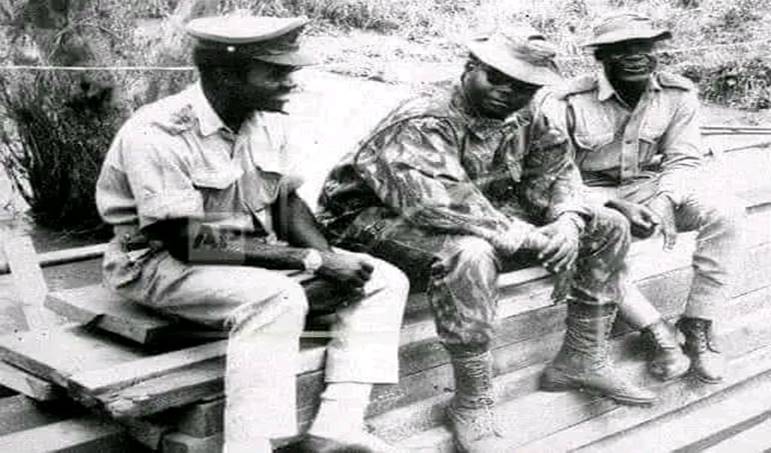
    When the civil war began in 1967, Murtala was appointed commander of the Nigerian Army’s 2nd Division, responsible for operations in the Midwestern and eastern theatres. His performance during this phase mixed tactical success with persistent friction with the high command. What stands out most in his wartime record was not only bravery, but a pattern of acting independently of orders from Army Headquarters and Supreme Headquarters.

    A picture of General Murtala Muhammad with two other soldiers in Benin after capturing the city during the Biafra War.
    Source: Associated Press

    The most discussed example is the push toward Onitsha.

    After retreating Biafran forces destroyed the key bridge over the River Niger, Army Headquarters in Lagos advised a cautious, unopposed crossing at Idah, followed by an overland advance  (a plan viewed as less risky and more coordinated with neighbouring formations).

    In his usual character, Murtala rejected that option. He favoured a direct river assault from Asaba, believing the momentum was with federal troops. Supreme Headquarters, his brigade commanders, and even the commander of the neighbouring 1st Division, Colonel Mohammed Shuwa, advised against it; despite this, Murtala persisted. He ordered the river crossing despite explicit strategic recommendations to the contrary.

    Twice, the frontal assault was repulsed by the Biafran soldiers with significant casualties and loss of equipment. Even after those setbacks, he tried a third assault before eventually agreeing to Army Headquarters’ original plan and capturing the town. The failure of his earlier attempts cost lives and morale.

    This episode reveals two consistent traits in his wartime command:

    • He valued initiative and decisiveness over procedural coordination.
    • He was willing to act against directives from his superiors if he judged them too cautious.

    Ideally, as some military observers have pointed out, such independence should likely have led to a court-martial in less chaotic conditions. However, in the Nigerian civil war’s fluid environment, it did not.

    These decisions were, however, not isolated, they reflected a larger pattern within the 2nd Division under his command, where he adopted rapid movement, aggressive engagement, and often unilateral decision-making that prioritised tempo over hierarchical compliance. That combination won him recognition for bold leadership and respect from many subordinates. It also created unease among senior officers who saw traditional military discipline eroding under the pressure of his personality and approach.

    The 1975 Coup

    By 1975, Murtala was no longer a divisional commander at war. He was Federal Commissioner for Communications in a government that had been in power for nearly a decade. But the impatience that marked him in 1966 and during the civil war had not softened. The post-war years were marked by oil revenue expansion and reconstruction. They were also marked by delay due to bureaucracy in government procedures. The promised transition to civilian rule, initially projected for 1976, was postponed. Administrative reforms were discussed repeatedly but implemented slowly. Don’t forget that by 1974, there had been two major milestones: The wage and Salary increases headed by Jerome Udoji, and a National Conference on Manpower Utilisation and Development. On one of such occasions where Gowon rejected his memo, he angrily remarked to Shehu Shagari,

    “Don’t mind him!” “We shall soon change him. We put him there and we can remove him anytime!”[1]

    Within sections of the officer corps, especially among those who had fought the war, frustration began to build. To them, the post-war state appeared slow, procedural and overly cautious. Murtala stood at the opposite end of that temperament. He was direct where others were consultative. He preferred resolution to deliberation.

    When the July 29, 1975 coup was executed while Gowon was abroad, Murtala was not an accidental beneficiary. He was the senior officer around whom dissatisfaction had quietly gathered.  Whether or not he drafted the plan himself is less important than the fact that he accepted its outcome without hesitation. Once again, he aligned himself with intervention as a corrective instrument.

    His months in office reflected the same instinct. State governors were removed. Senior officers were compulsorily retired. Thousands of civil servants were dismissed. A new federal capital was announced. Foreign policy shifted decisively. The tempo was unmistakable. Supporters described this as clarity and discipline restored. Critics saw recklessness and institutional shock. But even in government, Murtala behaved as he had in 1966 and during the war: when he believed a structure was defective, he moved to reset it.

    Then came 13 February 1976.

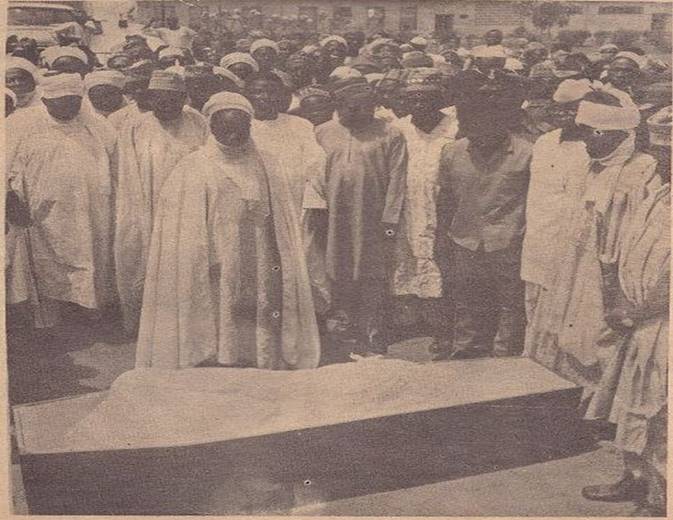
    General Murtala Mohammed’s Burial And Corpse, 1976.
    Source: Nairaland

    The irony is difficult to ignore. A man who had seized the airport in 1966 now has that same airport named after him.

    The first Nigerian Head of State to appear on a naira note is a man whose career repeatedly challenged the very hierarchies he once swore to uphold. Monuments, institutions and public memory have fixed him in national symbolism.

    It is here that Dimka’s failed coup assumes a historical weight beyond its immediate violence. Assassination froze Murtala at a particular moment as an energetic, reformist, and uncompromising leader. Death removed the possibility of decline, error, or prolonged controversy. It converted a divisive figure into a fallen one.

    In life, he was a rebel inside the system. In death, he became a symbol of it.

    That transformation may be the most consequential outcome of 13 February 1976.

    A portrait of Lt. Col. Buka Suka Dimka. Source:Vanguard News

    [1] Omoigui, N. (n.d.). Military rebellion of July 29, 1975: The coup against Gowon – Part 6. Dawodu. Retrieved February 11, 2026, from https://www.dawodu.com/articles/military-rebellion-of-july-29-1975-the-coup-against-gowon-part-6-635

  • THE PROMISES WE KEEP HEARING 2

    THE PROMISES WE KEEP HEARING 2

    EPISODE TWO: WHEN THE PROMISES BROKE

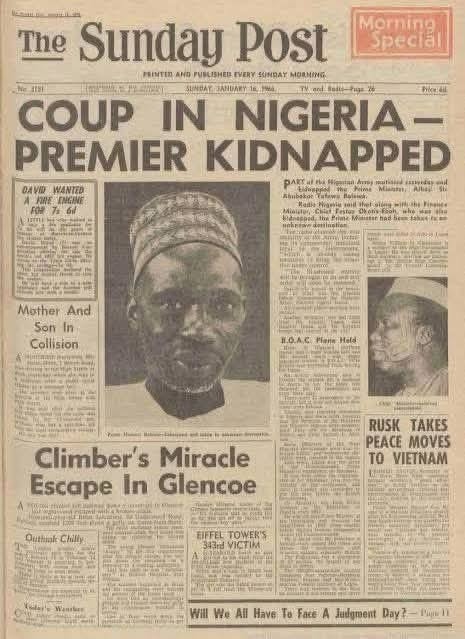
    On the morning of January 15, 1966, Nigerians woke up to a country they no longer recognised. Before dawn, soldiers had moved through Kaduna, Lagos, Ibadan, and Enugu with stealth and precision. By the end of the day, quite a number of politicians were either missing or killed, senior officers in the military were ambushed, and government authority had been effectively shattered. For many citizens, the first confirmation came not from officials in Lagos, but from Radio Kaduna. The voice that came through did not sound like a reassurance but a verdict.

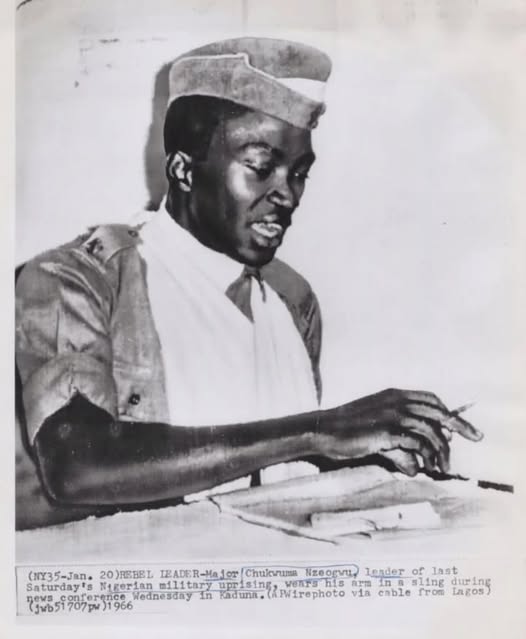
    Major Chukwuma Kaduna Nzeogwu’s broadcast was sharp, moralistic, and unlike anything Nigerians had heard from their leaders. Gone were the polished lines of Independence Day speeches. He spoke of “political profiteers… swindlers… men who seek bribes and demand ten percent.” His speech was not simply a justification for the coup; it was a public indictment of the First Republic. And for many Nigerians, it captured something they already felt but had not articulated: the promises of independence had begun to collapse long before the soldiers arrived.

    Major Chukwuma Nzeogwu, addressing a press conference in Kaduna, Nigeria. His arm was in a sling due to injuries he sustained during the military coup he had led just hours earlier on January 15, 1966

    To understand why the 1966 coup resonated so widely, you have to look at the slow breakdown that preceded it.

    The early optimism of independence did not survive the crises of the early 1960s. By 1962, politics had become a battlefield. The Action Group crisis in the Western Region (a dispute between Awolowo and his deputy, Akintola) grew into a full political fracture. What started as ideological disagreement escalated into violent street clashes, burnings, and targeted attacks. The period later known as Operation Wetie or “Wild Wild West” symbolised how far the democratic project had drifted. State institutions struggled to contain the violence. Public trust evaporated due to perceived biases and partisanship.

    At the national level, tensions grew worse. The 1962 census collapsed into controversy. The 1963 recount did not settle the matter; it further deepened suspicion. The 1964 federal elections were discredited by boycotts and intimidation. And the 1965 Western Regional elections triggered violence so intense that many Nigerians openly questioned whether democracy had a future.

    This was the environment in which political speeches began to lose their power. Leaders still invoked unity, brotherhood, and discipline, but the gap between rhetoric and reality widened daily. Citizens heard the speeches, but they no longer believed them.

    Do you see a similarity today?

    Why Nzeogwu’s Broadcast Hit the Way It Did

    What made his message different was not the language itself but the way he used them. Themes like honesty and discipline had appeared in earlier speeches, but his rendition stood out. Where Azikiwe had used such words to appeal, Nzeogwu used them to condemn. He was not asking for national unity; he was asserting that the political class had betrayed it.

    For many Nigerians, especially in regions where the crises had been most severe, the broadcast felt like a brutal but familiar truth. In the North, early reactions included cautious approval. In the West, exhausted by political violence, some citizens expressed relief that someone had taken control. In the East, responses were more restrained, coloured by concerns about who had been targeted in the coup.

    But across regions, one sentiment was consistent: the politicians no longer controlled the national narrative. Someone else (uniformed, armed, confident) had stepped in to define the country’s direction.

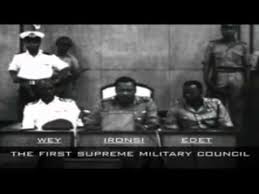
    In actual sense, the coup did not erase political rhetoric, it simply changed its tone. In the days following the intervention, military leaders adopted the same themes that civilians had used the word ‘unity, discipline, national survival’ but the meaning shifted. These were no longer appeals rooted in persuasion but instructions backed by authority. The vocabulary remained familiar, but the centre of power had moved from the parliament to the Supreme Military Council.

    Aguiyi-Ironsi’s First Press Conference After the January 15, 1966 Coup

    This transformation matters because it marks the first major rupture in Nigeria’s rhetorical tradition. From 1960 to 1966, civilian leaders used language to build consensus, manage crises, and hold together a fragile federation. After the coup, the military used similar words, but as instruments of control.

    This episode reveals the point at which the promises of early independence finally broke under the weight of political crisis. By January 1966, the gap between what leaders said and what citizens experienced had become impossible to bridge. The rhetoric of unity and progress no longer reassured anyone. That vacuum created the space for Nzeogwu’s broadcast, and for the new political language that would dominate the years to come.

    In Episode Three, we will follow this shift into the era of counter-coups and the Civil War: a period when rhetoric about unity, survival, and sacrifice took on deeper, more urgent meanings and when political language began to reflect not just hope, but existential struggle.

    Thanks for reading. Let us know what you think in the comments.

  • The Promises We Keep Hearing 1

    The Promises We Keep Hearing 1

    EPISODE ONE: The First Promises

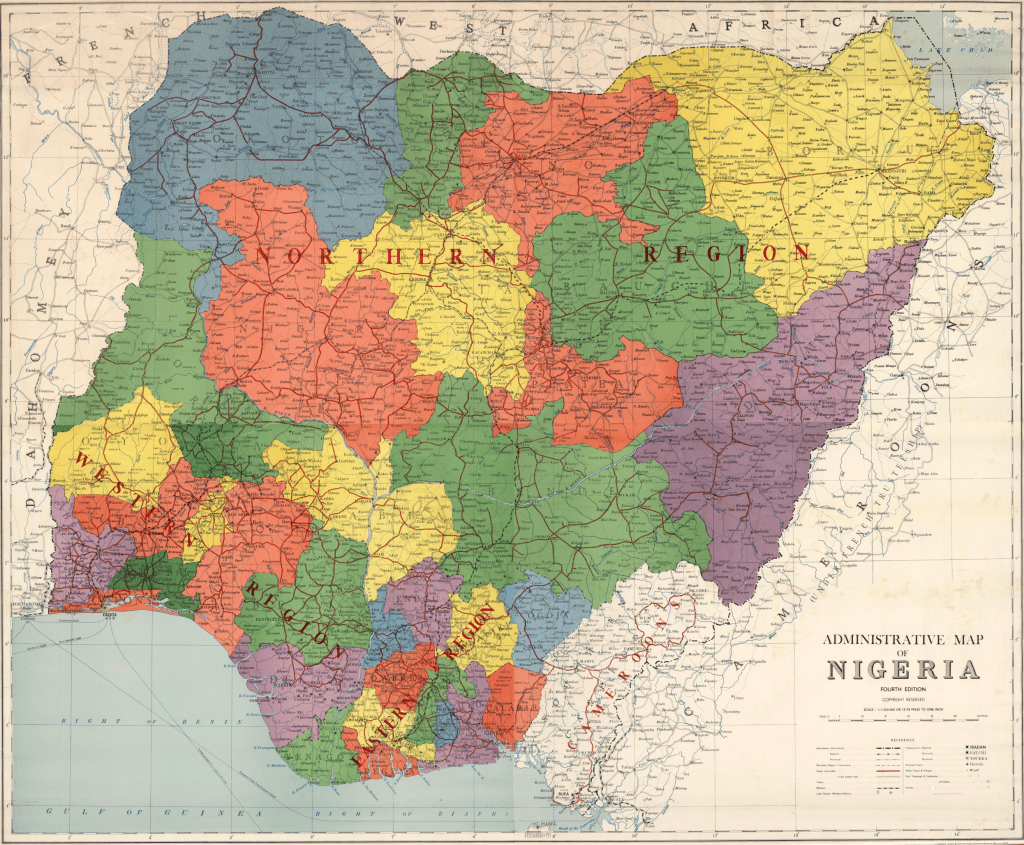
    In 1960, Nigeria became independent. The euphoria was real, but fragile. Three regions, each with distinct histories and political ambitions, were suddenly asked to govern themselves under a federal system. Unity was therefore not guaranteed; democracy was only an experiment. In this context, every speech from the national stage carried a weight far greater than ceremony. These speeches were instruments of reassurance. They served as appeals to cohesion and subtle warnings.

    By 1962, the first cracks appeared. The Action Group, dominant in the Western Region, fractured. Awolowo and Akintola clashed over leadership, party structure, and policy, turning the Western Region legislature into a battleground. The crisis quickly became national, raising doubts about the viability of democracy itself. Politicians across the country watched as trust between regions eroded, and ordinary citizens began questioning the promises of independence.

    Detailed map showing the regions and provinces of colonial Nigeria. Produced in 1924 and revised in 1960

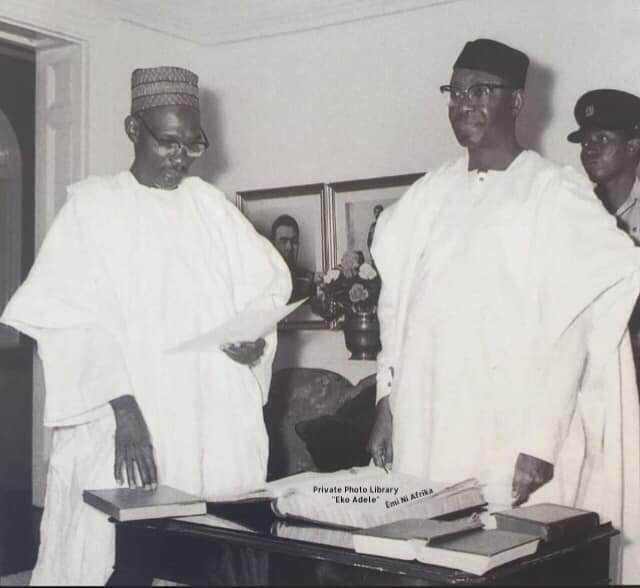
    It was against this backdrop that Nnamdi Azikiwe addressed the nation:

    “Let us renew our faith in liberal democracy and strengthen our belief in the greatness of our country.” (1962 Independence Day Speech)

    Contrary to popular beliefs, these words were not just patriotic exhortation on a national day, but a deliberate attempt to restore confidence in a system already under stress. Azikiwe was not only speaking to the citizens, he seemed to also be addressing the emerging power of the military, a silent observer of civilian failures.

    Two years later, the tensions over identity and representation had intensified. The 1963 census had sparked allegations of manipulation, feeding regional suspicion and inflaming ethnic consciousness. Political rhetoric increasingly addressed not policy but cohesion. In his 1964 address, Azikiwe invoked a line from the national anthem:

    “Though tribe and tongue may differ, in brotherhood we stand. Let us give meaning to these words by living and working together.”

    These words were not symbolic; they were a response to a real threat – a nation on the verge of fragmenting along ethnic lines. Interestingly, decades later, the administration of President Bola Ahmed Tinubu reintroduced this old anthem officially. Senate President Godswill Akpabio argued at the time:

    “If we had kept to that anthem, we probably would not have banditry today in Nigeria because if you take your neighbour as your brother, you will not want to kill him.”

    But that is a digression for another day. Returning to the early 1960s: the federal elections of 1964 and the ensuing violence in the Western Region, later dubbed the “Wild Wild West” or “Wet tie” crisis, intensified the stakes. Political rhetoric became both shield and strategy. Leaders promised peace, discipline, and unity while the country witnessed arson, intimidation, and targeted attacks. The language of promise was a mechanism of control: to assure, to persuade, and to postpone the inevitable confrontation.

    By 1965, the military was observing these developments with increasing concern. Civilian authority appeared ineffective, and the prospect of intervention grew. The promises made by politicians, while aspirational, also underscored the fragility of the republic. Gowon’s 1966 Independence Day address illustrates the continuity of the message, even as the voice shifted from civilian to military:

    “We must rediscover honesty and sincerity. Let us dedicate ourselves to discipline, loyalty and service.”
    “Our nation must remain united. It is only in unity that our progress can be guaranteed.”

    The words remained familiar, unity, progress, discipline, but their delivery signaled a change in authority. Whereas early promises sought to inspire, military rhetoric sought to command. Yet the underlying narrative of hope persisted, as though the nation’s imagination required a constant reminder that a better Nigeria was always within reach.

    Looking back, the first promises of independent Nigeria reveal two enduring truths. The first is that rhetoric is inseparable from the context in which it is delivered. Every speech, every line of persuasion was a response to political crises, social anxieties, and regional tensions.
    Second, the themes of unity, progress, and renewal established in the 1960s have endured. They continue to resonate because they address the same hopes, fears, and expectations of Nigerians today.

    Episode One closes here, not with resolution but with foreshadowing. The promises of 1960–1966 laid the groundwork for the challenges that would erupt in 1966, as the nation confronted civil war, further coups and the first tests of the rhetoric’s durability. Understanding these first promises is essential to tracing how political language shapes not only expectations but the trajectory of the nation itself.

  • The Promises We Keep Hearing

    The Promises We Keep Hearing

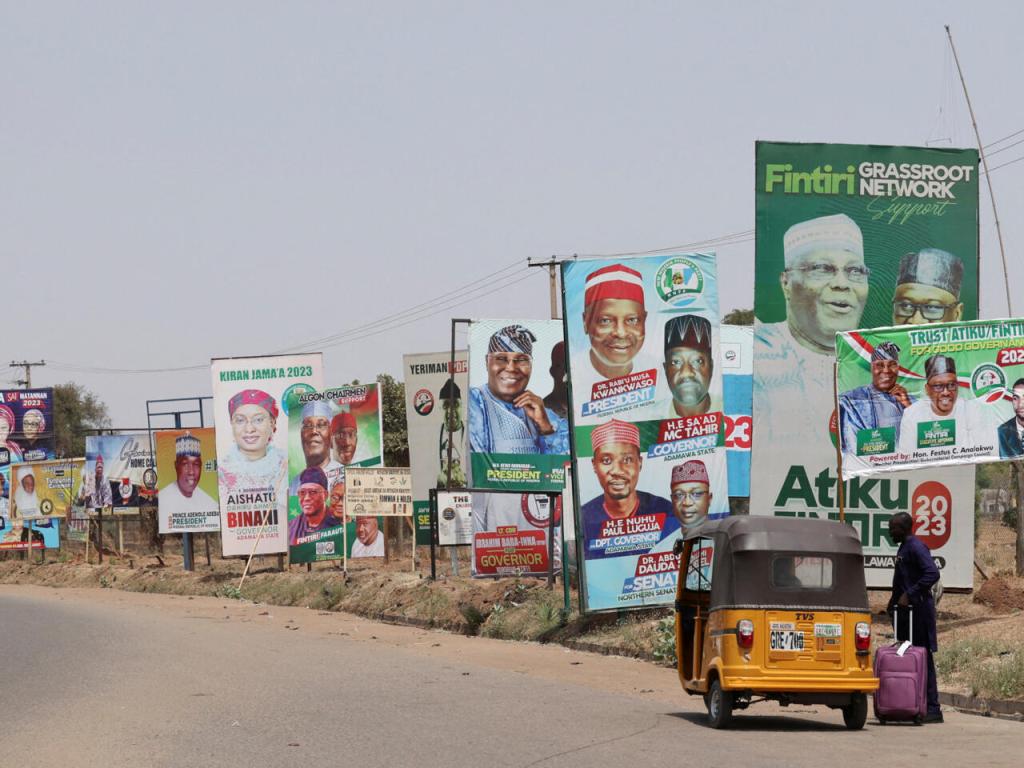
    Every election season in Nigeria feels like a revival. You hear new slogans, see new faces but the same promises of hope. In 2014 up till 2015, a new political coalition promised “Change”, then by 2019 they moved to the “Next Level.” Today, we listen patiently to the promise of “Renewed Hope.” These promises may sound fresh but are quite familiar; they are all echoes of promises we’ve heard before.

    In recent months, while reading through old Nigerian newspapers, one thing became clear: these promises are not new. From independence till now, every government has spoken the same language of transformation. They often promote the belief that a new dawn is just one administration away. These repeated declarations are not just political statements; they have become part of our national rhythm.

    This recurring pattern of rhetoric is what inspired this series — The Promises We Keep Hearing. It’s an attempt to look back at how political speech has shaped Nigeria’s identity and imagination. By tracing the evolution of the words of our leaders, we observe their tone and ideals. We also note their contradictions. This analysis helps us understand how language itself became one of the most powerful tools of governance in Nigeria.

    During the colonial era, Nationalist leaders delivered anti-colonial speeches. Today, most politicians make populist appeals to mobilise people, legitimise actions and, manipulate public opinion.

    The early nationalist movements of the 20th century show how language carried the moral weight of freedom. Early nationalist leaders understood the power of well-crafted speeches. Macaulay, often regarded as the father of Nigerian Nationalism, was renown for his fiery essays in The Lagos Daily News. Azikiwe’s speeches were often effective because they married intellect and hope, painting Nigeria as a proud, united nation (you really need to listen to his speeches).

    Awolowo’s tone, on the other hand, was often pragmatic and policy-driven, reflecting the discipline of a planner (See ‘Awo’, his memoir for more of this). Ahmadu Bello’s speeches often appealed to cultural preservation and dignity, linking tradition with progress. No wonder he was highly regarded by majority of the Northern Nigerian populace.

    The 1960s were full of optimism, but also rivalry. Independence brought hope, however political language quickly became a contest of identities and power. Our politics became regionally based. By 1966, the military replaced politicians who had fought themselves with words and the same institutions that wuld supplant them.

    Their eloquence gave way for the language of command. Leaders like Aguiyi-Ironsi, Gowon, and Murtala Mohammed spoke not to persuade, but to instruct. Even so, words such as unity, discipline, and accountability became rallying cries for a nation finding its footing.

    With the return to democracy in 1999 came a new vocabulary: unity, reform, rebirth. Obasanjo spoke with authority, Yar’Adua with humility, Jonathan with empathy. Today, slogans dominate social media: Change. Next Level. Renewed Hope. But the power of words hasn’t faded. Leaders still know that how they speak matters.

    Nigeria’s political rhetoric is also a story of how we imagine ourselves. The words of leaders shape what we believe is possible. This series starts by tracing those words – their origins, their intent, and their impact. Understanding the promises we keep hearing might just help us understand the country we’re becoming.

  • Power Drinkards

    Power Drinkards

    sober-reflecting on the days when they were still sober.
    reminiscing the times before
    their tongues
    ever tasted power. Before
    their lips kissed
    the rim of the calabash.


    behold our Messiah who turns
    power to wine—
    strong frothing wine. &
    drink till it blurs their
    vision. &
    deafens their ears. &
    corrupts their hearts.
    coursing through
    their esophagus like the
    venom of a diamondback rattle snake.

    Disclaimer: Power-drinkards are liable to run mad.

    Greed; drowning drinking them
    & driving them insane
    like it isn't a crime to
    drink & drive. power
    corrupts but absolute power
    corrupts absolutely.
    Power drunk
    they gyrate indefatigably to
    the lamentations of their
    people.

    They say "serve us another
    round, for we will never
    tire.
    We will drink until our very
    deaths."
    Power drunk
    they gyrate indefatigably to
    the lamentations of their
    people.

    One day,
    your calabash will run dry.
    And your keg will break.
    where then will you turn to
    to quench your insatiable
    thirst?
    which herb will cure you of
    your madness? Who will wean
    you of your deadly addiction?

    sober-reflecting on the days
    when these men were sober.
    reminiscing on
    the days before power drank
    them…
  • A Play In The Jungle

    A Play In The Jungle

    Who ever knew that the Lion was not-too-old to run?
    Or who knows why when the cub entered the bout
    He was called a sheep—a black sheep?
    But either ways, the cat family must lay claim to the throne

    Now, even the wolf wants to lead the flock
    Because this is the jungle; where anything goes

    I can't remember being taught the drama technique
    That sidelines the main characters in a play
    Having them sit as the audience
    Watching as jesters play
    Power games with their fate.
    In this play where every actor is a clown.

    It's funny how only the climax determines the drama's genre
    And how I can already predict
    That this farce will end in a devastating tragedy
    In this play where no one follows the script
    Every character struggling to steal the spotlight


    It's probably no coincidence that
    Cheetah and Cheater are homonyms
    Because either can win this race in the jungle

    Every virulent animal has stepped up to the line
    They are on their marks
    The stadium goes quiet
    As we await the bang like our lives depend on it.
Design a site like this with WordPress.com
Get started