Tag: Nigerian history

  • THE SMILING GENERAL

    If you grew up in Nigerian, the name Babangida (or IBB for short) doesn’t just sound like a person. It sounds like an era, a mood, a long political sentence with commas in strange places. While some call him IBB, some call him Maradona and some call him the Evil Genius. And the more you read about him, the more you realise that Babangida is not a simple story. He is layers, he is charm and calculation. He is history with a permanent half-smile.

    Let me tell it the way I understand it.

    He was born on August 17, 1941, in Minna, in present-day Niger State. [1] Northern Nigeria, dusty roads, conservative, muslim upbringing, structured environment. While his father, Muhammad Babangida, worked in the Native Authority system,[2] his mother, Aisha, grounded the home. Discipline was not optional, it was the major currency in his home.
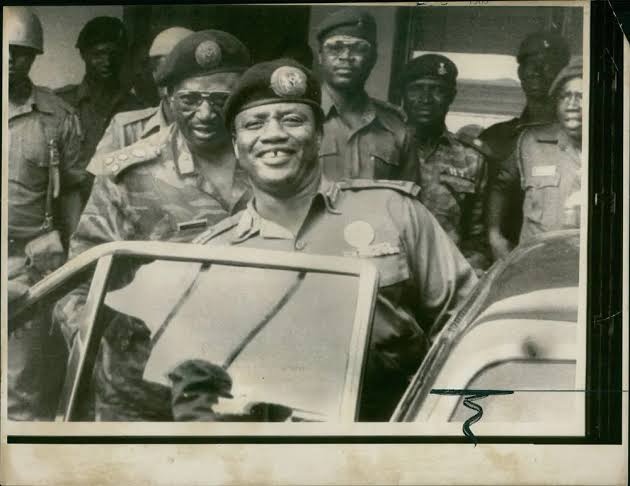
    (A picture of General Ibrahim Badamasi Babangida in Lagos on 1st September, 1985 leaving a session of the newly established Armed Forces Ruling Council (AFRC) days after he led a military coup that removed General Muhammadu Buhari from power)
    Source: Gettyimages

    Growing up in the late colonial era Nigeria meant you were born into transition. The British were still around, but independence was humming in the distance. Babangida’s early education took place in Bida and later in Kaduna.[3] Even as a boy, accounts suggest he wasn’t loud or flamboyant. He was observant.

    The quiet ones are always observing.

    Always calculating. At 21, in 1962, he joined the Nigerian Military Training College (NMTC) in Kaduna.[4] That decision changed not just his life, but Nigeria’s trajectory. The military, at that time, was one of the few national institutions cutting across ethnic and regional lines. It was disciplined, modern, and upwardly mobile. For ambitious young men, it was a launchpad.

    And Babangida? He thrived.
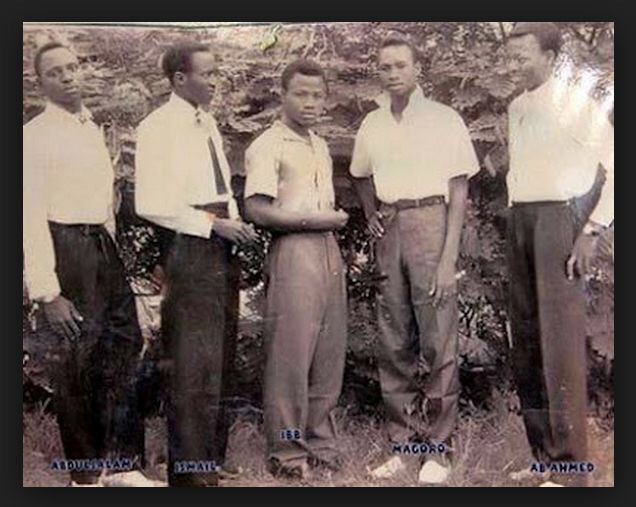
    Babangida (centre) and fellow Cadet officers at the NMTC (Later NDA) C. 1963
    Source: Nairaland

    Then came the coups in 1966 when Nigeria cracked open. The coup of January had been hijacked by Major General Johnson Aguiyi-Ironsi, the GOC of the Army who the coup plotters had failed to neutralise.[5] In July the same year, he was overthrown in a bloody revenge coup in which Lt. Babangida played a major role as a junior officer.

    The counter coup, also known as operation ‘Araba’, was a clear manifestation of suspicion that had engulfed the Army. The Nigerian military was no longer just an institution but a battlefield of ideology and ethnicity.

    When the Nigerian Civil War erupted in 1967, Babangida fought on the federal side. He was wounded in action.[6] Being shot in war at a young age changes you. It humbles you, it hardens you but it also convinces you that power is about survival and tact. It was during his recovery that he married Maria Okogwu who would later be known as Mariam.
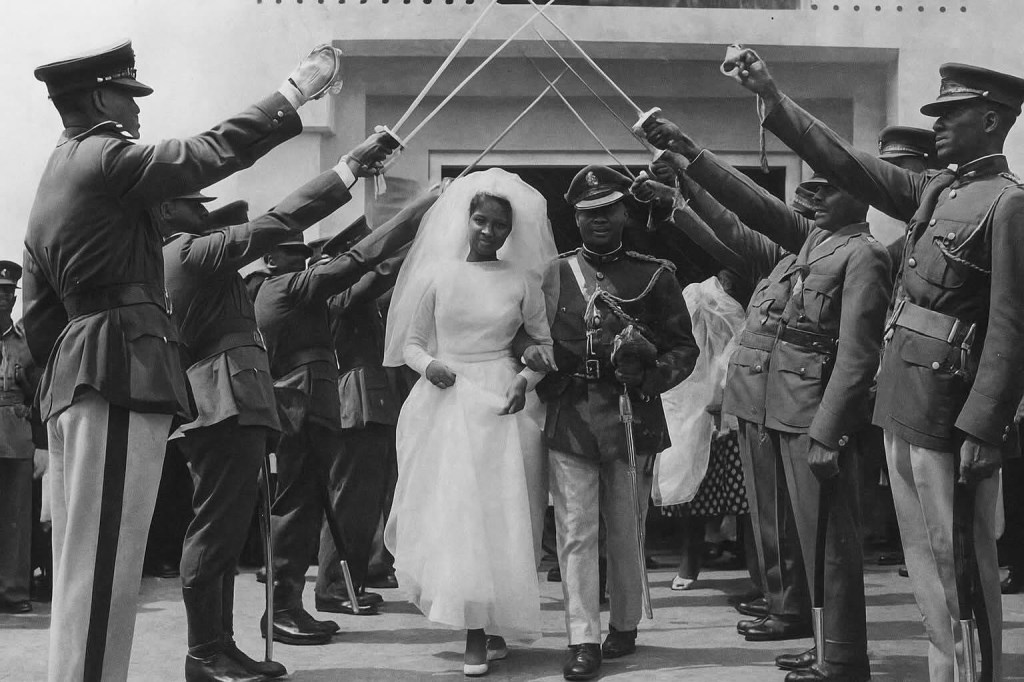
    This photograph captures Major Ibrahim Badamasi Babangida, then a Nigerian Army officer, alongside his bride, Maryam Babangida (née Maria Okogwu), on their wedding day, held on 6 September 1969 in Kaduna, while he was recovering from a battlefield injury.
    Source: Adeyinka Makinde

    During the war and after, he built alliances and strong friendships, most notably with officers like Sani Abacha.[7]

    In Nigerian military politics, loyalty is everything. Babangida understood that power in uniform went beyond rank. To be successful, one needed to have strong networks.

    As an officer, he had access to various elite training abroad most notably in India and The United Kingdom.[8] These advanced military education sharpened him and exposed him to global systems which influenced his orientation towards soldiering. In essence, he wasn’t just a local soldier, he was globally aware.

    By the 1970s and early 1980s, Babangida was climbing steadily through the ranks. Nigeria had entered its cycle of coups and counter-coups, military governments replaced civilian ones, corruption allegations were common. Economic mismanagement had followed the oil boom.

    In 1983, Muhammadu Buhari seized power in a coup that overthrew President Shehu Shagari.[9] Babangida supported Buhari initially. He became Chief of Army Staff.[10] But here’s the twist, Babangida believed Buhari’s regime was too rigid, too harsh, and too inflexible.

    And Babangida was not rigid, he was fluid and believed in realpolitik. It didn’t help matters that Buhari appointed Gen Tunde Idiagbon (Babangida’s junior) as Chief of Staff, Supreme HQ.

    In August 1985, Babangida led a bloodless coup against Buhari. He announced the takeover with smooth confidence. Nigeria had a new leader, just like that.[11]

    Babangida is famous for his smile that disarmed people. While other generals looked stern and intimidating, he looked approachable and charming. He would lean in slightly while speaking, listen carefully, then make a decision that nobody predicted. That’s why they called him the Maradona. The Argentine footballer Diego Maradona was known for dribbling past opponents effortlessly.[12] Babangida dribbled politically. One moment he promised a transition to civilian rule, next moment, timelines shifted. Policies reversed, aliances recalibrated. He was strategic ambiguity in human form.

    When he took power in 1985, Nigeria’s economy was struggling. Oil prices had dropped, debt was rising and inflation was biting. Babangida introduced the Structural Adjustment Programme (SAP) in 1986 under guidance from the International Monetary Fund and World Bank.[13] SAP meant currency devaluation, removal of subsidies, trade liberalisation and privatisation.

    In theory? Reform.

    In reality? Pain.

    The naira fell and prices rose. Many Nigerians struggled, critics argue that SAP widened inequality. Supporters say he inherited a broken system and had to take tough decisions. Here’s what fascinates me, Babangida didn’t see himself as reckless. He saw himself as modernising. He believed Nigeria needed economic restructuring to survive in a global system.

    Whether that belief was idealistic or convenient is still debated.

    Babangida promised to return Nigeria to civilian rule. But instead of allowing organic party formation, he created two political parties himself. The Social Democratic Party (SDP) and the National Republican Convention (NRC).[14] He once described them as “a little to the left” and “a little to the right.”

    Imagine a military ruler designing democracy like a software update.

    He banned politicians, unbanned them, postponed elections and shifted transition dates. It was like watching someone play chess alone and still managing to surprise himself.

    But then came June 12, 1993. The presidential election was widely regarded as Nigeria’s freest and fairest. Businessman Moshood Abiola[15] appeared to win. And then Babangida annulled it.[16] That single decision became the defining moment of his legacy.

    Why did he annul it? Some argue military pressure, some say fear of instability, ohers say he wanted to maintain control. He claimed there were irregularities and threats to national security. But Nigerians were furious, protests erupted and international pressure mounted. His political genius suddenly looked like political miscalculation.

    By August 27 1993, Babangida “stepped aside” and handed over to an interim national government.[17] That phrase became iconic. Not resigned, not overthrown, stepped aside. It was classic IBB language.

    Behind the politics was his marriage to Maryam Babangida. She was elegant, educated and charismatic. She redefined the role of First Lady in Nigeria. Her “Better Life for Rural Women” programme elevated women’s issues nationally.[18] They were seen as a power couple, almost glamorous compared to previous military regimes. They had four children.
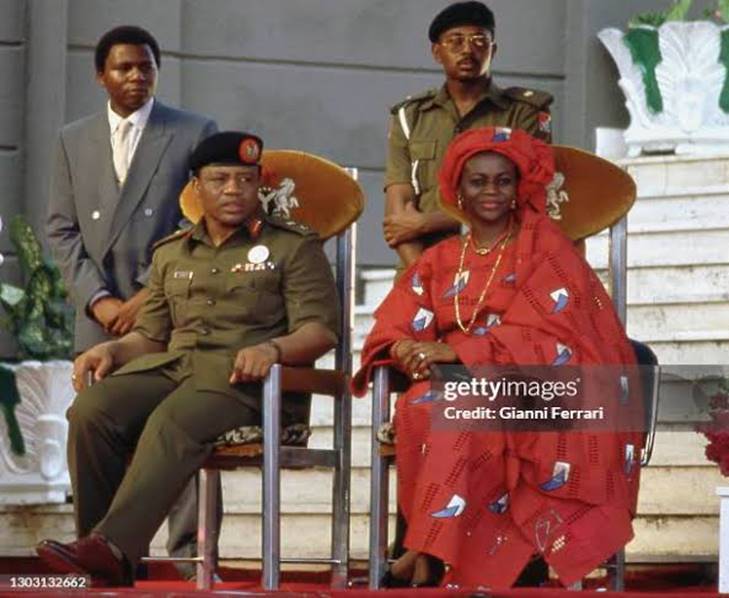
    (A picture of General Babangida and his wife, Maryam Babangida)
    Source: Gettyimages

    Those who interacted with Babangida socially often describe him as relaxed, humorous, and surprisingly informal. He enjoyed storytelling, he enjoyed being in control of the narrative.

    Maybe that’s why he has remained influential long after leaving office.

    Unlike some former rulers, Babangida didn’t fade away, he became a political kingmaker. Politicians visited Minna frequently,[19] his hilltop mansion became a pilgrimage site for aspirants. He never fully exited the stage, he just changed seats. Over the years, he expressed regret[20] about June 12, acknowledging it as a difficult decision. He however never apologised for annulling it. In later reflections, he suggested he was constrained by forces within the military.

    Whether that is accountability or reframing depends on who you ask.

    What Shaped Him? If I had to psychoanalyse him from the outside, I’d say this, growing up in colonial transition taught him that power structures shift. Surviving war taught him that control equals survival. Military training taught him hierarchy and strategy, exposure abroad taught him global realism. Nigeria’s volatility taught him that rigidity breaks regimes. So he chose flexibility, sometimes too much of it.

    He believed in controlled democracy, managed transitions, incremental reform and balance and distrusted chaos. But here’s the irony: in trying to control chaos, he often created more of it.

    Babangida is not easily categorised. He modernised parts of Nigeria’s banking sector, expanded the press environment in some periods, created new states, empowered technocrats. Yet his regime faced allegations of corruption, press intimidation and political manipulation. And the unresolved trauma of June 12. He is a paradox – reformist and disruptor, strategist and gambler in nature. And maybe that’s why he remains one of Nigeria’s most analysed leaders.

    When you think about Babangida, you do not see a cartoon villain or flawless hero. You see a man shaped by instability, convinced that only he understood how to hold the country together. He believed in diplomacy within the military. In balancing factions, in playing the long game. He was less about loud ideology and more about quiet maneuvering. His legacy depends on who’s telling the story.

    For some Nigerians, he represents lost democratic opportunity. For others, he represents complex reform during economic crisis. For historians, he represents the peak of military political engineering. But for me? He represents something deeper: the danger of believing you are the only one who knows how the chessboard should look.

    Ibrahim Babangida lived power like a strategist, not a preacher. He smiled through storms, he stepped aside instead of falling, he left questions hanging instead of answers. And maybe that’s the most Babangida thing of all.

    He didn’t just govern Nigeria.

    He dribbled it.


    [1] Max Siollun, Oil, Politics and Violence; Nigeria’s Military Coup Culture [1966-1976] [Algora Publishing, 2009].

    [2] Karl Maier, This House Has Fallen; Nigeria in Crisis [Penguin, 2000].

    [3] John Paden, Ahmadu Bello, Sardauna of Sokoto [Heinemann, 1986]

    [4] Nigeria Defense Academy historical records.

    [5] Siollun, Oil, Politics and Violence.

    [6] Nowa Omoigui, ‘‘The Nigerian Civil War and Military Leadership,’’ archived military studies papers.

    [7] Siollun, Soldiers of Fortune; Nigerian Politics from Buhari to Babangida [1983-1993] [Hurst, 2013]

    [8] Nigerian military training archives.

    [9] Siollun, Soldiers of Fortune.

    [10] Ibid.

    [11] Ibid.

    [12] Contemporary Nigerian Media accounts, 1985-1993.

    [13] International Monetary Fund country reports on Nigeria, 1986-1989.

    [14] Diamond, Larry, Class, Ethnicity and Democracy in Nigeria [Syracuse University Press, 1988].

    [15] Transition Monitoring Group reprts, 1993.

    [16] Siollun, Soldiers of Fortune.

    [17] Ibid.

    [18] Amina Mama, ‘’Feminism or Femocracy’’ Africa Development [1995].

    [19] Maier, This House Has Fallen.

    [20] Ibrahim Babangida, later public interviews and reflections on June 12.

  • The Rebel Soldier who Became a National Symbol

    The Rebel Soldier who Became a National Symbol

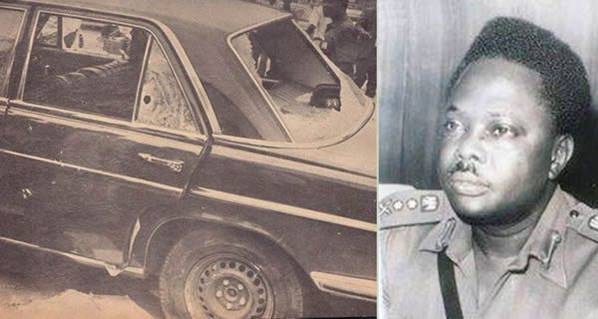
    On 13 February 1976 (a day to Valentine’s Day 50 years ago), General Murtala Ramat Mohammed was ambushed and killed in Lagos on his way to work by troops loyal to Lieutenant Colonel Buka Suka Dimka. He was on his way to Dodan Barracks with no serious security, asides the service pistol his ADC bore. Along Federal Secretariat Road, his vehicle was blocked. Shots were fired at close range. Within minutes, the Head of State was dead and left on the highway to the full view of bystanders.

    A picture of General Muritala’s official vehicle moments after he was assassinated C. February 1976.
    Source: Nairaland

    Fifty years later (in 2026), the interpretation of that event remains divided. Some argue that Murtala’s death was almost predictable. That a man who participated in coups, commanded troops in a civil war, and removed a sitting Head of State could not realistically expect a quiet political retirement. Others insist that he had become a necessary reformer and that his assassination interrupted what might have been a structural turning point in Nigeria’s political development.

    There is also a third claim, more speculative but persistent: that Murtala governed with the urgency of someone who knew he might not last. He moved quickly because he understood the volatility of the institution that produced him.

    But before we draw conclusions, we need to ask a more grounded question: How did he get there?

    Before 1976

    Murtala did not emerge suddenly as Head of State the previous year. By the time Gowon was overthrown, he had already been inside the core of Nigerian military politics for nearly a decade. Like Gowon, he belonged to the early generation of post-colonial officers. Born in Kano in 1938, Murtala attended Barewa College in Zaria, a school that produced a generation of northern political and military elites. Like Yakubu Gowon too, he trained at the Royal Military Academy, Sandhurst. On paper, he was a product of the British military tradition of discipline, hierarchy, and loyalty to the chain of command.

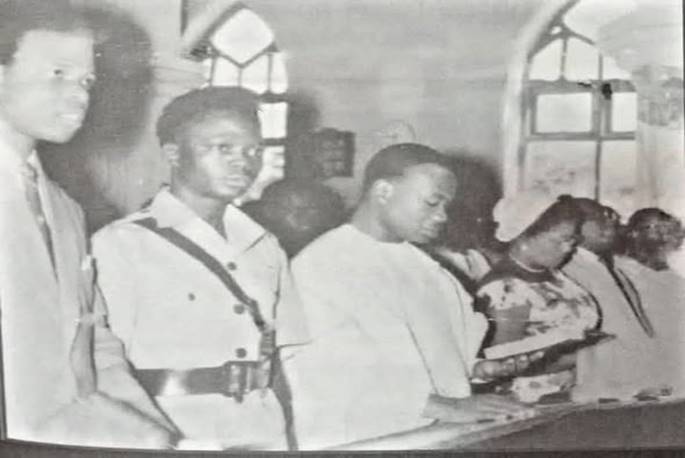
    This rare image captures Lieutenant Murtala Ramat Mohammed in 1962, pictured in military uniform while attending a church service as a young Nigerian Army officer. At the time, he was serving as Aide-de-Camp (ADC) to Dr. Moses Adekoyejo Majekodunmi, the Administrator of the Western Region during Nigeria’s political crisis of the early 1960s.
    Source: Folaranmi Ajayi (Facebook, 2026)

    But there is an important distinction. While Gowon absorbed institutional caution, Murtala absorbed structure, but not restraint. By the mid-1960s, he had developed a reputation for bluntness, impatience, and emotional intensity. Even early colleagues noticed that he only respected discipline when it aligned with his judgment. When it did not, he was prepared to challenge it. The pattern was already forming.

    His First Instance of Open Rebellion

    Murtala’s first clear break with military hierarchy came in July 1966. After the January coup brought General Johnson Aguiyi-Ironsi to power, tensions inside the army intensified. Many northern officers believed the political balance had shifted dangerously, and General Ironsi did little to assuage those fears. His promulgation of the Unification Decree, which replaced the federal system with a unitary structure, deepened that suspicion.

    At this point, Murtala was no longer a passive bystander, he was one of the officers who coordinated the counter-coup from Lagos. He took control of strategic points, including the airport, and maintained communication with other northern officers. In a sense, he was not merely executing orders handed down from above but was part of the circle shaping events as they unfolded. The July counter-coup was a calculated intervention by officers who believed the balance within the federation had been altered beyond comfort.

    It is also important to note that, at that stage, the objective was not simply regime change. Among many northern officers, the idea of Araba (secession of the North) was openly entertained. Murtala was associated with that current of thinking. In other words, his first major political act inside the Nigerian state was tied to a movement that contemplated breaking the state itself. Its an irony today that he is often viewed as a nationalist; people even go further to justify his ‘fellow Nigerians’ phrase as a pointer to his nationalist traits.

    Well, as we would see in the next article, Nigeria ultimately remained united, largely because political negotiation overrode separatist impulses. But July 1966 established something that would follow Murtala throughout his career. When he believed a structure was flawed or dangerous, his instinct was not patience. It was decisive correction, even if that correction risked fragmentation. He did not treat the Nigerian state as untouchable. If he believed it was failing or biased, he was prepared to dismantle or restructure it by force. That was his first open rebellion within the system he had sworn to serve.

    The Civil War: Courage and Disobedience

    When the civil war began in 1967, Murtala was appointed commander of the Nigerian Army’s 2nd Division, responsible for operations in the Midwestern and eastern theatres. His performance during this phase mixed tactical success with persistent friction with the high command. What stands out most in his wartime record was not only bravery, but a pattern of acting independently of orders from Army Headquarters and Supreme Headquarters.

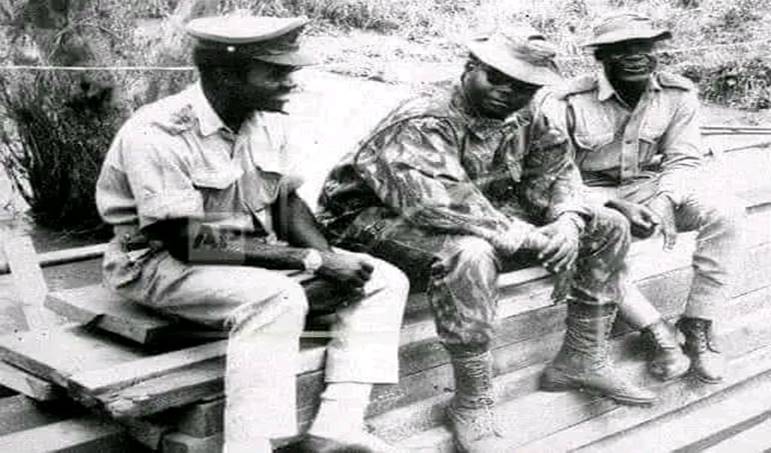
    A picture of General Murtala Muhammad with two other soldiers in Benin after capturing the city during the Biafra War.
    Source: Associated Press

    The most discussed example is the push toward Onitsha.

    After retreating Biafran forces destroyed the key bridge over the River Niger, Army Headquarters in Lagos advised a cautious, unopposed crossing at Idah, followed by an overland advance  (a plan viewed as less risky and more coordinated with neighbouring formations).

    In his usual character, Murtala rejected that option. He favoured a direct river assault from Asaba, believing the momentum was with federal troops. Supreme Headquarters, his brigade commanders, and even the commander of the neighbouring 1st Division, Colonel Mohammed Shuwa, advised against it; despite this, Murtala persisted. He ordered the river crossing despite explicit strategic recommendations to the contrary.

    Twice, the frontal assault was repulsed by the Biafran soldiers with significant casualties and loss of equipment. Even after those setbacks, he tried a third assault before eventually agreeing to Army Headquarters’ original plan and capturing the town. The failure of his earlier attempts cost lives and morale.

    This episode reveals two consistent traits in his wartime command:

    • He valued initiative and decisiveness over procedural coordination.
    • He was willing to act against directives from his superiors if he judged them too cautious.

    Ideally, as some military observers have pointed out, such independence should likely have led to a court-martial in less chaotic conditions. However, in the Nigerian civil war’s fluid environment, it did not.

    These decisions were, however, not isolated, they reflected a larger pattern within the 2nd Division under his command, where he adopted rapid movement, aggressive engagement, and often unilateral decision-making that prioritised tempo over hierarchical compliance. That combination won him recognition for bold leadership and respect from many subordinates. It also created unease among senior officers who saw traditional military discipline eroding under the pressure of his personality and approach.

    The 1975 Coup

    By 1975, Murtala was no longer a divisional commander at war. He was Federal Commissioner for Communications in a government that had been in power for nearly a decade. But the impatience that marked him in 1966 and during the civil war had not softened. The post-war years were marked by oil revenue expansion and reconstruction. They were also marked by delay due to bureaucracy in government procedures. The promised transition to civilian rule, initially projected for 1976, was postponed. Administrative reforms were discussed repeatedly but implemented slowly. Don’t forget that by 1974, there had been two major milestones: The wage and Salary increases headed by Jerome Udoji, and a National Conference on Manpower Utilisation and Development. On one of such occasions where Gowon rejected his memo, he angrily remarked to Shehu Shagari,

    “Don’t mind him!” “We shall soon change him. We put him there and we can remove him anytime!”[1]

    Within sections of the officer corps, especially among those who had fought the war, frustration began to build. To them, the post-war state appeared slow, procedural and overly cautious. Murtala stood at the opposite end of that temperament. He was direct where others were consultative. He preferred resolution to deliberation.

    When the July 29, 1975 coup was executed while Gowon was abroad, Murtala was not an accidental beneficiary. He was the senior officer around whom dissatisfaction had quietly gathered.  Whether or not he drafted the plan himself is less important than the fact that he accepted its outcome without hesitation. Once again, he aligned himself with intervention as a corrective instrument.

    His months in office reflected the same instinct. State governors were removed. Senior officers were compulsorily retired. Thousands of civil servants were dismissed. A new federal capital was announced. Foreign policy shifted decisively. The tempo was unmistakable. Supporters described this as clarity and discipline restored. Critics saw recklessness and institutional shock. But even in government, Murtala behaved as he had in 1966 and during the war: when he believed a structure was defective, he moved to reset it.

    Then came 13 February 1976.

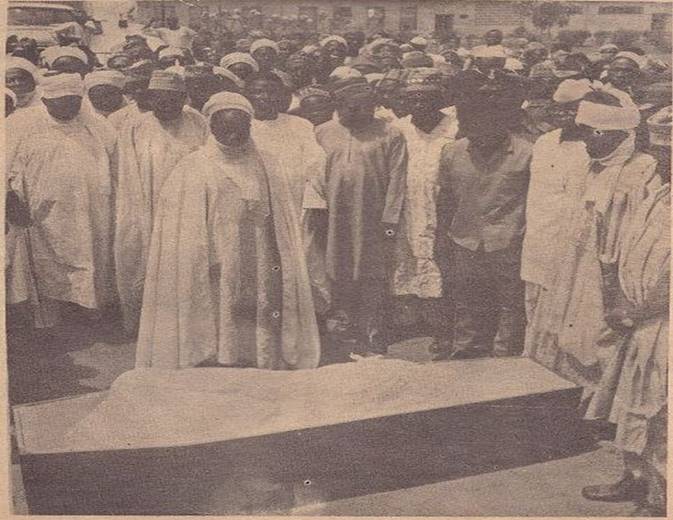
    General Murtala Mohammed’s Burial And Corpse, 1976.
    Source: Nairaland

    The irony is difficult to ignore. A man who had seized the airport in 1966 now has that same airport named after him.

    The first Nigerian Head of State to appear on a naira note is a man whose career repeatedly challenged the very hierarchies he once swore to uphold. Monuments, institutions and public memory have fixed him in national symbolism.

    It is here that Dimka’s failed coup assumes a historical weight beyond its immediate violence. Assassination froze Murtala at a particular moment as an energetic, reformist, and uncompromising leader. Death removed the possibility of decline, error, or prolonged controversy. It converted a divisive figure into a fallen one.

    In life, he was a rebel inside the system. In death, he became a symbol of it.

    That transformation may be the most consequential outcome of 13 February 1976.

    A portrait of Lt. Col. Buka Suka Dimka. Source:Vanguard News

    [1] Omoigui, N. (n.d.). Military rebellion of July 29, 1975: The coup against Gowon – Part 6. Dawodu. Retrieved February 11, 2026, from https://www.dawodu.com/articles/military-rebellion-of-july-29-1975-the-coup-against-gowon-part-6-635

  • The Promises We Keep Hearing 1

    The Promises We Keep Hearing 1

    EPISODE ONE: The First Promises

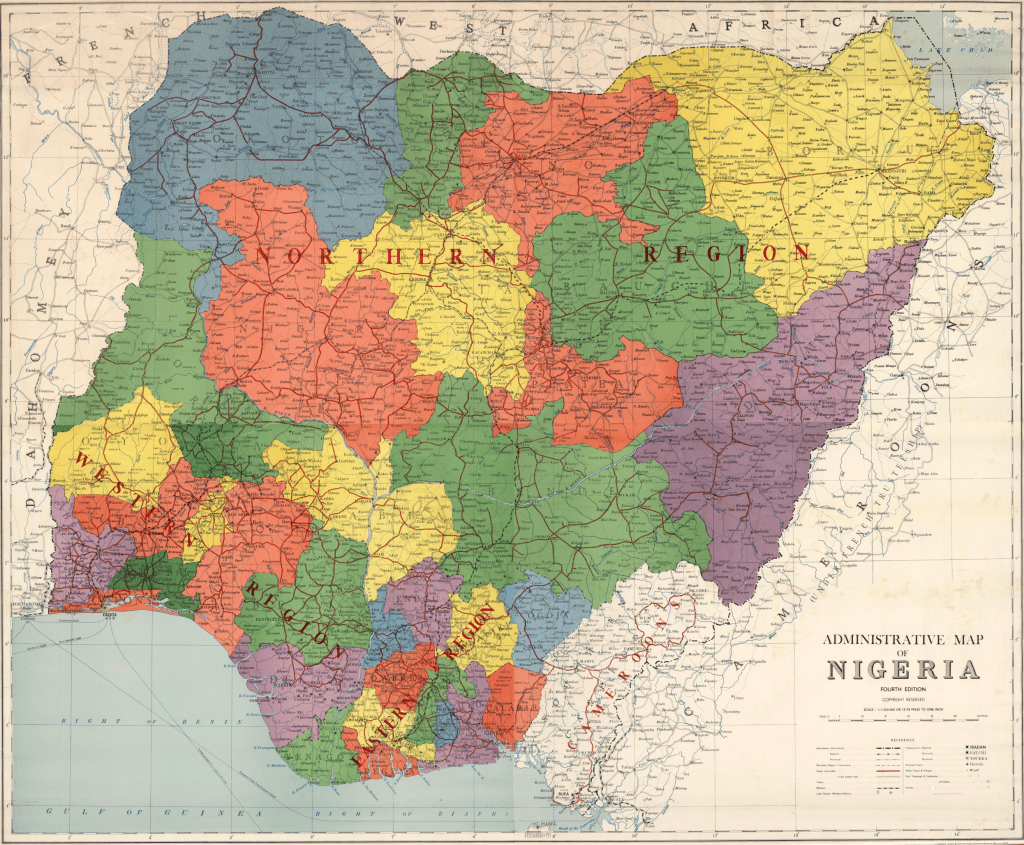
    In 1960, Nigeria became independent. The euphoria was real, but fragile. Three regions, each with distinct histories and political ambitions, were suddenly asked to govern themselves under a federal system. Unity was therefore not guaranteed; democracy was only an experiment. In this context, every speech from the national stage carried a weight far greater than ceremony. These speeches were instruments of reassurance. They served as appeals to cohesion and subtle warnings.

    By 1962, the first cracks appeared. The Action Group, dominant in the Western Region, fractured. Awolowo and Akintola clashed over leadership, party structure, and policy, turning the Western Region legislature into a battleground. The crisis quickly became national, raising doubts about the viability of democracy itself. Politicians across the country watched as trust between regions eroded, and ordinary citizens began questioning the promises of independence.

    Detailed map showing the regions and provinces of colonial Nigeria. Produced in 1924 and revised in 1960

    It was against this backdrop that Nnamdi Azikiwe addressed the nation:

    “Let us renew our faith in liberal democracy and strengthen our belief in the greatness of our country.” (1962 Independence Day Speech)

    Contrary to popular beliefs, these words were not just patriotic exhortation on a national day, but a deliberate attempt to restore confidence in a system already under stress. Azikiwe was not only speaking to the citizens, he seemed to also be addressing the emerging power of the military, a silent observer of civilian failures.

    Two years later, the tensions over identity and representation had intensified. The 1963 census had sparked allegations of manipulation, feeding regional suspicion and inflaming ethnic consciousness. Political rhetoric increasingly addressed not policy but cohesion. In his 1964 address, Azikiwe invoked a line from the national anthem:

    “Though tribe and tongue may differ, in brotherhood we stand. Let us give meaning to these words by living and working together.”

    These words were not symbolic; they were a response to a real threat – a nation on the verge of fragmenting along ethnic lines. Interestingly, decades later, the administration of President Bola Ahmed Tinubu reintroduced this old anthem officially. Senate President Godswill Akpabio argued at the time:

    “If we had kept to that anthem, we probably would not have banditry today in Nigeria because if you take your neighbour as your brother, you will not want to kill him.”

    But that is a digression for another day. Returning to the early 1960s: the federal elections of 1964 and the ensuing violence in the Western Region, later dubbed the “Wild Wild West” or “Wet tie” crisis, intensified the stakes. Political rhetoric became both shield and strategy. Leaders promised peace, discipline, and unity while the country witnessed arson, intimidation, and targeted attacks. The language of promise was a mechanism of control: to assure, to persuade, and to postpone the inevitable confrontation.

    By 1965, the military was observing these developments with increasing concern. Civilian authority appeared ineffective, and the prospect of intervention grew. The promises made by politicians, while aspirational, also underscored the fragility of the republic. Gowon’s 1966 Independence Day address illustrates the continuity of the message, even as the voice shifted from civilian to military:

    “We must rediscover honesty and sincerity. Let us dedicate ourselves to discipline, loyalty and service.”
    “Our nation must remain united. It is only in unity that our progress can be guaranteed.”

    The words remained familiar, unity, progress, discipline, but their delivery signaled a change in authority. Whereas early promises sought to inspire, military rhetoric sought to command. Yet the underlying narrative of hope persisted, as though the nation’s imagination required a constant reminder that a better Nigeria was always within reach.

    Looking back, the first promises of independent Nigeria reveal two enduring truths. The first is that rhetoric is inseparable from the context in which it is delivered. Every speech, every line of persuasion was a response to political crises, social anxieties, and regional tensions.
    Second, the themes of unity, progress, and renewal established in the 1960s have endured. They continue to resonate because they address the same hopes, fears, and expectations of Nigerians today.

    Episode One closes here, not with resolution but with foreshadowing. The promises of 1960–1966 laid the groundwork for the challenges that would erupt in 1966, as the nation confronted civil war, further coups and the first tests of the rhetoric’s durability. Understanding these first promises is essential to tracing how political language shapes not only expectations but the trajectory of the nation itself.

  • The Sleeping Man

    The Sleeping Man

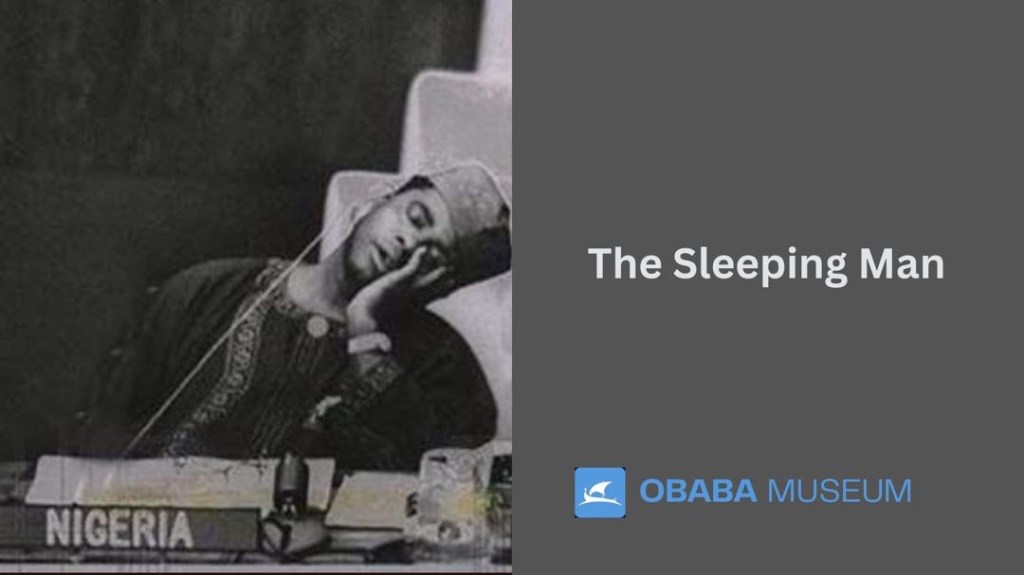
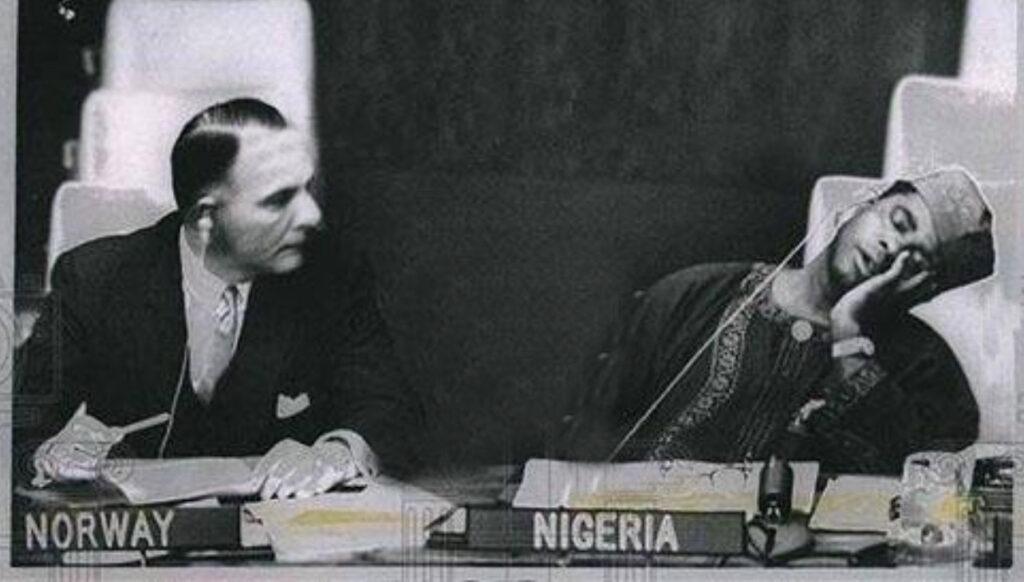
    There’s a picture that stayed with me since secondary school – Jaja Wachukwu sitting at the United Nations, eyes closed as if he was fast asleep. My classmates and I used to joke about it, wondering how a man could doze off in such an important meeting. For years, we believed that story. We never really asked questions. We never verified.

    That’s the scary part. Not that we were wrong, but that no one corrected us. We didn’t have a history teacher then, so that photograph became just another meme in our young minds. Only later did I find out that “the sleeping man” wasn’t asleep at all.

    He was protesting.

    Meet Jaja Wachuku, Nigeria’s first United Nations Ambassador. In 1960, his news rotated around the world for “sleeping” at a United Nations meeting.

    In 1960, Jaja Wachukwu, Nigeria’s first ambassador to the United Nations, was denied the right to speak after a condescending remark was made toward him. So he sat back, closed his eyes, and folded his arms, not in rest, but in silent defiance. That simple act of quiet dignity spoke louder than any speech could.

    It’s fascinating how one image can hold two completely different stories: one born of ignorance, and another of courage.

    Years later, when I learned the truth, it made me think about how many “sleeping men” we’ve misjudged in history, people whose actions we didn’t understand because no one told us the full story. It reminded me of the importance of teaching history, of looking twice before we conclude.

    Maybe that’s what storytelling does, it wakes us up.

  • A Play In The Jungle

    A Play In The Jungle

    Who ever knew that the Lion was not-too-old to run?
    Or who knows why when the cub entered the bout
    He was called a sheep—a black sheep?
    But either ways, the cat family must lay claim to the throne

    Now, even the wolf wants to lead the flock
    Because this is the jungle; where anything goes

    I can't remember being taught the drama technique
    That sidelines the main characters in a play
    Having them sit as the audience
    Watching as jesters play
    Power games with their fate.
    In this play where every actor is a clown.

    It's funny how only the climax determines the drama's genre
    And how I can already predict
    That this farce will end in a devastating tragedy
    In this play where no one follows the script
    Every character struggling to steal the spotlight


    It's probably no coincidence that
    Cheetah and Cheater are homonyms
    Because either can win this race in the jungle

    Every virulent animal has stepped up to the line
    They are on their marks
    The stadium goes quiet
    As we await the bang like our lives depend on it.
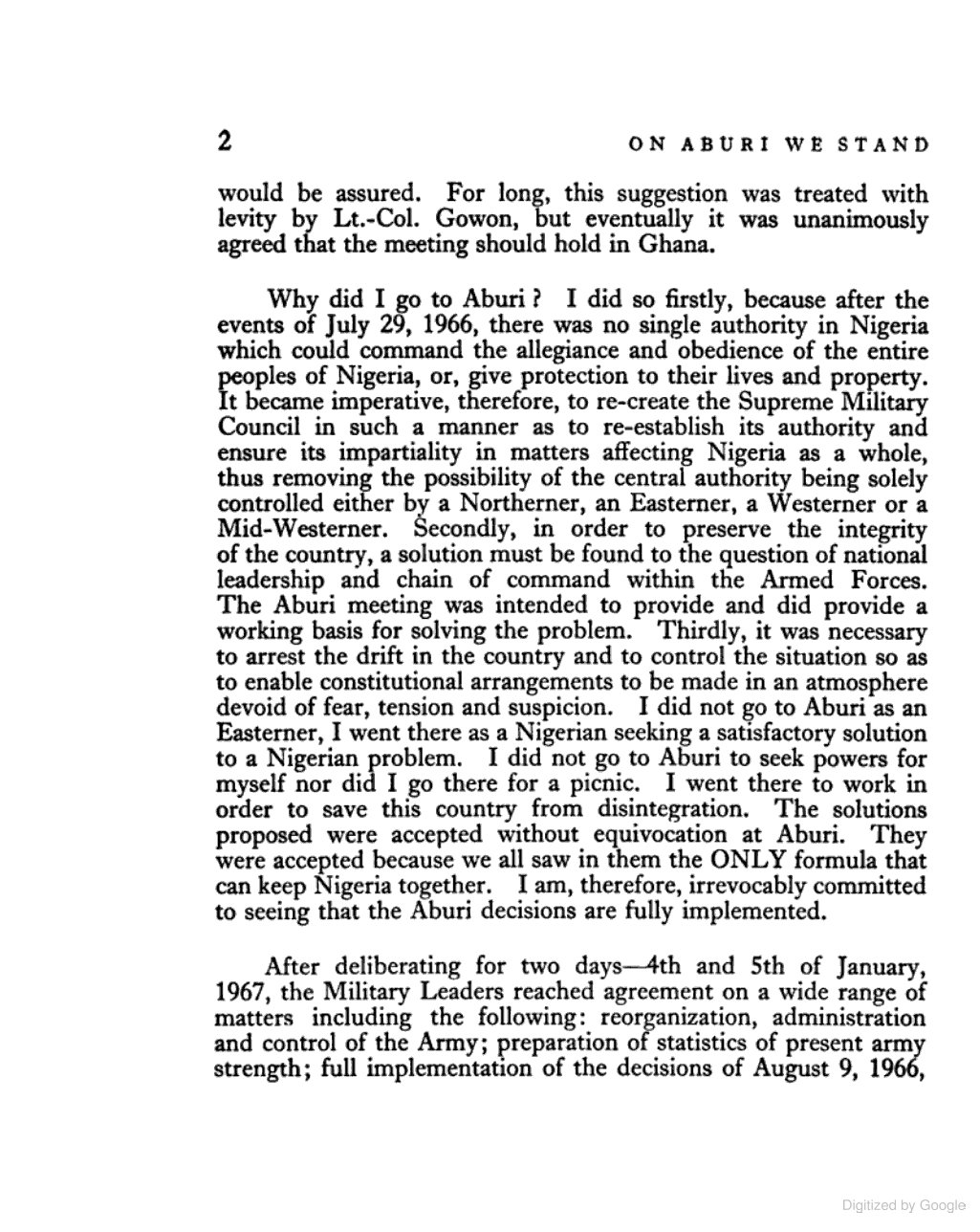
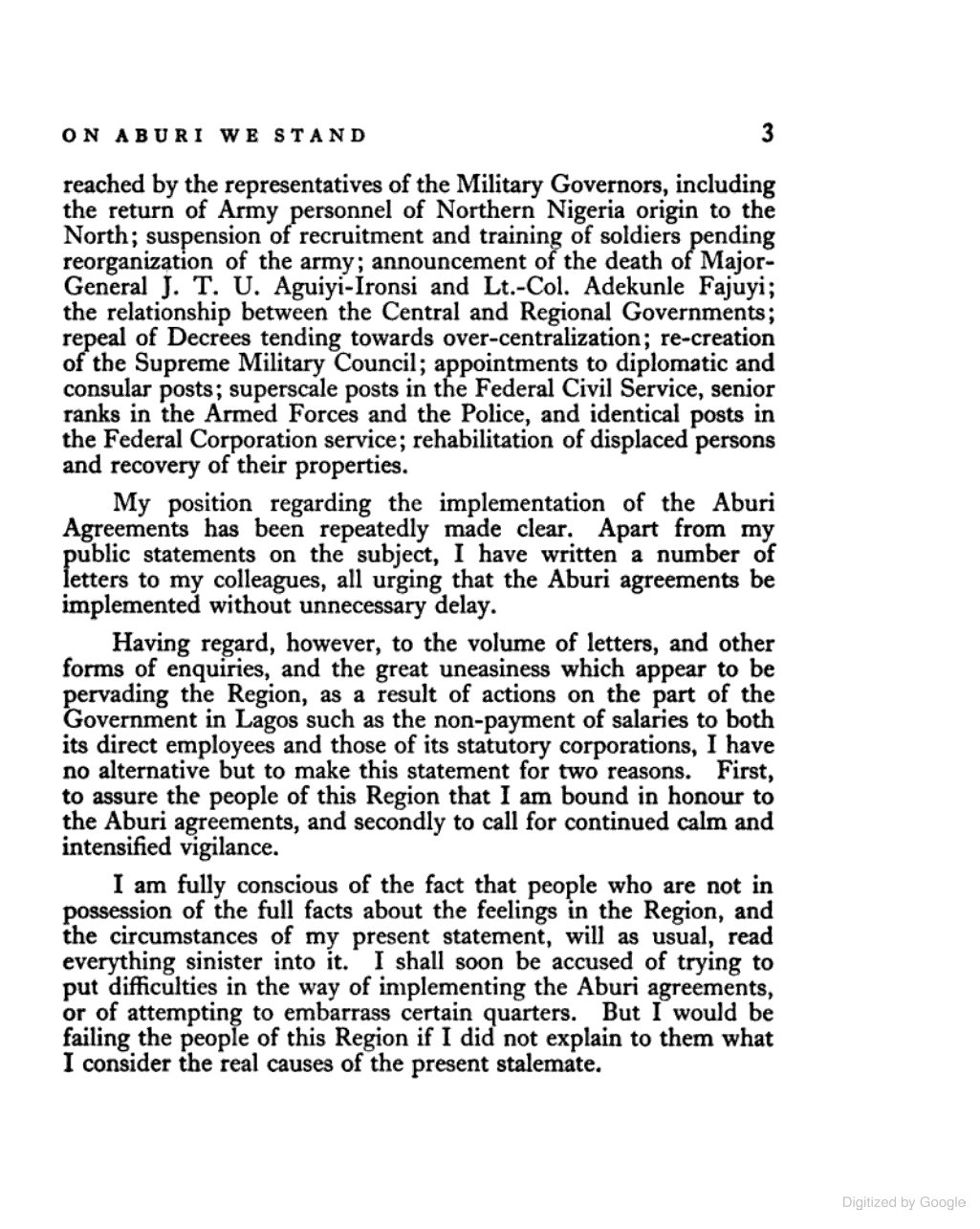
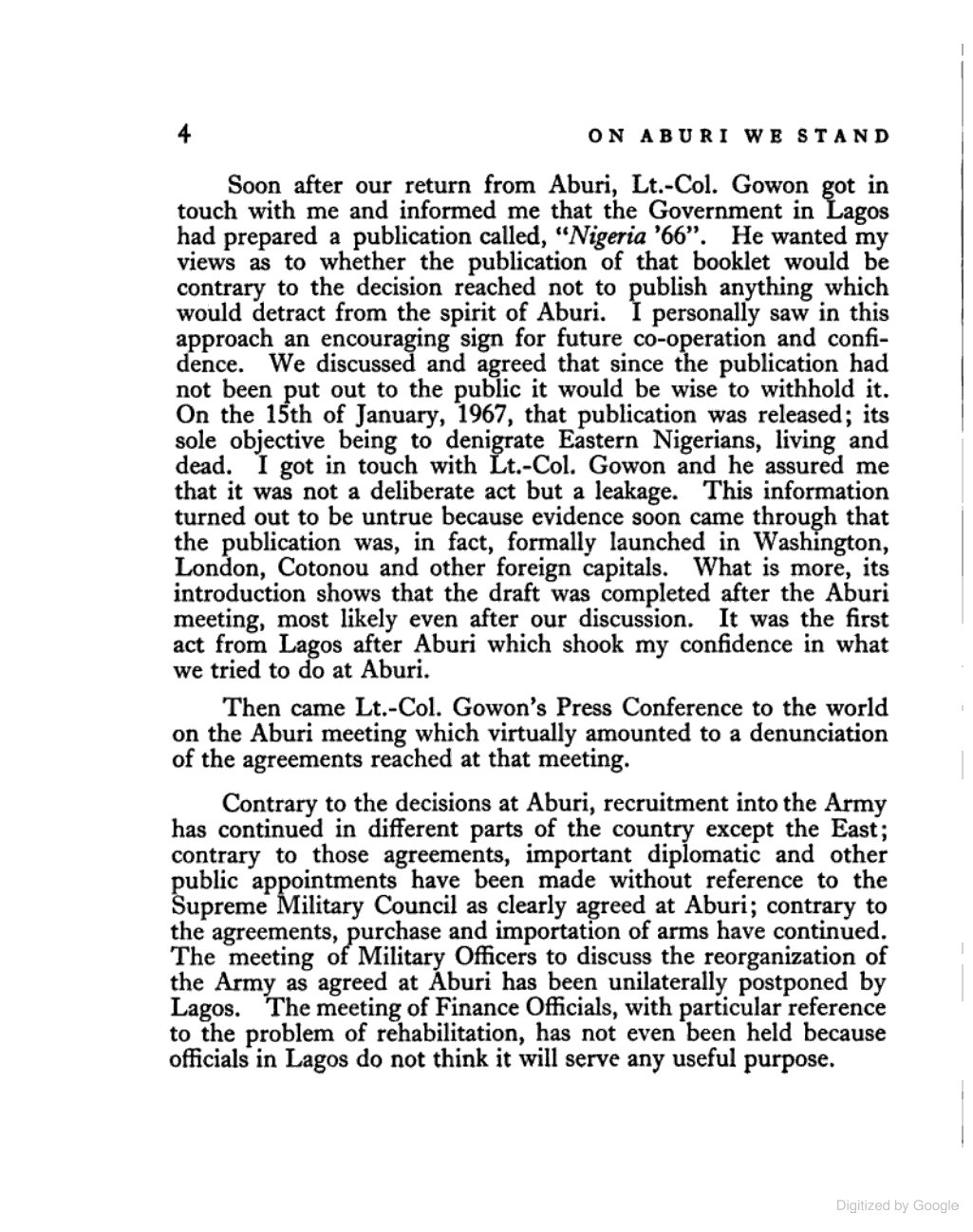
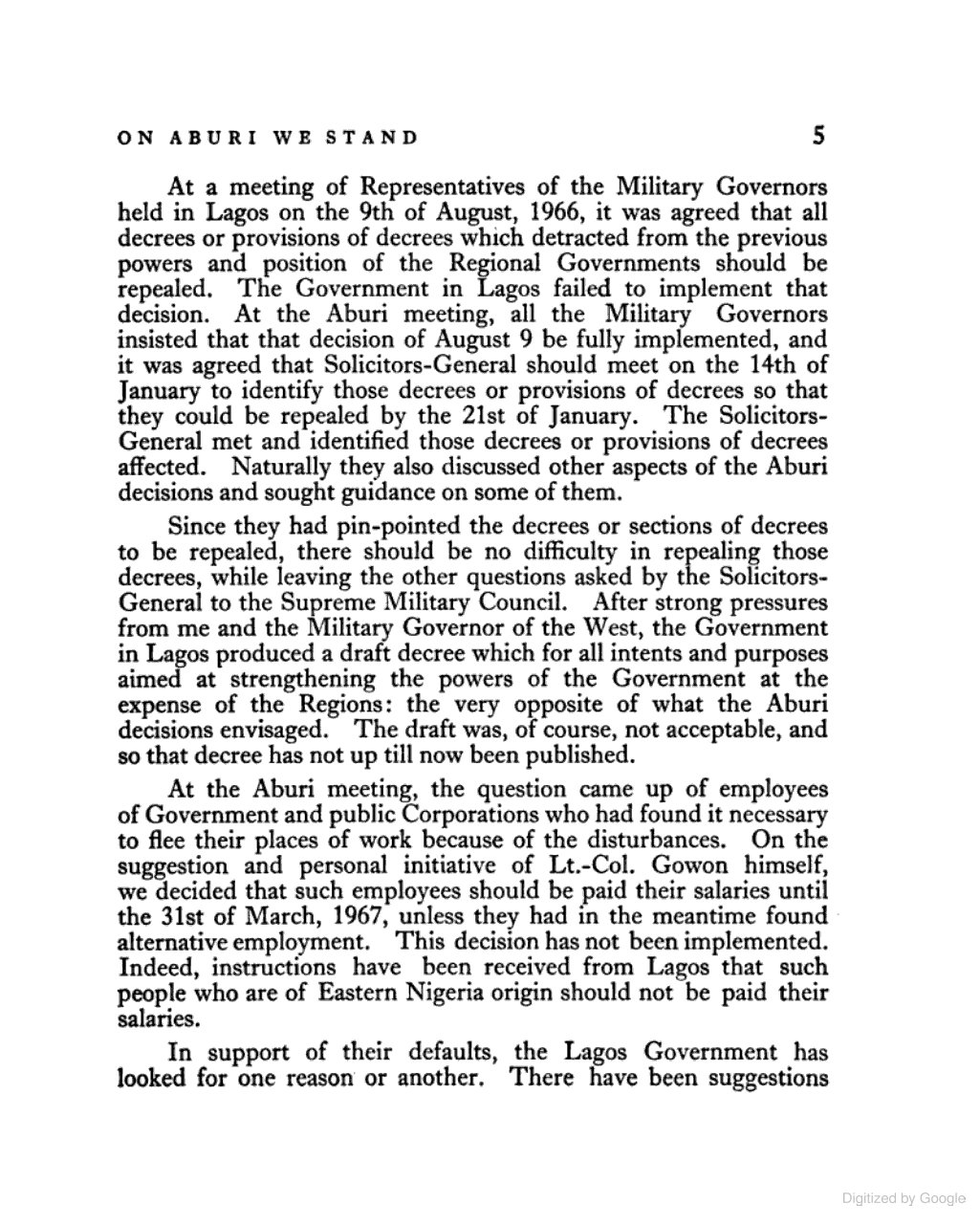
  • On Aburi We Stand!

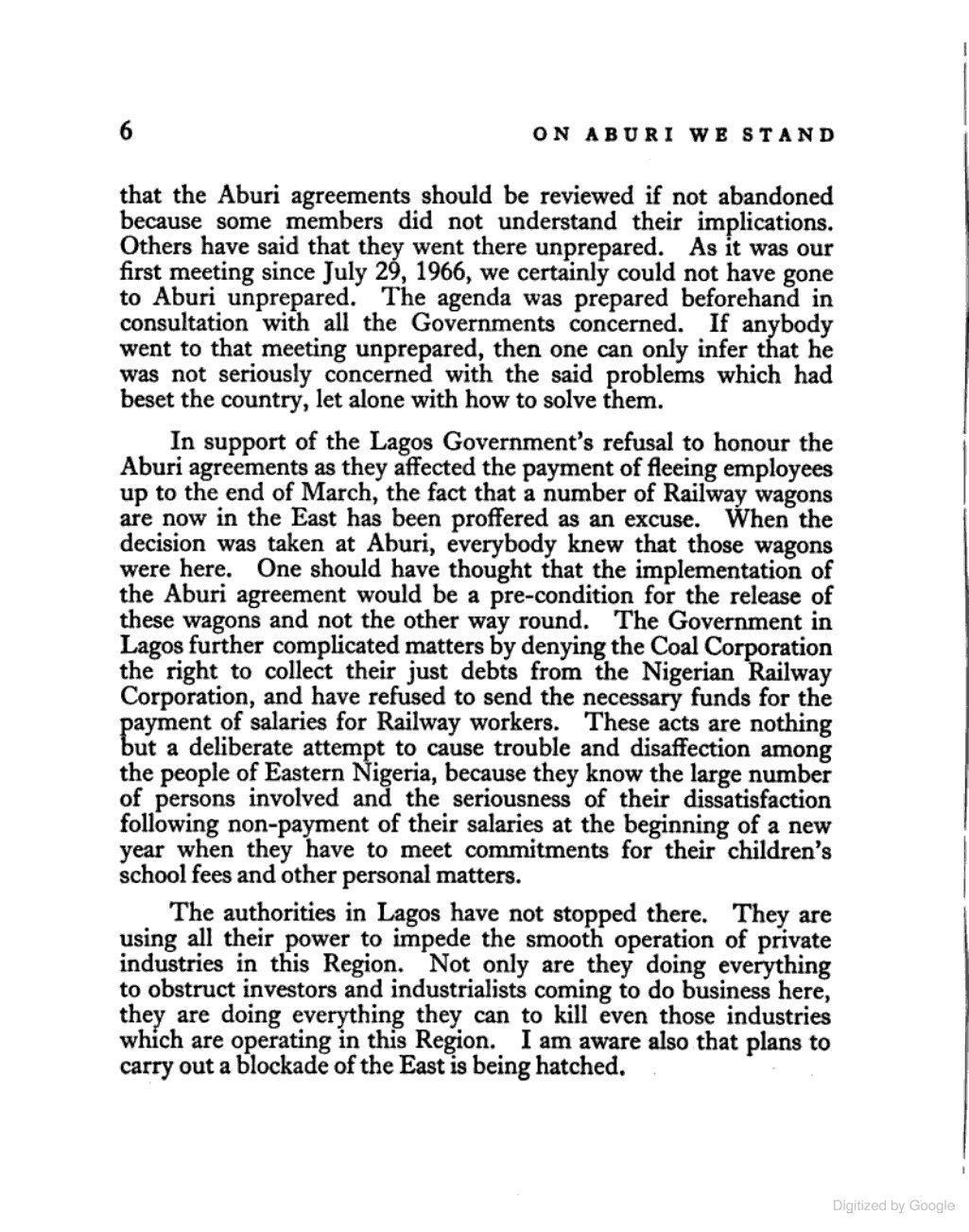
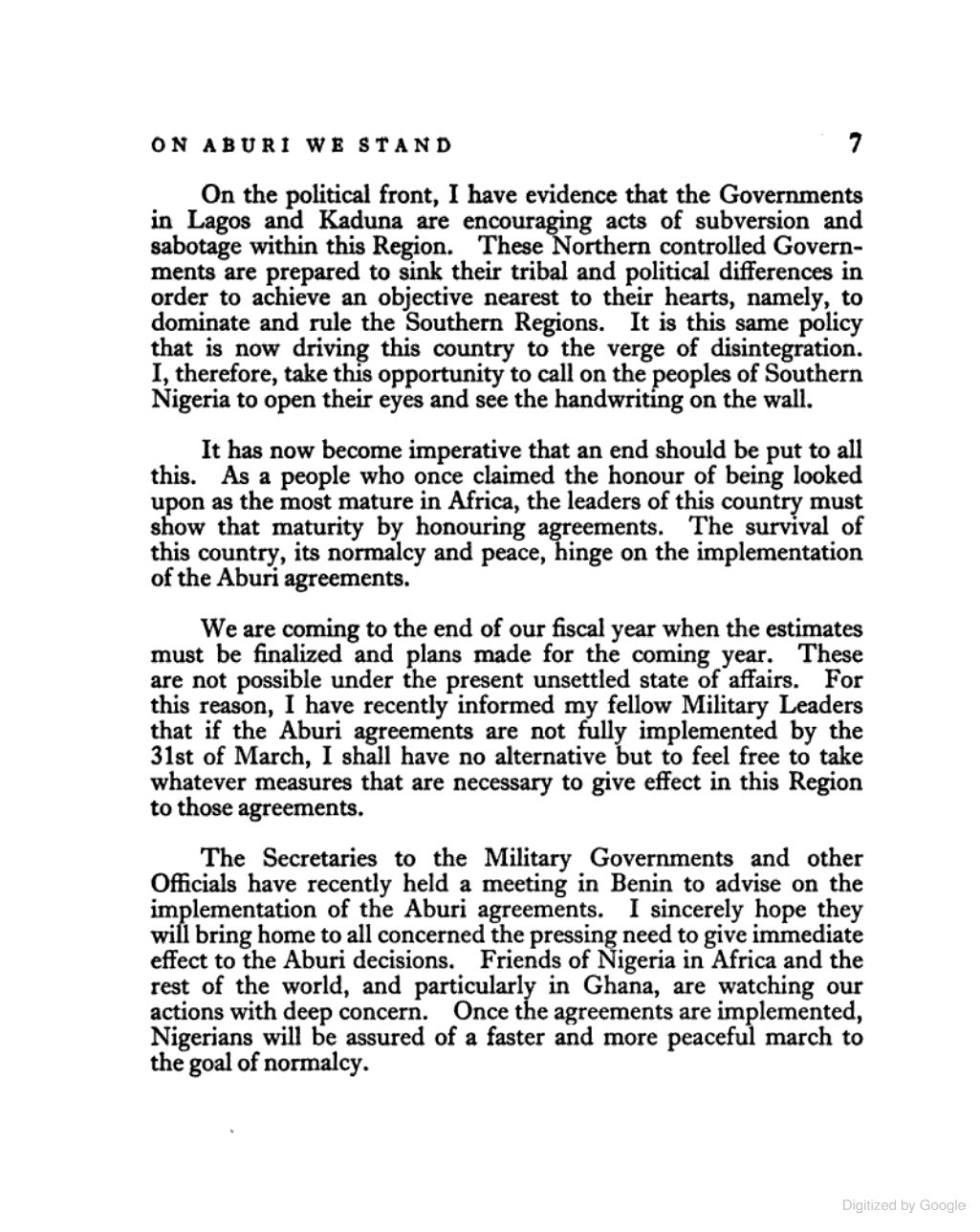
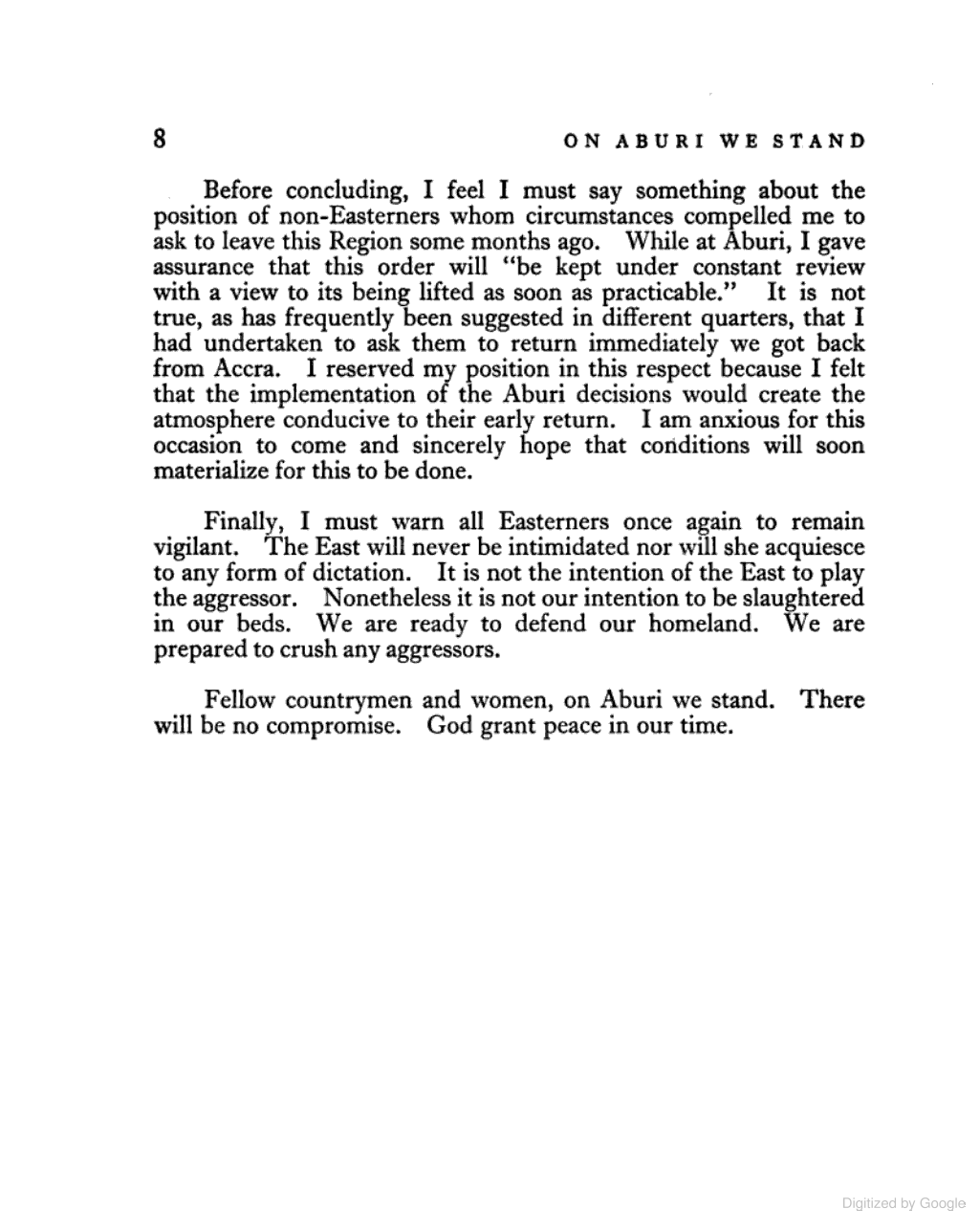
    On Aburi We Stand!

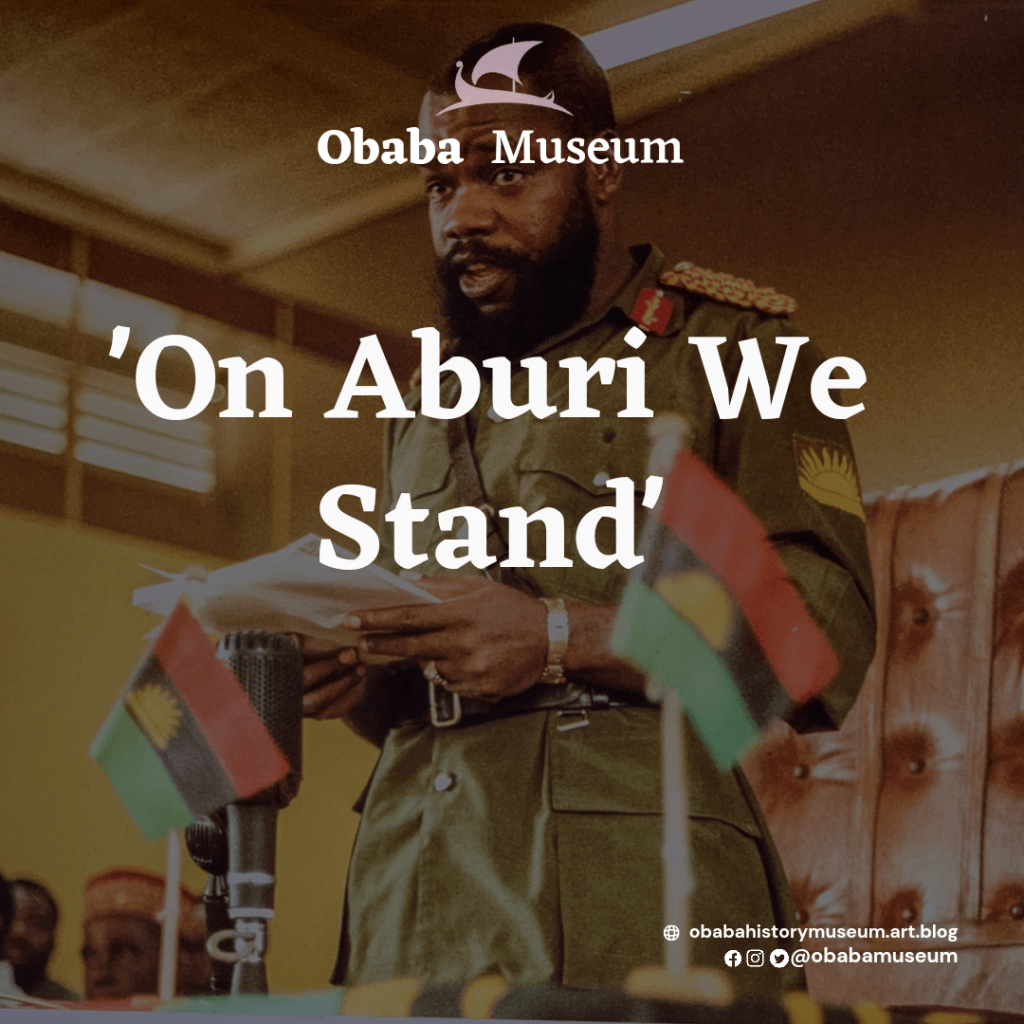
    The phrase ‘On Aburi We Stand’ is very common amongst scholars and students of the Nigerian Civil War historiography. This phrase is often cited by supporters of the Biafran nation as it implied that Ojukwu had done a great job at Aburi, especially with the resolutions reached in the Accord. Gowon’s betrayal of the contents of the agreement could be regarded as the immediate cause of the war. By so doing, he demonstrated that, indeed, the fears of Ojukwu and the Igbo nation were genuine. Before we discuss the standoff that led to the phrase ‘On Aburi We Stand’, let’s quickly take a look at the resolutions reached at Aburi and how Gowon went against them.

    In the previous article, I made it clear that the Aburi Peace Conference was a meeting of the Supreme Military Council of Nigeria. Below is the official minute of the resolutions reached.

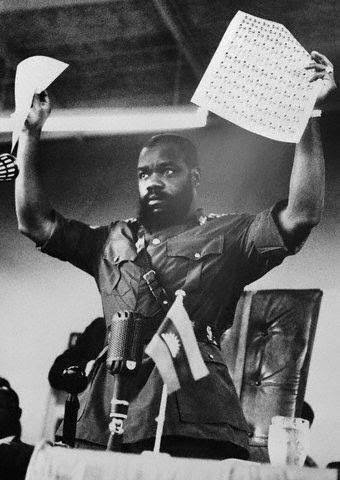
    ‘On Aburi We Stand’: Ojukwu unveils Biafran currency and postage stamps, January 29 1968

    FINAL ABURI COMMUNIQUE
    The Supreme Military Council of Nigeria resumed its meeting in Ghana on the 5th
    of January, and continued and concluded discussion of the remaining subjects on
    the Agenda. The Council reached agreement on all the items.
    On the powers and functions of the Federal Military Government, the Council
    reaffirmed its belief in the workability of the existing institutions subject to
    necessary safeguards.
    Other matters on which agreements were reached included the following:

    • Re-organisation, administration and control of the Army
    • Appointments and promotions to the senior ranks in the Armed Forces, the Police, Diplomatic and Consular Services as well as appointments to super-scale
    posts in the Federal Civil Service and the equivalent posts in the Federal Statutory
    Corporations. On the question of displaced persons, the Supreme Military Council
    agreed to set up a committee to look into the problems of rehabilitation and
    recovery of property. In this connection, the Military Governor of the East assured
    the Council that the order that non-Easterners should leave the Eastern Region would be reviewed with a view to its being lifted as soon as practicable.
    Agreement was also reached that the staff and employees of governments and
    statutory corporations who have had to leave their posts as a result of recent
    disturbances in the country should continue to be paid their full salaries up to the
    end of March 31, 1967, provided they have not found alternative employment.

    The Council agreed that the Ad Hoc Committee on the constitutional future of the country should be resumed as soon as practicable and that the unanimous
    recommendations of the committee in September 1966 will be considered by the
    Supreme Military Council at a later meeting.
    The Council unanimously agreed that future meetings of the Council should be
    held in Nigeria at a venue to be announced later.
    The entire members of the Supreme Military Council expressed profound regret for the bloodshed, which has engulfed the country in the past year and avow to do all
    in their power to ensure there is no recurrence of the unhappy situation.
    The members of the Supreme Military Council place on record their profound
    appreciation and gratitude for the constructive initiative and assistance rendered by the Chairman of the National Liberation Council, the Government and people of Ghana.

    Statement by the Supreme Council on the Reorganisation of the Army,
    and the Approval of Senior Appointments, and its Declaration on the use of force
    I. The Supreme Military Council now meeting in Ghana has agreed on the
    following reorganisation of the Army:
    • The Army is to be governed by the Supreme Military Council the Chairman of
    which will be known as Commander-in-Chief and Head of the Federal Military
    Government.
    • There will be a Military Headquarters on which the Regions will be equally
    represented and which will be headed by a Chief of Staff.
    • In each Region, there shall be an Area Command under the charge of an Area
    Commander and corresponding with the existing Regions.
    • All matters of policy, including appointments and promotions of persons in executive posts in the Armed Forces and Police shall be dealt with by the Supreme
    Military Council.
    • During the period of the Military Government, Military Governors will have
    control over their Area Commands in matters of internal security. The following
    appointments must be approved by the Supreme Military
    Council:
    • Diplomatic and Consular posts.
    • Senior posts in the Armed Forces and the Police.
    • Super-scale Federal Civil Service and Federal Corporation posts.
    • Any decision affecting the whole country must be determined by the Supreme
    Military Council. Where a meeting is not possible such a matter must be referred
    to Military Governors for comment and concurrence.

    II. We the members of the
    Supreme Military Council of Nigeria meeting at Accra on 4th day of January, 1967,
    hereby solemnly and unequivocally: DECLARE that we renounce the use of force as a means of settling the present crisis in Nigeria, and hold ourselves in honour
    bound by this declaration. REAFFIRM our faith in discussions and negotiation as
    the only peaceful way of resolving the Nigerian crisis. AGREE to exchange
    information on the quantity of arms and ammunition in each unit of the Army in
    each Region, and also on the quantity of new arms and ammunition in stock.

    If you take the time to read the minutes of the meeting, you will notice that Ojukwu was very prepared. He spoke at length each time he had the opportunity to speak and spoke quite intelligently. Obviously only himself knew the constitutional implications of the document they had signed. When it became clear that the Aburi Accord was a major victory for Ojukwu and the Eastern province, Gowon decided to abandon the agreement because, according to him, Ojukwu
    went to Aburi prepared while others were not (yes, Gowon actually said that).

    In response to Gowon, Lt. Colonel Odumegwu Ojukwu, Military Governor of the Eastern Region of Nigeria, declared that the region would no longer recognise Lt. Colonel Yakubu Gowon as Head of the Federal Military Government on March 2, 1967. Lt. Colonel Gowon assumed full powers as Commander-in-Chief of the armed forces and head of the military government on May 27, 1967. Lt. Colonel Gowon proclaimed a state-of-emergency on May 28, 1967. Lt. Colonel Odumegwu Ojukwu, Military Governor of the Eastern Region, declared the independence of the Republic of Biafra in Southern Nigeria on May 30, 1967. This began the 30-month long Civil War popularly known as the Biafran war.

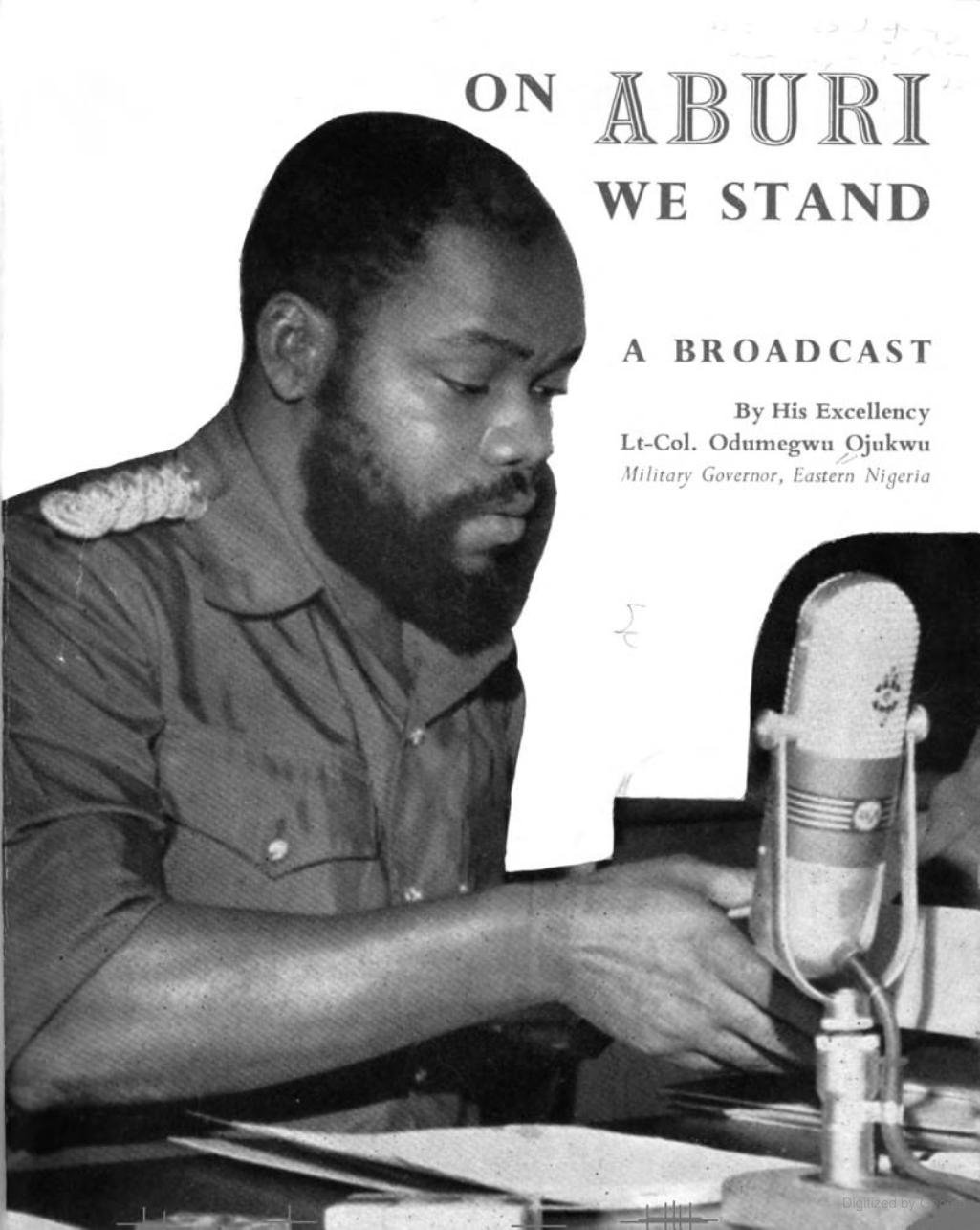
    The phrase ‘On Aburi We Stand’, was the title of Ojukwu’s broadcast delivered on the 27th of February, 1967 (a month after the signing of the Accord). Thanks for reading throug&h. If you enjoyed this piece, kindly give us a like and comment below. Do have a lovely day.

  • Prelude to War: The Aburi Accord

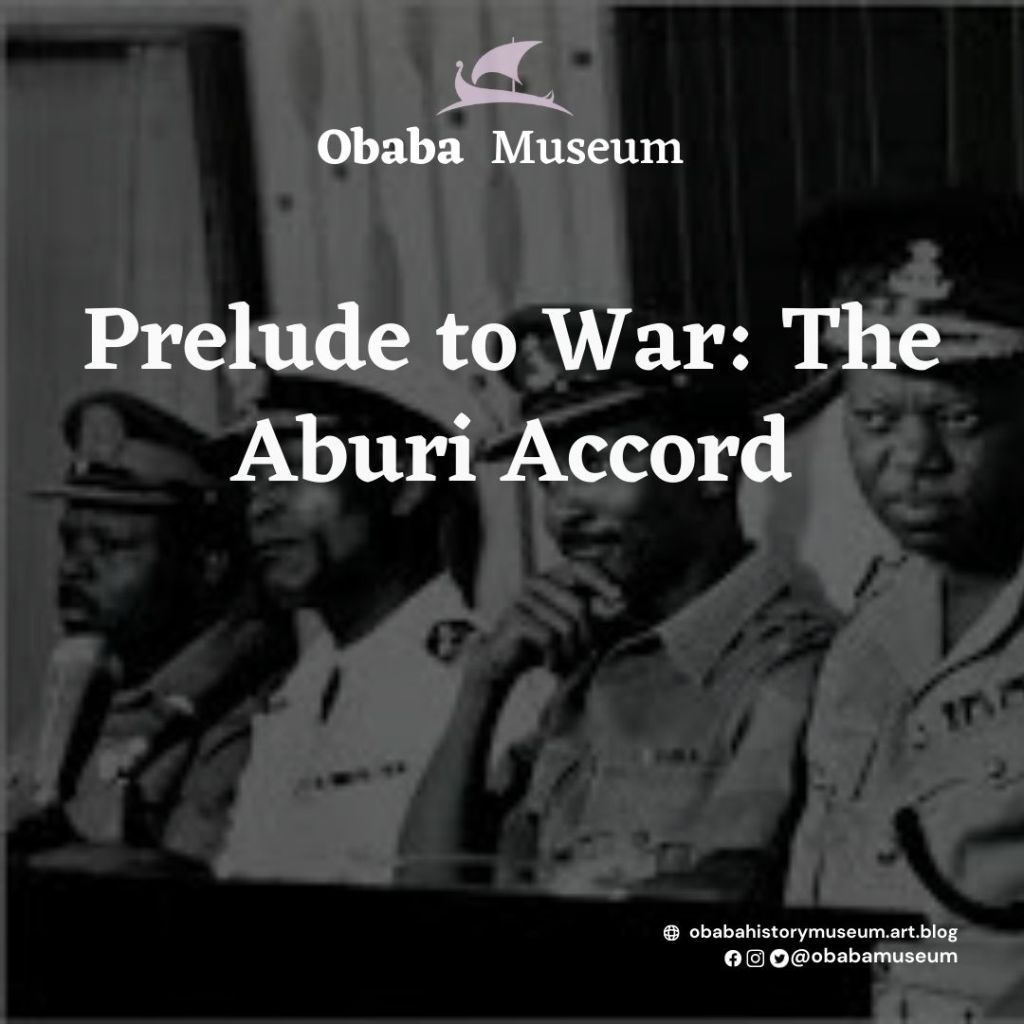
    Prelude to War: The Aburi Accord

    In our last article we explained Decree 34 as a precursor to the counter coup and by extension the Civil War. Already quite a number of Easterners in the Northern Region were being massacred, in fact about 115 individuals, mostly ethnic Ibos, were killed in political violence between May 28 – June 2, 1966 due to the unpopularity of the Decree promulgated by an Ibo Head of State. Hence the Counter Coup which was Mainly led by Northern officers ousted Gen. Ironsi and replaced him with an officer of Northern Origin, Lt. Col Yakubu Gowon. It is important to understand that Gowon was more than 3 ranks below Ironsi, therefore following the regular hierarchy of the military, he shouldn’t have ascended power but one thing was clear, ethnic and emotional sentiment had once again prevailed not just in Nigerian politics but also in the military. Foremost amongst these Coup plotters were, Lt. Col. Muritala Mohammed and Lt. Col. Theophilus Y Danjuma who later ousted the same person they brought in nine years later.

    Lt. Col. T. Y. Danjuma
    Lt. Col Muritala Mohammed

    The counter coup therefore launched fresh rounds of massacres, about 30 individuals were killed in political violence in Lagos between July 29-August 1, 1966, infact within the same period Nigeria had no Head of State for three days (July 29-31) till Gowon was sworn in on August 1. Realizing that their safety could no longer be guaranteed, some 250,000 ethnic Ibos fled the Northern Region to the Eastern Region.

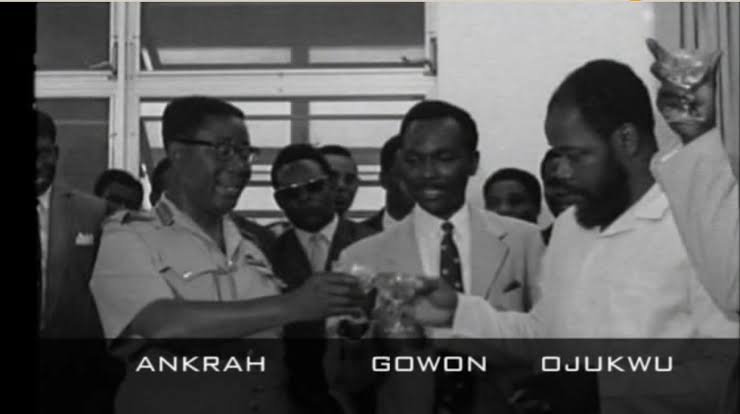
    The military governor of the Eastern region, Lt. Col. Odumegwu Ojukwu, had already become somewhat disillusioned with the military government, in fact he refused to recognize Gen. Gowon as Head of the National Military Government due to the circumstances surrounding Gowon’s appointment. He had persistently refused to attend meetings of the Supreme Military Council (SMC) anywhere outside the Eastern region. A major argument of Ojukwu, was that his personal safety could no longer be guaranteed outside the Eastern region. According to the Daily Times, dated Tuesday, August 2, 1966, Ojukwu had, in a speech broadcast across the Eastern region, suggested that negotiations be held to allow the people of Nigeria determine the nature of their future association. Series of Conferences were held within the country with the objective of redefining the form of government acceptable to all sections of the country; the various regions took different positions with the Eastern region opting for a confederation. At the end it became clear that Ojukwu was planning the secession of the East from the federation, however, Gen Gowon kept looking for a way to pacify Ojukwu which would at the same not threaten the authority of the Federal (central) government. In search of a place agreeable to Ojukwu, the military leaders met at Aburi, Ghana the result of what popularly became known as the Aburi Accord. The Chairman of the Ghana Liberation Council, Lt. Gen. J.A Ankrah presided over the gathering.

    The Aburi peace conference, lasting two days, was the final attempt by both parties, that is the Federal Military Government of Nigeria and The Government of the Eastern region, to find a solution to the ethnic cleansing perpetrated against the Easterners resident in the north amongst other issues of national importance. We understand that many Nigerians who at one point in time heard about this meeting do not really know the specific details of issues discussed, in order to clear the air we took special care to highlight them.

    The Aburi Peace Conference could be regarded as a meeting of Nigeria’s Supreme Military Council at Ghana. In attendance were Gowon, who was Supreme Military Commander at the time, His Vice President, Commodore Joseph Edet Akinwale Wey, Governors of the four regions and Lagos State – Lt.-Col. David Ejoor, Lt.-Col. Hassan Katsina, Lt. Col. Chukwuemeka Ojukwu, Colonel Robert Adebayo, and Major Mobolaji Johnson. They were joined by their secretaries and the Permanent Secretary of the Federal Cabinet Office, S. Akenzua, who would ascend the throne of Benin as Oba Erediauwa 1.

    According to official records of the minutes of the meeting kept by all sides, many issues formed the agenda, but only three of these would have ramifications on the future of Nigeria, and consequently, the civil war. The Armed Forces’ recruitment scheme had given the North an unfair advantage that became evident after the first coup. Ojukwu believed a re-organisation of the armed forces was necessary. Some decrees also vested absolute power on the federal government, Ojukwu and many of the regional governors wanted this condition to be reversed. The Kaduna pogroms that had displaced many Igbo from around the country were also, of course, a matter of necessity, on the table. In the aftermath of the July 29 counter coup many officers and civilians of non-northern origin, particularly the Igbo were being targeted for massive maiming and massacre.

    After initial pleasantries, Gowon took charge of the meeting. Gowon and Ojukwu addressed suspicions that they were stockpiling weapons for war  – a plane had crashed near Enugu carrying new weapons from a foreign supplier. The Federal Government was also amassing weapons in Kaduna, deliveries from purchases valued at over three million pounds. The council then adopted a declaration proposed by Lt.-Col. Ojukwu, that all members renounce the use of force to settle the Nigerian crisis.

    Even though Gowon was the head of the Supreme Military Council, he showed an unusual willingness to agree to nearly all requests made by Ojukwu and the other regional governors. In fact, in the eyes of the other governors, especially Ojukwu, Gowon’s posture raised questions about whether his concessions were genuine, or the meeting was simply a ploy to bring the regions to the negotiating table as part of ‘due process’, to explore the option of dialogue, especially since most of the recommendations and agreements reached were never implemented.

    One major defect of this peace accord was that both parties misunderstood the terms of agreement. While Gowon and other members of the SMC saw this as a meet up with Ojukwu to douse tensions in Eastern Nigeria and other regions, Ojukwu saw it as a platform for constitutional amendment.

    Thanks for reading through. Let’s know what you think in the comments.

  • Decree 34 and The Counter Coup

    Decree 34 and The Counter Coup

    The story of Nigeria’s Civil war popularly know as the Biafran war, is a sensitive matter which has not really been settled. The remote and final causes of the war are even more pronounced in Nigeria today. It is more baffling that most major narratives/accounts of the Civil war have been written by ‘Biafrans’ themselves. This is a deviation from the usual trend you would expect where the Victors usually write the history of war. Why is it that not much consideration is being given to permanently settle the Biafran question?

    Let’s trace some of the issues which eventually led to the outbreak of the war.

    The counter coup of July 29 1966, mainly sponsored by Army officers of Northern origin, brought in Lt. Col. Yakubu Gowon a man from current day Plateau state. His installation as head of state allegedly brought in some ethnic balance within the army as he did not belong to any of the major ethnic group like the Hausa, Yoruba or Igbo. The coup of January 15, 1966 had been tagged an Igbo Coup due to the fact that many of it’s casualties were of northern origin and most of it’s major perpetrators from the East. In fact, four out of the five Majors who spearheaded it were of Igbo origin. The counter coup therefore launched sprees of vengeful killing against Igbo people resident in the North.

    R-L: Lt. Col Ojukwu, Gen. Gowon at Aburi, Ghana, 1967. (Gen Ankrah looks on)

    Ironically, the Northerners who had dominated the Post independence politics in Nigeria feared the domination of another ethnic group. In fact a major strong argument of Lt. Col Ojukwu, the military governor of the Eastern region, was that Gowon did not merit the appointment he had taken on as the new head of state. Ojukwu argued that there were more suitable and qualified senior officers in the Army. An example was Brigadier-General Babafemi Ogundipe the Chief of Staff and next in line to Major-General Ironsi. The truth however was that the Northern hegemony in Nigerian politics had already been established underground. In fact there were really no northern officers who were willing to take orders from the Yoruba General.

    Brigadier-General Babafemi Ogundipe

    One of the immediate triggers of the Counter coup was Decree 34 which abolished Federalism and introduced the Unitary system of government. In effect power was being concentrated in the central government and all appointment would be rather on merit than Federal character. Of course the allegiance of citizens would no longer be to their respective states but to the central government. The Decree was promulgated on May 24, 1966 by then Head of State, Major General Ironsi and was called Unification Decree even though some critics (particularly northerners) at that time labelled it the De-unification Decree.

    Major General Aguiyi Ironsi

    There was widespread demonstration in many parts of Northern Nigeria at that time. On his return to Kaduna on May 27, Col. Hassan Katsina was besieged with demands for an explanation. It was feared that in a unified service, Northerners would be at a disadvantage. It was no consolation that the Decree provided for the delegation of appointments and promotions, except the most senior, to Provincial Civil Service Commissions.

    Col. Hassan Katsina

    Although General Gowon, the next Head of State, revoked Decree 34 on August 31, 1966 through Decree 9, a huge semblance of the Decree is still effective in Nigerian federalism today, however, the difference is that the Northerners are now more at an advantage than other sections of the country.

    Thanks for reading through. In my next article I would show you the effects of the counter coup and how it eventually led to the civil war. We would love to know your view, kindly drop your comments below. Do have a lovely day

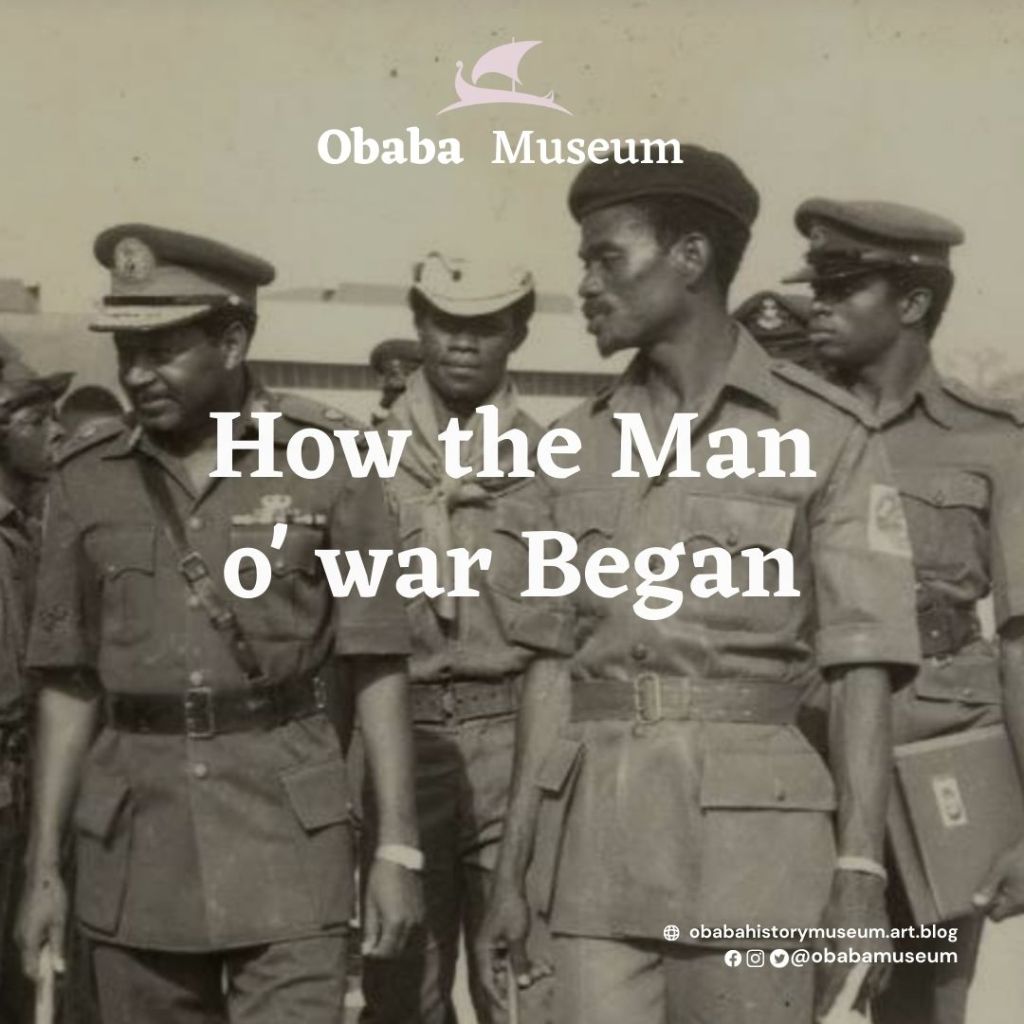
  • How The Man o’ war Began

    How The Man o’ war Began

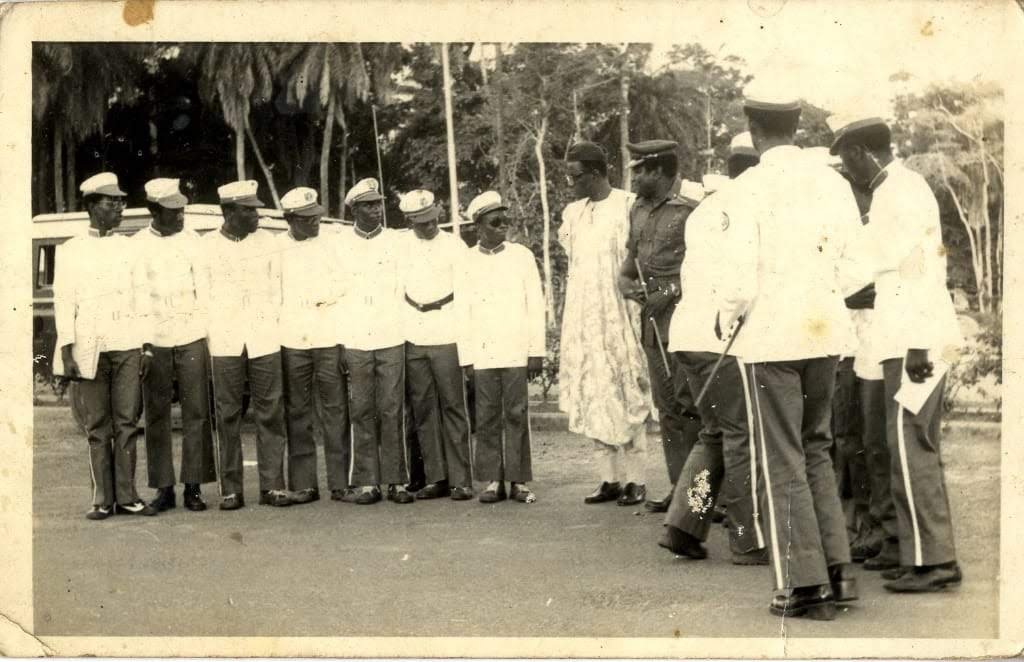
    If you attended public higher institutions in Nigeria like OAU, my Alma mater, it is very likely you came across some young uniformed men who had a reputation for waking you up early in the morning with their chants while jogging. There is however a lot you may not know about this organisation. Relax as I take you on a trip down memory lane.

    One Saturday evening, March 31, 1973 Sasa Ita Offiong Nsemoh and Ebiri Oteiri Okoro, two students of the University of Ife resident at Ifewara campus, conceived the idea to establish a student organisation which would enable other students to benefit from their vast knowledge of teamwork, fitness and strategy as they had both participated as combatants in the Biafran Army during the Nigerian Civil war (1967 – 1970).
    Prior to the establishment of the Man o war club in University of Ife, no University had previously attempted to establish such a student organisation in line with the Citizenship and Leadership Training Centre.

    Far back, in 1951, the Man o war Bay had been established in Southern Cameroon around Lake Victoria and Mount Cameroon by Alec Dickson based on the principles of the Outward Bound School established at Britain ten years earlier.
    In her book New Nigerians, Mora Dickson explained that by 1955, the Man o war Bay had begun to receive acceptability among Nigerian Youths who had been inspired by the need for adventure and physical training. One of the earliest schools where the club was established was Hope Wadell Training Institute at Calabar. Both Sasa Ita Nsemoh and Ebiri Oteiri Okoro had attended the Hope Wadell Training Institute for their secondary education. Ebiri Oteiri Okoro explained that during the period which he studied at Hope Wadell Training Institute, he had been involved in many skills and activities such as carpentry and wood carving (mandatory vocational courses), camping and tours which he undertook as a member of the Boys Scouts. However, he took a special interest in the Man o war club. He was also involved in a number of other physical activities such as Kung-fu where he acquired a black belt. However, the Nigerian Civil war which broke out in 1967 interrupted his secondary education and at the age of 19, he was enlisted into the Biafran Army and due to his martial art skills, his first assignment was the training over 100 fighters in physical drills and guerilla warfare. Throughout the 30 Months war, he distinguished himself as an excellent soldier and rose to the rank of Substansive Captain of the Biafran Army.

    Following the end of the Nigerian Civil war and his discharge from the Biafran Army effected by the signature of Colonel Olusegun Obasanjo, the then GOC, 3 Marine Commando Division, he returned to school to complete his secondary education.

    By 1971, both Himself and Sasa graduated from the Hope Wadell Training Institute and had become students of the University of Ife by 1972. It was the various experiences first as man o’ war members in the Hope Wadell Training Institute and as Combatants in the Biafran Army that inspired them to establish an organisation that would build youths -especially University Students- to be self-reliant, discipline and physically fit. The response of The Vice Chancellor, Professor Hezekiah Oluwasanmi was positive, he gave consent to the idea and immediately agreed to be the sponsoring authority of the Club. The Emir of Kano, the Ooni of Ife and the Obi of Onitsha also agreed to become Patrons and sponsoring authorities of the Club. And so by 5th May, 1973, the largest crowd ever seen around the campus during that period met and resolved to establish The man o’ war Club, University of Ife. That same Month, the man o’ war Club was registered by the Director of Student Affairs (DSA), Mr. Okunlola as a prominent student organisation within the school. The Club also got registered by the Citizenship and Leadership Directorate as a field arm of the Centre.

    By January 21, 1974, the Club was allocated a wide expanse of land for its training base, by the estate management of the school. Subsequent Vice Chancellors continued to render monetary and moral support to the man o’ war club, which was fondly regarded by lecturers then as the school’s ‘standing army’ due to their ideals of discipline and community development. The Director of the Centre, R. A. Elegbe maintained a cordial relationship with the club throughout his tenure and even supplied membership badge and white crested vests to the club.

    The then Vice Chancellor, Prof. Hezekiah Oluwasanmi and a army officer from the 2nd Mechanized Division at Ibadan addressing some Patriots on the Training base.

    It did not take long for the Nigerian Army to start giving logistic support to the Ife man o’ war Club. The 2nd Mechanized Division of the Nigerian Army at Ibadan was of great support to the club and even suggested that it become a Cadet Club which will be under the direct administration of The Nigerian Army. Ebiri Oteiri Okoro, the Commander-in-Chief (C-in-C) of the club however declined the recommendation.

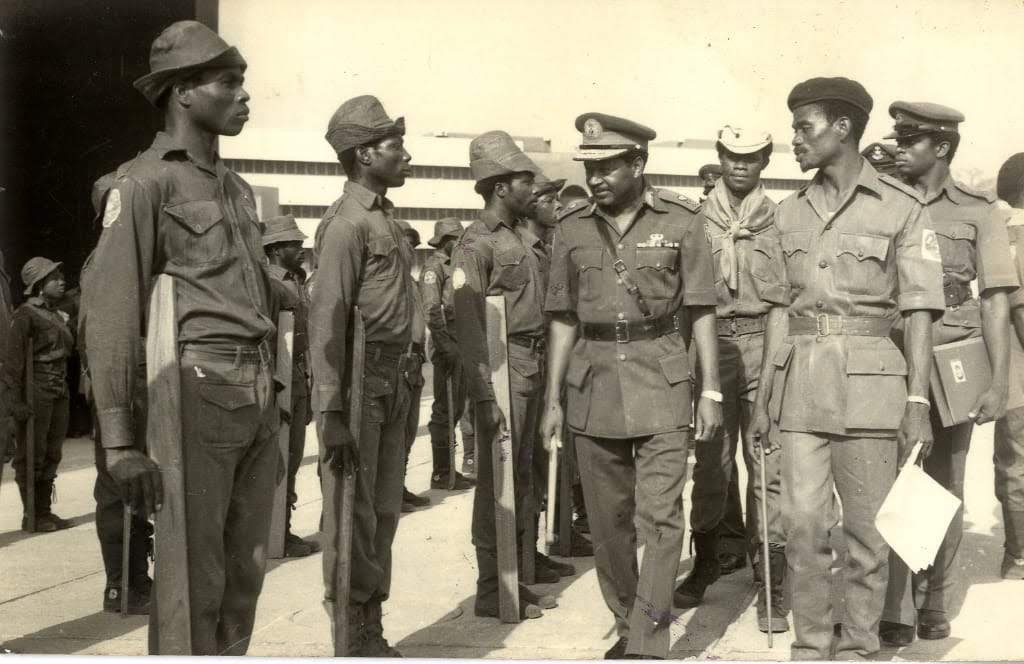
    R-L: Ebiri Etiri Okoro and Major General Martins Adamu inspecting a Guard of honour

    Two individuals from The 2nd Mechanized Division of The Nigerian Army are of significance, i.e. General Martins Adamu, the then GOC of the Division, who by 1978 was said to have donated not less than 360 yards of Army Green Khaki for clothing man o’ war Officers and also supplied vans and buses to facilitate the Operation Know Your Country Tour (OKYC). Colonel Anthony Aboki Ochefu, the Provost Marshal of the Nigerian Army was quoted by Ebiri Okoro to have persistently rendered support to the club during its early years of establishment.
    With the establishment of man o’ war club at University of Ife. Many other students at other universities were inspired to replicate same in their various places of study. By 1976, another unit was established at University of Lagos, Ado Bayero University in November, 1977 and University of Ibadan by 1984.

    NUMOWCHIN

    Upon assumption of office as Chief Coordinator, Pat Oluwatudimu began making consultations across various higher institutions with the aim of establishing a body that would unify all man o war clubs in higher institutions of Nigeria. By 1981 with a total number of 20 representatives from various clubs, the National Union of man o war Clubs in Colleges and Higher Institutions of Nigeria numowchin was established with the general motive of fostering friendship and cooperation among students of various higher institutions. Pat. Ife Adewumi the then Commander in Chief at man o war club in University of Ife, was elected as the first Supreme Commandant, or as you would better understand, National President of the union. However, in recent times, this union has continually faced various internal tensions and reduced acceptability amongst students of higher institutions.

    By 2000, efforts to reconcile the aggrieved parties in numowchin failed as the club at Auchi Polytechnic was alleged to have neglected due process in taking over the instrument and symbols of the union from the club at the University of Jos (The agreed Headquarters). This action has been described by many Statesmen and man o war historians as the coup which totally dismembered the numowchin .


    In recent times efforts have been made to revive the union. In a Passing out Parade (POP) ceremony held at the Federal University of Tecnology, Akure (FUTA) in 2006, the Chief Coordinators from the man o war clubs at the University of Ibadan, Obafemi Awolowo University and Federal University of Technology Akure, all agreed that it was necessary to make deliberate efforts to revive the NUMOWCHIN. On the premise of this discussion, the NUMOWCHIN SouthWest Forum was birthed. Up untill recent times various conventions have been held under this body with the sole aim of uniting the various clubs within the region. Similar and simultaneous efforts are also currently going on across the other Geopolitical zones in Nigeria, all which are designed to serve as the precursors for unifying the NUMOWCHIN on the national scale once again.

    References
    Obaba V.O (2019), A History of the Man o war Club in Nigerias Higher Institutions: Case Study of Obafemi Awolowo University, Ile-Ife, Nigeria, 1973-2011.


    The Pact(1977), Being the Constitution of the man o war Club, University of Ife, Ile-Ife

Design a site like this with WordPress.com
Get started