Tag: Nigeria

  • The Promises We Keep Hearing

    The Promises We Keep Hearing

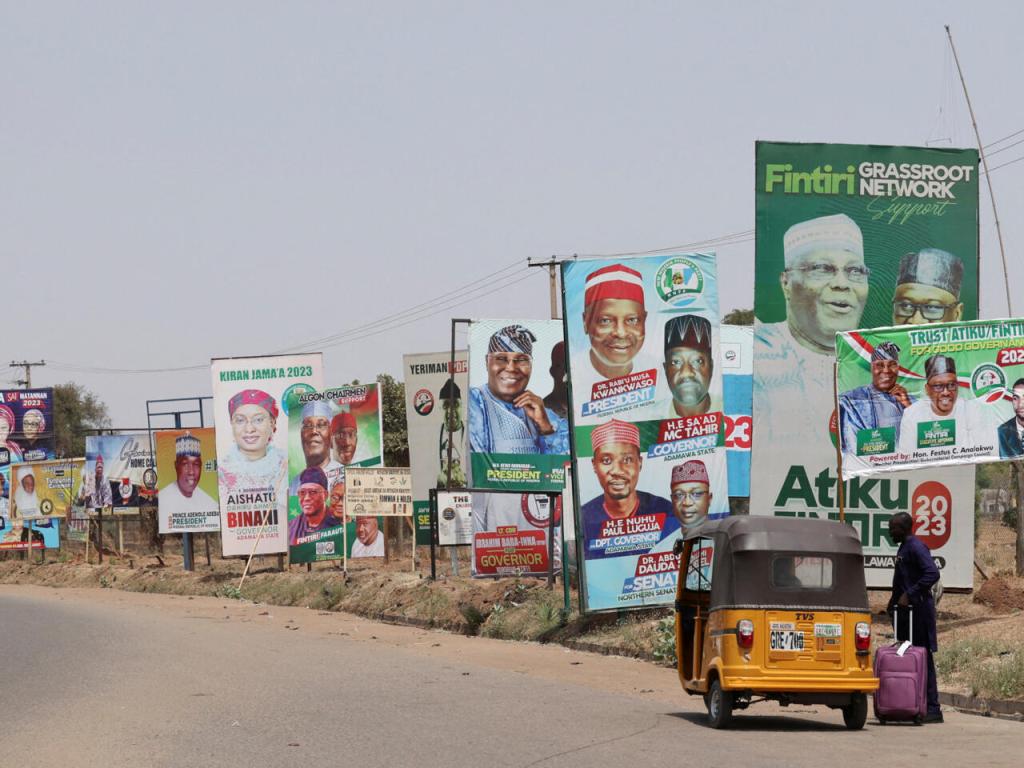
    Every election season in Nigeria feels like a revival. You hear new slogans, see new faces but the same promises of hope. In 2014 up till 2015, a new political coalition promised “Change”, then by 2019 they moved to the “Next Level.” Today, we listen patiently to the promise of “Renewed Hope.” These promises may sound fresh but are quite familiar; they are all echoes of promises we’ve heard before.

    In recent months, while reading through old Nigerian newspapers, one thing became clear: these promises are not new. From independence till now, every government has spoken the same language of transformation. They often promote the belief that a new dawn is just one administration away. These repeated declarations are not just political statements; they have become part of our national rhythm.

    This recurring pattern of rhetoric is what inspired this series — The Promises We Keep Hearing. It’s an attempt to look back at how political speech has shaped Nigeria’s identity and imagination. By tracing the evolution of the words of our leaders, we observe their tone and ideals. We also note their contradictions. This analysis helps us understand how language itself became one of the most powerful tools of governance in Nigeria.

    During the colonial era, Nationalist leaders delivered anti-colonial speeches. Today, most politicians make populist appeals to mobilise people, legitimise actions and, manipulate public opinion.

    The early nationalist movements of the 20th century show how language carried the moral weight of freedom. Early nationalist leaders understood the power of well-crafted speeches. Macaulay, often regarded as the father of Nigerian Nationalism, was renown for his fiery essays in The Lagos Daily News. Azikiwe’s speeches were often effective because they married intellect and hope, painting Nigeria as a proud, united nation (you really need to listen to his speeches).

    Awolowo’s tone, on the other hand, was often pragmatic and policy-driven, reflecting the discipline of a planner (See ‘Awo’, his memoir for more of this). Ahmadu Bello’s speeches often appealed to cultural preservation and dignity, linking tradition with progress. No wonder he was highly regarded by majority of the Northern Nigerian populace.

    The 1960s were full of optimism, but also rivalry. Independence brought hope, however political language quickly became a contest of identities and power. Our politics became regionally based. By 1966, the military replaced politicians who had fought themselves with words and the same institutions that wuld supplant them.

    Their eloquence gave way for the language of command. Leaders like Aguiyi-Ironsi, Gowon, and Murtala Mohammed spoke not to persuade, but to instruct. Even so, words such as unity, discipline, and accountability became rallying cries for a nation finding its footing.

    With the return to democracy in 1999 came a new vocabulary: unity, reform, rebirth. Obasanjo spoke with authority, Yar’Adua with humility, Jonathan with empathy. Today, slogans dominate social media: Change. Next Level. Renewed Hope. But the power of words hasn’t faded. Leaders still know that how they speak matters.

    Nigeria’s political rhetoric is also a story of how we imagine ourselves. The words of leaders shape what we believe is possible. This series starts by tracing those words – their origins, their intent, and their impact. Understanding the promises we keep hearing might just help us understand the country we’re becoming.
  • The Sleeping Man

    The Sleeping Man

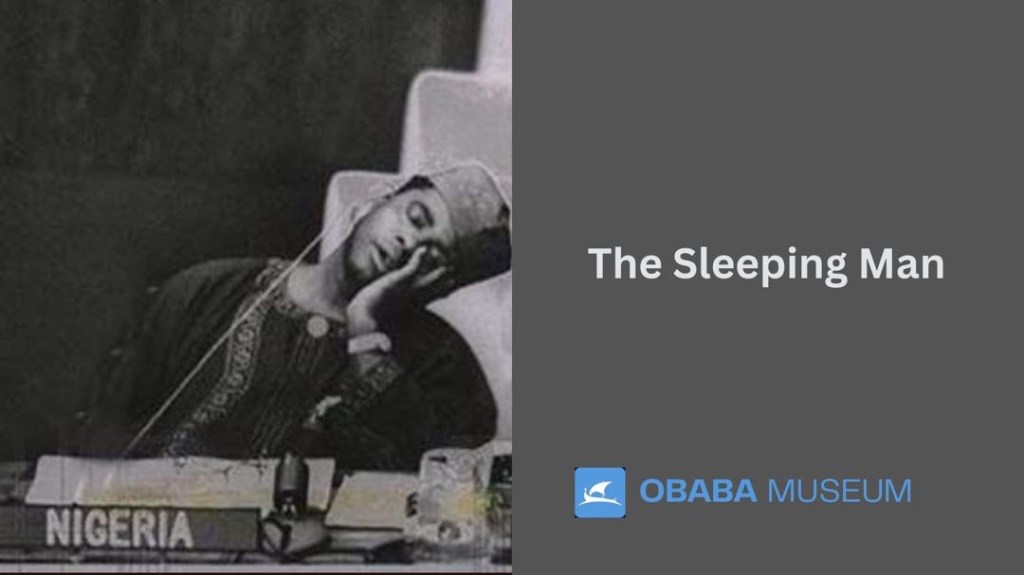
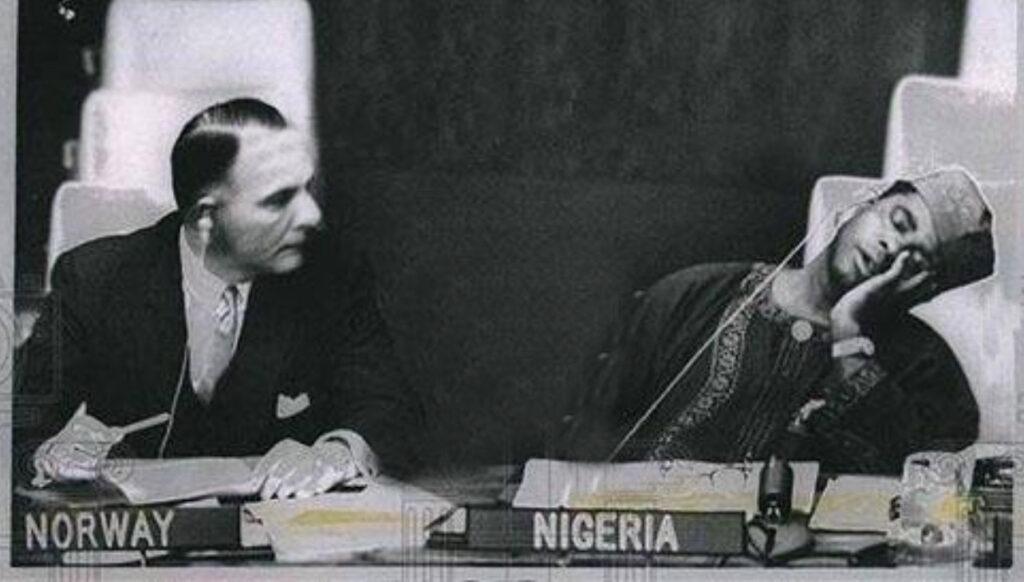
    There’s a picture that stayed with me since secondary school – Jaja Wachukwu sitting at the United Nations, eyes closed as if he was fast asleep. My classmates and I used to joke about it, wondering how a man could doze off in such an important meeting. For years, we believed that story. We never really asked questions. We never verified.

    That’s the scary part. Not that we were wrong, but that no one corrected us. We didn’t have a history teacher then, so that photograph became just another meme in our young minds. Only later did I find out that “the sleeping man” wasn’t asleep at all.

    He was protesting.

    Meet Jaja Wachuku, Nigeria’s first United Nations Ambassador. In 1960, his news rotated around the world for “sleeping” at a United Nations meeting.

    In 1960, Jaja Wachukwu, Nigeria’s first ambassador to the United Nations, was denied the right to speak after a condescending remark was made toward him. So he sat back, closed his eyes, and folded his arms, not in rest, but in silent defiance. That simple act of quiet dignity spoke louder than any speech could.

    It’s fascinating how one image can hold two completely different stories: one born of ignorance, and another of courage.

    Years later, when I learned the truth, it made me think about how many “sleeping men” we’ve misjudged in history, people whose actions we didn’t understand because no one told us the full story. It reminded me of the importance of teaching history, of looking twice before we conclude.

    Maybe that’s what storytelling does, it wakes us up.

  • ‘Ìyà àgbà ló jemí’

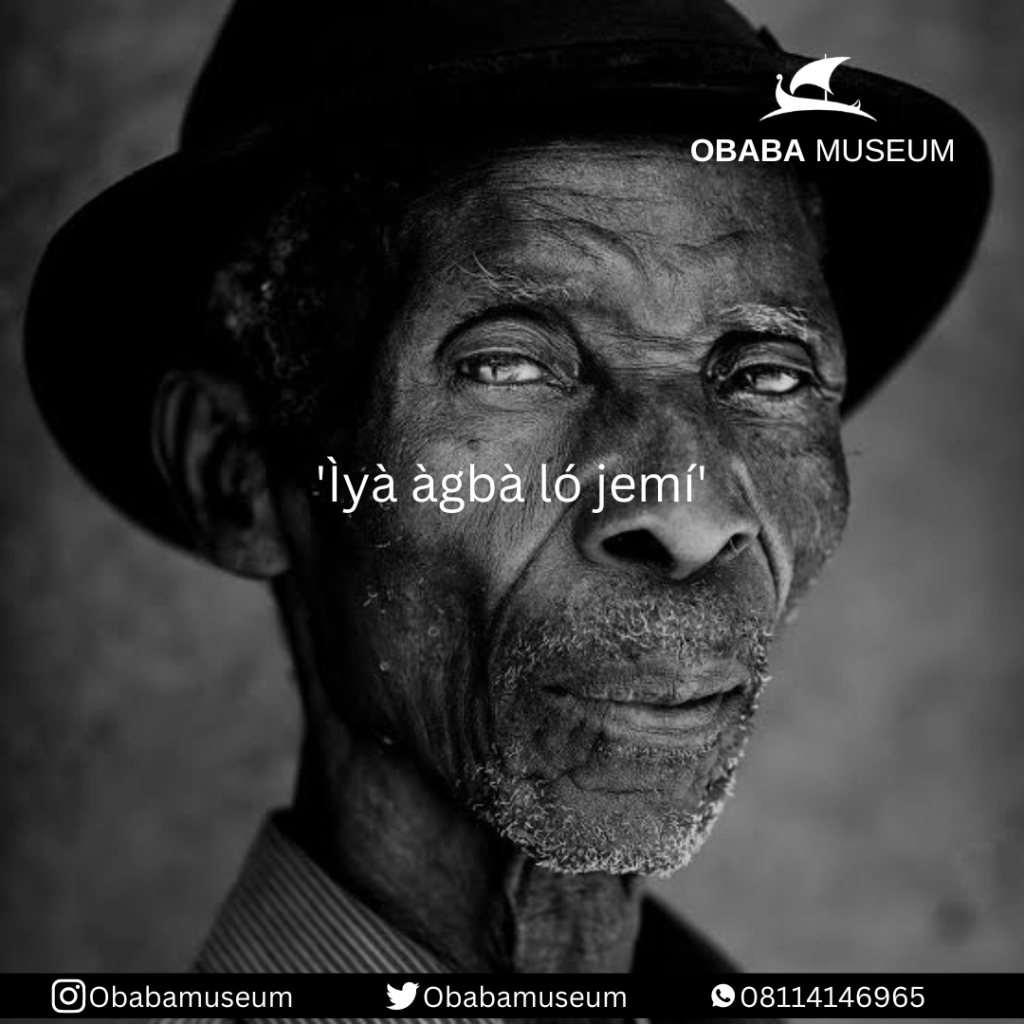
    ‘Ìyà àgbà ló jemí’

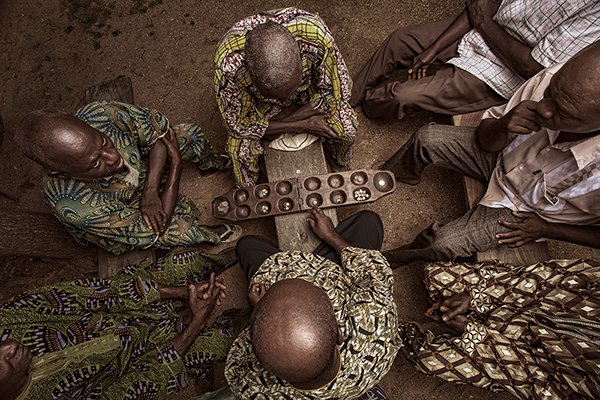
    For most people familiar with the Yoruba nation the popular Ijesha, Ijebu and of course the Eegun dialects are not strange, however most of you reading this would be surprised to hear there is also the okun. Yes, ‘Okun’ people geographically would be regarded as close cousins of the Ekiti people. They are the Yoruba speaking tribes in Kogi state and have quite an interesting culture, language and lifestyle. Follow the conversation closely.

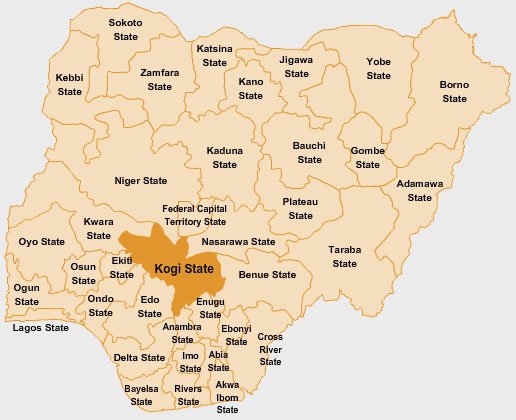
    Okun people make up over 20% of the entire population of Kogi state and are spread across six local government areas in Kogi State, they are; Kabba-Bunu, Yagba-West, Yagba-East, Mopa-Muro, Ìjùmú and Lokoja local government Areas.
    They speak various Yoruba dialects such as Owé, Ìyàgbà, Ìjùmú, Bùnú and Oworo, but their language is generally called Okun partly because it’s the common word for greeting.
    The beauty of this is that a non Okun person might not be able to figure out the slight differences in the dialects because every speaker flaunts his dialect at will, with full assurance that the other Okun person will understand what is being spoken about. This is often true, except for slight variations in the accent the spoken dialects are basically the same.
    More so, almost all of them speak the common Yoruba fluently even without any prior exposure outside Kogi – interesting, Right?
    Their dialects and culture is largely influenced by various reasons such as:

    Diversity of the State

    Kogi state could be regarded as a culturally diverse region with a huge number of ethnic groups like the Ebira, Igala, Idoma, Bassa (small fraction of Nupe mainly in Lokoja and Bassa Local Government Area), the Ogugu subgroup of the Igala, Gwari, Kakanda, Oworo people (A Yoruba Group), Ogori, Bassa komo, and many more.


    In addition to it’s ethnic diversity, it’s next door neighbors are many and diverse. In Nigeria, Kogi has the highest number of neighbours, a total of ten states share boundary with Kogi such as; Ondo, Ekiti, Kwara, Niger, Benue, Nassarawa, Anambra, Enugu, Edo and the Federal capital territory.

    History

    History has also played its part in shaping the Okun identity. The Nupe raids of the 19th century and their interaction with the Hausas due to geographical zoning have left an indelible mark on the Okun people and their culture.
    According to oral source, Okun people migrated from Ile-Ife, the cradle of the Yoruba race when Yorubas were spreading to occupy more lands. Before spreading out, each and everyone was instructed to report to Ile Ife for a yearly meeting.
    The man, that led a group of young people to a location (now called YAGBA) in Kogi state did not return over a long period of time. When he eventually returned and explained that he lost larger part of his acquired land to some other migrants and slave raiders.
    He was blamed for the loss and in defense he said, ”ÌYÀ ÀGBÀ LÓ JEMÍ” meaning that the invasion and annexation of a large portion of his acquired land was because he did not have elderly people around him to give counsel. Since then, they started teasing him at Ile Ife, calling him Iya agba. They associated this name with him whenever they wanted to send messages across to him after he had returned to his occupied area, now called Yagba.


    Over the years, the Okun people have faced numerous challenges, ranging from geo political zoning, marginalisation and what could be regarded as the identity crisis.

    Their problem started during the colonial era when they were politically grouped into the Northern protectorate by Sir Frederick Lugard, the British High Commissioner at that time. The abolition of the provincial and regional administrative units in 1967 led to their merging with Ilorin to form old Kwara state. Then, Igala was merged with old Benue State. However, on the 27th of August 1991, Okun people were removed again and merged with Ebira, Igala from Benue state and some other tribes to form Kogi state. Despite their protest against merging them with completely different tribes, they were forced into this union. Their efforts to break away and form Okun State, which could facilitate close affinity with their Kiths and Kins in the South West, has not yet materialised.


    Okun people bear Typical Yoruba names just like other communities in South Western Nigeria. In fact, virtually all of their settlements are named in basic Yoruba language examples are: Ayegunle, Ayetoro, Kajola, Egbeda, Egbeda Ega, Okedayo, Oke-aba (Kabba), Odo Ere, Odo Eri, Ife-olukotun, Iyamoye, Agbaja, Igbo Nla, Obajana and Ikoyi.
    Even, groups that make up Bunupeople of Okun have Yoruba names like; Okemeta, Okemesan, Akumerindinlogun and Kiri.


    Some notable Okun indigenes are:
    Chief Kola Jamodu, Eyitayo Lambo, Pastor Sam Adeyemi, Smart Adeyemi, James Faleke, Dino Melaye, Shola Amoebi, Tunde Ednut, Jaywon, Nike Davies Okundaye, Sam Alle, Bayo Ojo, Joseph Ojo Omonehin, Dare Art Alade, Sunday Bada, Funke Akindele, and Victor Obaba.

    Thanks for reading through, I would like to hear your thoughts and opinion about this article. Please share them in the comments.

    The first edition of our magazine, The Explorer would be published this December, If you would like to, or know anyone who has a business and would like to advertise, we have some few spaces reserved. Contact us: 08114146965
  • Pyrokinesis

    Pyrokinesis

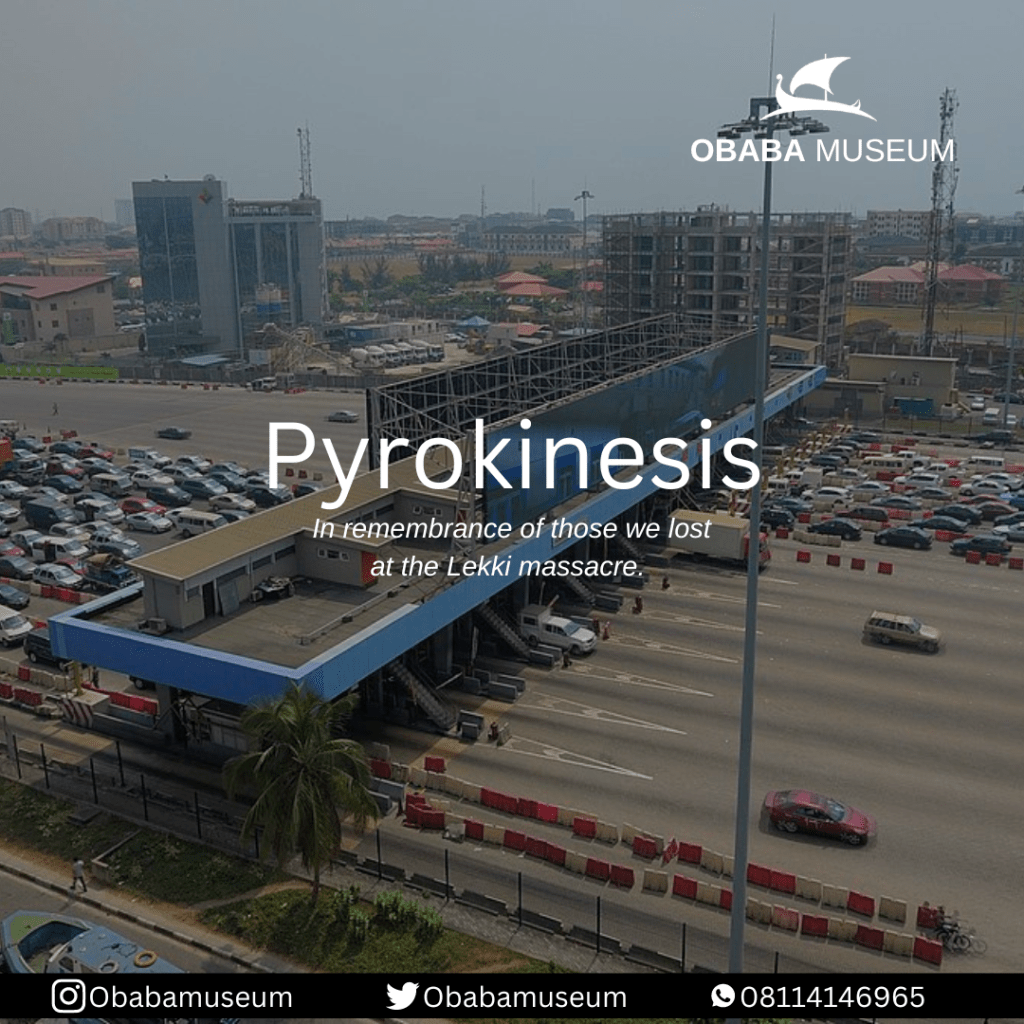
    in memory of those killed at the lekki massacre.

    Tonight, I light up my heart like a candle-wick,

    in remembrance of everyone we’ve lost.

    I’m guilty of self-immolation. Every inch of my anatomy burning—

    And all the tears shed won’t quench this inferno.

    I am a memorial for every sowed seedling,

    Sister and brother planted into the earth.

    with death’s cold tongue.

    This is how we remember the dead,

    we chrome everything black and light,

    a candle hoping the flickering flame guides their passage

    into everlasting fire.

Design a site like this with WordPress.com
Get started