
On 13 February 1976 (a day to Valentine’s Day 50 years ago), General Murtala Ramat Mohammed was ambushed and killed in Lagos on his way to work by troops loyal to Lieutenant Colonel Buka Suka Dimka. He was on his way to Dodan Barracks with no serious security, asides the service pistol his ADC bore. Along Federal Secretariat Road, his vehicle was blocked. Shots were fired at close range. Within minutes, the Head of State was dead and left on the highway to the full view of bystanders.
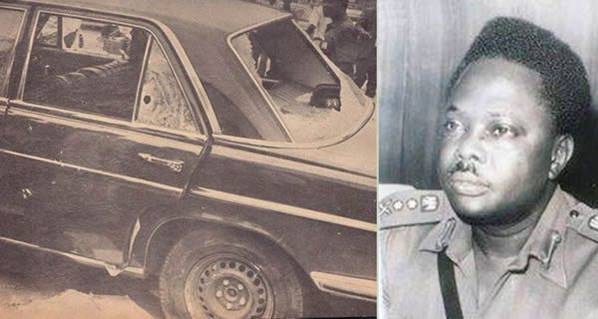
Source: Nairaland
Fifty years later (in 2026), the interpretation of that event remains divided. Some argue that Murtala’s death was almost predictable. That a man who participated in coups, commanded troops in a civil war, and removed a sitting Head of State could not realistically expect a quiet political retirement. Others insist that he had become a necessary reformer and that his assassination interrupted what might have been a structural turning point in Nigeria’s political development.
There is also a third claim, more speculative but persistent: that Murtala governed with the urgency of someone who knew he might not last. He moved quickly because he understood the volatility of the institution that produced him.
But before we draw conclusions, we need to ask a more grounded question: How did he get there?
Before 1976
Murtala did not emerge suddenly as Head of State the previous year. By the time Gowon was overthrown, he had already been inside the core of Nigerian military politics for nearly a decade. Like Gowon, he belonged to the early generation of post-colonial officers. Born in Kano in 1938, Murtala attended Barewa College in Zaria, a school that produced a generation of northern political and military elites. Like Yakubu Gowon too, he trained at the Royal Military Academy, Sandhurst. On paper, he was a product of the British military tradition of discipline, hierarchy, and loyalty to the chain of command.
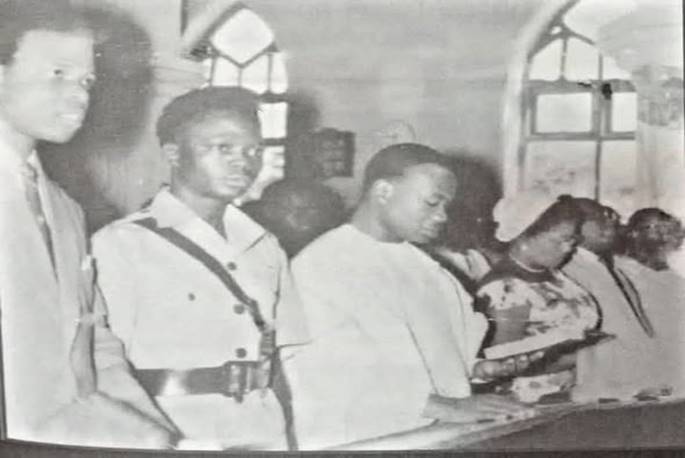
Source: Folaranmi Ajayi (Facebook, 2026)
But there is an important distinction. While Gowon absorbed institutional caution, Murtala absorbed structure, but not restraint. By the mid-1960s, he had developed a reputation for bluntness, impatience, and emotional intensity. Even early colleagues noticed that he only respected discipline when it aligned with his judgment. When it did not, he was prepared to challenge it. The pattern was already forming.
His First Instance of Open Rebellion
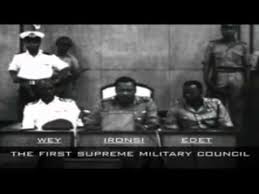
Murtala’s first clear break with military hierarchy came in July 1966. After the January coup brought General Johnson Aguiyi-Ironsi to power, tensions inside the army intensified. Many northern officers believed the political balance had shifted dangerously, and General Ironsi did little to assuage those fears. His promulgation of the Unification Decree, which replaced the federal system with a unitary structure, deepened that suspicion.
At this point, Murtala was no longer a passive bystander, he was one of the officers who coordinated the counter-coup from Lagos. He took control of strategic points, including the airport, and maintained communication with other northern officers. In a sense, he was not merely executing orders handed down from above but was part of the circle shaping events as they unfolded. The July counter-coup was a calculated intervention by officers who believed the balance within the federation had been altered beyond comfort.
It is also important to note that, at that stage, the objective was not simply regime change. Among many northern officers, the idea of Araba (secession of the North) was openly entertained. Murtala was associated with that current of thinking. In other words, his first major political act inside the Nigerian state was tied to a movement that contemplated breaking the state itself. Its an irony today that he is often viewed as a nationalist; people even go further to justify his ‘fellow Nigerians’ phrase as a pointer to his nationalist traits.
Well, as we would see in the next article, Nigeria ultimately remained united, largely because political negotiation overrode separatist impulses. But July 1966 established something that would follow Murtala throughout his career. When he believed a structure was flawed or dangerous, his instinct was not patience. It was decisive correction, even if that correction risked fragmentation. He did not treat the Nigerian state as untouchable. If he believed it was failing or biased, he was prepared to dismantle or restructure it by force. That was his first open rebellion within the system he had sworn to serve.
The Civil War: Courage and Disobedience
When the civil war began in 1967, Murtala was appointed commander of the Nigerian Army’s 2nd Division, responsible for operations in the Midwestern and eastern theatres. His performance during this phase mixed tactical success with persistent friction with the high command. What stands out most in his wartime record was not only bravery, but a pattern of acting independently of orders from Army Headquarters and Supreme Headquarters.
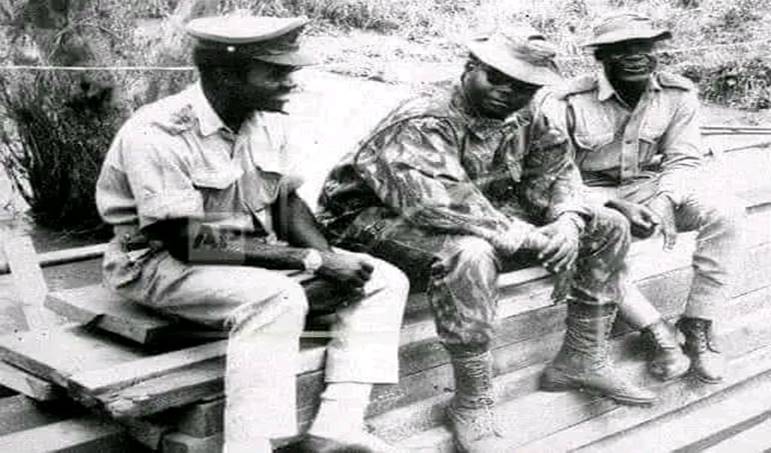
Source: Associated Press
The most discussed example is the push toward Onitsha.
After retreating Biafran forces destroyed the key bridge over the River Niger, Army Headquarters in Lagos advised a cautious, unopposed crossing at Idah, followed by an overland advance (a plan viewed as less risky and more coordinated with neighbouring formations).
In his usual character, Murtala rejected that option. He favoured a direct river assault from Asaba, believing the momentum was with federal troops. Supreme Headquarters, his brigade commanders, and even the commander of the neighbouring 1st Division, Colonel Mohammed Shuwa, advised against it; despite this, Murtala persisted. He ordered the river crossing despite explicit strategic recommendations to the contrary.
Twice, the frontal assault was repulsed by the Biafran soldiers with significant casualties and loss of equipment. Even after those setbacks, he tried a third assault before eventually agreeing to Army Headquarters’ original plan and capturing the town. The failure of his earlier attempts cost lives and morale.
This episode reveals two consistent traits in his wartime command:
- He valued initiative and decisiveness over procedural coordination.
- He was willing to act against directives from his superiors if he judged them too cautious.
Ideally, as some military observers have pointed out, such independence should likely have led to a court-martial in less chaotic conditions. However, in the Nigerian civil war’s fluid environment, it did not.
These decisions were, however, not isolated, they reflected a larger pattern within the 2nd Division under his command, where he adopted rapid movement, aggressive engagement, and often unilateral decision-making that prioritised tempo over hierarchical compliance. That combination won him recognition for bold leadership and respect from many subordinates. It also created unease among senior officers who saw traditional military discipline eroding under the pressure of his personality and approach.
The 1975 Coup
By 1975, Murtala was no longer a divisional commander at war. He was Federal Commissioner for Communications in a government that had been in power for nearly a decade. But the impatience that marked him in 1966 and during the civil war had not softened. The post-war years were marked by oil revenue expansion and reconstruction. They were also marked by delay due to bureaucracy in government procedures. The promised transition to civilian rule, initially projected for 1976, was postponed. Administrative reforms were discussed repeatedly but implemented slowly. Don’t forget that by 1974, there had been two major milestones: The wage and Salary increases headed by Jerome Udoji, and a National Conference on Manpower Utilisation and Development. On one of such occasions where Gowon rejected his memo, he angrily remarked to Shehu Shagari,
“Don’t mind him!” “We shall soon change him. We put him there and we can remove him anytime!”[1]
Within sections of the officer corps, especially among those who had fought the war, frustration began to build. To them, the post-war state appeared slow, procedural and overly cautious. Murtala stood at the opposite end of that temperament. He was direct where others were consultative. He preferred resolution to deliberation.
When the July 29, 1975 coup was executed while Gowon was abroad, Murtala was not an accidental beneficiary. He was the senior officer around whom dissatisfaction had quietly gathered. Whether or not he drafted the plan himself is less important than the fact that he accepted its outcome without hesitation. Once again, he aligned himself with intervention as a corrective instrument.
His months in office reflected the same instinct. State governors were removed. Senior officers were compulsorily retired. Thousands of civil servants were dismissed. A new federal capital was announced. Foreign policy shifted decisively. The tempo was unmistakable. Supporters described this as clarity and discipline restored. Critics saw recklessness and institutional shock. But even in government, Murtala behaved as he had in 1966 and during the war: when he believed a structure was defective, he moved to reset it.
Then came 13 February 1976.
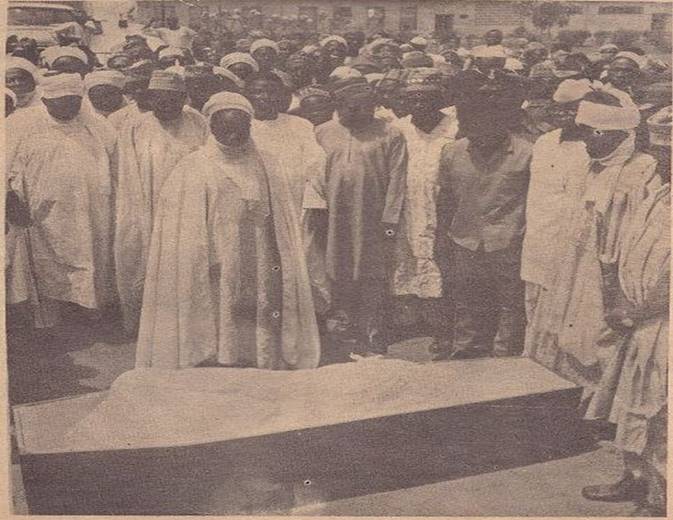
Source: Nairaland
The irony is difficult to ignore. A man who had seized the airport in 1966 now has that same airport named after him.
The first Nigerian Head of State to appear on a naira note is a man whose career repeatedly challenged the very hierarchies he once swore to uphold. Monuments, institutions and public memory have fixed him in national symbolism.
It is here that Dimka’s failed coup assumes a historical weight beyond its immediate violence. Assassination froze Murtala at a particular moment as an energetic, reformist, and uncompromising leader. Death removed the possibility of decline, error, or prolonged controversy. It converted a divisive figure into a fallen one.
In life, he was a rebel inside the system. In death, he became a symbol of it.
That transformation may be the most consequential outcome of 13 February 1976.
[1] Omoigui, N. (n.d.). Military rebellion of July 29, 1975: The coup against Gowon – Part 6. Dawodu. Retrieved February 11, 2026, from https://www.dawodu.com/articles/military-rebellion-of-july-29-1975-the-coup-against-gowon-part-6-635

 Obaba Museum