Tag: military history

  • Origin of the Military Salute

    Origin of the Military Salute

    When you see or think of the military, there are common practices which naturally flashes through your mind, in fact some of those cultures are jokingly imitated by the civilian populace; one of these traditions is the military salute. Of course even the salute has many variations depending on the arms (swords, rifle, etc.) being held in the course of saluting, but our focus today is the general salute you do with your bare hands.
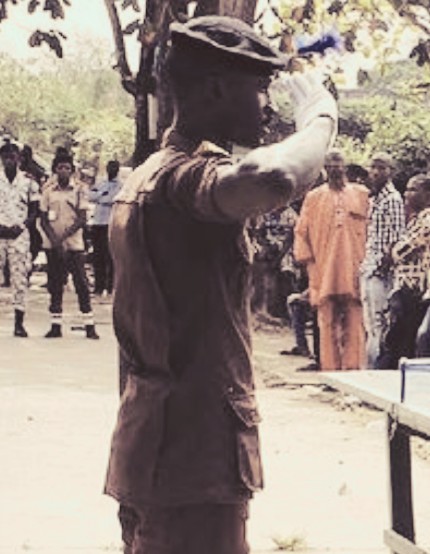
    Photo Credit: Man o’ war OAU Archive

    Saluting is generally regarded as a gesture of respect, mutual trust and a sign of comradeship among service personnel. It’s not limited to junior officers, all serving personnel are required by tradition to salute and reciprocate in necessary circumstances, but because of strict adherence to rank, the junior is required to make the first gesture. It is a sign of regimental discipline and a vital aspect of the drills (what you regard as marching or parade) thus, the appropriate situation and timing of a salute is one of the first thing all military officers are educated on during their drills. Although it is usually required when officers are outdoors and in their uniform and head gear, certain military handbooks prescribe the necessity of saluting indoors in instances of reporting to a superior officer or acknowledging his/her arrival.

    It would really be difficult to trace the specific origin of the general salute but there are common theories which rationally explains the reason for saluting and how the culture itself had evolved over time. The most probable theory is that it originated and evolved in the Roman empire and British Navy respectively.

    The likely standard of Roman salute. (Note there are no pictures to back the claim of this trend in 509 BCE)


    In Roman Republic (around 509 BCE) assassinations were said to be very common, so citizens and subordinates were required to approach officials with their fighting hand, the right hand, raised to demonstrate that it was not carrying or concealing a weapon. Others say that the Romans would slap their chest and raise their arm in tribute to demonstrate allegiance.
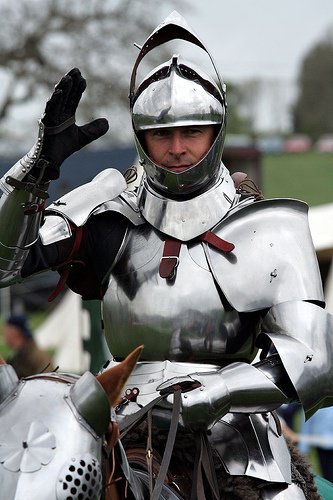

    Another origin story is that men in armor and horseback would hold the saddle with their left hands and raise the visors of their helmets with the right hands to greet their lords or commanders. According to the Met museum, ‘this gesture would have made a person both recognizable as well as vulnerable.’

    Still, it wasn’t until the 1600s that the English military records the formal mention of the salute, calling it a formal act that was ‘to be by removal of headdress.’ After metal helmets fell out of favour, soldiers wore hats similar to those of civilians. Like civilians they raised their hats when greeting a superior.
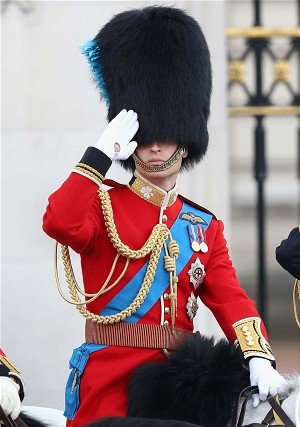
    Grenadier hats


    The salute however probably had to undergo further development in response to a change in military headgear. By 1700 grenadiers were wearing tall, conical hats held in place with secure chinstraps that were difficult to raise in greeting. The men began to merely touch their hats as if intending
    to raise them. Soon other soldiers adopted the shako, busby or bearskin, all of which were held in place by a chinstrap. They, too, stopped raising the hat and instead merely touched
    its brim. This action was formalised as the salute in European armies by about 1780, and from them spread to the rest of the world.

    Another explanation is that during the 18th Century because of concerns over excessive wear to headgear or hats becoming more cumbersome the salute was changed limiting the constant movement of headgears. A 1745 British order book states: ‘The men are ordered not to pull off their hats when they pass an officer, or to speak to them, but only to clap up their hands to their hats and bow as they pass.’

    With time the British Army developed a salute with the palm facing outwards, also used by the Royal Air Force. The Royal Navy, however, adopted a version with the palm facing downwards, thought to be because many men working on ships had dirty palms and to display them was disrespectful. One popular tale cites Queen Victoria as the one behind the downward-facing-palm, after she was saluted with a grimy hand. This tradition has been adopted by many military installations all over the world with the Navy salute being the most commonly favoured.
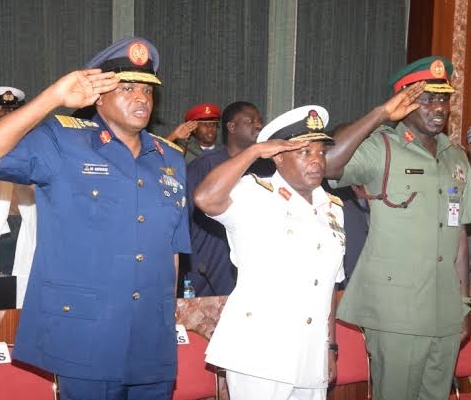
    The Nigerian Airforce, Navy and Army Salute respectively

    Various countries have different legal ramifications behind certain salutes. In Germany, for example, the straight-arm ‘Nazi/Hitler’ salute is illegal and punishable by up to three years in jail. It is therefore not uncommon for tourists to be detained for performing the salute for photos.

    So while there are really no general formal rules forbidding civilians from saluting military officers, you should keep in mind that it is better not to salute at all than to give a sloppy salute. Hope you enjoyed the gist? Let’s know what you think in the comment section below and don’t forget to follow our page to get notified when we drop a new post.

    Have a lovely week ahead.
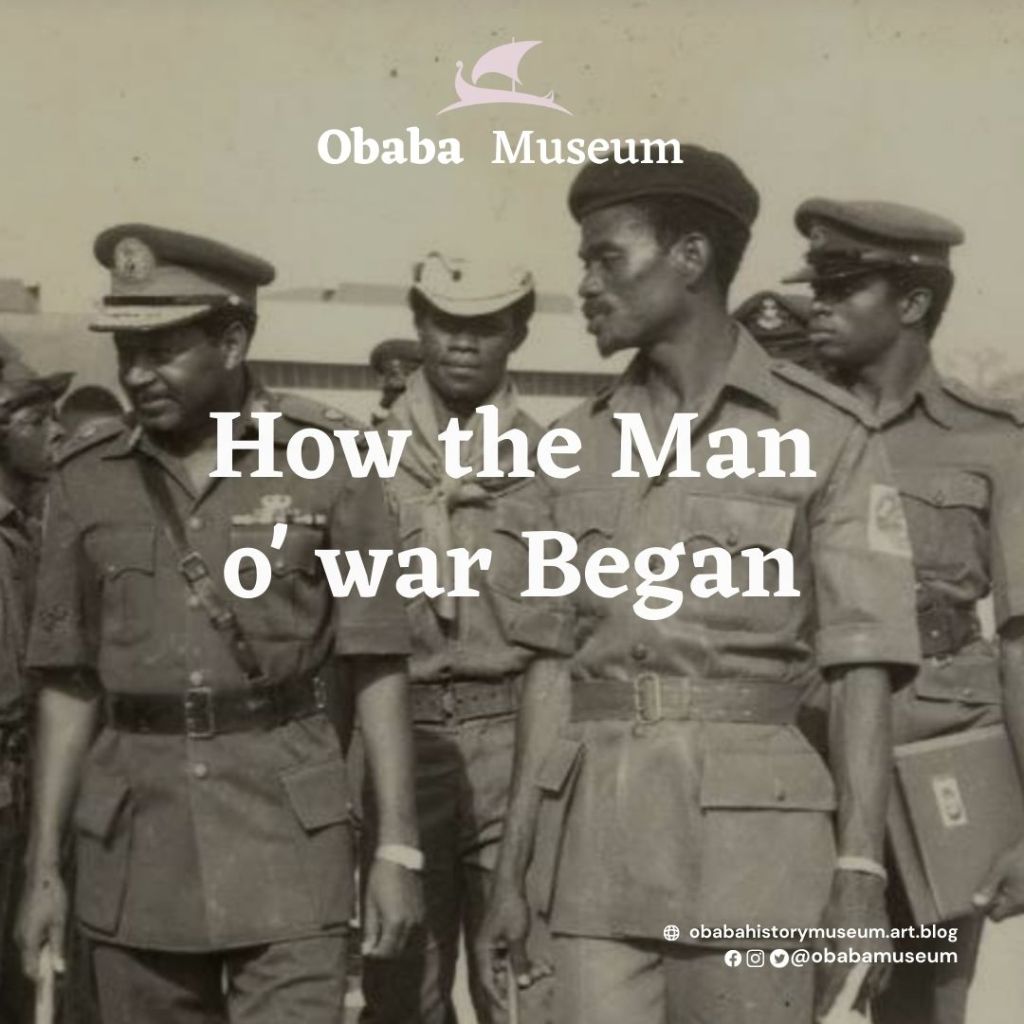
  • How The Man o’ war Began

    How The Man o’ war Began

    If you attended public higher institutions in Nigeria like OAU, my Alma mater, it is very likely you came across some young uniformed men who had a reputation for waking you up early in the morning with their chants while jogging. There is however a lot you may not know about this organisation. Relax as I take you on a trip down memory lane.

    One Saturday evening, March 31, 1973 Sasa Ita Offiong Nsemoh and Ebiri Oteiri Okoro, two students of the University of Ife resident at Ifewara campus, conceived the idea to establish a student organisation which would enable other students to benefit from their vast knowledge of teamwork, fitness and strategy as they had both participated as combatants in the Biafran Army during the Nigerian Civil war (1967 – 1970).
    Prior to the establishment of the Man o war club in University of Ife, no University had previously attempted to establish such a student organisation in line with the Citizenship and Leadership Training Centre.

    Far back, in 1951, the Man o war Bay had been established in Southern Cameroon around Lake Victoria and Mount Cameroon by Alec Dickson based on the principles of the Outward Bound School established at Britain ten years earlier.
    In her book New Nigerians, Mora Dickson explained that by 1955, the Man o war Bay had begun to receive acceptability among Nigerian Youths who had been inspired by the need for adventure and physical training. One of the earliest schools where the club was established was Hope Wadell Training Institute at Calabar. Both Sasa Ita Nsemoh and Ebiri Oteiri Okoro had attended the Hope Wadell Training Institute for their secondary education. Ebiri Oteiri Okoro explained that during the period which he studied at Hope Wadell Training Institute, he had been involved in many skills and activities such as carpentry and wood carving (mandatory vocational courses), camping and tours which he undertook as a member of the Boys Scouts. However, he took a special interest in the Man o war club. He was also involved in a number of other physical activities such as Kung-fu where he acquired a black belt. However, the Nigerian Civil war which broke out in 1967 interrupted his secondary education and at the age of 19, he was enlisted into the Biafran Army and due to his martial art skills, his first assignment was the training over 100 fighters in physical drills and guerilla warfare. Throughout the 30 Months war, he distinguished himself as an excellent soldier and rose to the rank of Substansive Captain of the Biafran Army.

    Following the end of the Nigerian Civil war and his discharge from the Biafran Army effected by the signature of Colonel Olusegun Obasanjo, the then GOC, 3 Marine Commando Division, he returned to school to complete his secondary education.

    By 1971, both Himself and Sasa graduated from the Hope Wadell Training Institute and had become students of the University of Ife by 1972. It was the various experiences first as man o’ war members in the Hope Wadell Training Institute and as Combatants in the Biafran Army that inspired them to establish an organisation that would build youths -especially University Students- to be self-reliant, discipline and physically fit. The response of The Vice Chancellor, Professor Hezekiah Oluwasanmi was positive, he gave consent to the idea and immediately agreed to be the sponsoring authority of the Club. The Emir of Kano, the Ooni of Ife and the Obi of Onitsha also agreed to become Patrons and sponsoring authorities of the Club. And so by 5th May, 1973, the largest crowd ever seen around the campus during that period met and resolved to establish The man o’ war Club, University of Ife. That same Month, the man o’ war Club was registered by the Director of Student Affairs (DSA), Mr. Okunlola as a prominent student organisation within the school. The Club also got registered by the Citizenship and Leadership Directorate as a field arm of the Centre.

    By January 21, 1974, the Club was allocated a wide expanse of land for its training base, by the estate management of the school. Subsequent Vice Chancellors continued to render monetary and moral support to the man o’ war club, which was fondly regarded by lecturers then as the school’s ‘standing army’ due to their ideals of discipline and community development. The Director of the Centre, R. A. Elegbe maintained a cordial relationship with the club throughout his tenure and even supplied membership badge and white crested vests to the club.

    The then Vice Chancellor, Prof. Hezekiah Oluwasanmi and a army officer from the 2nd Mechanized Division at Ibadan addressing some Patriots on the Training base.

    It did not take long for the Nigerian Army to start giving logistic support to the Ife man o’ war Club. The 2nd Mechanized Division of the Nigerian Army at Ibadan was of great support to the club and even suggested that it become a Cadet Club which will be under the direct administration of The Nigerian Army. Ebiri Oteiri Okoro, the Commander-in-Chief (C-in-C) of the club however declined the recommendation.

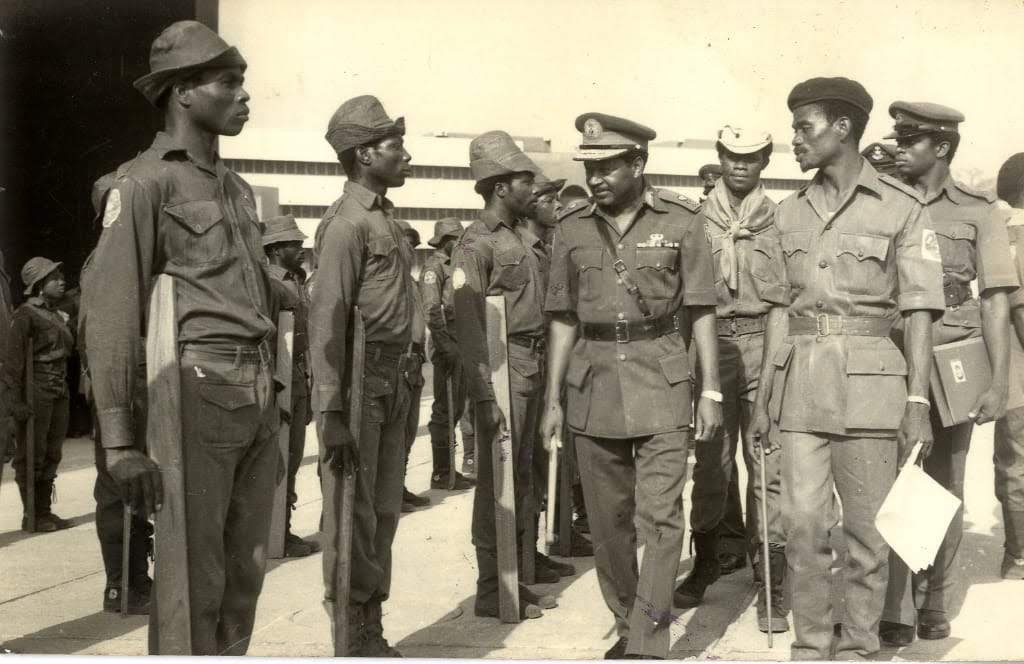
    R-L: Ebiri Etiri Okoro and Major General Martins Adamu inspecting a Guard of honour

    Two individuals from The 2nd Mechanized Division of The Nigerian Army are of significance, i.e. General Martins Adamu, the then GOC of the Division, who by 1978 was said to have donated not less than 360 yards of Army Green Khaki for clothing man o’ war Officers and also supplied vans and buses to facilitate the Operation Know Your Country Tour (OKYC). Colonel Anthony Aboki Ochefu, the Provost Marshal of the Nigerian Army was quoted by Ebiri Okoro to have persistently rendered support to the club during its early years of establishment.
    With the establishment of man o’ war club at University of Ife. Many other students at other universities were inspired to replicate same in their various places of study. By 1976, another unit was established at University of Lagos, Ado Bayero University in November, 1977 and University of Ibadan by 1984.

    NUMOWCHIN

    Upon assumption of office as Chief Coordinator, Pat Oluwatudimu began making consultations across various higher institutions with the aim of establishing a body that would unify all man o war clubs in higher institutions of Nigeria. By 1981 with a total number of 20 representatives from various clubs, the National Union of man o war Clubs in Colleges and Higher Institutions of Nigeria numowchin was established with the general motive of fostering friendship and cooperation among students of various higher institutions. Pat. Ife Adewumi the then Commander in Chief at man o war club in University of Ife, was elected as the first Supreme Commandant, or as you would better understand, National President of the union. However, in recent times, this union has continually faced various internal tensions and reduced acceptability amongst students of higher institutions.

    By 2000, efforts to reconcile the aggrieved parties in numowchin failed as the club at Auchi Polytechnic was alleged to have neglected due process in taking over the instrument and symbols of the union from the club at the University of Jos (The agreed Headquarters). This action has been described by many Statesmen and man o war historians as the coup which totally dismembered the numowchin .


    In recent times efforts have been made to revive the union. In a Passing out Parade (POP) ceremony held at the Federal University of Tecnology, Akure (FUTA) in 2006, the Chief Coordinators from the man o war clubs at the University of Ibadan, Obafemi Awolowo University and Federal University of Technology Akure, all agreed that it was necessary to make deliberate efforts to revive the NUMOWCHIN. On the premise of this discussion, the NUMOWCHIN SouthWest Forum was birthed. Up untill recent times various conventions have been held under this body with the sole aim of uniting the various clubs within the region. Similar and simultaneous efforts are also currently going on across the other Geopolitical zones in Nigeria, all which are designed to serve as the precursors for unifying the NUMOWCHIN on the national scale once again.

    References
    Obaba V.O (2019), A History of the Man o war Club in Nigerias Higher Institutions: Case Study of Obafemi Awolowo University, Ile-Ife, Nigeria, 1973-2011.


    The Pact(1977), Being the Constitution of the man o war Club, University of Ife, Ile-Ife

Design a site like this with WordPress.com
Get started