Category: Culture

  • What the Ṣẹ̀kẹ̀rẹ̀ says

    What the Ṣẹ̀kẹ̀rẹ̀ says

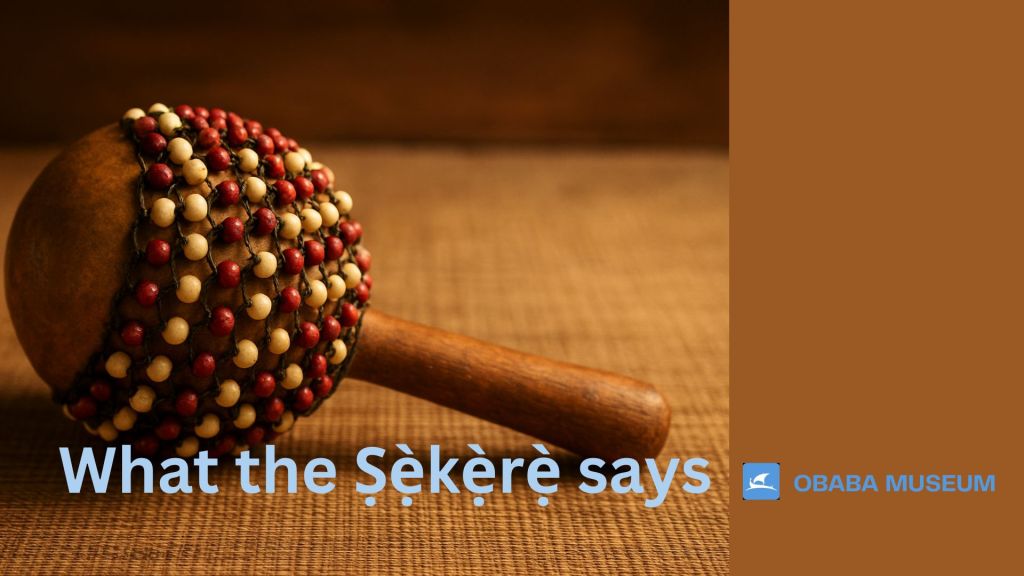
    Across much of West Africa, the ṣẹ̀kẹ̀rẹ̀ is more than a musical instrument, it is a symbol of joy, community, and rhythm. Made from a dried gourd covered with beads or cowries, it’s one of those instruments that almost everyone recognises by sound. When you hear it, you know something good is happening.
    Among the Yoruba people, the ṣẹ̀kẹ̀rẹ̀ is a staple in traditional music and ceremonies. It is rarely played in moments of sadness, such as funerals and definitely not during mourning, because it’s seen as a bringer of joy. Its rhythm is tied to celebration, thanksgiving, and togetherness. You’ll find it at weddings, naming ceremonies, festivals, and even in religious worship.
    And this isn’t only in Yorubaland. Across Africa, there are instruments that look and sound like the sekere – in Ghana, it’s called axatse; in Senegal, chekere; and in some parts of East Africa, there are similar shakers made from gourds and seeds. However, they all share the same purpose: to keep rhythm and to keep people connected. The ṣẹ̀kẹ̀rẹ̀’s sound travels easily, crossing languages, borders, and emotions.

    For me, the sound of the sekere brings back the village. I remember those mornings when my dad would take me along on his trips home. He was a generous man; everyone knew him for that. And most mornings started with music. You’d just hear the sound of the sekere from outside, women singing and laughing as they came around. In Igboland, they call them Umuada; in Yagbaland (where I hail from), the women would belong to an Egbe Obinrin (women’s group or club). But they often came as a group, celebrating, greeting, and, honestly, trying to make my dad “drop something.”
    The sound filled the compound, warm, cheerful, and alive. It wasn’t just about the beats; it carried meaning. It said, ‘we’re here, life is good, let’s share it together’.
    When I asked a friend what the sekere means to him, he said something that really stayed with me:


    “The Yoruba have a saying that the sekere doesn’t go to a place of sadness, not to funerals or war. It’s an instrument of joy, peace, and celebration. The sekere brings melody and smiles to people’s faces. It’s often used at naming ceremonies and marriages, and even to encourage generosity. It lays the foundation for other instruments that rhythm that every other sound builds on. Without the sekere, the music feels incomplete.” – Adekunle


    And that’s true. The sekere carries more than sound; it carries memory. It reminds us of what it means to live in rhythm with others, to share joy, to celebrate generosity, and to keep our traditions alive. For me, that sound will always mean home, community, laughter, and mornings when life felt simple and connected.
  • The People of Okuku

    The People of Okuku

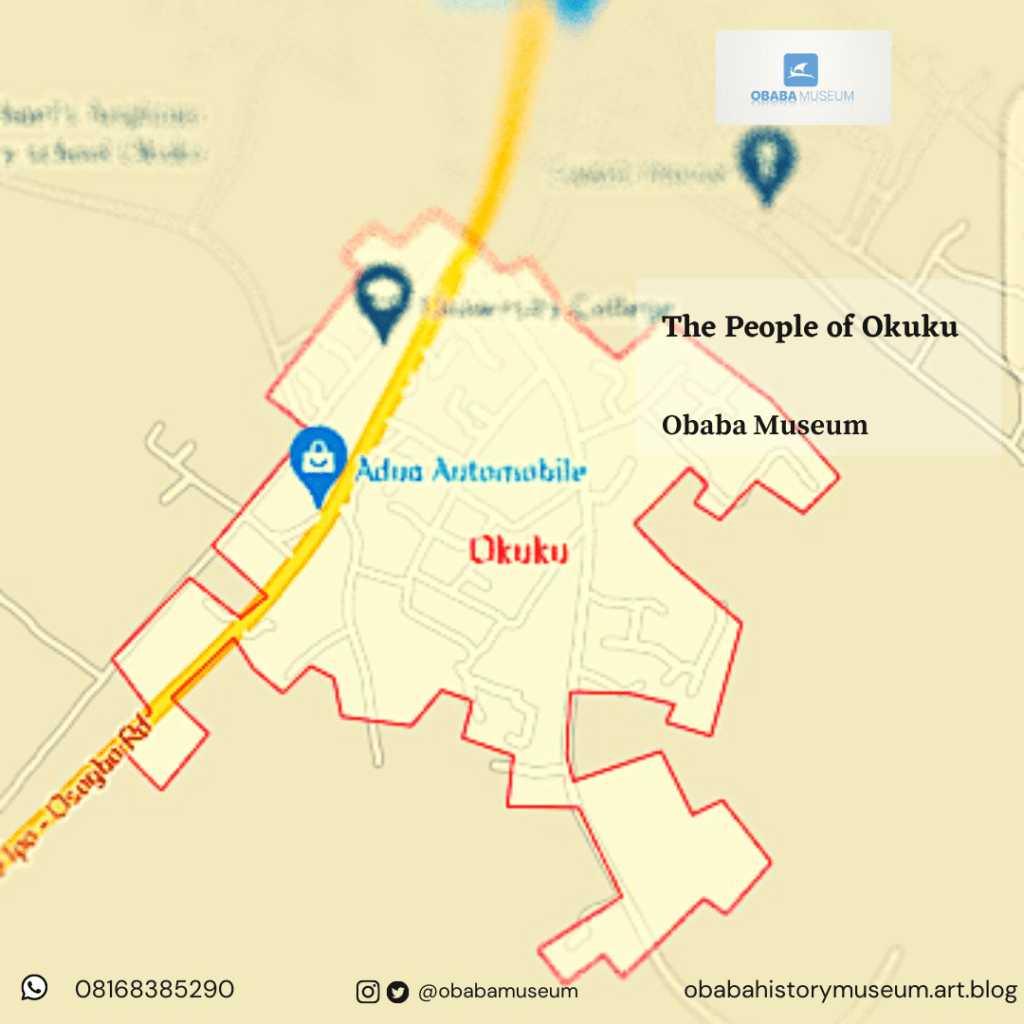
    Few days ago, I met a lady who seemed friendly and smiley. I asked for her name which sold her out as Yoruba. However, her specific city of origin was somewhat unique. It was something I had never heard before. She said she was from Okuku in present day Osun, Nigeria. I told her I would definitely do a little finding on this settlement as there was really not much she knew about it. Perhaps we could both travel down there for a field research.

    Immediately I got home, I searched the term ‘Okuku’ online and found a lot of other meanings, one of which was the Edo bridal hairstyle. Fortunately I finally found an article on a brief history of the settlement and how the name came about. Grab a seat and enjoy the gist.

    Like most Yoruba settlement, Okuku town traces descent from Ile-ife, Oladile, the founder of Okuku was said to be a descendant of Oduduwa. It is said that he left Ile-Ife at the same time with Alara, Ajero and Orangun to settle and take possession of virgin lands.
    After series of conquests, they all settled leaving Oladile who remained a ‘lone wolf’.

    Alara settled in Aromoko-Ekiti, Ajero settled in Ijero-Ekiti, and Orangun settled in Ila. Oladile was instructed by the Ifa oracle not to settle until he came across an exceptionally thick clump of palm trees. Eventually he found a completely uninhabited spot in a thick palm forest, near River Otin. He named the place “Iko-Ikin (Iko – a thick clump, Ikin – palm nuts), over time the word eventually metamorphosed to” Kookin”.
    In no time, Kookin grew to be a large and prosperous town because of new immigrants who trooped in from Further North. Legend has its that it grew to be an Iron Works Centre courtesy of its access to iron from the mines at Isundunrin near Ejigbo (in current day Osun, Nigeria).


    Two tragedies informed the name Okuku as it became known as today: around 1790, Kookin fought and lost a battle called ‘Ijesha-Arara’ (Dwarfs Ijesha) with the warriors of Ijesha. There were few people who survived the war. As if that wasn’t enough, their disaster was compounded by water poisoning consequently upon drinking from Omi Amuku (Amuku River).

    Oba Jala Okin led the survivors to a few kilometres towards Northern side of the ruins of Kookin to found another settlement which came to be called ‘Okuku’, derived from Oku to ku ku (Transliterated to mean remains of the dead).
    The peace of the new-found Okuku was disturbed once again by the Ilorin-Ibadan wars. It was not until after the war that Okuku once more enjoyed peace following Captain Bower’s Imposition of Peace in 1893.
    The Olokuku of Okuku Chieftaincy Declaration October, 1956, gave recognition to four ruling houses:
    1 – Edun
    2 – Oyewusi
    3 – Oyeleke
    4 – Oyekanbi
    Now, Okuku is the headquarters of Odo-Otin local government in Osun State, Nigeria. It is the nearest major town on the boundary between Osun and Kwara states. Among its immediate neighbours are Ikirun, Inisa, Ila-Odo (nearest to Kwara state) , Iba, Ijabe, Igbaye, Ekusa, Oyan and Erin-Ile (Kwara state)

    Thanks for reading through. I’m sure you learnt something new today. If you would like to read more articles like this, subscribe to get notified whenever we publish. Don’t forget to leave a comment, let’s know what you think.

  • Who Named The Yoruba?

    Who Named The Yoruba?

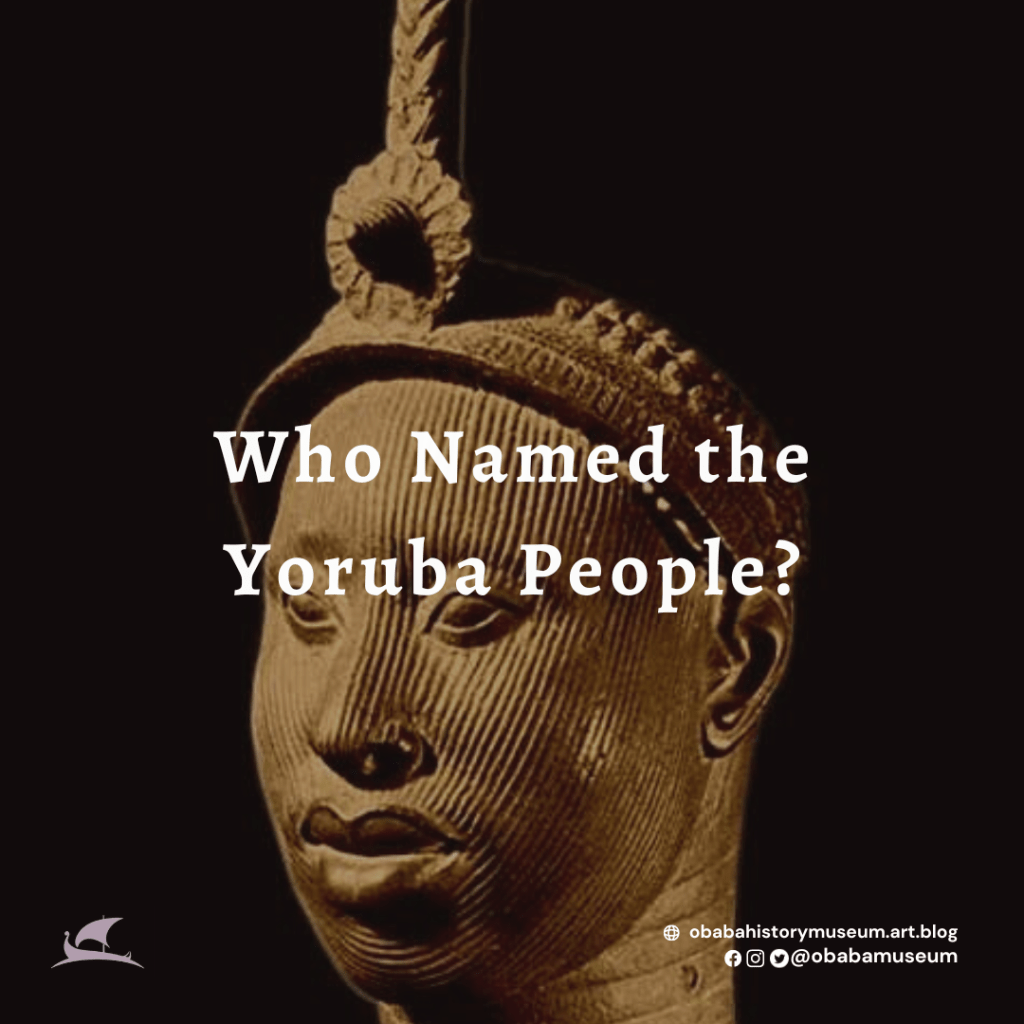
    Have you wondered why there really isn’t an appropriate interpretation for the word, Yoruba despite the value descendants of Oduduwa place on naming?

    Perhaps, you may have noticed that naming is of great value to the various peoples now collectively regarded as the Yoruba. For example names of individuals are usually based on foretelling or a consequence of the circumstances surrounding their birth, for example parents may name their child Owolabi hoping the child will bring wealth/good fortune to the family, or Adebisi, meaning one who was added to the crown or was born after the parent took titles. You would notice also that the naming of most Yoruba towns were derived from historical events or qualities and attributes, a vivid illustration is Abeokuta-Abe Okuta Olumo which was a place abode under the Olumo rock, Eba-Odan – Ibadan, and Ibi ti Ile ti yo – Oyo and other neighboring towns like Ile ibinu-Benin. However, these factors appear not partake in the word Yoruba. The question therefore is why do the ‘Omo Oodua’ still retain the name. Stay tuned as we trace the origin of this strange appellation now used to characterise the descendants of Oduduwa.

    The Yorubas are one of the three largest ethnic groups of Nigeria, concentrated in the southwestern part of the country. Although a smaller, scattered group live in Benin and northern Togo. They speak a language of the Benue-Congo branch of the Niger-Congo language family.

    In their book, ‘The Yoruba from Prehistory to the Present’, Falola and Usman argue that the word Yoruba was already in use in the interior of the Bight of Benin probably before the 16th century. Ahmed Baba also used this term in reference to the Oyo Empire. You should understand that up until the 1800s, there is little evidence to confirm that the Yoruba regarded themselves as Yoruba, the term was often an external label. They usually referred to themselves based on their subgroups and geo-location, for example, the Egbas, Ife, Okun, etc.

    The name Yoruba was the Hausa name for Oyo people, it was popularized by Hausa usage. As a result of bitter experiences in trade with the Oyo Kingdom where they usually felt cheated and short-changed they developed a stereotypical tag where they referred to the people of Oyo as ‘Yaribanza’ which means cunning, dubious or unreliable. This was later corrupted to Yorubawa or Yoruba. The extension of the term to all speakers of dialects related to the language of the Oyo dates to the second half of the 19th century. It is greatly due to the influence of Bishop Samuel Ajayi Crowther, the first Anglican bishop in Nigeria. Crowther himself was an Oyo Yoruba who compiled the first Yoruba dictionary as well as introducing a standard for Yoruba orthography. The accounts of Crowther coupled with its usage by Colonial officials gave credence to the name.

    The Egbas are know to have resisted that label by the Hausa/Fulani as there are alternative names like ‘Aku’, derived from the first words of Yoruba greetings (such as Ẹ kú àárọ? “good morning”, Ẹ kú alẹ? “good evening”) which has survived in certain parts of their diaspora as a self-descriptive, especially in Sierra Leone and Okun which usually refers to the Yoruba speaking nations within present day Kogi state, Nigeria.

    The native term the Yoruba people call themselves, is “Ọmọ Káàárọ̀-oòjíire,” literally meaning, ‘The People who ask ‘Good morning, did you wake up well?’ Of course the cultures of greeting is one of the striking features of the Yoruba culture, they are known for their many different greetings in many situations. Another term used is, ‘Ọmọ Oòduà,’ meaning ‘Children of Oduduwa,’ referencing the semi-legendary king who is believed to be the founder and ancestor of the modern Yoruba people. The Yorubas usually regard themselves also as ‘Omoluwabi’ which is a philosophical and cultural concept that’s native to them. The concept signifies character, courage, hard work, humility, respect and honour. In clear terms an Omoluwabi is a person of honor and integrity who believes in hard work, respects the rights of others, and gives to the community in deeds and in action. I don’t know o, but if you ask me, I would say that the Omoluwabi is a preferable tag to the Hausa/Fulani imposed name.

    Thanks for reading through, feel free to share and comment.

    References

    Aribidesi Usman and Toyin Falola, ‘The Yoruba from Prehistory to the Present’.

    Noah Yusuf(2020) ‘Yoruba names as a Reflection of People’s Cultural heritage’.

    Wikipedia

Design a site like this with WordPress.com
Get started