Author: titilayofadare15

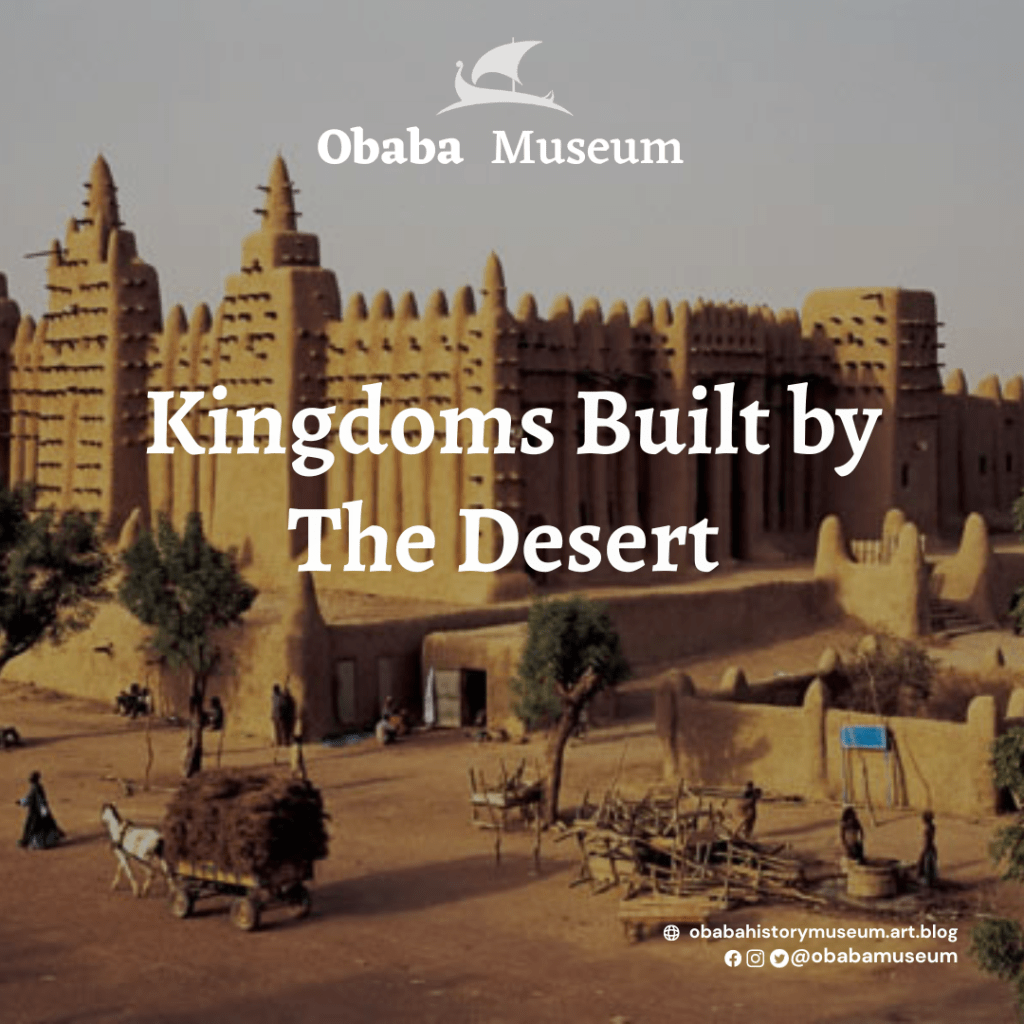
  • Kingdoms Built by The Desert

    Kingdoms Built by The Desert

    For a good number of years, trade moved back and forth across the Sahara with goods exchanging hands in West Africa, however West Africans did not really benefit from the Saharan trade because the routes were often controlled by Berbers from North Africa.

    One of the major articles of trade was Gold, arguably the most expensive and wanted commodity in human history. Of course it was an abundant natural resource in the possession of West Africans which eventually made the control of the trade routes go into the hands of West Africans. The ability to control the trade routes to their advantage brought about the birthing or rise of three great empires; Ghana, Mali and Songhai.

    GHANA KINGDOM

    The Ghana Empire was also known as Wagadou or Awka existed from 300 to 1100 AD. The word Ghana means King of gold. The Ghana empire was founded by the Soninke people and was based in the capital city of Koumbi Saleh.

    Ghana was rich in gold and salt- two valuable articles of trade. People wanted gold for its beauty and salt to preserve their food and of course make their food tasty. As trade in gold and salt increased, Ghana’s rulers gained power, they built up armies equipped with iron weapons that were superior to other nearby cities. As time passed by, Ghana took control of trade merchants. Merchants from the north and south would meet in Ghana to exchange goods. Gradually, Ghana took firm control of West Africa’s trade routes, almost all trades between Northern and Southern Africa passed through Ghana.
    Eventually, the rulers of Ghana started forcing traders to pay taxes. Every trader who entered Ghana had to pay a special tax on the goods he carried and another on the goods he took with him when leaving. They gained an incredible amount of wealth from the trade and used the wealth to build an army and an empire.

    As the kingdoms of Ghana extended into the Sahara, increased contact with Arab traders from the east brought the Islamic religion to Ghana. In the 1060s, a Muslim group called the Almoravids attacked Ghana in an effort to force its leaders to convert to Islam. They weakened Ghana’s empire by cutting off many trade routes. Without its trade, Ghana was nothing and the empire eventually fell. The influence of Islam however remained strong. Despite its collapse, the empire’s influence can be felt in the establishment of numerous urban centers throughout its former territory and beyond. In 1957, the British colony of Gold Coast under the leadership of Kwame Nkrumah named itself Ghana in honour and remembrance of the historic empire although, they never shared the same geographical boundary or location.

    MALI KINGDOM

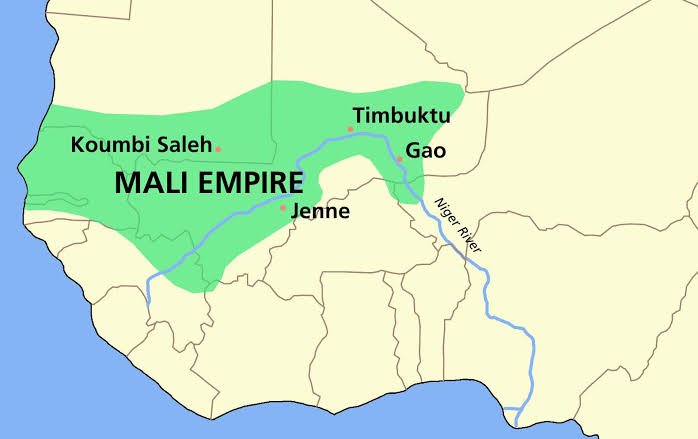
    Mali was along the upper Niger River. This area’s fertile soil helped Mali grow and control the trade on the river. The empire grew rich and powerful through the control of the trade.

    Mali’s rise to power began under a ruler named Sundiata. He won back his country’s independence and conquered nearby kingdoms, one of which was Ghana. However, Mali’s most famous ruler was Mansa Musa (Musa Keita). Under his leadership, Mali reached the height of its wealth, power, and fame.

    Mansa Musa ruled Mali from 1312 to 1337. During that time, Mali added many trade centres including Timbuktu, Djenne, and Gao, to its empire. Traders came to Timbuktu from the north and the south to trade salt, gold, shells, and many other goods. Religion was very important to Mansa Musa. In 1324 he left Mali on a Hajj, or pilgrimage to Mecca. Making this journey at least once in their lifetime is the spiritual duty of all Muslims. As he journeyed to Mecca, Mansa Musa introduced his empire to the world. The stories of Mali’s wealth and religion spread far and wide. Because of Mansa Musa’s influence, Islam spread through a large part of West Africa.
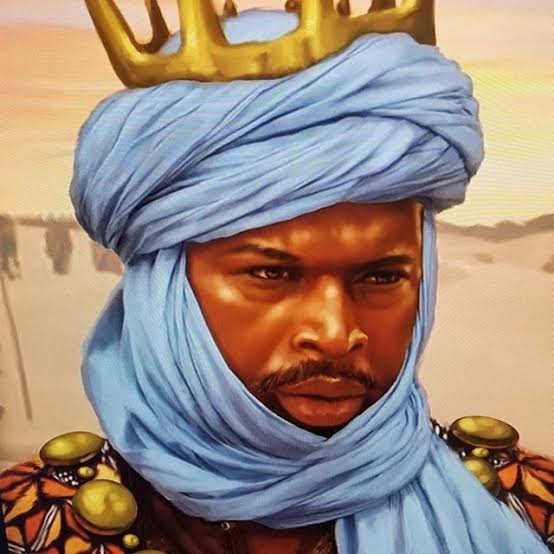
    A portrait of Mansa Musa

    Mansa Musa wanted all Muslims to be able to read the Qur’an. Therefore, he stressed the importance of learning to read and write the Arabic language and he sent scholars to study in Morocco. These scholars later set up schools in Mali for studying the Qur’an. To encourage the spread of Islam in West Africa, Mansa Musa brought back artists and architects from other Muslim countries to build mosques throughout lands.

    The architectural advances in cities like Timbuktu as well as an organized government, an emphasis on education, and expansion of trade all combined to make Mansa Musa Mali’s most successful ruler. Unfortunately, Mansa Musa died and poor leadership weakened the empire. By 1500 nearly all of the lands the kingdom once ruled were lost. Only a small area of Mali remained.

    SONGHAI KINGDOM

    In the 1300s, Mansa Musa had conquered a rival kingdom of people called Songhai who also lived along the Niger River. As the Mali Empire weakened, the Songhai grew in strength. They took advantage of Mali’s decline and regained their independence conquering most of Mali.

    One of Songhai’s greatest rulers was Muhammad Ture​, who chose the title Askia the Great​. Like Mansa Musa, Askia the Great was a devout Muslim who supported education and learning. Under his rule, the cities of Gao and Timbuktu flourished. They contained great mosques, universities, schools, and libraries. People came from all parts of West Africa to study mathematics, science, medicine, grammar, and law.
    Askia understood that an empire needed effective government so he created a professional army, and to enhance the empire, he set up five provinces, each led by a governor who was loyal to him. He also created specialized departments to oversee various tasks, much like modern day government offices do.

    Soon after Askia the Great lost power, the empire of Songhai declined. Songhai was invaded by the Moroccans, the kingdom’s northern neighbors. The Moroccans wanted to control the Saharan salt mines. They had superior military power and were able to take over Timbuktu and Gao. Changes in trade patterns completed Songhai’s fall.

    Of course many other empires also rose up due to their ability to control the Trans Saharan trade routes, however we listed the
  • JUNE 12: The Stolen Mandate

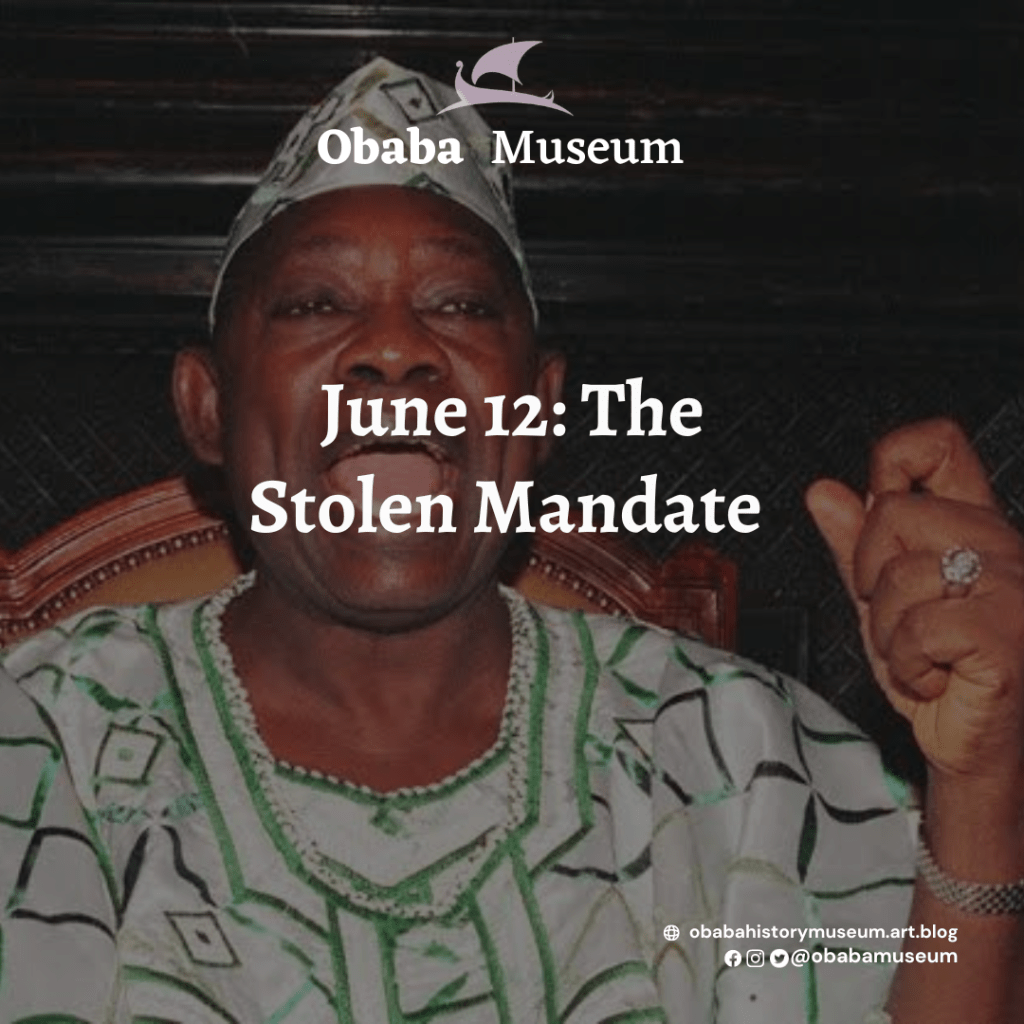
    JUNE 12: The Stolen Mandate

    June 12 has now officially come to mark a day of celebration in Nigeria. Nigerians celebrate June 12 as Democracy day, symbolic in marking the transfer of political power from the military to an elected civilian government in 1999. Of course it also marks the start of the longest continuous civilian rule since Nigeria got independence from colonial masters in 1960. Democracy day is a tradition that has been held annually since the year 2000 however June 12 was not always a thing.

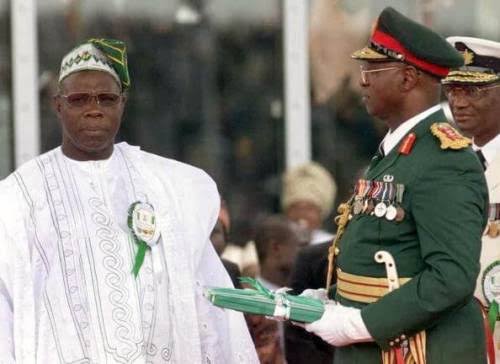
    Gen Abdusallami Abubakar hands over to Chief Olusegun Obasanjo, May 29 1999

    Initially, May 29 was the official democracy day in Nigeria marking when Olusegun Obasanjo took office as the president of Nigeria in 1999 officially ending several decades of military rule in Nigeria since 1966. Of course there was a short period of democracy from 1979 to 1983, however, the apparent helplessness of the civilian government gave way for another coup. On June 6, 2018 a little bit over a week after May 29, 2018 had been celebrated as democracy day, the Federal Government of Nigeria led by President Muhammad Buhari declared June 12 as the new democracy day and he gave his inaugural speech for his second term on June 12, 2019.

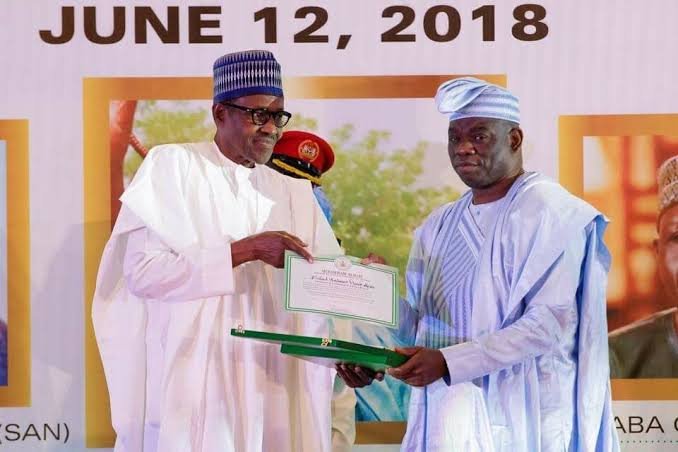
    Buhari posthumously awards Chief MKO Abiola

    You must be wondering, why June 12? On June 12, 1993 an election which is said to be Nigeria’s ‘freest’ and ‘fairest’ election took place. The election involved two parties – Social Democratic Party (SDP) represented by Moshood Kashimawo Abiola and National Republican Convention (NRC) represented by Bashir Tofa. Nigeria was practicing a two party system then. Although it was said that the election was the ‘freest’ and ‘fairest’, the military head of state, Ibrahim Babaginda annulled the election on the grounds of rigging. On June 11, 1994, Abiola declared himself as the President of Nigeria which led to his arrest on the grounds of treason, under the command of General Sani Abacha on June 23, 1994.

    Abiola was detained for four years and he died on July 7, 1998, his supposed day of release. In order to celebrate a man who fought for Nigerian’s democracy, president Buhari declared June 12 as the new official day for democracy celebration, although, before then the south Western states of Nigeria had been celebrating June 12 as ‘Abiola’s Day’.

  • THE SHIP OF THE DESERT

    THE SHIP OF THE DESERT

    “The Ship of the Desert” is a phrase you may have heard especially if you followed our last article on The Trans Saharan Trade. Of course if you followed closely you realize that camels were popularly regarded as the ship of the desert. They are regarded as so due to the fact that they move smoothly through the desert in Africa with ease (at least compared to other beasts of burden). They carry people as well as cargo in desert just like the ships at sea. They were used mostly by the Trans Saharan traders from North and West Africa. People have been using Camels for over 4,000 years mostly for transportation and it is said that camels came into North Africa from Arabia through Egypt and the Sudan, coming into widespread use by 300BCE.

    Now why would these traders choose the camel? I mean there are other animals that can carry load and walk through the desert right? Yes, other animals may be able carry load and walk through the desert but the camel was chosen because the desert is usually hot and dry, and they seemed more suitable due to many distinguishing features chief amongst which is their ability to carry much more load than other animals. Wares/articles of trade were often loaded and transported in caravans of camels.

    According to Abu Abdullah Muhammad popularly known as Ibn Battutah, a famous Muslim explorer, the average size per caravan was 1000 camels but some caravans were as large as 12000 camels. The caravans were guided by highly paid Berbers who knew the desert well enough to ensure a safe journey.


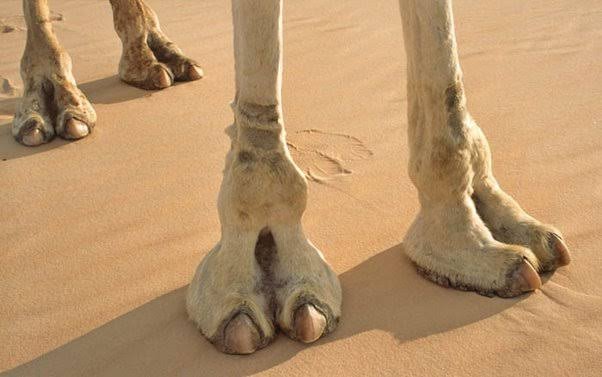
    Unlike other pack animals, the camel can go for months without food and about 15 days without water. This is because they have a large store of fat in their hump which can easily be broken down to food. Another cool feature of the camel is its legs. The camel walks on a broad pad which connects its two toes. This cushion – like pad spreads when the camel places its foot on the ground enabling it to firmly grasp the earth. This pad also stops it from sinking on the loose sand of the desert, making movement easier and faster. They can move between 8 and 10mph in 18 hours.

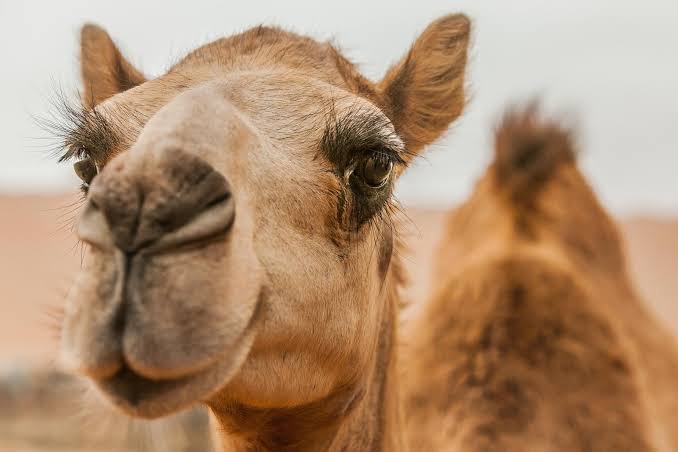
    That’s not all; camels can close their nostrils just as humans can blink their eyes. This helps them close out sand that sometimes blows fiercely in the desert. Their long eyelashes and ear hairs also stand as a barrier against sand. If sand gets into their eyes, they can get it out using their third transparent eyelid. These features helped the camel withstand the harsh climate conditions in the desert.

    When you consider all the traits, you just have to agree that they are truly the ship of the desert!

    Thanks for reading through, let’s know what you think in the comments.

  • The Trans Saharan Trade

    The Trans Saharan Trade

    From 500AD to 1450AD, a massive trading community stretched throughout the Sahara desert. This community linked wealthy empires of West Africa and the Mediterranean region. Sit tight and enjoy some little facts about the Saharan Trade.

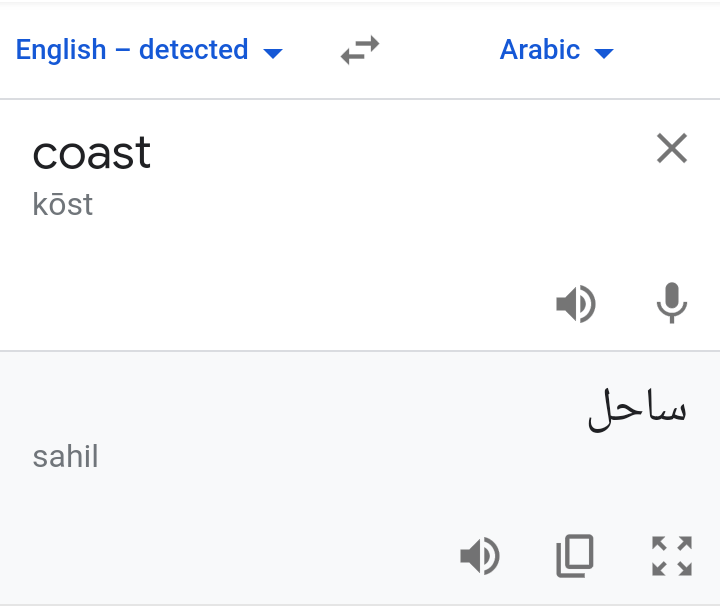
    The Sahara desert is known to be the largest desert in the world. It measures about 3.5 million square miles from the Nile River to the Atlantic ocean. The word SAHARA is gotten from an Arabic word SAHIL which means coast or shores.

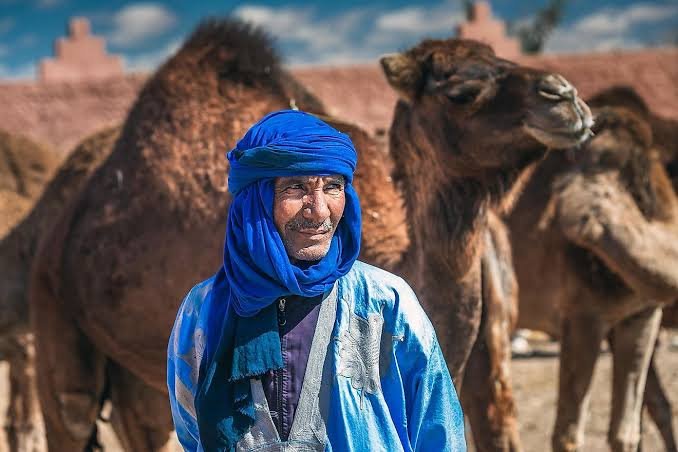
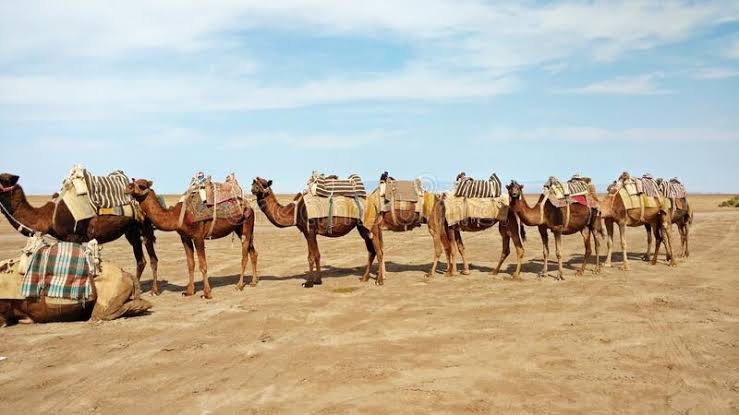
    Traders used huge caravans of camels to transport goods across the desert. Caravans we’re more like convoys of Camels 🐪 following each other, just imagine a convoy of trailers, lol. The desert could be likened to an ocean where merchants transport goods with ships. The ‘ship’ in this case would be the camel and the captain of the ship the Berbers who were skilled and experienced in handling the camel.

    A typical Berber

    The camel was most suitable for this job due to some features; they have a large store of fat in their hump which enables them to survive for several months without food and about 15 days without water, they can drink up to 145 litres of water in one sitting. The camel is said to be able to carry about 330 – 900 pounds of load comfortably.

    A Camel Caravan

    The camel is said to have gone extinct during the stone age but it appears it simply went out of use as it later resurfaced in North Africa around 300BCE. The arrival of Islam really facilitated the Trans-Saharan trade. In fact the religion and culture of Islam was most effectively spread by trade at least in it’s early phase.

    After the Arab conquests of 600BCE, the Berbers converted to Islam as well as many West African Merchants. Arabic provided a common language and value system, making it easier for traders to communicate and record trades. Powerful Islamic empires and Muslim retailers in the North United a whole lot of Afro-Eurasia into one trading system and trade grew.

    The combination of increased trade and other factors including Islam created a golden age for the empires of West Africa. This enabled travellers and scholars to move around the world thereby creating new trades.

    Thanks for reading through. Let’s know what you think in the comments 🐪👳.

Design a site like this with WordPress.com
Get started