Remember in the last article, we told you that Queen Elizabeth was the second longest reigning monarch in Europe, second only to King Louis XIV. The truth is she would have broken his record if she lived on for two more years, however she still lived longer than he did. While Louis ascended the throne at the age of 4, Elizabeth became Queen at 26. The focus for today is on Louis XIV popularly dubbed the Sun King, and we would be dropping some random facts about this powerful King. Let’s begin!
We already said he’s the longest reigning monarch in Europe – he ruled France from 1643 until his death in 1715 (that’s a total of 72 years and 110 days). After the death of his father (Louis XIII), Louis XIV became king at the tender age of 4 (his father was king at 9). It would have been custom for Louis XIV’s mother, Anne of Austria, to become Queen Regent of France until her son was of age. However, Louis XIII apparently lacked faith in his wife’s ability to rule. In his will, Louis XIII arranged for a regency council to rule on his son’s behalf, appointing Anne head of the council to ease her disappointment. Anne however orchestrated an annulment of the council and took over as Queen Regent with the support of her chief minister, Cardinal Jules Mazarin of Italy.
Cardinal Jules Mazarin
The royal family was driven out of Paris twice because of Anne and Mazarin’s radical policies, giving Louis XIV a deep distrust of Paris and its people as he grew older that was why he built another one at Versailles. In 1682, Louis XIV officially moved his court to the lavish palace at Versailles, 13 miles outside of Paris. Europe’s grandest palace became a center of political power and a symbol of the king’s dominance and wealth.
Another fact most historians and political scientists are aware of is that Louis XIV believed he was a direct representative of God. His parents christened him Louis-Dieudonné, meaning “Louis, the gift of God.” If that wasn’t enough to go to his head, Jules Mazarin instilled in him the impression that Kings are divinely chosen. Hence, Louis XIV adopted the sun as his emblem, associating himself with the Greek and Roman sun god Apollo. He even played Apollo in a royal ballet. Like the planets revolve around the Sun, Louis XIV believed that France revolved around himself, he commonly uttered the phrase “c’etat est moi”(The state is me). He is known as a despot who held absolute powers as a monarch. He went far to commission scholars like Jean Bodin to convince the people of France why the Sun King should be Sovereign over the land. Of course Bodin’s work further gave an intellectual backing to Louis desire to centralise power in France (you could read more about Bodin in his book, Les Livres de la république).
Marie-Thérèse
Do you know that the princess Louis XIV married was his first cousin? The king’s first true love was Mazarin’s niece, Marie Mancini, but both his mother (the queen) and the cardinal frowned upon their relationship. Louis XIV was ultimately directed into a marriage that was a political, rather than a romantic, union by wedding the daughter of Spain’s King Philip IV, Marie-Thérèse, in 1660. The marriage between the two first cousins ensured ratification of the peace treaty that Mazarin had sought to establish with Hapsburg Spain. This may explain why the randy king has countless affairs producing various known kids from different women. In fact, one of Louis XIV’s mistresses bore more of his children than his wife. Marie-Thérèse (his wife) gave birth to six of the king’s children, but only one, Louis, survived past the age of five. Louis XIV, however, had a healthy libido and fathered more than a dozen illegitimate children with a number of mistresses. Mistress Louise de La Vallière bore five of the king’s children, only two of which survived infancy, while her rival Madame de Montespan, who eventually became the king’s chief mistress, gave birth to seven of the monarch’s children. Louis XIV eventually legitimized most of his children born to mistresses in the years following their births.
Madame de Montespan
In our next episode we would be giving you some more bizzare facts about the Sun King. Stay tuned and on the bright side of life.
‘🎶🎶Things Fall Apart when the centre cannot hold, mere anarchy is loosed upon the land. Things Fall Apart when the centre cannot hold, Things Fall Apart, Fall apart, fall apart…🎶’
You may be wondering why I started with a song, right? Well, many of us familiar with the tune probably watched the movie ‘Things Fall Apart’ (An adaptation of Chinua Achebe’s Novel) produced in the 80s with favourite Nollywood actor, Pete Edochie, starring as Okonkwo (the central character). Achebe paints a vivid picture of the Pre and Post Colonial Igbo Society. He argues that things began to fall apart when anarchy was released in the land as a result of the white man’s arrival. His(the white man) arrival in any form often symbolized disruption, disorder, disunity and disarray either as a missionary, District Officer or Soldier.
Why all these story? I just wanted to explain what happens when a nation/individual decides to forsake it’s history, culture, norms and values. Change they say is the only constant but you know it’s either for better or worse. At what point did Nigerian citizenship become a disadvantage? Well, just sit tight, grab a popcorn, drink or whatever and let’s find the ‘Y’ in historical timeline ‘X’.
Today we are told if you would love to get a dollar note you should be ready to part with N650 at least but just like yesterday the value of the dollar could really not stand the might of the Naira. Few days ago my dad recounted tales of his days at university where scholarship in a government institution was prestigious, in fact you really would not regard private universities. But today makes it 150 plus days of total shutdown in all government owned higher institutions of learning quite a lot of students have moved on. Was the white man really the emblem of anarchy or simply a figurehead of a well organized crime to disrupt the centre? It’s left for you and I to judge. Let’s hear your take.
Today our blog turns a year, it’s really a joyous occasion especially when you consider how much we’ve done within a year. Today’s celebration is low-key but it brings the feeling of nostalgia; feels just like yesterday when we published the first article titled How The Man o’ war began then followed it up with series of bangers.
Going through our blog, you would see quite a lot to interest you be it in the field of technology, history, health, politics, inspiration and many more. We just want to say a big thank you to all our friends and well wishers, we couldn’t have come this far without your love and support.
Happy Anniversary It’s our first anniversary, we would like to know your first encounter with Obaba Museum. Let us know in the comments.
The first time I heard this phrase a ‘runaway’ uncle had come visiting. It was really surprising and unexpected that dad exclaimed, ‘to what do we owe this August visit?’ Do you remember the first time your heard someone being addressed as August visitor? Let’s know in the comments.
Most times it is usually used as an adjective to qualify people who visit once in a blue moon or those who seldom visit. Before we go into how this phrase came about, let’s burst your bubble – August visitor actually means a distinguished, highly regarded and respected visitor, not just any random person. You’ll agree with me that most visitors actually don’t fall under this category, I guess the phrase became more associated with sarcasm then.
In Nigeria, any visitor that visits without a prior notice is also tagged an August Visitor, because despite not planning ahead of their coming, they are usually treated with utmost courtesy and warmth, as you would every other visitor.
So how did the phrase come about?
History has it that the month of August was named after the first Roman Emperor, Emperor Augustus Caesar because several of his major victories were recorded in the month of August. He was an important and regal person this made people extend warm hospitality to any Guest they received during the month of August. In Europe, August is also the peak of the summer season and is referred to as the most comfortable month of hospitality for them.
When I read this, I began to wonder what was August called before Augustus influenced it’s renaming.🤔
A colourised statue of Augustus Caesar
Apparently, August was called Sextilis (also spelt Sextillus) because it was the sixth month of the original ten-month Roman calendar. Another unique thing about August is that it’s not just the name of a month. The word “August” itself has meaning and usage in English; according to the Merriam-Webster’s dictionary it means to be ‘marked by majestic dignity or grandeur’. So yeah if you were born in August you sure possess this grandeur.
Thanks for reading, please share your own story in the comments.
Last week we started a gist on the Fascinator trend and how we’ve started hearing about another one called a Hatinator. I wonder if there’s really any difference but be the judge.
The term hatinator became popular in the early 2010s describing a headgear which combines the features of a hat and a fascinator. Think of them more as hybrids between hats and fascinators. They are small decorative hats fastened to the head with bands, combs or clips just like a fascinator. They may not be as big as your regular hat, but are bigger than fascinators. Still confused? Take a look at the image below.
L-R Queen Elizabeth II wears a hat, the Duchess of Cambridge wears a hatinator, and Princess Eugenie wears a fascinator.
There really are no too obvious different between a Hatinator and Fascinator, in fact some fashionistas would tell you that the so called Hatinators are just another style of fascinators. However we decided to give you some few tips to distinguish between the two headgears.
The Size
Most fascinators are moderately sized to match your outfits but Hatinators almost simulate an actual hat with large rims.
The Circumference
Fascinators are simple and chick designs curated simply to fascinate the ‘wearer’ and the ‘beholder’ as the name implies. Hatinators on the other hand are usually larger than the circumference of the head.
Thanks for reading, we hope you’re able to distinguish between the two when next you spot one or are there other tips to distinguishing between them, feel free to share in the comments.
Today, I wanted to get a fascinator for a friend, I got to see various styles from plumes to wide rim hats. Then I started thinking what’s the history behind this fashion accessory? When and how did it become a trend? Well let’s try to get answers. Sit tight and enjoy the ride.
As far back as we can remember head gears have always been a symbol of status be it royal crowns, tiaras, berets or military hats. Women of almost every civilization have recognized the value of adorning their hair with various decorations. Native Americans used feathers, Ancient Egyptians wore gilded wigs, ancient Chinese wore special hair pins and specially shaped combs and ancient Hebrews powdered their hair with gold dust.
The Renaissance period however introduced a new era of power dressing. Merchants were expanding consumer markets in courts and cities by making chic accessories, including hats and hairpieces. Suddenly, the word ‘fashion’ was gaining usage across languages. And with increased wealth, self-image became less functional and more frivolous.
Marie Antoinette
With the 18th century came the world’s most iconic hair decorator: Marie Antoinette, the wife of Louis XVI. This queen craved beauty, prestige, luxury, and most importantly, attention. Her lavish spending habits may have been inappropriate considering France’s financial status at the time, but Antoinette’s hairstyles did succeed in igniting a spark of fashion creativity among the European upper classes. She regularly decorated her hair with outrageous trinkets, including miniature landscape gardens, animals, feathers, and even a scaled model of La Belle-Poule, a victorious war battleship. At this time France was a great influence in European fashion and art, and British ladies began picking up ‘few fashion tips’ in hair adornment from their French counterparts.
The 1940s, saw the rise of ‘doll hats’ – feminine, miniature hats perched on the front of the forehead or nestled into an updo. In the 1980s, London-based milliners (hat makers) Stephen Jones and Philip Treacy popularized fascinators as we know them today within elite circles. Throughout the decade, Jones’s Covent Garden salon attracted royal clientele and celebrity clients like Princess Diana, Grace Jones, and Isabella Blow. Both Jones and Treacy are still renowned and active milliners today.
Princess Diana
Fascinators do have a several desirable qualities. For one, they can elongate your silhouette by adding the illusion of height. Being perched on the side or front of your head, they can also preserve a gorgeous blowout (unlike a wide-brim hat). Often made from sinamay or crinoline fabric and embellished with decorative trimmings such as organza, feathers, flowers and beads and for a more dramatic effect, some fascinators may also have a birdcage veil. The fascinator creation is attached to a fixing, usually a comb, clip or headband so it can be easily worn and fixed to the head.
If you get yours custom made, fascinators can be true works of art and expressions of your personality. When understood this way, who wouldn’t want to wear a chic and creative piece of art.
I now hear we now have hatinators which is almost the same thing but just join us next week to hear the full gist.
Recently we’ve seen a lot of controversial views on the recent COVID-19 vaccines; many individuals are suspicious and unwilling to take some few shots of the vaccine, which they feel, hasn’t been too reliable in protecting them from more severe strains of the virus (let’s not even talk about the various conspiracy theories associated with it).
With our basic knowledge in biology we understand vaccines to be useful tools for combating infectious diseases. They generally contain weakened or inactive parts of a particular organism (antigen) that triggers an immune response within the body.
Still confused as to how this works? Let’s explain further.
A vial of the COVID-19 vaccine
Most vaccines contain a weakened or docile form of a virus or bacterium, or a small piece of the virus/bacterium that cannot cause disease. This small piece is called an antigen. When a person gets a vaccine, their immune system recognises the antigen as foreign. This activates the immune cells so that they kill the disease-causing virus or bacterium and make antibodies against it. It also activates immune cells – called T-cells and B-cells – in the blood, in the bone marrow and throughout the body. Hence, if later on the person comes into contact with the actual virus or bacterium, their immune system will remember it (so you could actually relate it with training for actual battle). The implication is that the immune system can then produce the right antibodies and activate the right immune cells quickly, to kill the virus or bacterium. This protects the person from the disease.
Different vaccines bring about different levels of protection. How long protection lasts also depends on the disease it protects against. Some vaccines can only protect against a disease for a short period and may need booster doses; for others, immunity can last a lifetime.
Newer vaccines now contain the blueprint for producing antigens rather than the antigen itself. Regardless of whether the vaccine is made up of the antigen itself or the blueprint so that the body will produce the antigen, this weakened version will not cause the disease in the person receiving the vaccine, but it will prompt their immune system to respond much as it would have on its first reaction to the actual pathogen. This explains some temporary side effects you may or may not experience after taking the COVID shot, there really is nothing to worry so, ‘Lets get vaccinated!’
Thanks for reading through. Let’s know what you think in the comments.
Sober reflection to the time we knew not art, Yes the tiny strokes of the artist steadily marking our heart shaped canvas As I regard the vacuum which hitherto housed a magnificent piece or better still the acrylic paint spread on canvas, I realize the beauty I once beheld was nothing but illusion, As the smokescreen clears, Springs of overflowing wine bursts forth filling up cups and gourds. The flow is premium and a bit striking, This isn’t your regular taste it is the perfect brew of ‘vin rouge’.
Suddenly Ini’s question brings me closer home
‘Wise one, is it true that time heals our hurts?’
‘My dear daughter’, I reply
‘Does time really heal, or we simply learn to live with pain?…’
The Ghana vs Nigerian jollof continues to attract global attention on social media with many Twitter duels on which nation has the best party jollof. But does Jollof rice really have a standard recipe?
Today, I will like to show you another angle, relax and follow the gist.
Few years ago, while attending a lecture on West African history, the lecturer mentioned something about Jollof rice being indigenous to the Tukulor Wolof (Jolof Empire). I initially thought it to be a joke but later realised this wasn’t one. I really took a lot of time to do my personal research into the culture and peculiarity of the People of Jolof. Here are some amazing facts to note.
The origins of Jollof rice could be traced to the 1300s in the ancient Wolof Empire (also called the Jolof Empire), which extended to parts of modern day Senegal, The Gambia and Mauritania. Rice farming flourished in this region, hence, the Jollof began as a dish called thieboudienne, prepared with rice, fish, shellfish, and vegetables. As the Empire grew, the Wolof people dispersed across the region and settled in different parts of West Africa, taking their sumptuous rice dish with them.
Thieboudienne (the real Jollof rice)
Today, virtually every West African country has at least one variation of Jollof, which both divides and unites the region. Each nation and family adds their own twist and interpretation, which perhaps is the root of the fierce competition taking place across the social media.
The major rivals seem to be Ghana and Nigeria. Of course, we also have Sierra Leone, Liberia, and Cameroon featuring in the food beef. The Gambia and Senegal are quite laid-back and rarely enter the Jollof controversy; after all, they gave it to the world. One major issue with the Jollof rice is the variety in available recipes with as many similarities and differences; and with the common oral traditions of passing down recipes, what else could be expected?
These two nations (Ghana vs. Nigeria) have been rivals in quite a lot, especially football (lol, that’s a story for another day). But as much as citizens of both nations pick Twitter fights, they seem to admire each other’s culture.
Of course, foreigners are sometimes forced to pick sides between the two types of Jollof, I think there shouldn’t really be a beef as to which is better, we should rather see it more in the light of enjoying variety. One main difference in the Jollof recipe is the type of rice used. Ghanaians use aromatic basmati rice, which gives it extra flavour, while Nigerians use long grain rice, believing that it is best for absorbing flavour. Both countries enjoy this gentle teasing, seeing it as a battle of wits where each tries to wear the other down with words.
Ironically, the feud actually brings Nigerians and Ghanaians together, certain people have described it is a love language between both countries similar to the dynamic of siblings teasing each other. Many non-African celebrities have given their verdict on whose jollof is preferable. Sometime in October 2021, while discussing with Nigerian celebrity, Yemi Alade, Ed Sheeran said he loves Ghanaian jollof, though he hadn’t tried the Nigerian one, lol.
If you ask me, I would say neither has a superior recipe for cooking Jollof, it simply is a question of who is cooking and who intends to eat it. The Senegalese Jollof (Thieboudienne) sef no too appeal to me (just kidding o 😂).
Thanks for reading through, let’s know what you think in the comments.
The phrase ‘On Aburi We Stand’ is very common amongst scholars and students of the Nigerian Civil War historiography. This phrase is often cited by supporters of the Biafran nation as it implied that Ojukwu had done a great job at Aburi, especially with the resolutions reached in the Accord. Gowon’s betrayal of the contents of the agreement could be regarded as the immediate cause of the war. By so doing, he demonstrated that, indeed, the fears of Ojukwu and the Igbo nation were genuine. Before we discuss the standoff that led to the phrase ‘On Aburi We Stand’, let’s quickly take a look at the resolutions reached at Aburi and how Gowon went against them.
In the previous article, I made it clear that the Aburi Peace Conference was a meeting of the Supreme Military Council of Nigeria. Below is the official minute of the resolutions reached.
‘On Aburi We Stand’: Ojukwu unveils Biafran currency and postage stamps, January 29 1968
FINAL ABURI COMMUNIQUE The Supreme Military Council of Nigeria resumed its meeting in Ghana on the 5th of January, and continued and concluded discussion of the remaining subjects on the Agenda. The Council reached agreement on all the items. On the powers and functions of the Federal Military Government, the Council reaffirmed its belief in the workability of the existing institutions subject to necessary safeguards. Other matters on which agreements were reached included the following:
• Re-organisation, administration and control of the Army • Appointments and promotions to the senior ranks in the Armed Forces, the Police, Diplomatic and Consular Services as well as appointments to super-scale posts in the Federal Civil Service and the equivalent posts in the Federal Statutory Corporations. On the question of displaced persons, the Supreme Military Council agreed to set up a committee to look into the problems of rehabilitation and recovery of property. In this connection, the Military Governor of the East assured the Council that the order that non-Easterners should leave the Eastern Region would be reviewed with a view to its being lifted as soon as practicable. Agreement was also reached that the staff and employees of governments and statutory corporations who have had to leave their posts as a result of recent disturbances in the country should continue to be paid their full salaries up to the end of March 31, 1967, provided they have not found alternative employment.
The Council agreed that the Ad Hoc Committee on the constitutional future of the country should be resumed as soon as practicable and that the unanimous recommendations of the committee in September 1966 will be considered by the Supreme Military Council at a later meeting. The Council unanimously agreed that future meetings of the Council should be held in Nigeria at a venue to be announced later. The entire members of the Supreme Military Council expressed profound regret for the bloodshed, which has engulfed the country in the past year and avow to do all in their power to ensure there is no recurrence of the unhappy situation. The members of the Supreme Military Council place on record their profound appreciation and gratitude for the constructive initiative and assistance rendered by the Chairman of the National Liberation Council, the Government and people of Ghana.
Statement by the Supreme Council on the Reorganisation of the Army, and the Approval of Senior Appointments, and its Declaration on the use of force I. The Supreme Military Council now meeting in Ghana has agreed on the following reorganisation of the Army: • The Army is to be governed by the Supreme Military Council the Chairman of which will be known as Commander-in-Chief and Head of the Federal Military Government. • There will be a Military Headquarters on which the Regions will be equally represented and which will be headed by a Chief of Staff. • In each Region, there shall be an Area Command under the charge of an Area Commander and corresponding with the existing Regions. • All matters of policy, including appointments and promotions of persons inexecutive posts in the Armed Forces and Police shall be dealt with by the Supreme Military Council. • During the period of the Military Government, Military Governors will have control over their Area Commands in matters of internal security. The following appointments must be approved by the Supreme Military Council: • Diplomatic and Consular posts. • Senior posts in the Armed Forces and the Police. • Super-scale Federal Civil Service and Federal Corporation posts. • Any decision affecting the whole country must be determined by the Supreme Military Council. Where a meeting is not possible such a matter must be referred to Military Governors for comment and concurrence.
II. We the members of the Supreme Military Council of Nigeria meeting at Accra on 4th day of January, 1967, hereby solemnly and unequivocally: DECLARE that we renounce the use of force as a means of settling the present crisis in Nigeria, and hold ourselves in honour bound by this declaration. REAFFIRM our faith in discussions and negotiation as the only peaceful way of resolving the Nigerian crisis. AGREE to exchange information on the quantity of arms and ammunition in each unit of the Army in each Region, and also on the quantity of new arms and ammunition in stock.
If you take the time to read the minutes of the meeting, you will notice that Ojukwu was very prepared. He spoke at length each time he had the opportunity to speak and spoke quite intelligently. Obviously only himself knew the constitutional implications of the document they had signed. When it became clear that the Aburi Accord was a major victory for Ojukwu and the Eastern province, Gowon decided to abandon the agreement because, according to him, Ojukwu went to Aburi prepared while others were not (yes, Gowon actually said that).
In response to Gowon, Lt. Colonel Odumegwu Ojukwu, Military Governor of the Eastern Region of Nigeria, declared that the region would no longer recognise Lt. Colonel Yakubu Gowon as Head of the Federal Military Government on March 2, 1967. Lt. Colonel Gowon assumed full powers as Commander-in-Chief of the armed forces and head of the military government on May 27, 1967. Lt. Colonel Gowon proclaimed a state-of-emergency on May 28, 1967. Lt. Colonel Odumegwu Ojukwu, Military Governor of the Eastern Region, declared the independence of the Republic of Biafra in Southern Nigeria on May 30, 1967. This began the 30-month long Civil War popularly known as the Biafran war.
The phrase ‘On Aburi We Stand’, was the title of Ojukwu’s broadcast delivered on the 27th of February, 1967 (a month after the signing of the Accord). Thanks for reading throug&h. If you enjoyed this piece, kindly give us a like and comment below. Do have a lovely day.
Hmmm!
'It is well', I keep mumbling to myself,
At least there's a little ray of light, right?

Even when it seems hopeless I still believe that by simple chance the creator orchestrates a means of relief.
The Holy Book 📖 says that hope doesn't disappoint,
But right now I'm really having a mental duel within;
Is the tragedy I now face the produce of seeds sown in years of ignorance,
Or this is simply one of the few cases beyond hope's jurisdiction.

What do you do when suddenly you lose visibility?
At least, I still have the privilege of expression through the pen I now wield.

Who knows what tomorrow brings?
Strangely enough, not even the prophets do,
At least the weatherman admits cluelessness in this matter.

So, till then we could only take the posture of blind beings resigned to fate.
In our last article we explained Decree 34 as a precursor to the counter coup and by extension the Civil War. Already quite a number of Easterners in the Northern Region were being massacred, in fact about 115 individuals, mostly ethnic Ibos, were killed in political violence between May 28 – June 2, 1966 due to the unpopularity of the Decree promulgated by an Ibo Head of State. Hence the Counter Coup which was Mainly led by Northern officers ousted Gen. Ironsi and replaced him with an officer of Northern Origin, Lt. Col Yakubu Gowon. It is important to understand that Gowon was more than 3 ranks below Ironsi, therefore following the regular hierarchy of the military, he shouldn’t have ascended power but one thing was clear, ethnic and emotional sentiment had once again prevailed not just in Nigerian politics but also in the military. Foremost amongst these Coup plotters were, Lt. Col. Muritala Mohammed and Lt. Col. Theophilus Y Danjuma who later ousted the same person they brought in nine years later.
Lt. Col. T. Y. Danjuma Lt. Col Muritala Mohammed
The counter coup therefore launched fresh rounds of massacres, about 30 individuals were killed in political violence in Lagos between July 29-August 1, 1966, infact within the same period Nigeria had no Head of State for three days (July 29-31) till Gowon was sworn in on August 1. Realizing that their safety could no longer be guaranteed, some 250,000 ethnic Ibos fled the Northern Region to the Eastern Region.
The military governor of the Eastern region, Lt. Col. Odumegwu Ojukwu, had already become somewhat disillusioned with the military government, in fact he refused to recognize Gen. Gowon as Head of the National Military Government due to the circumstances surrounding Gowon’s appointment. He had persistently refused to attend meetings of the Supreme Military Council (SMC) anywhere outside the Eastern region. A major argument of Ojukwu, was that his personal safety could no longer be guaranteed outside the Eastern region. According to the Daily Times, dated Tuesday, August 2, 1966, Ojukwu had, in a speech broadcast across the Eastern region, suggested that negotiations be held to allow the people of Nigeria determine the nature of their future association. Series of Conferences were held within the country with the objective of redefining the form of government acceptable to all sections of the country; the various regions took different positions with the Eastern region opting for a confederation. At the end it became clear that Ojukwu was planning the secession of the East from the federation, however, Gen Gowon kept looking for a way to pacify Ojukwu which would at the same not threaten the authority of the Federal (central) government. In search of a place agreeable to Ojukwu, the military leaders met at Aburi, Ghana the result of what popularly became known as the Aburi Accord. The Chairman of the Ghana Liberation Council, Lt. Gen. J.A Ankrah presided over the gathering.
The Aburi peace conference, lasting two days, was the final attempt by both parties, that is the Federal Military Government of Nigeria and The Government of the Eastern region, to find a solution to the ethnic cleansing perpetrated against the Easterners resident in the north amongst other issues of national importance. We understand that many Nigerians who at one point in time heard about this meeting do not really know the specific details of issues discussed, in order to clear the air we took special care to highlight them.
The Aburi Peace Conference could be regarded as a meeting of Nigeria’s Supreme Military Council at Ghana. In attendance were Gowon, who was Supreme Military Commander at the time, His Vice President, Commodore Joseph Edet Akinwale Wey, Governors of the four regions and Lagos State – Lt.-Col. David Ejoor, Lt.-Col. Hassan Katsina, Lt. Col. Chukwuemeka Ojukwu, Colonel Robert Adebayo, and Major Mobolaji Johnson. They were joined by their secretaries and the Permanent Secretary of the Federal Cabinet Office, S. Akenzua, who would ascend the throne of Benin as Oba Erediauwa 1.
According to official records of the minutes of the meeting kept by all sides, many issues formed the agenda, but only three of these would have ramifications on the future of Nigeria, and consequently, the civil war. The Armed Forces’ recruitment scheme had given the North an unfair advantage that became evident after the first coup. Ojukwu believed a re-organisation of the armed forces was necessary. Some decrees also vested absolute power on the federal government, Ojukwu and many of the regional governors wanted this condition to be reversed. The Kaduna pogroms that had displaced many Igbo from around the country were also, of course, a matter of necessity, on the table. In the aftermath of the July 29 counter coup many officers and civilians of non-northern origin, particularly the Igbo were being targeted for massive maiming and massacre.
After initial pleasantries, Gowon took charge of the meeting. Gowon and Ojukwu addressed suspicions that they were stockpiling weapons for war – a plane had crashed near Enugu carrying new weapons from a foreign supplier. The Federal Government was also amassing weapons in Kaduna, deliveries from purchases valued at over three million pounds. The council then adopted a declaration proposed by Lt.-Col. Ojukwu, that all members renounce the use of force to settle the Nigerian crisis.
Even though Gowon was the head of the Supreme Military Council, he showed an unusual willingness to agree to nearly all requests made by Ojukwu and the other regional governors. In fact, in the eyes of the other governors, especially Ojukwu, Gowon’s posture raised questions about whether his concessions were genuine, or the meeting was simply a ploy to bring the regions to the negotiating table as part of ‘due process’, to explore the option of dialogue, especially since most of the recommendations and agreements reached were never implemented.
One major defect of this peace accord was that both parties misunderstood the terms of agreement. While Gowon and other members of the SMC saw this as a meet up with Ojukwu to douse tensions in Eastern Nigeria and other regions, Ojukwu saw it as a platform for constitutional amendment.
Thanks for reading through. Let’s know what you think in the comments.
The story of Nigeria’s Civil war popularly know as the Biafran war, is a sensitive matter which has not really been settled. The remote and final causes of the war are even more pronounced in Nigeria today. It is more baffling that most major narratives/accounts of the Civil war have been written by ‘Biafrans’ themselves. This is a deviation from the usual trend you would expect where the Victors usually write the history of war. Why is it that not much consideration is being given to permanently settle the Biafran question?
Let’s trace some of the issues which eventually led to the outbreak of the war.
The counter coup of July 29 1966, mainly sponsored by Army officers of Northern origin, brought in Lt. Col. Yakubu Gowon a man from current day Plateau state. His installation as head of state allegedly brought in some ethnic balance within the army as he did not belong to any of the major ethnic group like the Hausa, Yoruba or Igbo. The coup of January 15, 1966 had been tagged an IgboCoup due to the fact that many of it’s casualties were of northern origin and most of it’s major perpetrators from the East. In fact, four out of the five Majors who spearheaded it were of Igbo origin. The counter coup therefore launched sprees of vengeful killing against Igbo people resident in the North.
R-L: Lt. Col Ojukwu, Gen. Gowon at Aburi, Ghana, 1967. (Gen Ankrah looks on)
Ironically, the Northerners who had dominated the Post independence politics in Nigeria feared the domination of another ethnic group. In fact a major strong argument of Lt. Col Ojukwu, the military governor of the Eastern region, was that Gowon did not merit the appointment he had taken on as the new head of state. Ojukwu argued that there were more suitable and qualified senior officers in the Army. An example was Brigadier-General Babafemi Ogundipe the Chief of Staff and next in line to Major-General Ironsi. The truth however was that the Northern hegemony in Nigerian politics had already been established underground. In fact there were really no northern officers who were willing to take orders from the Yoruba General.
Brigadier-General Babafemi Ogundipe
One of the immediate triggers of the Counter coup was Decree 34 which abolished Federalism and introduced the Unitary system of government. In effect power was being concentrated in the central government and all appointment would be rather on merit than Federal character. Of course the allegiance of citizens would no longer be to their respective states but to the central government. The Decree was promulgated on May 24, 1966 by then Head of State, Major General Ironsi and was called Unification Decree even though some critics (particularly northerners) at that time labelled it the De-unification Decree.
Major General Aguiyi Ironsi
There was widespread demonstration in many parts of Northern Nigeria at that time. On his return to Kaduna on May 27, Col. Hassan Katsina was besieged with demands for an explanation. It was feared that in a unified service, Northerners would be at a disadvantage. It was no consolation that the Decree provided for the delegation of appointments and promotions, except the most senior, to Provincial Civil Service Commissions.
Col. Hassan Katsina
Although General Gowon, the next Head of State, revoked Decree 34 on August 31, 1966 through Decree 9, a huge semblance of the Decree is still effective in Nigerian federalism today, however, the difference is that the Northerners are now more at an advantage than other sections of the country.
Thanks for reading through. In my next article I would show you the effects of the counter coup and how it eventually led to the civil war. We would love to know your view, kindly drop your comments below. Do have a lovely day
Recently, I’ve had a lot of baby pictures. My friends say they look great on me and that I would make a great dad. But one thing those babies and I share in common is being cute and clean, argue with your phone😂, lol. I just realized that there are quick decisions you subconsciously make upon sighting a baby which often determines whether or not you’d want to carry them.
The Baby’s hygieneand Demeanor
Have you seen a cute little baby, so clean and smiley, you’re so captivated by his/her sight that you can’t resist smiling back and sometimes approaching them for quick greetings 😊. On the other hand you see another with dirty clothes and flu running down the nostrils and you silently pray that he/she doesn’t run towards you, not that you’re scared of baby dirt but some mothers are just poor at giving adequate care to their kids. Most times the baby’s hygiene is a reflection of the mom.
The Mother’s Demeanor
This reminds me of an occasion when myself and ‘a baby in arms’ were smiling and waving to ourselves from a distance then suddenly an angry looking mom turned her face towards me, omooo, I quickly looked the other side and continued my long walk to freedom. There are quite a lot of babies we salute simply because their moms are friendly and smiley. Reminds me of a nursing mom at my local church, she’s always smiling. In fact, the positive energy is so contagious, that her baby takes a double dosage of it.
Is the baby well padded?
I remember one of those occasion where I was carrying this cute little baby and all of a sudden, he soiled my clothes with watery poo😂. Sorry for the graphic description. But this is another factor we mostly consider before carrying them, does the baby have his/her diaper on, so there isn’t any awkward moment.
Is Your Energy Level a match with the Baby’s?
Like me, if you do love babysitting, you definitely have come across one whose energy level surpasses yours, Nigerians would say ‘power pass power’😂. I’ve had my fair share especially due to my likeability amongst the baby population, lol. I Remember one of such times; a baby kept clinging to me when I wanted to drop her 😆, she didn’t want to go back to her mom yet (omo see wahala o🤣), I had to just carry her about and act like a dad, lol.
The Age and Weight of the Baby
Most people are scared of newborns due to the fragile nature, I personally feel so emotional 🤧🤗 when I see a very tiny baby, especially those ones who don’t open their eyes too often. So not many people have that emotional strength to carry newborns for long. On the other hand there are certain babies who grow so fast, you wonder if you’re actually carrying an eight months old and not a two years old🤣(reminds me of my kid bro). Well that shows good nutrition.
These are few things I’ve observed, if there are others you feel I haven’t mentioned please share them in the comments section.
It’s really funny how the green frog🐸 has gone viral on the internet, in fact, there is hardly any meme lover who doesn’t have one with the frog who most of us know as ‘comrade’, I’m laughing hard typing this. Well it’s really getting out of hand, majority of my WhatsApp stickers feature our ‘comrade’ and the funny thing is there are quite enough stickers available for any message you would like to convey. If you ask me, I would tell you that memes and stickers are now becoming preferable to emojis.
But how did our comrade become so popular overnight, who’s the creator of this frog character?
Well we’re about to give answers. Just sit tight, relax as we begin the gist.
I recently decided to trace the origin of our comrade only to find out his real name is Pepe the frog. He became an internet meme when his popularity grew across different social media like Myspace, Gaia online and 4chan in 2008. On 4chan, various illustrations of the frog creature have been used as reaction faces, including Feels Good Man, Sad Frog, Angry Pepe, Smug Frog and Well Meme’d. By 2015, he had become one of the most popular memes used on 4chan and Tumblr.
Matt Furie (Creator of ‘Pepe the Frog’ character)
Pepe the frog was created by an American artist and cartoonist Matt Furie in 2005. It gained it’s meme usage from his comic Boy’s Club #1. The comic featured Pepe, Brett, Andy and Landwolf. He shared his comic in a series of posts on Myspace in 2005.
In 2014, some images of Pepe were shared on social media by celebrities like Katy Perry and Nicki Minaj. When Pepe became popular, 4chan users started referring to the particularly unique version of the sticker as “Rare Pepes”. In 2015, Pepe was number 6 on Daily News and Analysis list of the most popular and important meme on Twitter.
Pepe stickers can now be seen on WhatsApp since the creation of sticker makers. They come in handy especially in expressing feeling or thought without having to type or engage in any verbal communication (of course a picture is worth a thousand words, lol).
Thanks for reading through, we hope you enjoyed the read.
We know you have at least 6 different types of comrade sticker on your WhatsApp favourite list. Comment down below your favourite sticker with a picture of it.
Torches and lamps, candles and flames, It wasn’t always so, I go back in time reliving that moment, Yeah, the bliss before the arrival of the great bird, We gather outside to gaze at the full moon, Share a story or two, Perhaps even a fried moose, The chirping of the bird is quite different tonight,
The scene changes as we all turn to gaze at the big bird 🐦, Who ruins everything with a sudden poo drop.
The end... (Dedicated toour people resident in wartorn Ukraine, we're praying for you)
On the 13th of February 1976 (Forty six years ago) Nigeria’s Third military Head of State was assassinated on his way to work. It was a Friday morning just a day to valentine. He was without adequate security detail and was attacked while stuck in Lagos traffic. Today a national monument is erected at the exact spot where the General was shot. For those really familiar with Lagos, the small roundabout facing the old Federal Secretariat in Obalende, Lagos, circles a massive structure. This monument designed in the form of a military epaulette bears the rank of a four star general with two rifles below and the Islamic crescent above. This massive structure is called a cenotaph, commissioned over two decades ago at the spot of the gruesome act, to commemorate his assassination.
The cenotaph of Gen. Muritala at the spot where he was assassinated.
During his regime Nigeria presided over a period of rampant economic prosperity. He was one of the most charismatic figures in Post Civil War Nigeria; he was promoted to the rank of brigadier general in 1971, aged 33, becoming one of the youngest generals in Nigeria. In the coup d’état that brought him to power on July 29th 1975, he introduced the phrases ‘Fellow Nigerians’ and ‘with immediate effect’ to the national lexicon. Subsequent military coup address would be laced with these flowery lexicons.
In a short time, Muritala Muhammed’s policies won him broad popular support, and his decisiveness gave him the status of a folk hero. He was in fact the most widely celebrated Military Head of State among the common man in Nigeria. At the same time, his regime transitioned from being authoritarian into consensus decision-making with himself as the leader of a military triumvirate, alongside Generals Olusegun Obasanjo (the Chief of Staff Supreme Headquarters) and Theophilus Danjuma (Chief of Army Staff). The dictatorship softened and Muritala unveiled plans for the demilitarization of politics.
On October 1, 1978, two years after his death, he was declared a national hero alongside Alvan Ikoku, Sir Tafawa Balewa and Sir Herbert Macaulay. His portrait adorned a new twenty naira note introduced by his successor, Gen. Olusegun Obasanjo.
Muritala’s revolutionary personality is usually a topic for debate especially amongst the Igbo ethnicity, let me explain. Many Nigerians know him for his role in active leadership however there are few dark secrets you never got to know about him. One is his involvement in the Counter coup of July 29, 1966 alongside Theophilus Danjuma and other northern officers. The Federal troops under his command thundered into Asaba on the 5th of October 1967 to orchestrate what would later be known as the Asaba Massacre. The Biafrans had fallen back as the immediate commander, Col. Joe Achizia (a son of Asaba), opted to retreat to Onitsha rather than fight with nothing but a lorry load of cutlass. He blew up the Niger Bridge, paralyzing the battalion under Muritala’s command. Out of frustration and annoyance Federal troops gathered all male adults and teenagers to the village square for public execution. It turned horrendous on the 6th and became hellish on the 7th. It was regarded as a punishment for aiding Biafrans. About 1, 000 persons died in Asaba in those gruesome three days.
His involvement in the killings at Asaba severely betrayed his imperfection and lowered his cult-like status by many degrees.
Thanks for reading through, let’s know what you think in the comment section.
Few days ago, I met a lady who seemed friendly and smiley. I asked for her name which sold her out as Yoruba. However, her specific city of origin was somewhat unique. It was something I had never heard before. She said she was from Okuku in present day Osun, Nigeria. I told her I would definitely do a little finding on this settlement as there was really not much she knew about it. Perhaps we could both travel down there for a field research.
Immediately I got home, I searched the term ‘Okuku’ online and found a lot of other meanings, one of which was the Edo bridal hairstyle. Fortunately I finally found an article on a brief history of the settlement and how the name came about. Grab a seat and enjoy the gist.
Like most Yoruba settlement, Okuku town traces descent from Ile-ife, Oladile, the founder of Okuku was said to be a descendant of Oduduwa. It is said that he left Ile-Ife at the same time with Alara, Ajero and Orangun to settle and take possession of virgin lands. After series of conquests, they all settled leaving Oladile who remained a ‘lone wolf’.
Alara settled in Aromoko-Ekiti, Ajero settled in Ijero-Ekiti, and Orangun settled in Ila. Oladile was instructed by the Ifa oracle not to settle until he came across an exceptionally thick clump of palm trees. Eventually he found a completely uninhabited spot in a thick palm forest, near River Otin. He named the place “Iko-Ikin (Iko – a thick clump, Ikin – palm nuts), over time the word eventually metamorphosed to” Kookin”. In no time, Kookin grew to be a large and prosperous town because of new immigrants who trooped in from Further North. Legend has its that it grew to be an Iron Works Centre courtesy of its access to iron from the mines at Isundunrin near Ejigbo (in current day Osun, Nigeria).
Two tragedies informed the name Okuku as it became known as today: around 1790, Kookin fought and lost a battle called ‘Ijesha-Arara’ (Dwarfs Ijesha) with the warriors of Ijesha. There were few people who survived the war. As if that wasn’t enough, their disaster was compounded by water poisoning consequently upon drinking from Omi Amuku (Amuku River).
Oba Jala Okin led the survivors to a few kilometres towards Northern side of the ruins of Kookin to found another settlement which came to be called ‘Okuku’, derived from Oku to ku ku (Transliterated to mean remains of the dead). The peace of the new-found Okuku was disturbed once again by the Ilorin-Ibadan wars. It was not until after the war that Okuku once more enjoyed peace following Captain Bower’s Imposition of Peace in 1893. The Olokuku of Okuku Chieftaincy Declaration October, 1956, gave recognition to four ruling houses: 1 – Edun 2 – Oyewusi 3 – Oyeleke 4 – Oyekanbi Now, Okuku is the headquarters of Odo-Otin local government in Osun State, Nigeria. It is the nearest major town on the boundary between Osun and Kwara states. Among its immediate neighbours are Ikirun, Inisa, Ila-Odo (nearest to Kwara state) , Iba, Ijabe, Igbaye, Ekusa, Oyan and Erin-Ile (Kwara state)
Thanks for reading through. I’m sure you learnt something new today. If you would like to read more articles like this, subscribe to get notified whenever we publish. Don’t forget to leave a comment, let’s know what you think.
I'm a fighter, Tired or maybe just wired to keep struggling, trying various ways of adapting to the changing wiles of life, I pick up few clothes, slip on my fancy footwear and set out for work, Or do I just recline on my bedroom chair,
Here's a full grown chap by society's standard, Required not just to keep soul and body tight, But regarded with an aggrandised status of high taste, Yes by onlookers and mentees who desire some lifts and tips for a little weeks drive.
I'm not better than you, Yes, I still struggle with the 'imposing' syndrome, I sometimes feel the need to silence the celebration of my heroism lest you get abashed by the battles left unconquered.
There are many questions we think about daily, often times we keep these questions at the level of imagination but you know it’s really a good idea to just share them so you could get answers or, at least, a good explanation/speculation. Today we would be treating the topic of the international passport, its origin and why it became a requirement for international journeys. Other related questions would also be addressed and if there are more questions you would love us to treat, feel free to drop them in the comment section below.
Let’s get started!
Picture of a Nigerian Passport
For the purpose of our gist, a passport is a travel document issued by the government to its citizens in order to verify the identity and nationality of the bearer for international travels. They generally come in small booklets that usually contain the bearer’s BioData, photograph and signature. There are several types of passports depending on the status of the bearer in their home country.
Front page of a Canadian Passport containing the details listed above.
But why do we even need a passport to travel around the world? What really necessitated the need to hold an official travel booklet which must be stamped on arrival or departure from an international border? Let’s do a brief throwback.
It’s 1920, the First World War ended barely two years ago, the League of Nations (equivalent of today’s United Nations) proposes the idea of a worldwide passport standard at the Paris Conference on Passports & Customs Formalities and Through Tickets of 1920.
During World War I, European governments had introduced border passport requirements for security reasons, and to control the emigration of people with useful skills. Prior to the war, even as far back as the biblical times, there had been the existence of international travel documents, permitting aliens to pass through or even reside in foreign lands. The Bible mentions Nehemiah’s procurement of such a travel document from the ancient Persian king Artaxerxes requesting the governors of the lands beyond the Euphrates to grant him safe passage to Judah. The purpose of Nehemiah’s visit, incidentally, was to rebuild the walls of Jerusalem. This is the oldest recorded mention of such a travel document dated around 445BC. Beyond the biblical mention of this letter, we do not have an existing copy or clue of its format or appearance.
However in the next episode, we would be featuring the earliest available records of travel documents.
To get notified as soon as it drops, subscribe/follow our blog.
Soon I'll close my eyes and take a trip, Unburdened by emotions, affection or neglect, But first I take a moment to pause and pray, Hope almost expires but ignorance is even a greater fear, Would I awake in a much hopeful place or wish I never slept? How then do I continue to live when fear remains in sight, Mocking and teasing me at night, Not just at night but even in day's light
There really is no visible way out of this, I say, But how do I tell her I'm so ashamed to speak of myself, She really must think you're such a big mess, A big cry baby who masks up in cloaks of strength. Well I do not claim to be strong, I'm just a fighter knocked down constantly but not yet out.
He pauses from typing, focusing his gaze on the blend of nature and civilization intermingling before his very eyes. He’s so lost in thought that he doesn’t recall what happened few seconds ago, when he picked up his tablet busily drafting and scribbling words and thoughts. Perhaps the juggling of words and figures would make sense to a few readers. The abundance of green trees, shrubs and vegetation not deserted but shielding both great and small, the bats and even man go about unperturbed. The individual noises or music of different species create a constant rhythm of nature conserved in civilization.
There is of course the constant humming of engines mowing to keep nature in check preventing it from overrunning it’s course. From a strategic height he turns around to observe the genius of man featured in such a masterpiece of architecture. One that erects various edifice with little interference to nature, in fact the two work together in harmonious configuration giving the feeling of awe to all visitors who can not but pause to wonder.
He loses track of his thoughts, drifting from time to time as he awaits the Therapist.
Sometimes ago I picked up the bucket containing my Aloe Vera plant. It felt really good to see how healthy it looked. I was so thrilled with the sight that I told my sister to take a snapshot of my Aloe with a healthy green look☺️. Flashback to the previous year when I planted it, I had concluded after few months that the shoot was death, I had in fact given up on it but just decided to leave it in the bucket because it was given to me by a big sister I love and respect so much. I was surprised to see after a long while that it had grown and spread out pretty well.
A deep reflection on this little incident made me realise that God uses various things especially nature to speak to us. There are many things I observed from the Aloe Vera asides the quality of perseverance and endurance. When our current circumstance feels like a wreck, the promise and hope of a great future is enough motivation to keep pushing.
It is a known truth that people only reward results, not the process. You rarely see pictures of goldsmiths online refining a raw gold bar. But you definitely have seen a lot of pictures of people rocking gold jewelry and bling on the social media. In relationships likewise, people are oblivious to the fact that every happy couple or housemate are just better at forgiving each other’s excesses. Just like the Aloe, patience, trust and faith are vital ingredients to growing and sustaining relationships.
Not the kind of post you were expecting, right? But thanks for reading anyway.
Few months ago, a lady and I were walking down the street, I had gone to pay her a visit and was leaving for my place. By the time we got to the junction it was evening already and I could see a Suya man setting up for evening sales. Different thoughts flashed through my mind, for the first time I started connecting different ‘dots’ to understand the full ‘matrix’.
I started wondering why I had never really paid close attention to the business strategies used by this skilled skewers of Suya. We all know that Suya spots are common locations carefully situated at major intersections and junctions. I think I just jogged your memory; you sef don dey reason am😂. While on campus, I remember that all Suya joints were either in front of the junction, beside, around or close to a junction. Though most people do not realise, these guys are certified and may even be more qualified than most Harvard MBAs. Think of this, you’ve really had a long stressful day at work, probably even spent some few hours in traffic then as you’re about to get home your nose picks up the signal of seasoned meat, you turn and sight a stand carefully adorned with tasty red meat diced and arranged in a very visible position on the grill. These Suya custodians understand that junctions are very strategic markets, the reason they are so valuable is that they give the needed exposure and visibility even from a distance. They also provide ease of access to customers who can easily bump in regardless of traffic.
Come back by 10pm to that same spot and you’d be amazed. Yes, Suya still never finish. Now I ask you How many sellers sell out Suyas every night? You just guessed right again. They know to maximize their assets, from meat to even the gas lamps. Have you ever seen a suya man preparing his meat for the evening sales during the day? They spend a lot of time sharpening their knives to make precise cuts. They use these knives to achieve laser like cuts, reducing the thickness of the beef to the barest minimum. Every pound of beef counts as profits and profits can be maximized just by spreading out the beef. Let me give you a related story. When we were kids, I remember we used to separate wafers by their layers just to make them last longer and make one wafer feel like five!? That’s the similar style the Suya guys use. How well you maximize your assets may just be the difference between your profits and your losses.
They also understand the need to stand out; the use of kerosene gas lamps gives them added visibility at night. On social media, we know that to stand out and reach more people, your content should have a catchy title, that you should make good use of imagery and a great command of language. In order words, you should stand out from the crowd, set yourself apart.
Well, at least whenever you are out at night and you feel like treating yourself to a pack of suya, just look for the street corner with a spot of bright light and there you have your suya, no sign, no logo, just good old gas lamps.
We would like to hear your experience and observation from Suya stands around, kindly let us know in the comment section.
It has really been an eventful year, and pretty fast if you would agree with my friends. One thing I was quick to observe as a kid was the fact that the space between Merry Christmas and Happy New Year is just a week. So that means Christmas today would mean you have roughly seven days before the year ends. Could it be that the person or institution responsible for popularizing the celebration of Christmas on the 25th, wanted to make it exactly a week to the New Year festivities? I also wonder how Christmas came to be popularized in the church as there really is no exact biblical reference for the word, Christmas or even the date. Before we get lost in the loop of unending questions, let’s quickly go through some amazing facts about Christmas. Sit back and enjoy as we take you on an interesting ride.
Christmas is celebrated all over the world, as a religious holiday or as a time of celebrations by Christians and non-Christians alike. The traditions are different based on geographical space, but they nearly always include common practices which includes a lot of feasting, giving gifts, cards, and enjoying church or public festivities such as singing Christmascarols and songs. It’s also not uncommon to see beautiful display of fireworks even weeks before the 25th.
Some of the traditions that are used for Christmas are older than Christianity. Our modern Christmas is a product of hundreds of years of both secular and religious traditions from around the globe, most of them centered on the winter solstice. Many European cultures celebrated festivals centred on the winter solstice, one of these traditions known as Yule probably derived from the Germanic jōl or the Anglo-Saxon geōl, which referred to the feast of the winter solstice. Early Europeans celebrated light and birth in the darkest days of winter. Many peoples rejoiced during the winter solstice, when the worst of the winter was behind them and they could look forward to longer days and extended hours of sunlight.
Winter Solstice; usually the shortest day and longest night of the year.
Christians mark Christmas as a festival celebrating the birth of Jesus, hence, the English term Christmas meaning ‘mass on Christ’s day’. There is however many evidence to show that end of the year festivities had long been in vogue, even predating the birth of Jesus. Many historical evidence suggest that the church simply christianized some of the existing pagan practices.
In Scandinavia, the Norse celebrated Yule from December 21, the winter solstice, through January. In recognition of the return of the sun, fathers and sons would bring home large logs, which they would set on fire. The people would feast until the log burned out, which could take as long as 12 days.
The precise origin of assigning December 25 as the birth date of Jesus is unclear. The Bible provides no clues in this regard. December 25 was first identified as the date of Jesus’ birth by Sextus Julius Africanus in 221AD and later became the universally accepted date. One widespread explanation of the origin of this date is that December 25 was the Christianizing of the dies solis invicti nati (‘day of the birth of the unconquered sun’), a popular holiday in the Roman Empire that celebrated the winter solstice as a symbol of the resurgence of the sun, the casting away of winter and the rebirth of spring and summer. Indeed, after December 25 had become widely accepted as the date of Jesus’ birth, Christian writers frequently made the connection between the rebirth of the sun and the birth of the Son.
A sculpture of Sextus Julius Africanus
Certain christian sects such as the Deeper Life and Jehovah Witness do not subscribe to the celebration of Christmas due to it’s perceived pagan origin. The unavailability of a proper record of Christ’s birth has also given rise to variations in the perceived period of his birth.
Ironically, the message of Christianity forbids discrimination. In the gospels, Christ makes it clear that he came not for the saved but for the sinners. Hence the argument of whether or not the date chosen to celebrate Christ is correct is inconsequential compared to what we make out of it.
When you see or think of the military, there are common practices which naturally flashes through your mind, in fact some of those cultures are jokingly imitated by the civilian populace; one of these traditions is the military salute. Of course even the salute has many variations depending on the arms (swords, rifle, etc.) being held in the course of saluting, but our focus today is the general salute you do with your bare hands.
Photo Credit: Man o’ war OAU Archive
Saluting is generally regarded as a gesture of respect, mutual trust and a sign of comradeship among service personnel. It’s not limited to junior officers, all serving personnel are required by tradition to salute and reciprocate in necessary circumstances, but because of strict adherence to rank, the junior is required to make the first gesture. It is a sign of regimental discipline and a vital aspect of the drills (what you regard as marching or parade) thus, the appropriate situation and timing of a salute is one of the first thing all military officers are educated on during their drills. Although it is usually required when officers are outdoors and in their uniform and head gear, certain military handbooks prescribe the necessity of saluting indoors in instances of reporting to a superior officer or acknowledging his/her arrival.
It would really be difficult to trace the specific origin of the general salute but there are common theories which rationally explains the reason for saluting and how the culture itself had evolved over time. The most probable theory is that it originated and evolved in the Roman empire and British Navy respectively.
The likely standard of Roman salute. (Note there are no pictures to back the claim of this trend in 509 BCE)
In Roman Republic (around 509 BCE) assassinations were said to be very common, so citizens and subordinates were required to approach officials with their fighting hand, the right hand, raised to demonstrate that it was not carrying or concealing a weapon. Others say that the Romans would slap their chest and raise their arm in tribute to demonstrate allegiance.
Another origin story is that men in armor and horseback would hold the saddle with their left hands and raise the visors of their helmets with the right hands to greet their lords or commanders. According to the Met museum, ‘this gesture would have made a person both recognizable as well as vulnerable.’
Still, it wasn’t until the 1600s that the English military records the formal mention of the salute, calling it a formal act that was ‘to be by removal of headdress.’ After metal helmets fell out of favour, soldiers wore hats similar to those of civilians. Like civilians they raised their hats when greeting a superior.
Grenadier hats
The salute however probably had to undergo further development in response to a change in military headgear. By 1700 grenadiers were wearing tall, conical hats held in place with secure chinstraps that were difficult to raise in greeting. The men began to merely touch their hats as if intending to raise them. Soon other soldiers adopted the shako, busby or bearskin, all of which were held in place by a chinstrap. They, too, stopped raising the hat and instead merely touched its brim. This action was formalised as the salute in European armies by about 1780, and from them spread to the rest of the world.
Another explanation is that during the 18th Century because of concerns over excessive wear to headgear or hats becoming more cumbersome the salute was changed limiting the constant movement of headgears. A 1745 British order book states: ‘The men are ordered not to pull off their hats when they pass an officer, or to speak to them, but only to clap up their hands to their hats and bow as they pass.’
With time the British Army developed a salute with the palm facing outwards, also used by the Royal Air Force. The Royal Navy, however, adopted a version with the palm facing downwards, thought to be because many men working on ships had dirty palms and to display them was disrespectful. One popular tale cites Queen Victoria as the one behind the downward-facing-palm, after she was saluted with a grimy hand. This tradition has been adopted by many military installations all over the world with the Navy salute being the most commonly favoured.
The Nigerian Airforce, Navy and Army Salute respectively
Various countries have different legal ramifications behind certain salutes. In Germany, for example, the straight-arm ‘Nazi/Hitler’ salute is illegal and punishable by up to three years in jail. It is therefore not uncommon for tourists to be detained for performing the salute for photos.
So while there are really no general formal rules forbidding civilians from saluting military officers, you should keep in mind that it is better not to salute at all than to give a sloppy salute. Hope you enjoyed the gist? Let’s know what you think in the comment section below and don’t forget to follow our page to get notified when we drop a new post.
Looking great is a desire for almost everyone, we sometimes try out a lot of tips to stay healthy which often times are not effective. The issue with physical fitness is the predominance of numerous myths which are in constant circulation. Do you know that the most essential workout routine deals with your leg? However it turns out to be the most avoided training. The mere thought of having to subject yourself to such a rigorous and tiring workout routine is enough to send chills down your spine. Some would rather hide at the corner and do additional upper body exercises then make excuses like not wanting big thighs and so on. However training your legs is very important to your overall health and well-being, in fact you should never skip a leg day.
Leg workouts aids strength building, speed, and stability. Strong leg muscles would help keep your body balanced, if you focus solely on your upper body you are simply cheating your body. Here are some benefits of training your legs.
Build more Muscles Building your legs boosts testosterone levels and growth hormone. Testosterone is a steroid hormone that is naturally produced in your body and plays a key role in men’s health by regulating fertility, muscle mass, fat distribution, and red blood cell production. Compound workouts, such as squats and deadlifts, which use large muscle groups, help elevate your Testoterone levels.
Anatomy of the gluteus muscles
Aids Rapid Fat loss Did you know that your gluteus maximus (aka, your butt) is the largest muscle in your body? Working these bigger muscles requires more energy, which means your body will have to burn more calories as it increases your metabolism. Training sessions like these increase your heart rate because you combine strength training with cardio exercises. That’s why everyone gets tired few minutes after a leg routine.
It Improves your Overall Strength Believe it or not, your legs and core supplies majority of the energy you use during heaving lifting. Even when you’re bench-pressing, it is your lower body that is engaged to help provide a stable platform to pump from; that’s why when you’re tired and trying to push at all costs, you seem to be engaging your legs. By strengthening your leg muscles you’ll also lower your risks of injuries because virtually all leg programs are compound hence you strengthen other muscles parts asides your legs.
Helps prevent/reduce the risk of Back Injuries You should know that lower back pain is oftentimes caused by weak stabilizing muscles. That’s why by training your lower body muscles, you will minimize the risks of lower back injuries.
Promotes better Muscle Conditioning and Body Composition Muscle Conditioning means more energy, more muscle mass, agility, in fact it’s the grammar you use to say someone is physically fit. If you lack conditioning, you may not really be able do much big lifts. Performing exercises, like deadlifts, however, will strengthen your legs, glutes, core and lower body, while developing all-over muscle and mobility. Remember, core strength supports the body in almost every movement. And the deadlift – the King of Exercises – is the key core strength building workout.
Maintains Proper Body Symmetry and strengthens the joints Have you seen a very huge guy, big biceps and triceps, six packs and all only to look down and see thin, weak legs🤣 – you might have seen such pictures countless times. It happens when people pay all their attention to upper body workouts, but ignore their legs. Your body should look symmetrical. You would agree that it is much more attractive that way. Besides, our body works like a unit, every exercise engages several muscle groups. That’s why there should be a balance for your muscles to function properly; your lower body also faces high amounts of physical load, so if it’s undertrained, it may lead to a number of health issues such as Arthritis and Osteoporosis.
Of course it also Boosts your Self Esteem and confidence Going through all this difficult routine and completing it gives you this psychological boost and sense of self worth. It is in fact an anti depressant not only because of the previous reason but because it also release endorphins(the happiness hormones). Now that we all agree that building the lower body is necessary to our overall physical well-being, here are some workout routines you could select for your leg day below.
It’s important to maintain a proper posture while deadlifting
✓Deadlifts
Often regarded as the King of all workouts, deadlifts. Just like squats, they are effective exercises for gaining lower body strength. It targets your upper and lower back, glutes, and hamstrings.
Lunges
✓Lunges
Lunges engages your thighs, butt, and abs. It engages your quadriceps and hamstrings at the same time, making it a great exercise for strong legs.
✓Squats
Squatting is one of the best exercises to tone legs. It also helps in toning the butt, hips, and abs. So yeah ladies 😜 it’s a win win, better figure and greater strength.
Other exercises include; calf raises, cycling, power walks, running and Burpees. Thanks for reading through, we hope you get to incorporate more leg exercises in your workout routine.
not that you really care about my well-being or desire to help (well that’s just my imagination)
I’m fine thanks, I reply with a smile masking the ugly scars carefully concealed under the well shaped beards, The one you think is a cool change for my revolutionary style or in your words persona.
If you ever need someone to talk to I’m here, whenever you need me, Na your number I bin dial when those ghosts came haunting me at night,
but you hardly noticed my absence,
the recess from the usual clicking of tumblers and vodkas downed when one is called to bar by the supreme judge of our duel.
Behind bars I fight the constant thoughts of neglect,
The matters of my heart are what matters to her,
The pain I’ve caused seems to hammer 🔨 on for so long,
In the last episode, we talked about the two great figures featured on the Twenty Naira note, today you’ll see much more and even the original Pictures used on the Naira notes. Let’s begin!
The Ten Naira note alongside the Five Naira and one Naira, was reintroduced on July 1979 with new portraits. On October 1, 1978 General Murtala Mohammed, Alvan Ikoku, Sir Tafawa Balewa and Sir Herbert Macaulay were declared national heroes during the regime of General Olusegun Obasanjo. The February of the previous year (1977), a new twenty Naira note with the portrait of General Murtala, had been introduced as part of the activities marking the one year anniversary of his assassination. By the 2nd of July 1979 the portraits of Alvan Ikoku, Sir Tafawa Balewa and Herbert Macaulay were featured on the Ten, Five and One Naira notes respectively.
A portrait of Dr Alvan Ikoku
Alvan Ikoku (1900-1971) is still someone many Nigerian masses see daily, because at least, in most areas of the country, you should still be able to purchase a sachet water (pure water) for Ten Naira but do you really know his significance in Nigerian history?
Dr. Ikoku was an activist, nationalist, politician and statesman. One great thing about Dr. Ikoku is his reputation for pioneering education in Nigeria, in fact, it is safe to say that his greatest contribution was in the area of education. He established one of Nigeria’s very first private secondary schools, Aggrey Memorial College in Nigeria in Arochukwu, Abia State in 1931. At Aggrey, he introduced carpentry as a subject, where he called it ‘the Education of the Hand.’ The most interesting aspect of this is that the students were able to make their desks, lockers, chairs, bookshelves and tables all by themselves. Almost all his children studied at Aggrey college too. The school was at the forefront of technical and entrepreneurial education, as well as the teaching of indigenous languages. He did not just run the school but also taught some of the subjects. After the 1946 constitutional changes, which allowed more Nigerians to be in the legislative chambers, Ikoku was one of the persons nominated into the Eastern Nigeria House of Assembly. In 1947 he became part of the Legislative Council in Lagos as one of three representatives of the Eastern Region.
He contributed to making the colonial government implement the decisions of Nigeria Union of Teachers (NUT) and also pushed for some of its educational ordinances to be amended in the 1950s. He later became the president of the union in 1955. In 1962, he advocated for the Education Bill of Rights for primary school education to be free for six years across the country and also for indigenous languages to be taught in schools. The bill in the first republic did not scale through, but in 1976 the Federal Military Government adopted it as a policy for the country. He served on various educational bodies in the country, including the West African Educational Council (WAEC) and Council of the University of Ibadan, among others. Dr. Ikoku died on November 18, 1971, seven years later, he was declared a national hero and featured on the ten Naira note a year later.
Fulani milk maids captured by John Hinde.
At the back of the ten Naira notes are pictures of two Fulani milkmaids carrying calabashes filled with Fura da nono. It has been discovered that this picture was captured by John Wilfrid Hinde an English photographer, whose idealistic and nostalgic style influenced the art of postcard photography. Hinde took the picture of the Fulani milk maids between 1960 and 1970. Fura da nunu/nono is a special treat. Fura da nono is very popular in the Northern states where it can be taken any time of the day. Nono is the Hausa word for cow’s milk while Fura is millet flour usually moulded into balls; the two are usually sold together by the Fulani maids. However many people prefer to use plain yogurt to mix with the fura and drink. Well most of my friends add a lot of sugar to their millet cereal lol, I forgot to tell you millet cereal is the closest English translation I know for fura da nono.
Fura da nono.
The Five Naira note features, on its front view, Sir Abubakar Tafawa Balewa (1912-1966), Nigeria’s first and only Prime Minister. He is most popularly known as a Nigerian politician, and the only prime minister of Nigeria but do you know that he originally trained and served as a teacher? Nicknamed the Golden Voice of Africa because of his oratory skills, he arguably could be described as one of Nigeria’s greatest speakers (you need to check out some of his videos to confirm).
Sir Tafawa Balewa, the Golden voice of Africa
Tafawa Balewa had very humble origins. He was born on October 1, 1912 in the village of Tafawa Balewa, in modern-day Bauchi State. His father, Yakubu Dan Zala, was a slave who rose in service of the Madaki of Bauchi and became a district head. He took the name of his birthplace together with his name Abubakar. Tafawa Balewa derives its name from two corrupted Fulani words: ‘tafari’ meaning ‘rock’ and ‘baleri’ meaning ‘black’. He was his father’s only child and contrary to the belief of most Nigerians he had no Hausa origin, his father was in fact of Bageri ethnicity, and his mother Fatima Inna was Fulani.
He attended Koranic school and learnt the first chapter of the Qur’an by heart at a very young age. For his Western education he attended Bauchi Provincial School. According to his teacher and classmates he was shy, quiet and not really an outstanding student. He later enrolled at Katsina Teacher Training College (1928-1933) and graduated with a third class certificate, performing best in English. He became a teacher and having passed the Senior Teacher’s Certificate examination he would go on to become headmaster of the Bauchi Middle School. Alongside a handful of northern teachers he obtained scholarship to study at the University of London’s Institute of Education from 1945 to 1946, where he received a teacher’s certificate in history. Upon returning to Nigeria, he became an Inspector of Schools for the colonial administration before entering politics. In 1946 the Bauchi Native Authority had selected Tafawa Balewa as their representative to the Northern House of Assembly and the House of Assembly in turn selected him to become a member of the Nigerian Legislative Council. In the North’s first elections in 1951, Tafawa Balewa won seats in the Northern House of Assembly and in the House of Representatives in Lagos, where he became a minister in the Central Council. By 1952 he became Minister of Works and in 1954 was made Minister of Transport and the Senior Minister and leader of the NPC in the House of Representatives. In 1957 he became the first prime minister of Nigeria, a position he held until his death in 1966. Balewa was initially suspicious of Nigerian unification and feared that the Northern Region would be dominated by the better educated and dynamic South. He was quoted to say
‘the southern tribes who are now pouring into the north in ever increasing numbers…do not mix with the northern people in social matters and we…look upon them as invaders. Since 1914 the British government has been trying to make Nigeria into one country, but the Nigerian people themselves are historically different in their backgrounds, in their religious beliefs and customs, and do not show themselves any sign of willingness to unite. So what it comes to is that Nigerian unity is only a British intention in the country.’
He would later change his ideology to adopt a more federal outlook following a visit to America in 1955. He later remarked
‘in less than 200 years, this great country (America) was welded together by people of so many different backgrounds. They built a mighty nation and had forgotten where they came from and who their ancestors were. They had pride in only one thing —their American citizenship… I am a changed man from today. Until now I never really believed Nigeria could be one united country. But if the Americans could do it, so can we.’
Many Nigerians believe he wasn’t too effective as a leader due to the subservience to his party leader, the Premier of Northern Nigeria, Sir Ahmadu Bello. Hence he was viewed by the indigenes of Southern Nigeria as an agent for the extension of Northern politics/interest, this turned out to be one of the factors leading to his abduction and assasination by some disgruntled sect of the army.
As Prime Minister of Nigeria, Tafawa Balewa, from 1960, doubled as the country’s foreign affairs minister till 1961, when his government created an official Foreign Affairs and Commonwealth Relations ministerial position in favour of Jaja Wachuku who became, the first substantive Nigerian Minister of Foreign Affairs and Commonwealth Relations (later External Affairs) between 1961-1965.
Nkpokiti dance Troupe
The Nkpokiti Dance Troupe is featured at the back of the Five Naira note, it was established in 1959 by Chief Festus Okoli. History has it that when all the states in Nigeria converged in Lagos in the year 1970, at Lagos to celebrate the end of the war, the Nkpokiti group, made use of that opportunity and took their dance to another level. They won three thousand pounds which was the grand prize together with a gold gong. The group performs mind blowing acrobatics and balance techniques which has made it feature in many national and international magazines.
A portrait of Sir Herbert Macaulay on the one Naira coinFirst issue of the One Naira note with portrait of Herbert Macaulay in 1979
Herbert Macaulay (1864-1945) was a Nigerian political leader, he was also a civil engineer, journalist and accomplished violinist. He is usually regarded as the father of nationalism in colonial Nigeria due to his stance against racism and colonial rule in Nigeria. Born in Lagos, he clearly belonged to a distinguished missionary family with roots in the abolition movement and Sierra Leone colony his father was the Reverend Thomas Babington Macaulay, prominent Lagos missionary and educator, and his maternal grandfather, Samuel Ajayi Crowther, first African bishop of the Niger Territory. He joined the civil service in September 1881 as a clerical assistant but obtained a scholarship to study at England in July 1890 where he trained to become a civil engineer (the first Nigerian in this profession) and a land surveyor.
After completing his tertiary education, he returned to Nigeria where he was made the surveyor of Crown lands in Lagos. However, he soon became dissatisfied with this employment because of the two-tier system that existed in the government service at the time. The two-tier system was one whereby British civil servants enjoyed better conditions and higher salaries than their African counterparts. This led him to venture into private practice in 1898, the same year, he got romantically involved with Caroline Pratt, the daughter of an African Police Superintendent and they later married but she died the following year in August 1899 with the marriage producing no offspring. He went on to marry Maria Pase although there are several records that show he had other mistresses who had children for him. Though he was barred from elective public office, Macaulay made his mark in politics through journalism, political organisation and various advisory capacities. He groomed and maintained an interest in the history and concerns of black people throughout the world. In 1921, Macaulay passionately led protests in Lagos over water rates, land issues, and mishandling of the railway finances. In 1922, he helped a Lagos chief in his legal battle with the colonial government who had forcefully taken some of his lands for government purposes. The highest court in England heard the case and returned the land to the chief. This victory inspired Macaulay to establish in 1923 Nigeria’s first political party, the Nigerian National Democratic Party whose members were the first to sit in the Legislative Council.
In 1927, he teamed up with his friend, Dr John Akilade Caulcrick to buy the Lagos Daily News, the first daily newspaper founded in 1925. He used the platform of the paper for his battles against the government and his African political opponents. His features and editorials were often critical of the colonial government in relation to racial segregation, taxation and politics. Macaulay set a high tempo for nationalist movement in Colonial Nigeria and provided a framework on which subsequent nationalists would build on.
Next week we’ll be concluding this series by taking a look at the personalities on the 100, 200 and 500 Naira notes with particular emphasis on their influence on politics in colonial and independent Nigeria. Thanks for reading through today.
Kindly let us know what you think in the comment section.
Have you heard about the legendary football match, between Nigeria and India where the latter allegedly beat Nigeria 99 to 1. No one however knows for sure, the year this game was played or where exactly it happened, just the legend. I wouldn’t want to spend too much time narrating the story but the version I heard as a child was that the Indians scored with every shot on target because the Nigerians could not see the Indian players on the pitch and when they shot, the ball either transformed into a lion or multiplied into seven with the Nigerian keeper going for the one he thought was the real one thereby catching air or diving towards the opposite direction of the ball.
At other times, (just like in the legendary movie ‘Shaolin Soccer’) the ball transformed into a fire and the keeper had to run for cover to save himself from being burnt. This humiliation continued till Samuel Okwaraji (or Teslim Balogun) risked his life to score a goal for Nigeria. It was said that while other players were already terrified by the Indian players who were using voodoo on the field, Okwaraji manned up and decided to give Nigeria its first and only goal in the game which cost him his life. When he got the ball, it mysteriously transformed into a big stone but he kicked it in however just to secure a goal for his country. The goal created wide jubilation as the Indians had agreed to concede defeat if Nigeria was able to score a goal. Consequently, FIFA banned India from soccer. Many of you reading this would agree with me that this story, despite being mythical, held sway for a very long time partly due to the fact that access to information was not as widespread as it is today. And since evidence/fact is central to history, this event can only qualify as a common Nigerian Folktale. In fact the common question many of us kept asking for was the evidence in videos and pictures, but at least you have the popular ‘Shaolin Soccer’to watch lol🤣.
The only element of truth in this story is the painful death of Sam Okwaraji and it occurred on a Saturday, 12th August 1989, during a 1990 World Cup qualifier match, between the Green Eagles and the Angolans. The tragic event occurred at the National Stadium, in Surulere, Lagos. Okwaraji collapsed in the 77th minute of that match and later died at age 25 of congestive heart failure. An autopsy showed that he had an enlarged heart and high blood pressure.
How come this myth circulated so much that it became a National tale?
Well the issue is not really about it’s spread but it’s origin. It’s still difficult to trace the origin of this story but there are numerous factors which obviously contributed to the spread of this story which, I must confess, was a masterpiece of folktale. The major actors were carefully chosen to sustain the spread of the rumour, lol, I know you’re probably trying to understand what I just said, let me explain. Sam Okwaraji, the player who was said to have died for example generated a lot of controversy among the Nigerian populace especially since he collapsed on the football pitch during a qualifying match. The fact that he could not be resuscitated quickly due to the faulty ambulance that won’t start, in fact a lot of people who were viewing from home had more questions as the TV went off for a while, so my best guess is that some mischievous tale bearers who were present physically at the stadium decided to contort some exaggerated stories to explain what happened after the Television went off. Well that’s just a speculation, I’m not establishing another rumour o.
Another controversial actor in this story is India, I mean the Indian soccer team. Many of us would agree that they have not really featured in world cup tournaments for a very long time, in fact, you rarely hear anything about them in the world of international soccer but this isn’t because of the match against Nigeria but because their team has not really been able to qualify for the world cup as they do not often meet the criteria.
Since the first World Cup Tournament was held in Uruguay 1930, India only qualified for the World Cup Tournament once in 1950 and this was because, the slots available from Asia, just like Africa, were limited. The Philippines, Indonesia and Burma who also got the invites withdrew before the qualification round, leading to India automatically earning a spot. After a while, India also backed out and this exit has been a subject of controversy. While some have said it was because FIFA has refused India to contest barefooted, others believed that the Indian team backed out because the nation couldn’t afford to take its team to Brazil where the I950 Cup was hosted.
Another reason this lie could thrive for long was the fact that credible information was not readily available at our finger tips. It not like every Emeka, Audu and Ojo could visit Google in a matter of minutes and tell our ominous fabricators that they should stop spreading toxic lies. Honestly I feel that this lie was concocted by an elder of a community because, let’s be honest who questions the words of the elders in Nigeria you know, what an adult sees sitting down a child will never see even if he consults Google, lol.
Thank God today affords us the avenue to reach and verify information in nanoseconds, even with the prevalence of rumours and fake news, it’s much easier today to demystify such tales. Hope you enjoyed the story, thanks for reading through. Let’s know what you think in the comment section.
It’s Saturday and the afternoon of the first day of October 1960. Lagos Race Course (Now Tafawa Balewa Square) is the scene for Nigeria’s great day with thousands awaiting the climax of events which had began building up from the previous day. Elaborate preparations had been made, across the country, for this historic occasion. The previous day, 30 September, the United Kingdom had sent its congratulations to the Nigerian Prime Minister Alhaji Sir Abubakar Tafawa Balewa. The Queen’s representative, Princess Alexandra of Kent had also been welcome to Nigeria by a downpour of rain but even further endeared herself to the Nigerians lined up on the street when she orders that the roof of the car be left open to the worst the clouds could possibly offer. Later in the day the weather is clear.
Princess Alexandra of Kent strolling to take her seat at the Race Course, the Eve of Independence
Many dignitaries had also gathered at the Race Course to keep vigil for the great Day ahead. At exactly 12 midnight, the floodlights were dimmed and the light came up again, ushering a new Green White Green flag replacing the Union Jack previous flying on the flagpole. The National anthem follows. The independence parties are not limited to the capital city of Lagos; other regions of the country also organised various events to usher in independence, but that of Lagos is of course the biggest.
Sir Tafawa Balewa with Princess Alexandra of Kent on the Eve of Independence. Jaja Wachukwu looks on.
Only very few Nigerians have access to Television sets. So, to be part of the celebrations, many people troop in to the Race Course in Lagos and their various regional capitals. The celebrations begin by noon with the opening speech by Prime Minister Tafawa Balewa
PM Tafawa Balewa delivers the independence Day Speech
‘…Today is Independence Day. The first of October 1960 is a date to which for two years every Nigerian has been eagerly looking forward. At last, our great day has arrived, and Nigeria is now indeed an independent sovereign nation. Words cannot adequately express my joy and pride at being the Nigerian citizen privileged to accept from Her Royal Highness these Constitutional Instruments which are the symbols of Nigeria’s Independence. It is a unique privilege which I shall remember forever, and it gives me strength and courage as I dedicate my life to the service of our country…’
Princess Alexandra formally opening 1st Nigerian Parliament on the 3rd of October 1960
On the next day, which is a Sunday, Princess Alexandra attends the morning service, as part of thanksgiving, at the Cathedral Church of Christ, Lagos. By Monday, 3rd of October, she formally opens Nigeria’s Independence parliament before a distinguished assembly of people and diplomats. Dr Nnamdi Azikiwe, President of the Nigerian senate and Governor-General-designate, reads out the letters meant for the opening of the parliament.
The Princess later drives out of Lagos saying an official farewell to Nigerians. Later that day, she arrives Ibadan to begin a two day official visit to the Western Region in connection with the independence celebrations and Her Royal Highness is being met by Sir. Adesoji Aderemi, the Governor and Chief S.L. Akintola, Premier. The West African Games which the country waited for in anticipation was finally declared open by the Prime Minister, Alhaji Sir Tafawa Balewa at the National Stadium, Lagos. It’s such a memorable day for all Nigerians who are filled with high hopes and aspiration for their new country, little did they know that less than 7 years later, the attempt to build a strong United and virile nation would lead to much bloodshed.
The history of subsequent governments in Nigeria had also been replete with chaos, abuse of power and further blood shed. As we celebrate Nigeria’s independence from colonialism today, we must remember the bravery and patriotism of all Nigerians who lost their lives in their line of duty and also those civilians who were massacred recently at the Lekki Tollgate.
Last week we began a series on the various personalities featured on the Naira notes with particular emphasis on the twenty Naira note. I know I also promised to explain why the twenty Naira note is the only note with the green colour today, I’ll definitely keep to that promise, the only issue is that this week’s series is more of a trip down history lane😳 I would be taking part 2 of that series next week. I wouldn’t want to bore you with too much background history but this week I want to briefly show you how the Nigerian currency looked even before the introduction of the first set of Naira notes. Sit tight, relax and enjoy the gist or do I say display 🤔 because you’d be seeing a lot of throwback pictures o😂.
On October 1912, twelve years after the British assumed formal responsibility for administering the region known today as Nigeria, the West African Currency Board (WACB) was established (an equivalent of the Central Bank). The Colonialists needed a standard currency to aid economic exploitation as various currencies had existed in the various colonies they now administered. Examples of such currencies included Manilla of various shapes, cowrie shells, gold bars, and so on. Another major reason for the establishment of the WACB was that by 1910 the amount of silver coinage in circulation in the West African Colonies Nigeria, Gold Coast (Ghana), Sierra Leone and Gambia was almost equivalent to that in circulation in the United Kingdom and given the fact that cash transactions had began to replace barter and other forms of currency more money was needed in circulation. The Board was responsible for the control and supply of currency in the Gold Coast (Ghana), Nigeria, Sierra Leone and Gambia.
For centuries, cowrie shells were a popular form of currency. It is believed that the Arabs introduced it to the West African region during the Trans Saharan Trade.
Credits: MUSÉUM NATIONAL D’HISTOIRE NATURELLEManilla of various shapes and sizes were used in various regions of precolonial west Africa.
The first cash notes issued by the Currency Board were 2, 10 and 20 shillings. A centre at Lagos was used for the circulation of currencies in the various colonies till each colony attained self government and independent status. In Nigeria, the Currency board was responsible for the circulation and control of currency till July 1959 when the Central Bank of Nigeria (CBN) was established.
First issue of the 2, 10 and 20 shillings
Many currency notes have been issued by the CBN since 1959 till date, in fact studying the history of currency development may confuse you a bit if you do not get your sources right. The first currency notes issued by the CBN in 1959 were in the denominations of Five pounds, One pound, Ten Shillings and Five shillings, coins in the denominations of Two shillings, three Pence, One Penny and One half Penny were also issued the same year. Well looking critically at these new currency notes, the only visible change was the name of the issuing body; instead of the WACB you now had the the CBN and the Federation of Nigeria imprinted to indicate the independent status of Nigeria
In 1965, the currency notes were changed to reflect the country’s republican status. So instead of ‘Federation of Nigeria’, you now had ‘Federal Republic of Nigeria’ imprinted on each notes. The denominations of Five pounds, One pound, Ten Shillings and Five shillings were reissued in different colours from those of 1959. The coins in use were still the same ones issued in 1959. The notes all had the same pictures in the front but differed in the illustrations at the back.
As a war strategy, the shillings notes were changed to reflect different colours the one below was introduced in 1968.
In 1968, Nigeria was fighting a civil war, hence as a war strategy, new currency notes were issued as an economic strategy to control the use of the country’s currency by the Biafrans during that period. The currency notes were in denominations of Five (5) Pounds, One (1) Pound, Ten (10/-) Shillings and Five (5/-) Shillings while the coins issued in 1959 remained the same. Nigeria made a great leap in changing to its own decimal currency on January 1, 1973, both notes and coins experienced this change. It was named Naira by Chief Obafemi Awolowo. This could be regarded as the real history of modern currency in Nigeria. Naira and kobo was rolled into the Nigerian economy with bank notes and coins. In 1973, we had ½, 1, 5, 10 and 25 kobo issued in coins, and 50kobo ₦1, ₦5 and ₦10 issued in bank notes. Yes you heard me right, 50kobo and 1 Naira were first issued in notes; the 50kobo notes were withdrawn from the market in 1978 and reintroduced as nickel plated coins in 1989.
Okay, here’s the reason why the twenty Naira note is the only Naira note with the national colour, green. By July 1979 when the One, Five and Ten Naira notes were reintroduced in addition to the Twenty Naira previously introduced in 1977, the Five and Twenty Naira notes bore the colour Green, perhaps due to the fact that both notes bore the portraits of former Heads of Government (PM Tafawa Balewa and Gen. Murtala Mohammed) It was during the Buhari-Idiagbon regime in 1984 that the colours of the Currency notes were changed in an attempt to control money laundering. It was alleged by the government then that many politicians had been involved in hoarding raw cash embezzled during the previous administration. The changes of just the colours of each currency notes rendered such monies (yes I deliberately used this word ‘monies’) useless.
The first issue of the Five Naira note
I know this week’s episode wasn’t really what you were expecting but next week, I shall conclude the episode we started last week thanks for reading through, let me know what you think in the comment section and put down your suggestion for my next post.
Hello 👋 thanks for always reading through and also contributing. This week we’ll be starting a series on the iconic images featured on the Naira notes and the story behind them. Before we proceed I just wanted to ask you, whose picture appears on the five Naira note? You probably haven’t seen it in the past five months😭😂 due to the constant inflation in the local economy. Unlike before where you could get a good bunch of candy🍬 with 5 Naira or even a loaf of bread for N20, today the relevance of icons imprinted on our currency is gradually coming to question. Let’s not even talk about the coins because that’s a story for another day.
As at 1977 when it was introduced, it did not have the portrait of Hajiya Ladi Kwali.
We’ve decided to start with the twenty Naira note today due to the fact that it’s the oldest paper money still in circulation today or to be safe, as at the time of writing this 😉. You may wonder why is the twenty Naira note the only green Naira note today? Just relax and follow through.
On 11th February 1977, a new banknote with the value of twenty naira (₦20) was issued. It was the highest denomination introduced at the time as a result of the growth of the economy; and partly due to inflation. The banknote was the first in Nigeria to bear the portrait of a prominent Nigerian citizen, the late Head of State, General Murtala Ramat Muhammed (November 8, 1938 – February 13 1976) who was the torch bearer of the Nigerian Revolution in July, 1975. The note was issued on the 1st anniversary of his assassination as a fitting tribute to a patriotic son of Nigeria. On October 1, 1978 he was declared a national hero alongside Alvan Ikoku, Sir Tafawa Balewa and Sir Herbert Macaulay who respectively adorned the Ten Naira, Five Naira and One Naira notes issued on the 2nd of July 1979. Late Gen. Murtala Mohammed was one of the most charismatic figures in Post Civil War Nigeria, he was promoted to the rank of brigadier general in 1971, aged 33, becoming one of the youngest generals in Nigeria. In the coup d’état that brought him to power on July 29th 1975, he introduced the phrases ‘Fellow Nigerians’ and ‘with immediate effect’ to the national lexicon. Subsequent military coup speeches would be patterned with these flowery lexicons. In a short time, Murtala Muhammed’s policies won him broad popular support, and his decisiveness gave him the status of a folk hero. He was in fact the most widely celebrated Military Head of State among the common man in Nigeria.
His father, Mallam Dako Mohammed, was an indigene of Igbe Village, in Auchi current day Edo State, but Murtala himself was born in Kano to a mother from the Kano royal family. The general loved his mother so much that on assumption of office as Head of State in 1975, he dropped his middle name, Rufai and chose Ramat, in her honour. He also married Hafsatu Ajoke, a Yoruba lady in 1963.
Nigeria under Murtala presided over a period of rampant economic prosperity. At the same time, his regime transitioned from being authoritarian into consensus decision-making with Murtala the leader of a military triumvirate, alongside Generals Olusegun Obasanjo (the Chief of staff Supreme Headquarters) and Theophilus Danjuma (Chief of Army Staff). The dictatorship softened and Murtala unveiled plans for the demilitarization of politics. In 1976 barely seven months into his rule Murtala without having time to see his plans implemented was assassinated in a failed coup d’ètat attempt, and was succeeded by Olusegun Obasanjo, who, in fulfilment of the solemn promise made by his predecessor, led the Nigerian transition to democracy with the Second Nigerian Republic on October 1979.
The new version of the 20 Naira released in polymer featured Hajiya Ladi Kwali.
On February 28, 2007, new versions of the 20 Naira note was released in polymer, this new note, in addition to the portrait of Gen. Murtala, featured at the back the picture of Hajiya (Dr) Ladi Kwali, a talented potter from the village of Kwali in the Gwari area of what is now called the Federal Capital Territory, FCT. She was born in 1925 and though she never had a formal education, she was one of the most influential women of art. Growing up in a community where pottery was indigenous to the women folk, she first trained with her aunt in her village located in what is now the Kwali Area Council of the Nigerian Federal Capital Territory. Her talent was recognised early by the Emir of Abuja (now Suleja), Alhaji Suleiman Barau, who collected her pots for display in his palace where they caught the attention of the potter Michael Cardew during his 1950 tour in Colonial Nigerian.
After M. Cardew founded the Pottery Training Centre (PTC) in Abuja in 1952, L. Kwali became its first female trainee in December 1954. She completed her training in January 1959 and was employed at the centre. Although M. Cardew taught her wheel-throwing, L. Kwali used the centre’s stoneware clay to create pots using the traditional free-hand modelling technique in which she was adept, Cardew also learnt some of this traditional techniques from her. The rendition of schematised figures of scorpions, fishes, birds, snakes, chameleons, crocodiles and lizards on her pottery was a signature of Ladi Kwali.
Ladi Kwali working on a pottery with Michael Cardew
Ladi Kwali was conferred numerous awards and tires during her lifetime. She was a Member of the Most Excellent Order of the British Empire, she was also received the National Honour of Officer of the Order of Niger in 1981. Although she could neither read nor write, she was awarded a doctorate degree by Ahmadu Bello University in 1977. Her story is one which shows true greatness in an African woman.
Yeah, you’re wondering how valuable a car could be right?
Here’s your world’s most expensive car purchased with 500 humans in 1834. This is just one of the few horrors of the Trans Atlantic Slave Trade where human beings were reduced to mere commodities. It is estimated that during the period of this triangular trade, nothing less than 10 million African slaves were transported outside Africa but that’s a story for another day. Well I know you must be itching so badly to hear the name of this woman who wielded so much power and control over slaves that she could give out 500 of them for a single car she never drove, hmmm.
Here’s what we’d do, I’ll give you a bit of her bio then you guess her name. Fortunately her name is very popular in Lagos, Nigeria, in fact the first hint is that a very strategic monument is named after her.
Let’s begin!
She was the first Nigerian woman to buy a car in 1834 but never drove it; she simply leased it out to the white men in Lagos. She was born in Abeokuta in 1805 (216yrs ago). She was a wealthy slave trader and sold many slaves to the Europeans, of course she traded in arms and ammunition and became one of the most influential female figures to wield so much power and affluence in Yorubaland. She built a financial empire through arms and salt trade and of course her most booming business, slaving. She married Adele, an exiled Oba of Lagos years after the death of her first husband. This marriage was strategic to her economic and trade interest and being an opportunist, she gained economic and political power through the marriage and was able to build a business empire through the trade of salt and tobacco from Europe for slaves from Abeokuta.
In 1835, her husband Adele returned to his throne but died two years later making her a widow for the second time. She then helped install Adele’s son, Oluwole as the new king and married Yesufu Bada, his military advisor. She continued to grow her business and created a monopoly in the palm oil business and in slave trade. The ammunition she got from selling slaves were used in the Yoruba wars of the 1840s and 1850s. Her business acumen in this area made her very rich and powerful it was even particularly strange then that a woman would deal in arms so this woman was a real hustler. The constant tragedy of her story is usually the death of her benefactors, I wouldn’t understand if it was just fate, curse or …? Well the thing I want to say is that death soon struck again. The Oba of Lagos Oluwole died. This time around she got her brother-in-law Akitoye to become king and he rewarded her with stores in downtown Lagos. She was rumoured to own over three hundred personal slaves.
After slavery was repudiated in 1845 by European nations and commercial crops the new items of commerce, she expanded her empire by controlling the major items of commerce. She was the major channel in Lagos between European merchants and Traders. Her monopoly and control of power was broken in May of 1856 when she challenged the British Consul Benjamin Campbell after he railed against her secret slave trade with Europeans. She was exiled from Lagos and returned to her original homeland, Egba.
Tinubu Square, Lagos
So if by this stage you’re still wondering who this powerful lady is, her name is Madam Efunroye Tinubu, an economic powerhouse and a dominant figure in 19th century Nigeria she died as the Iyalode of Egbaland in 1887. And if you’re wondering who Tinubu Square was named after, she’s the one and of course she’s in no way related to the former governor of Lagos state, and now President Bola Ahmed Tinubu, the naming is simply a mere coincidence.
Thanks for reading through feel free to share and comment. ✌🏿🤪
When you were a child, what was your favorite bedtime story? As a child, I remember watching Tales by the Moonlight 🌒 on NTA(Nigerian Television Authority) Anchored by aunty Nkem. The programme, which featured children in nursery and primary schools gathering around the elderly and wise Aunty Nkem was an attempt to rekindle and popularise the art of storytelling under the moonlight, in a typical Nigerian village setting. This was an art adopted by parents and elders of old, not only to entertain and educate but also to teach and inculcate morals in the young ones right from the cradle.
Before the advent of television and Internet which changed the way we live, relax and entertain, folktales were very interesting means of passing time. As a little boy, I remember sitting attentively with my kid sister in front of the veranda listening to the popular story of Tortoise and the birds and of course many other tales our mom used to tell us while we were waiting for dad to arrive from work or while we gathered outside to receive fresh air and view the moonlight.
Long before people could turn to books for instruction and amusement, they relied upon storytellers for answers to their questions about life. In fact religious priests and counsellors to the royal court often used storytelling to convey a difficult message or to communicate indirectly. Most African nations (kingdoms) had village historians who preserved and passed along cultural beliefs and experiences from one generation to the next. Many folktales were used to explain things that were difficult to understand, to discipline (or frighten) children, or to provide a moral lesson.
Today, with the assault of social media platforms like Facebook, Snapchat, tiktok WhatsApp and Instagram, the culture of moonlight Tales seems to be facing extinction. Today, the average teenager in Nigeria has probably never heard a folk tale featuring Ijapa (tortoise), the cunning one. Today’s social media generation neither gives a damn about Ijapa and his antics nor could they recount any of the folktales told after him. I recently stumbled on the Instagram page of Jimi Solanke, one of Nigeria’s greatest story tellers and was happy to see that Baba is still utilising the social media to tell stories to a wider audience. One great advantage of African folktales is that it is mostly didactic (it teaches morals) and warns about character weaknesses. In most cases, the protagonist, or main character, is jovial, kind, and overzealous but has a major flaw such as greed, naivety, and pride. These shortcomings soon become weaknesses often exploited by the antagonist, or main adversary, a trickster. In our own case, Tortoise fits this role perfectly. He usually had a reputation for leading the protagonist to his or her demise.
In some cases, we have situations of repercussions where the cunning tortoise paid dearly for his actions. I remember one of such fables about tortoise which practically all friends within my age range are familiar with. This story is about Tortoise and the birds and how a greedy act of his made him end up with an ugly rough shell. I’ll be featuring this wondrous story on my next post. Stay tuned 😜
Have you wondered why there really isn’t an appropriate interpretation for the word, Yoruba despite the value descendants of Oduduwa place on naming?
Perhaps, you may have noticed that naming is of great value to the various peoples now collectively regarded as the Yoruba. For example names of individuals are usually based on foretelling or a consequence of the circumstances surrounding their birth, for example parents may name their child Owolabi hoping the child will bring wealth/good fortune to the family, or Adebisi, meaning one who was added to the crown or was born after the parent took titles. You would notice also that the naming of most Yoruba towns were derived from historical events or qualities and attributes, a vivid illustration is Abeokuta-Abe Okuta Olumo which was a place abode under the Olumo rock, Eba-Odan – Ibadan, and Ibi ti Ile ti yo – Oyo and other neighboring towns like Ile ibinu-Benin. However, these factors appear not partake in the word Yoruba. The question therefore is why do the ‘Omo Oodua’ still retain the name. Stay tuned as we trace the origin of this strange appellation now used to characterise the descendants of Oduduwa.
The Yorubas are one of the three largest ethnic groups of Nigeria, concentrated in the southwestern part of the country. Although a smaller, scattered group live in Benin and northern Togo. They speak a language of the Benue-Congo branch of the Niger-Congo language family.
In their book, ‘The Yoruba from Prehistory to the Present’, Falola and Usman argue that the word Yoruba was already in use in the interior of the Bight of Benin probably before the 16th century. Ahmed Baba also used this term in reference to the Oyo Empire. You should understand that up until the 1800s, there is little evidence to confirm that the Yoruba regarded themselves as Yoruba, the term was often an external label. They usually referred to themselves based on their subgroups and geo-location, for example, the Egbas, Ife, Okun, etc.
The name Yoruba was the Hausa name for Oyo people, it was popularized by Hausa usage. As a result of bitter experiences in trade with the Oyo Kingdom where they usually felt cheated and short-changed they developed a stereotypical tag where they referred to the people of Oyo as ‘Yaribanza’ which means cunning, dubious or unreliable. This was later corrupted to Yorubawa or Yoruba. The extension of the term to all speakers of dialects related to the language of the Oyo dates to the second half of the 19th century. It is greatly due to the influence of Bishop Samuel Ajayi Crowther, the first Anglican bishop in Nigeria. Crowther himself was an Oyo Yoruba who compiled the first Yoruba dictionary as well as introducing a standard for Yoruba orthography. The accounts of Crowther coupled with its usage by Colonial officials gave credence to the name.
The Egbas are know to have resisted that label by the Hausa/Fulani as there are alternative names like ‘Aku’, derived from the first words of Yoruba greetings (such as Ẹ kú àárọ? “good morning”, Ẹ kú alẹ? “good evening”) which has survived in certain parts of their diaspora as a self-descriptive, especially in Sierra Leone and Okun which usually refers to the Yoruba speaking nations within present day Kogi state, Nigeria.
The native term the Yoruba people call themselves, is “Ọmọ Káàárọ̀-oòjíire,” literally meaning, ‘The People who ask ‘Good morning, did you wake up well?’ Of course the cultures of greeting is one of the striking features of the Yoruba culture, they are known for their many different greetings in many situations. Another term used is, ‘Ọmọ Oòduà,’ meaning ‘Children of Oduduwa,’ referencing the semi-legendary king who is believed to be the founder and ancestor of the modern Yoruba people. The Yorubas usually regard themselves also as ‘Omoluwabi’ which is a philosophical and cultural concept that’s native to them. The concept signifies character, courage, hard work, humility, respect and honour. In clear terms an Omoluwabi is a person of honor and integrity who believes in hard work, respects the rights of others, and gives to the community in deeds and in action. I don’t know o, but if you ask me, I would say that the Omoluwabi is a preferable tag to the Hausa/Fulani imposed name.
Thanks for reading through, feel free to share and comment.
References
Aribidesi Usman and Toyin Falola, ‘The Yoruba from Prehistory to the Present’.
Noah Yusuf(2020) ‘Yoruba names as a Reflection of People’s Cultural heritage’.
If you attended public higher institutions in Nigeria like OAU, my Alma mater, it is very likely you came across some young uniformed men who had a reputation for waking you up early in the morning with their chants while jogging. There is however a lot you may not know about this organisation. Relax as I take you on a trip down memory lane.
One Saturday evening, March 31, 1973 Sasa Ita Offiong Nsemoh and Ebiri Oteiri Okoro, two students of the University of Ife resident at Ifewara campus, conceived the idea to establish a student organisation which would enable other students to benefit from their vast knowledge of teamwork, fitness and strategy as they had both participated as combatants in the Biafran Army during the Nigerian Civil war (1967 – 1970). Prior to the establishment of the Man o war club in University of Ife, no University had previously attempted to establish such a student organisation in line with the Citizenship and Leadership Training Centre.
Far back, in 1951, the Man o war Bay had been established in Southern Cameroon around Lake Victoria and Mount Cameroon by Alec Dickson based on the principles of the Outward Bound School established at Britain ten years earlier. In her book New Nigerians, Mora Dickson explained that by 1955, the Man o war Bay had begun to receive acceptability among Nigerian Youths who had been inspired by the need for adventure and physical training. One of the earliest schools where the club was established was Hope Wadell Training Institute at Calabar. Both Sasa Ita Nsemoh and Ebiri Oteiri Okoro had attended the Hope Wadell Training Institute for their secondary education. Ebiri Oteiri Okoro explained that during the period which he studied at Hope Wadell Training Institute, he had been involved in many skills and activities such as carpentry and wood carving (mandatory vocational courses), camping and tours which he undertook as a member of the Boys Scouts. However, he took a special interest in the Man o war club. He was also involved in a number of other physical activities such as Kung-fu where he acquired a black belt. However, the Nigerian Civil war which broke out in 1967 interrupted his secondary education and at the age of 19, he was enlisted into the Biafran Army and due to his martial art skills, his first assignment was the training over 100 fighters in physical drills and guerilla warfare. Throughout the 30 Months war, he distinguished himself as an excellent soldier and rose to the rank of Substansive Captain of the Biafran Army.
Following the end of the Nigerian Civil war and his discharge from the Biafran Army effected by the signature of Colonel Olusegun Obasanjo, the then GOC, 3 Marine Commando Division, he returned to school to complete his secondary education.
By 1971, both Himself and Sasa graduated from the Hope Wadell Training Institute and had become students of the University of Ife by 1972. It was the various experiences first as man o’ war members in the Hope Wadell Training Institute and as Combatants in the Biafran Army that inspired them to establish an organisation that would build youths -especially University Students- to be self-reliant, discipline and physically fit. The response of The Vice Chancellor, Professor Hezekiah Oluwasanmi was positive, he gave consent to the idea and immediately agreed to be the sponsoring authority of the Club. The Emir of Kano, the Ooni of Ife and the Obi of Onitsha also agreed to become Patrons and sponsoring authorities of the Club. And so by 5th May, 1973, the largest crowd ever seen around the campus during that period met and resolved to establish The man o’ war Club, University of Ife. That same Month, the man o’ war Club was registered by the Director of Student Affairs (DSA), Mr. Okunlola as a prominent student organisation within the school. The Club also got registered by the Citizenship and Leadership Directorate as a field arm of the Centre.
By January 21, 1974, the Club was allocated a wide expanse of land for its training base, by the estate management of the school. Subsequent Vice Chancellors continued to render monetary and moral support to the man o’ war club, which was fondly regarded by lecturers then as the school’s ‘standing army’ due to their ideals of discipline and community development. The Director of the Centre, R. A. Elegbe maintained a cordial relationship with the club throughout his tenure and even supplied membership badge and white crested vests to the club.
The then Vice Chancellor, Prof. Hezekiah Oluwasanmi and a army officer from the 2nd Mechanized Division at Ibadan addressing some Patriots on the Training base.
It did not take long for the Nigerian Army to start giving logistic support to the Ife man o’ war Club. The 2nd Mechanized Division of the Nigerian Army at Ibadan was of great support to the club and even suggested that it become a Cadet Club which will be under the direct administration of The Nigerian Army. Ebiri Oteiri Okoro, the Commander-in-Chief (C-in-C) of the club however declined the recommendation.
R-L: Ebiri Etiri Okoro and Major General Martins Adamu inspecting a Guard of honour
Two individuals from The 2nd Mechanized Division of The Nigerian Army are of significance, i.e. General Martins Adamu, the then GOC of the Division, who by 1978 was said to have donated not less than 360 yards of Army Green Khaki for clothing man o’ war Officers and also supplied vans and buses to facilitate the Operation Know Your Country Tour (OKYC). Colonel Anthony Aboki Ochefu, the Provost Marshal of the Nigerian Army was quoted by Ebiri Okoro to have persistently rendered support to the club during its early years of establishment. With the establishment of man o’ war club at University of Ife. Many other students at other universities were inspired to replicate same in their various places of study. By 1976, another unit was established at University of Lagos, Ado Bayero University in November, 1977 and University of Ibadan by 1984.
NUMOWCHIN
Upon assumption of office as Chief Coordinator, Pat Oluwatudimu began making consultations across various higher institutions with the aim of establishing a body that would unify all man o war clubs in higher institutions of Nigeria. By 1981 with a total number of 20 representatives from various clubs, the National Union of man o war Clubs in Colleges and Higher Institutions of Nigeria numowchin was established with the general motive of fostering friendship and cooperation among students of various higher institutions. Pat. Ife Adewumi the then Commander in Chief at man o war club in University of Ife, was elected as the first Supreme Commandant, or as you would better understand, National President of the union. However, in recent times, this union has continually faced various internal tensions and reduced acceptability amongst students of higher institutions.
By 2000, efforts to reconcile the aggrieved parties in numowchin failed as the club at Auchi Polytechnic was alleged to have neglected due process in taking over the instrument and symbols of the union from the club at the University of Jos (The agreed Headquarters). This action has been described by many Statesmen and man o war historians as the coup which totally dismembered the numowchin .
In recent times efforts have been made to revive the union. In a Passing out Parade (POP) ceremony held at the Federal University of Tecnology, Akure (FUTA) in 2006, the Chief Coordinators from the man o war clubs at the University of Ibadan, Obafemi Awolowo University and Federal University of Technology Akure, all agreed that it was necessary to make deliberate efforts to revive the NUMOWCHIN. On the premise of this discussion, the NUMOWCHINSouthWest Forum was birthed. Up untill recent times various conventions have been held under this body with the sole aim of uniting the various clubs within the region. Similar and simultaneous efforts are also currently going on across the other Geopolitical zones in Nigeria, all which are designed to serve as the precursors for unifying the NUMOWCHIN on the national scale once again.
References Obaba V.O (2019), A History of the Man o war Club in Nigerias Higher Institutions: Case Study of Obafemi Awolowo University, Ile-Ife, Nigeria, 1973-2011.
The Pact(1977), Being the Constitution of the manowar Club, University of Ife, Ile-Ife
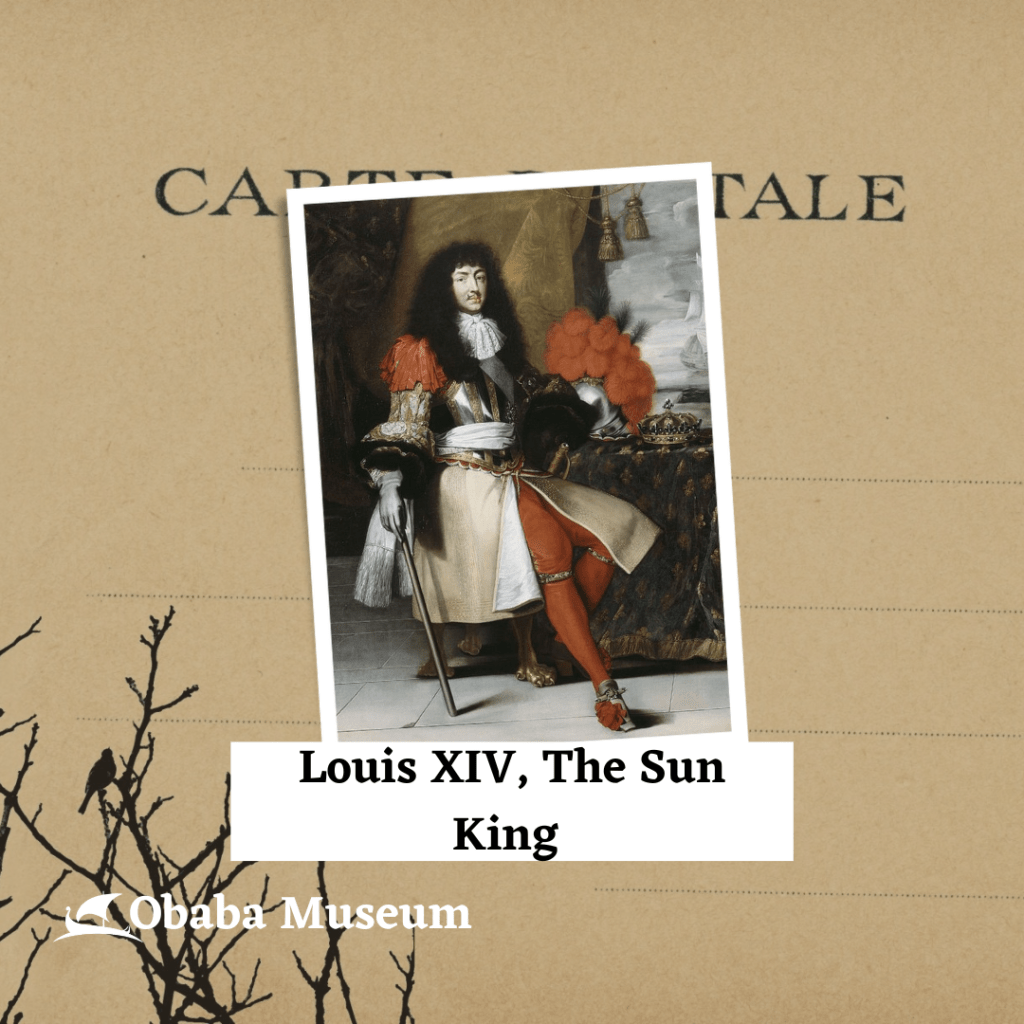
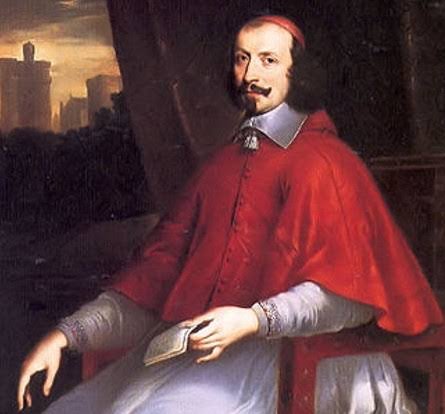
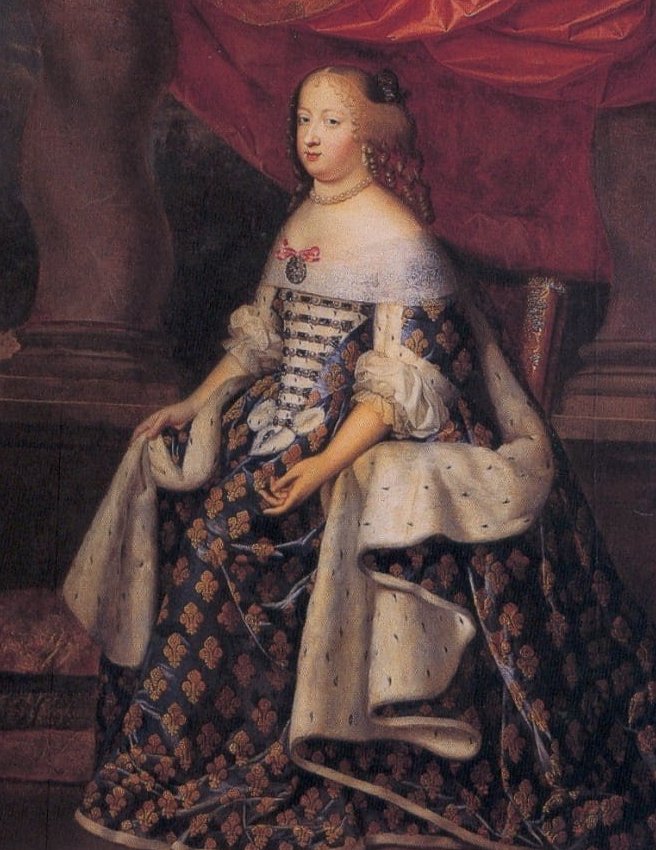
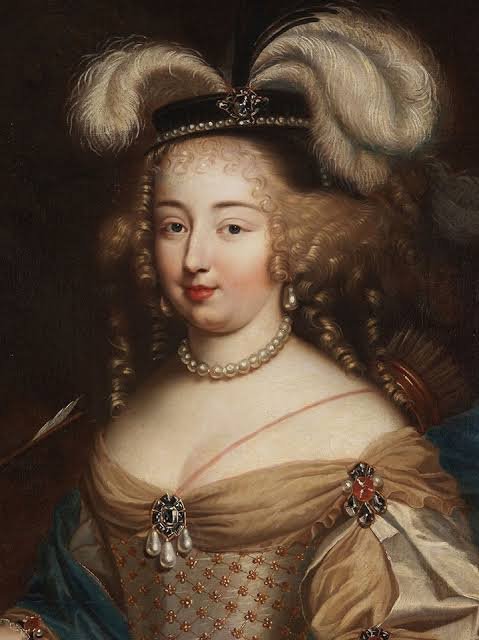
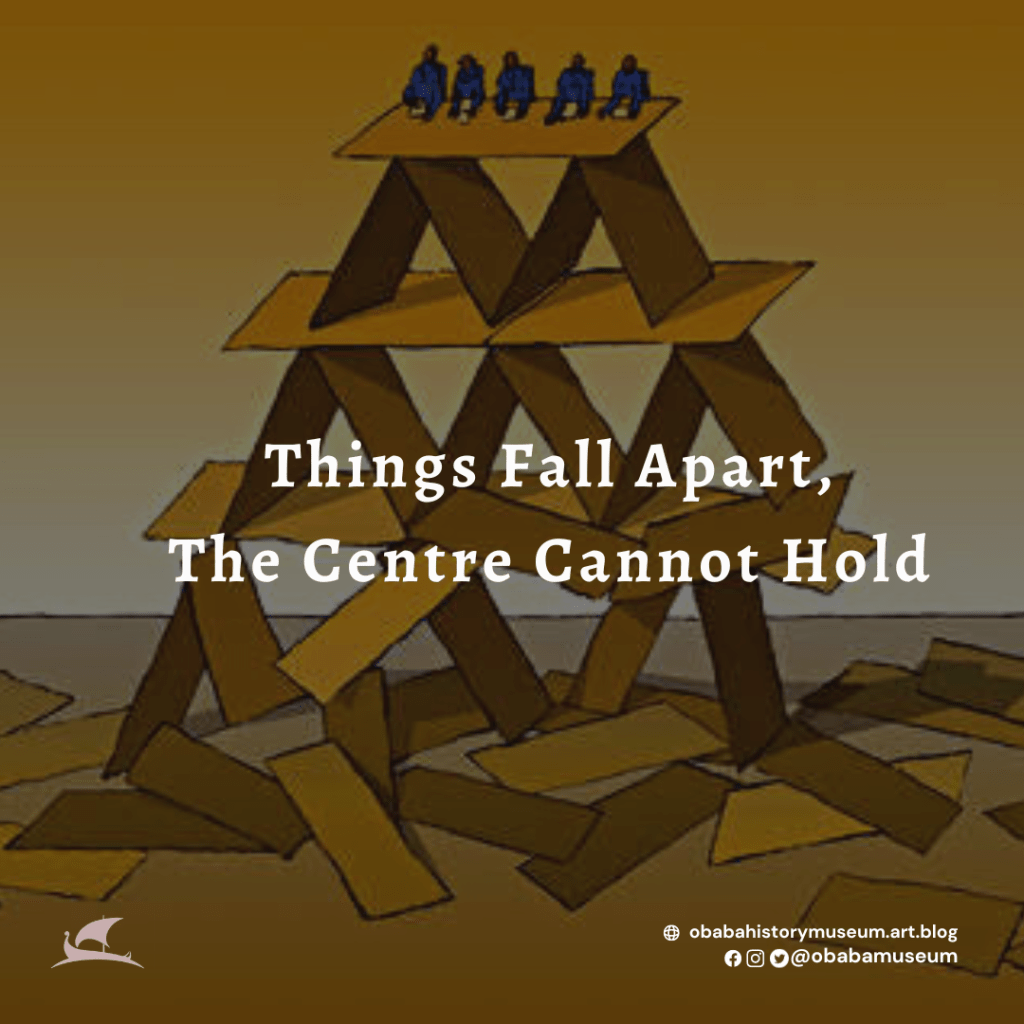
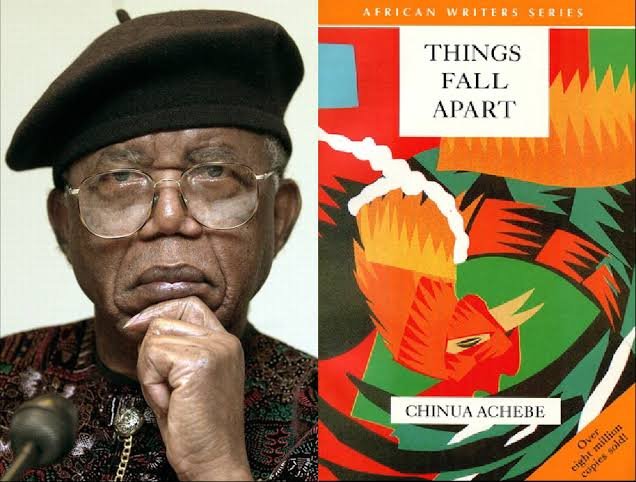
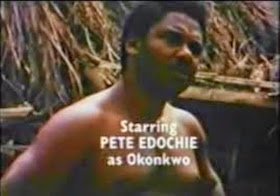
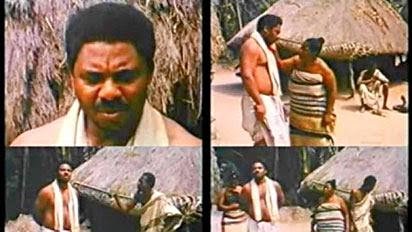



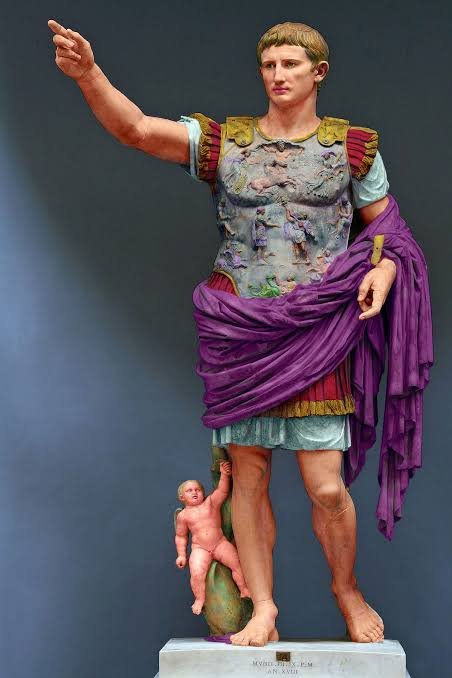
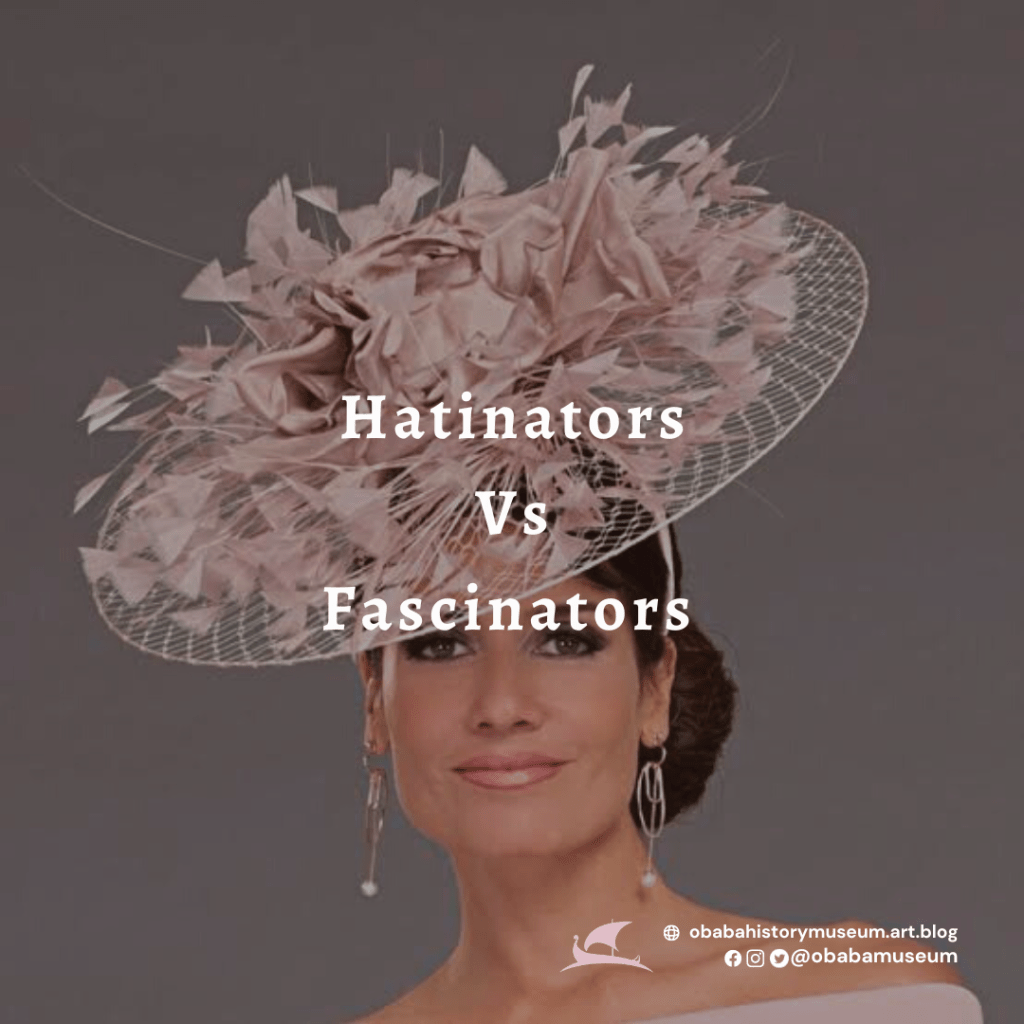
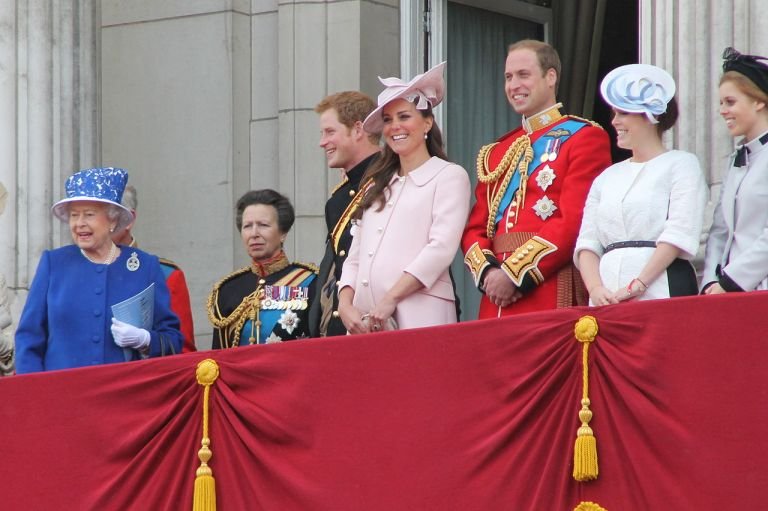
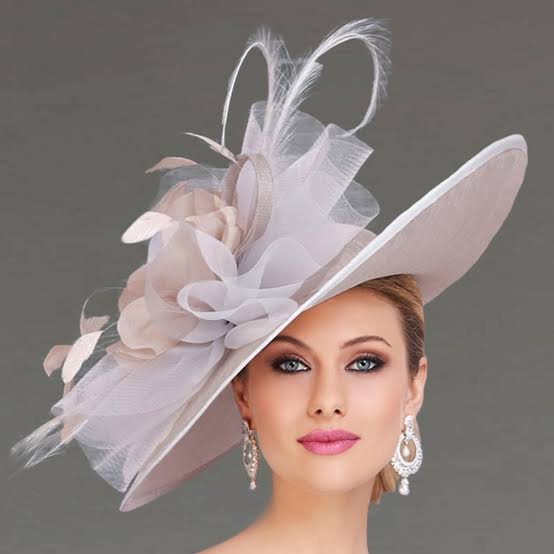
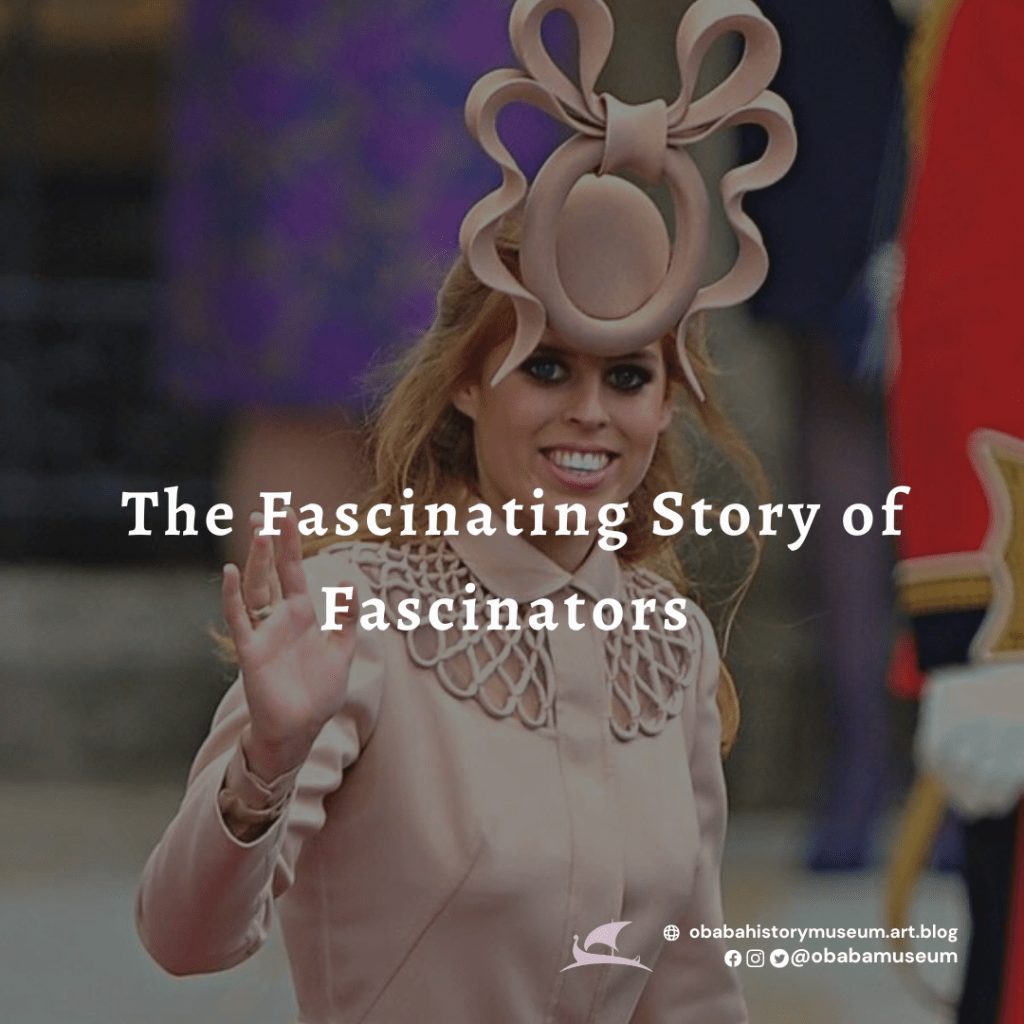
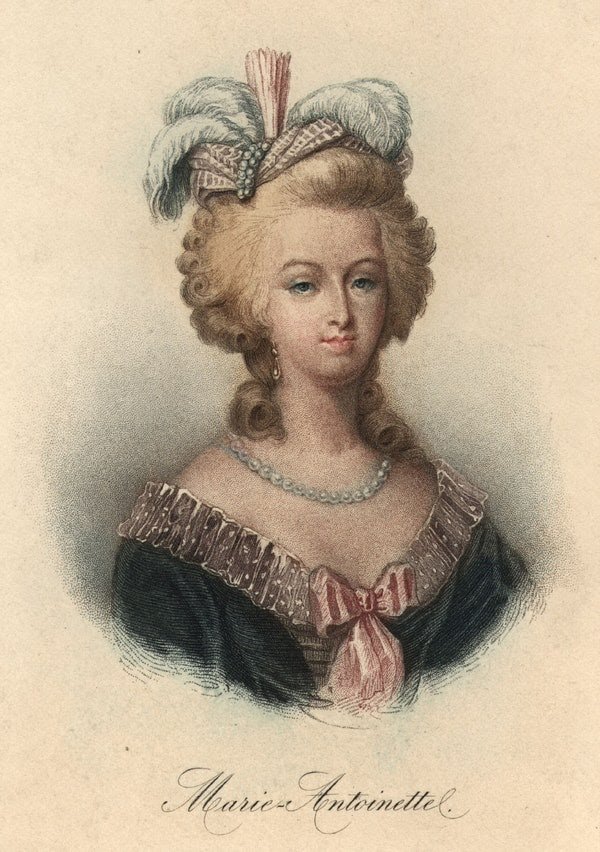
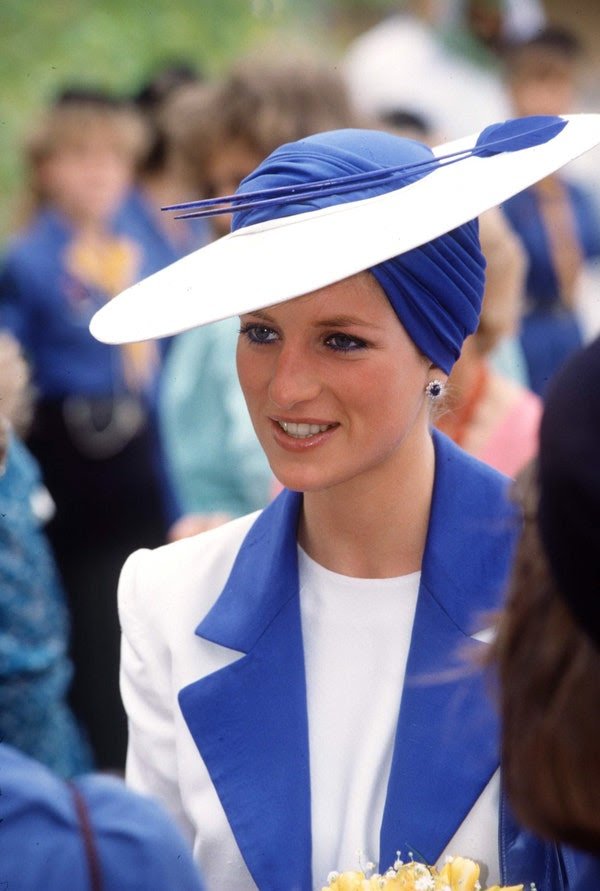



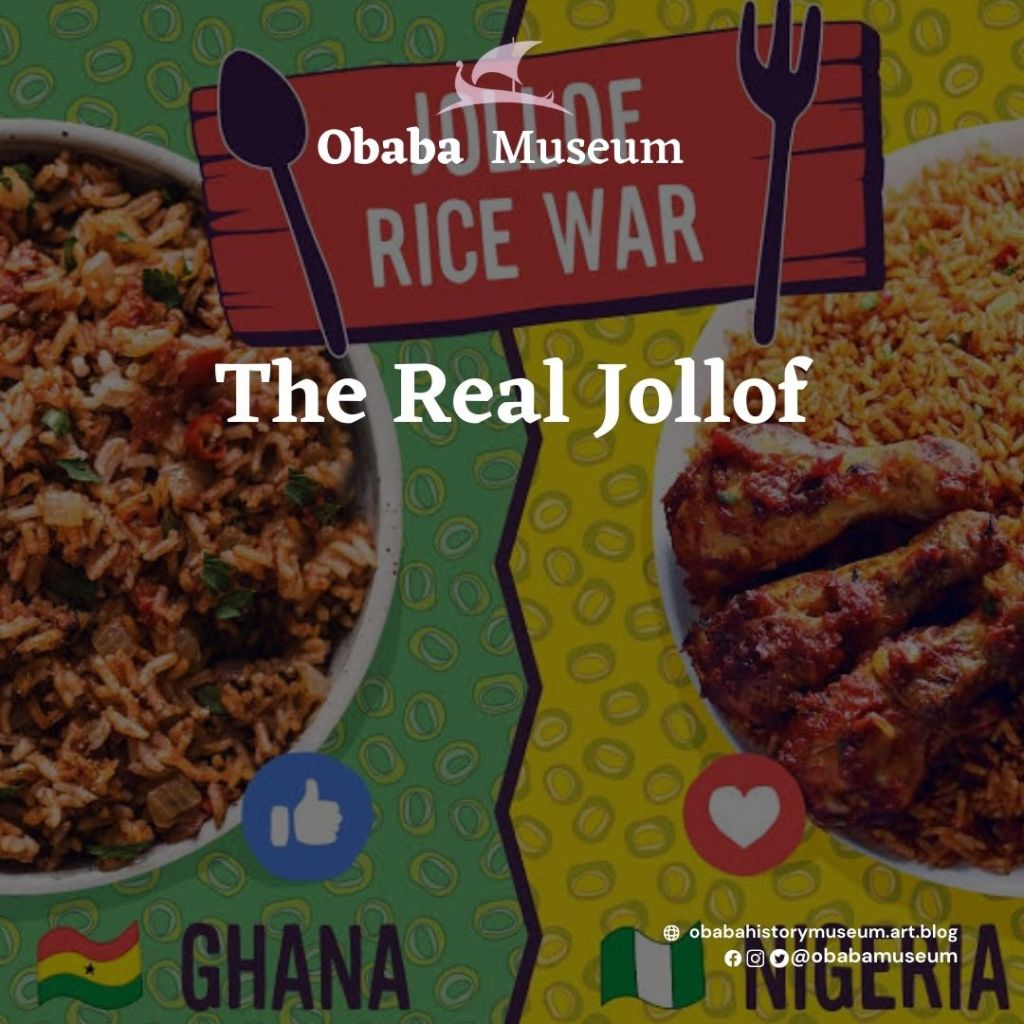
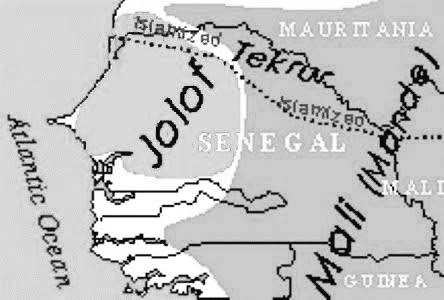

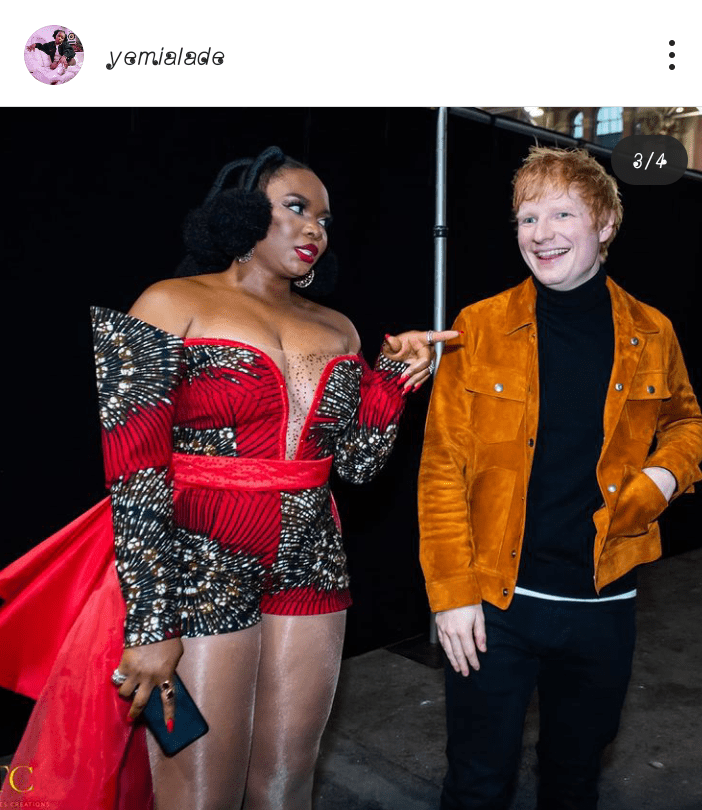
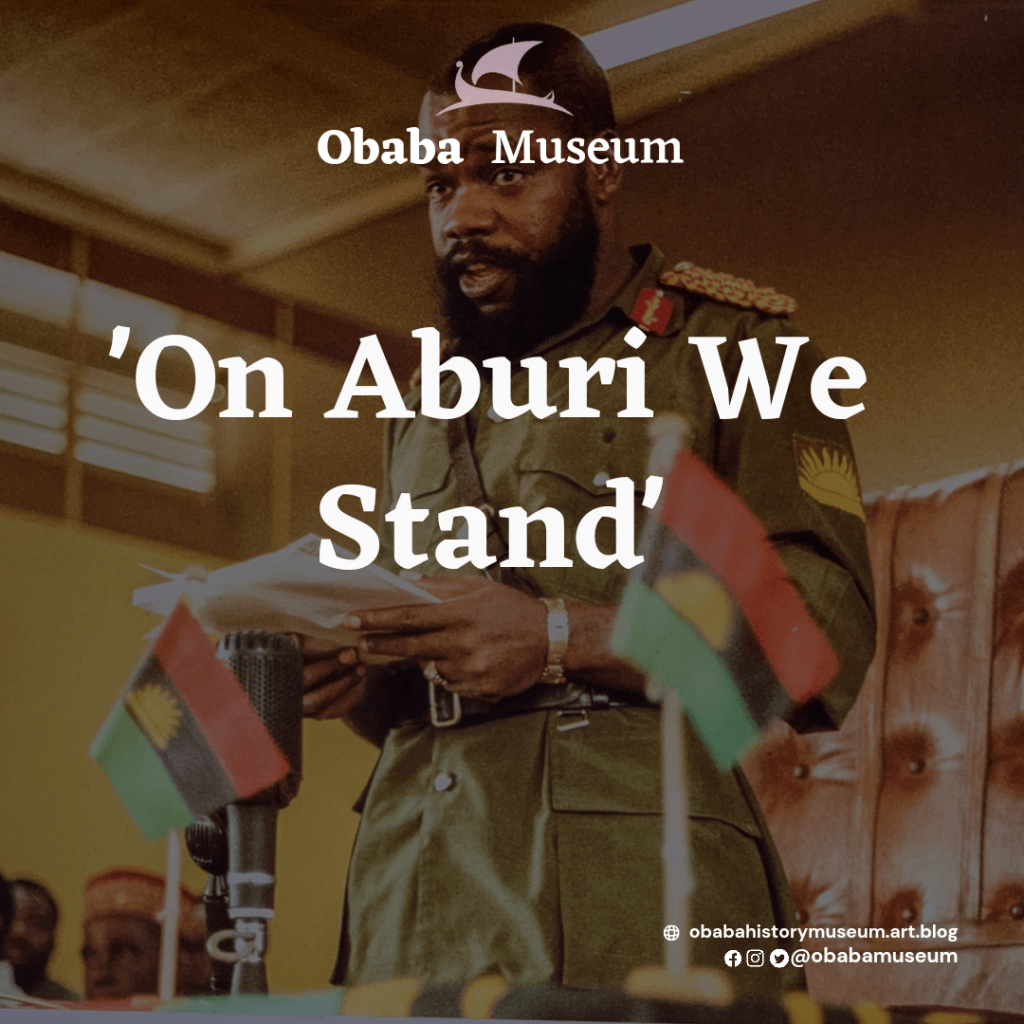
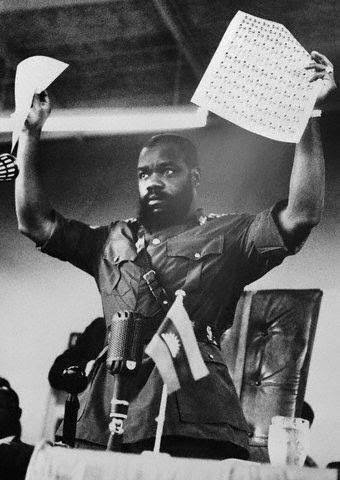
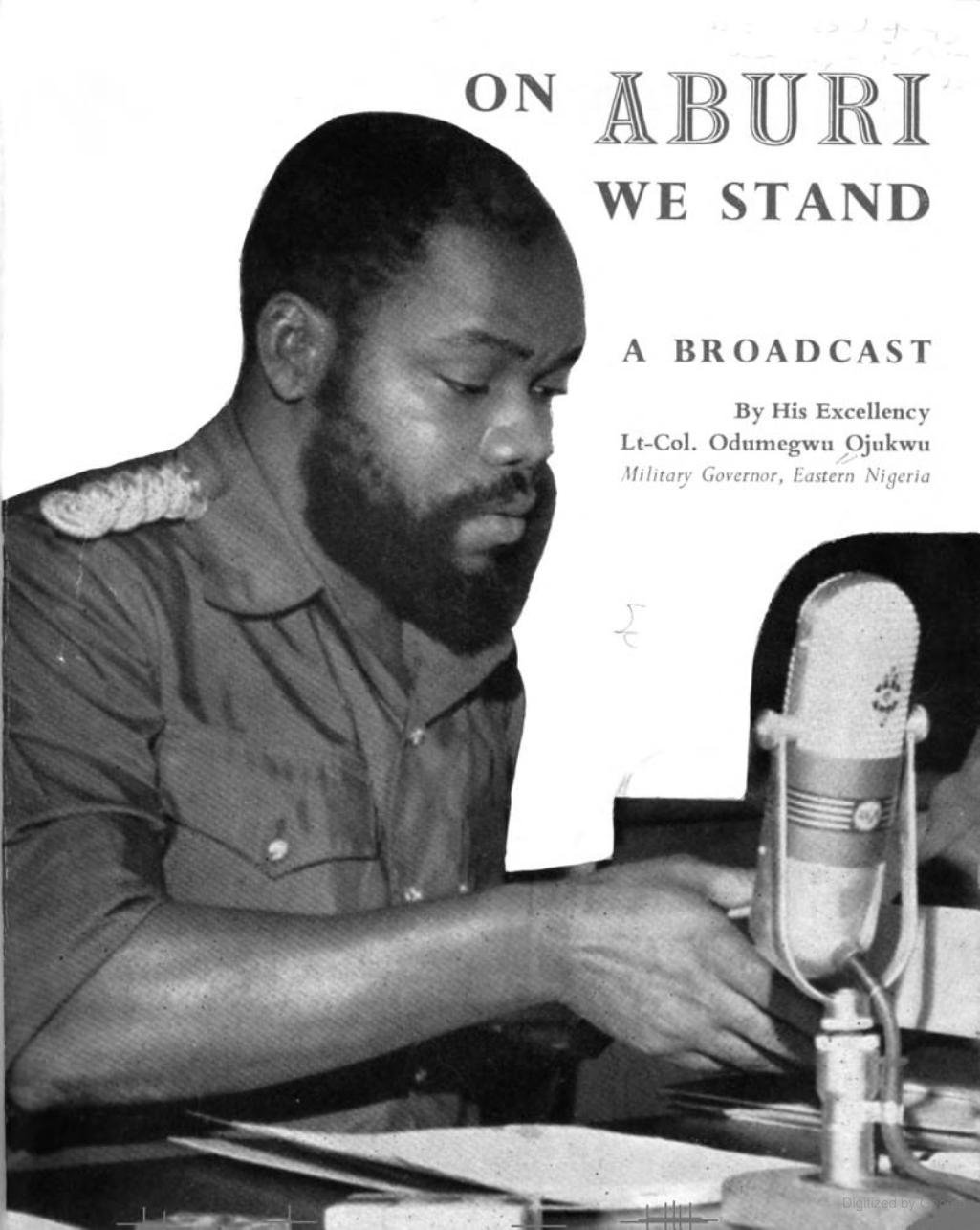

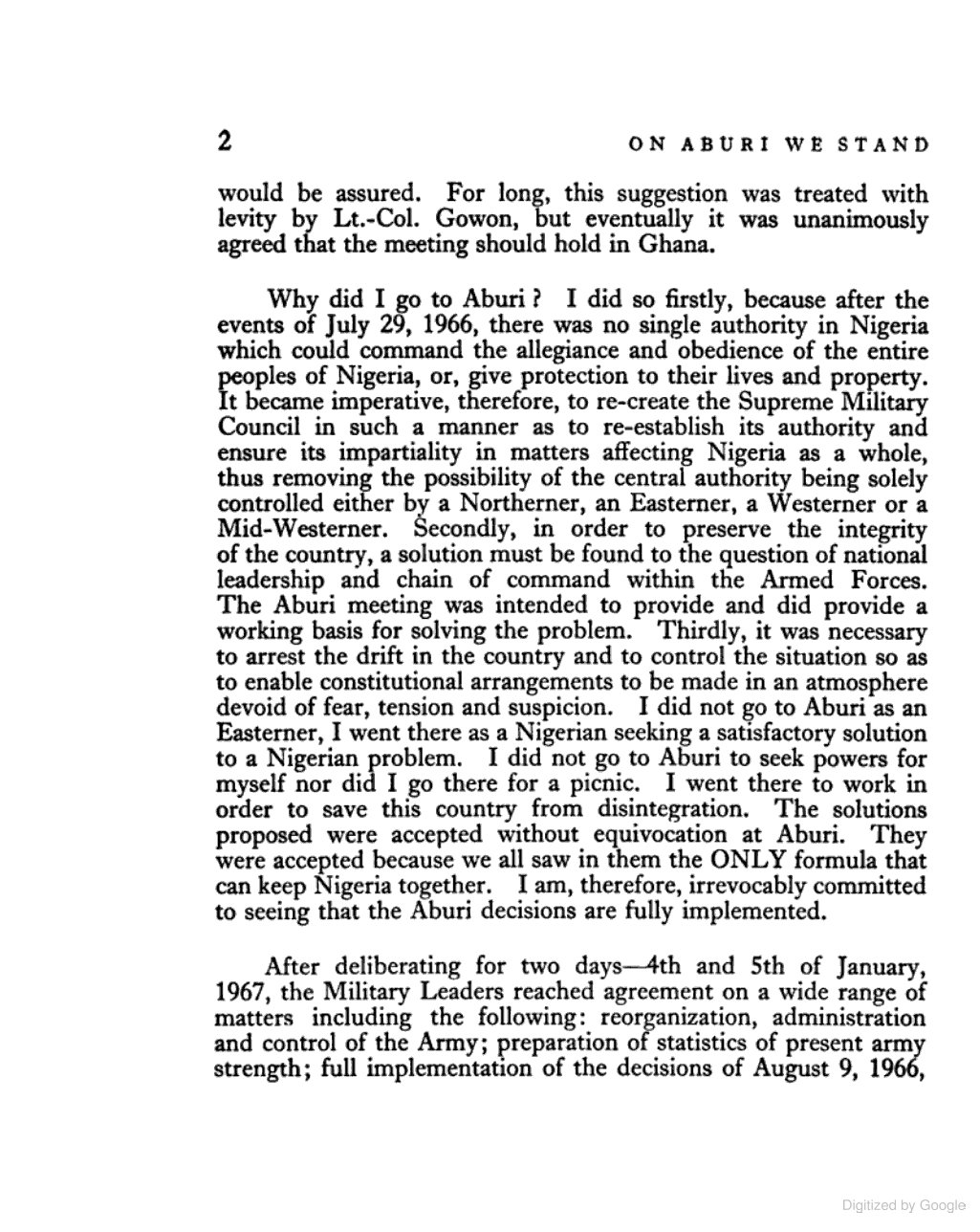
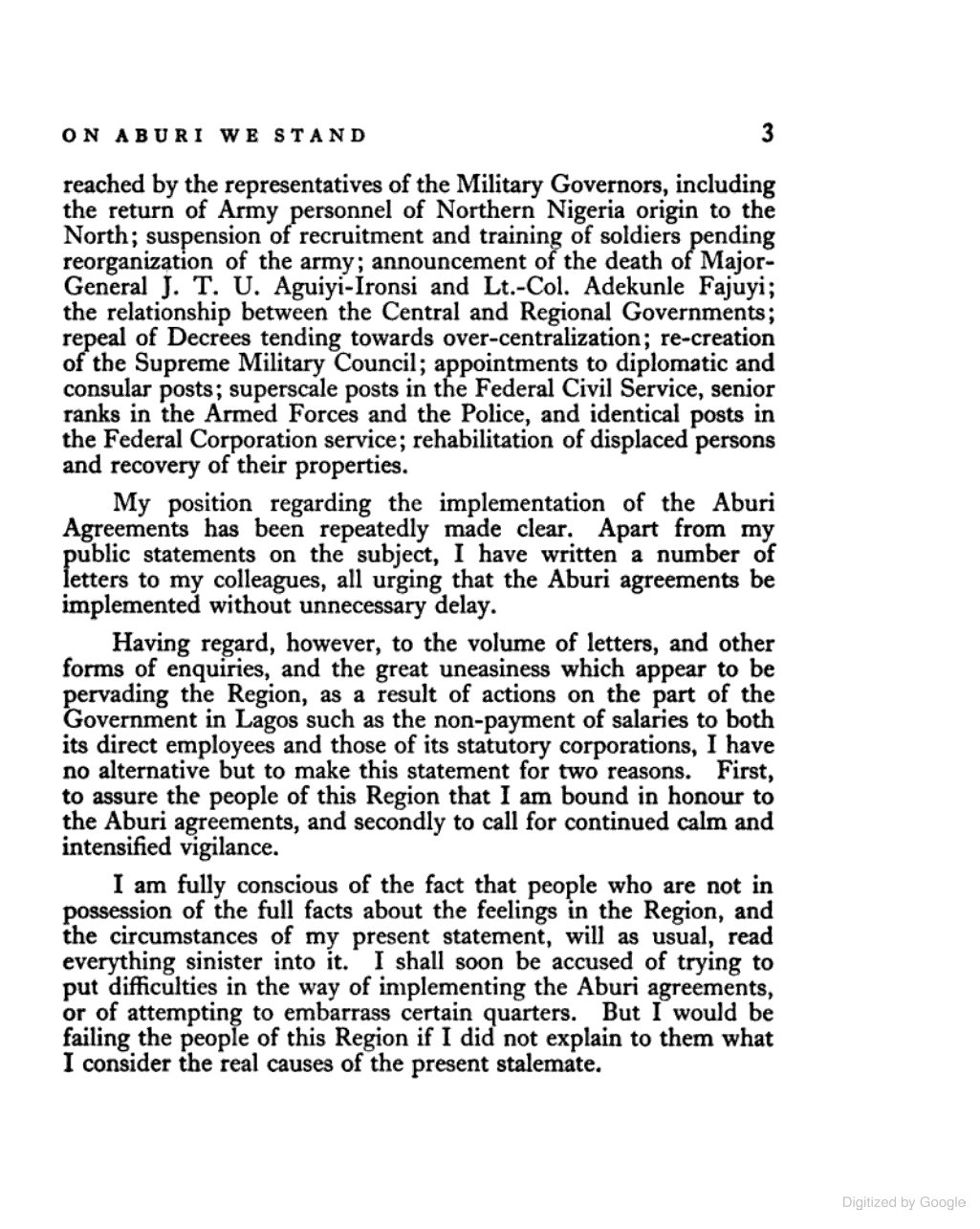
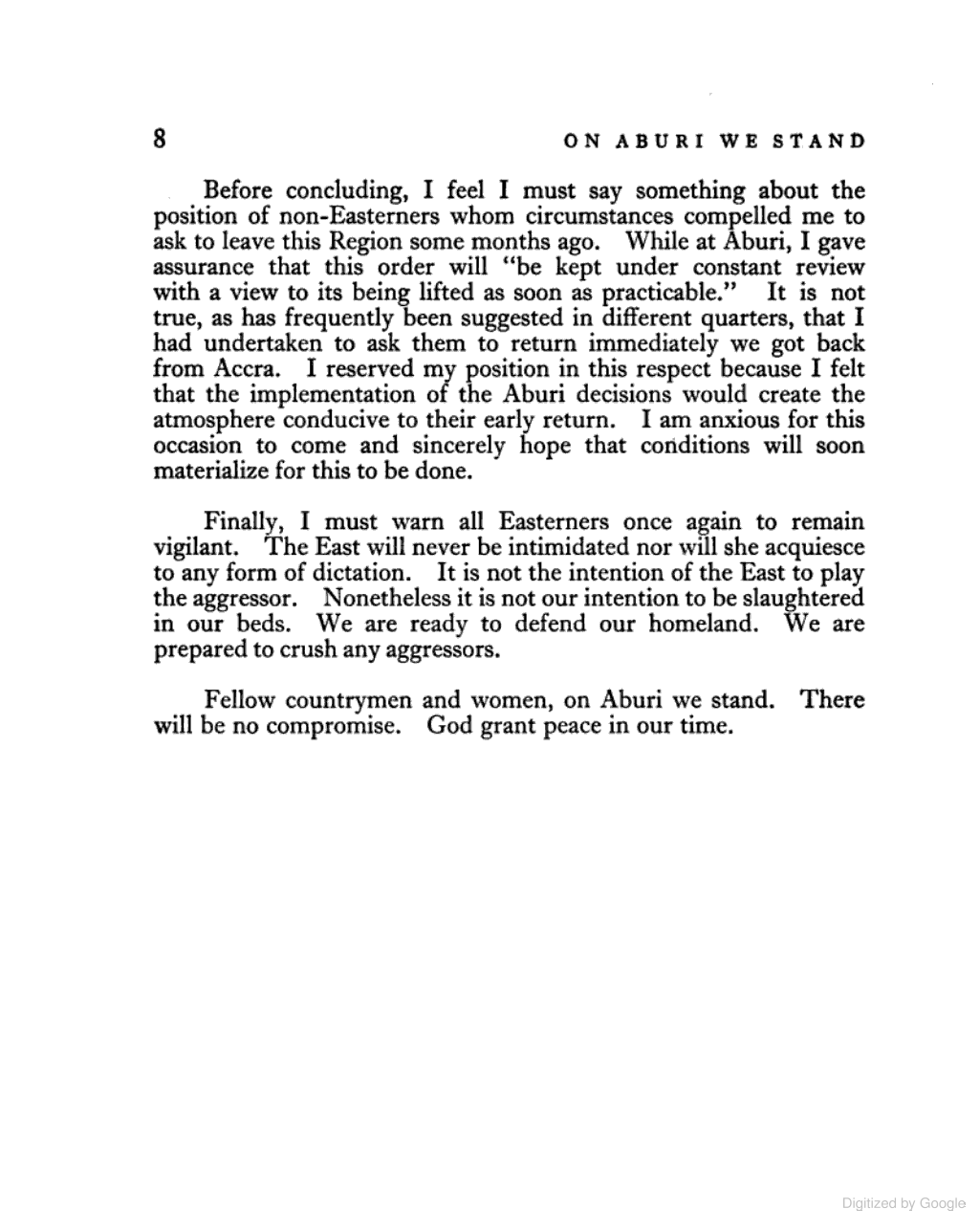
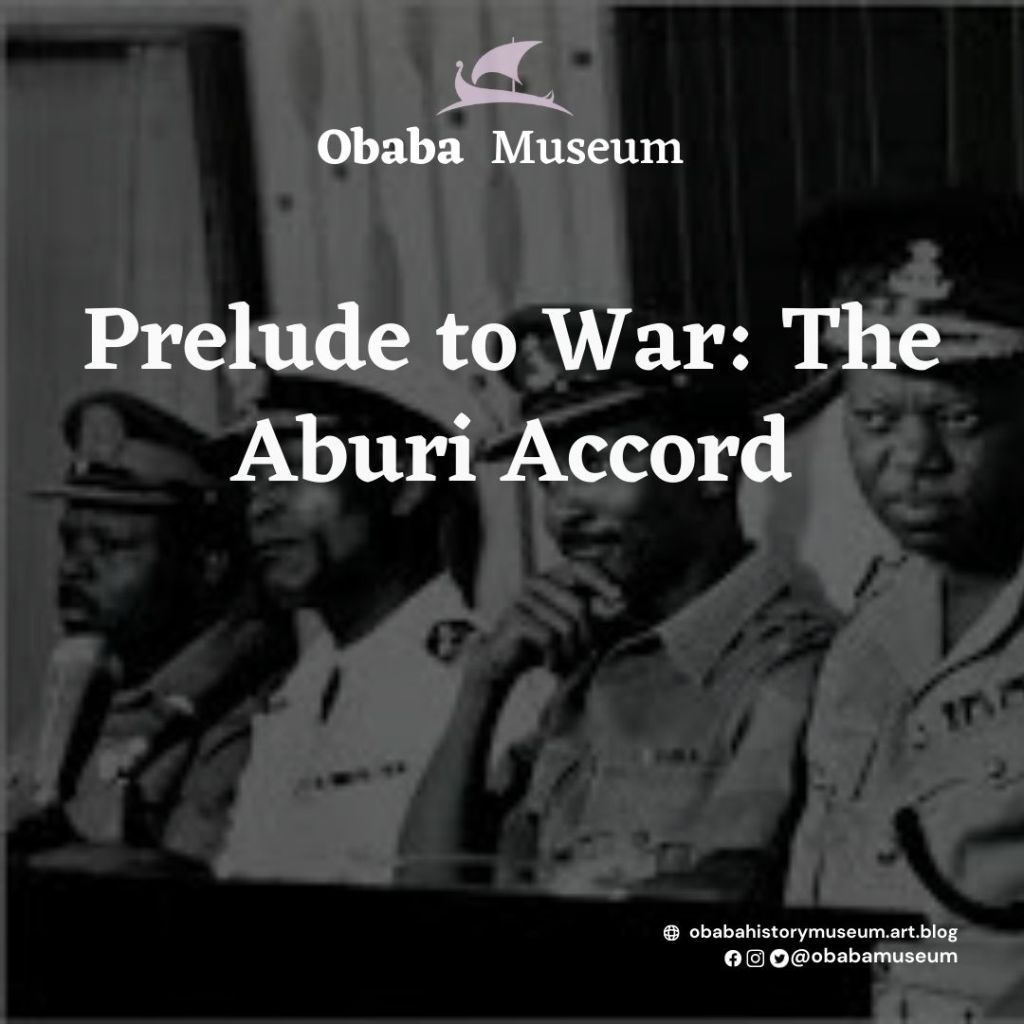
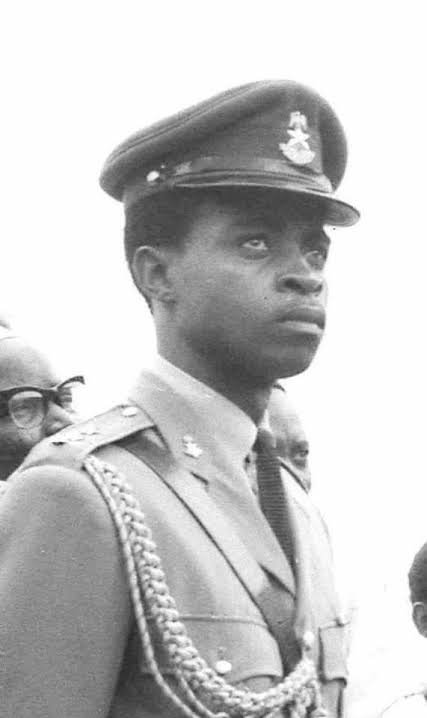
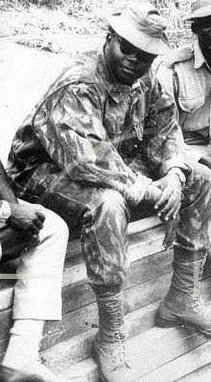
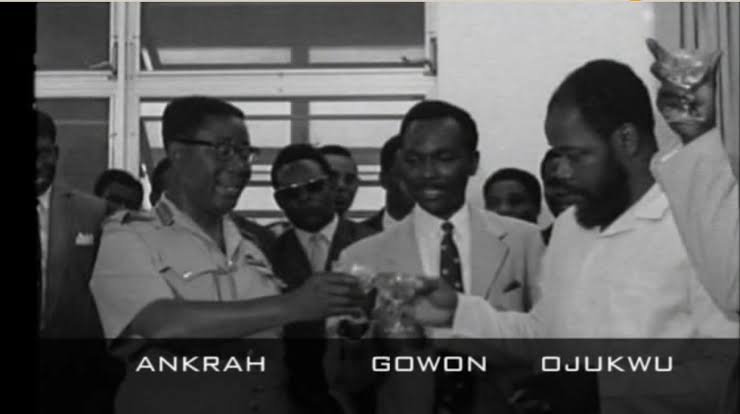
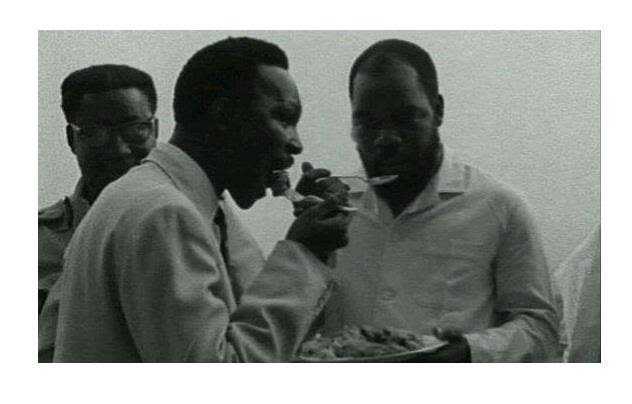
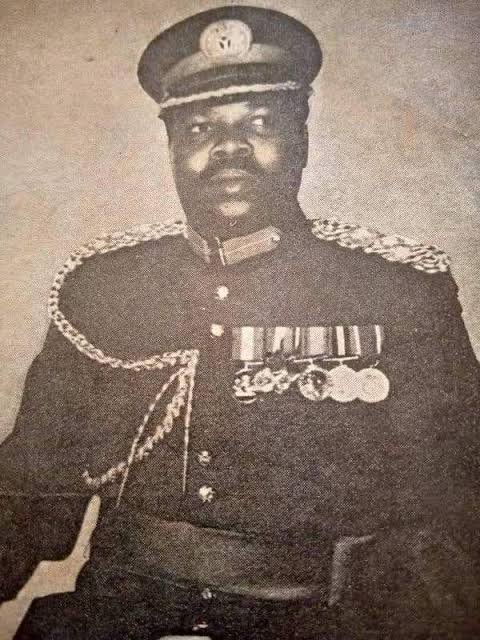
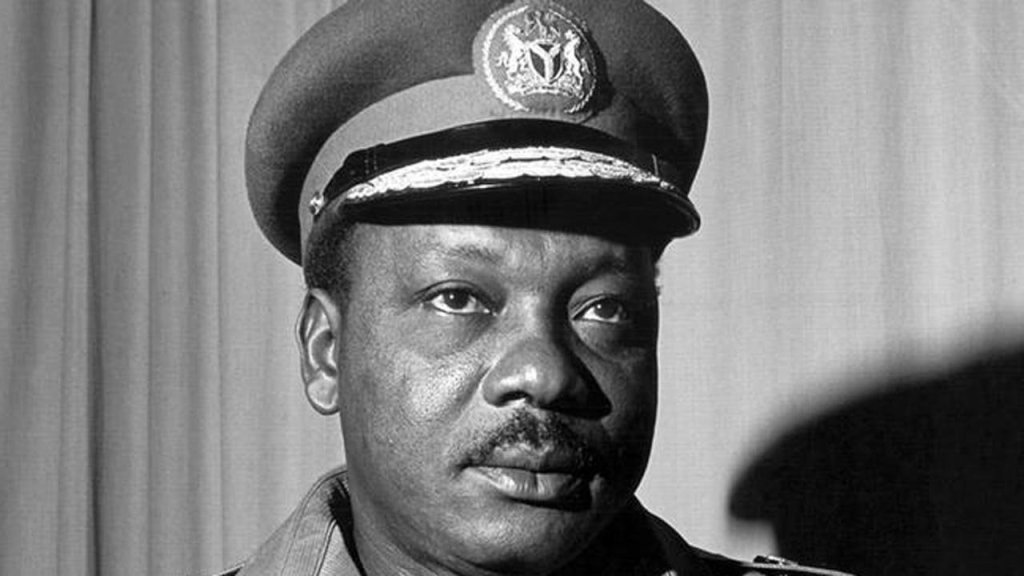
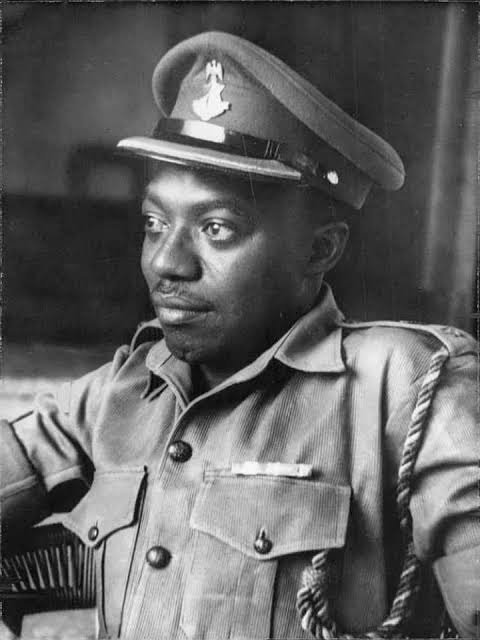
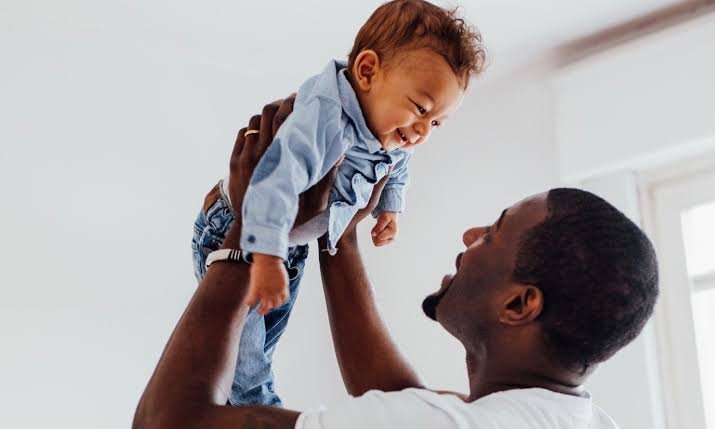


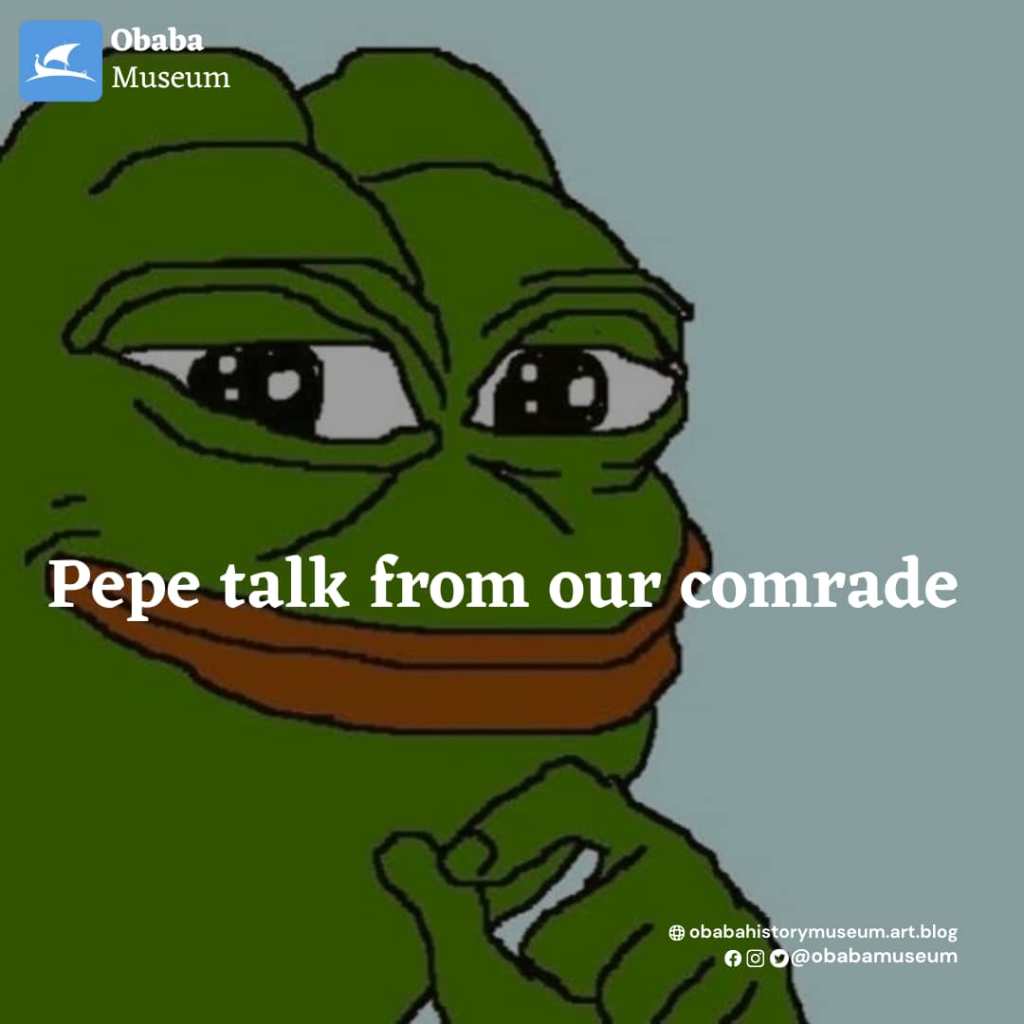


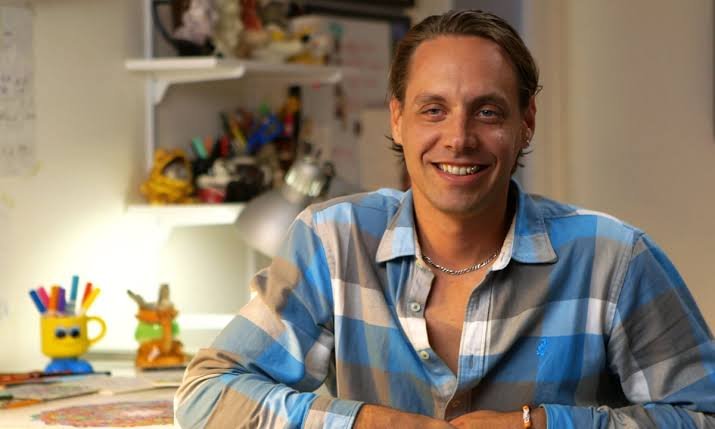
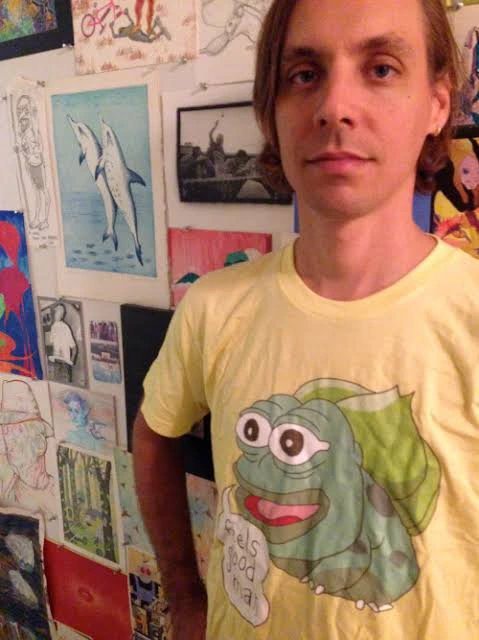


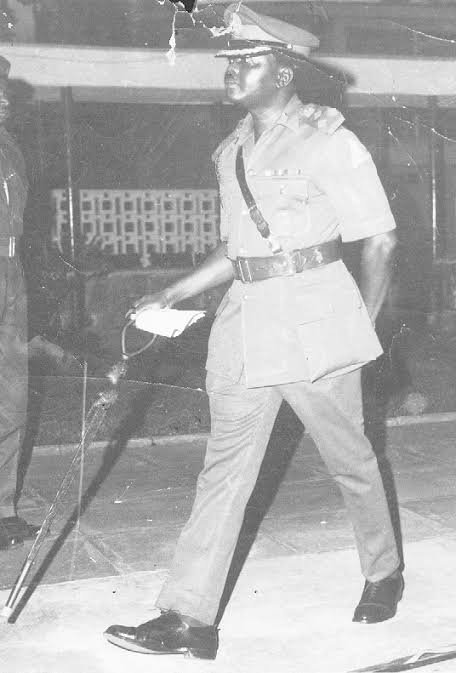
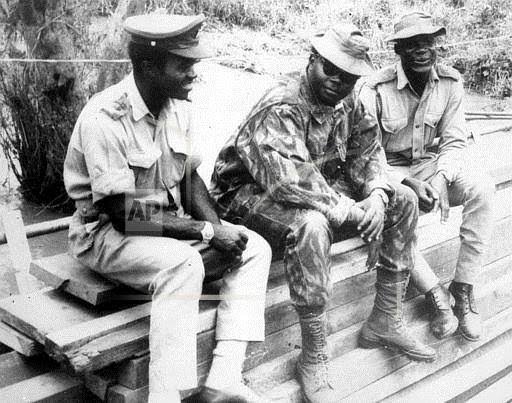
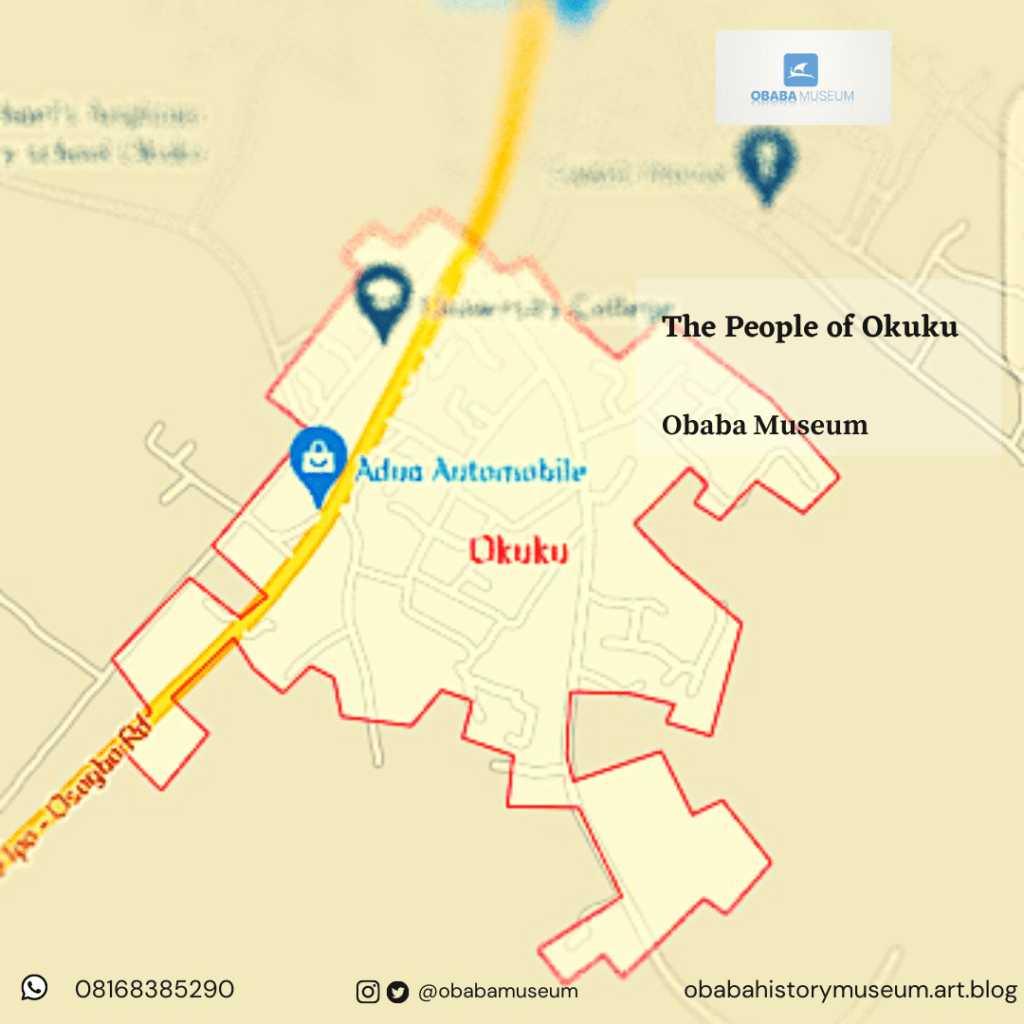
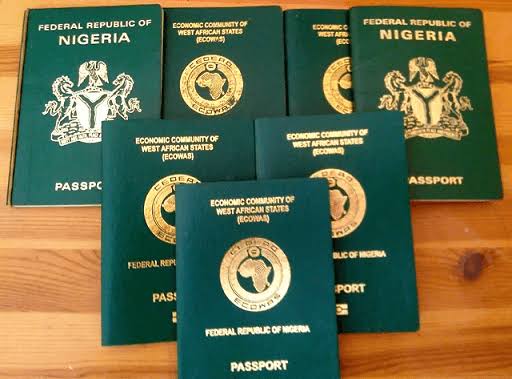
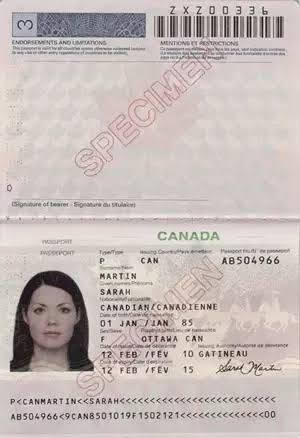
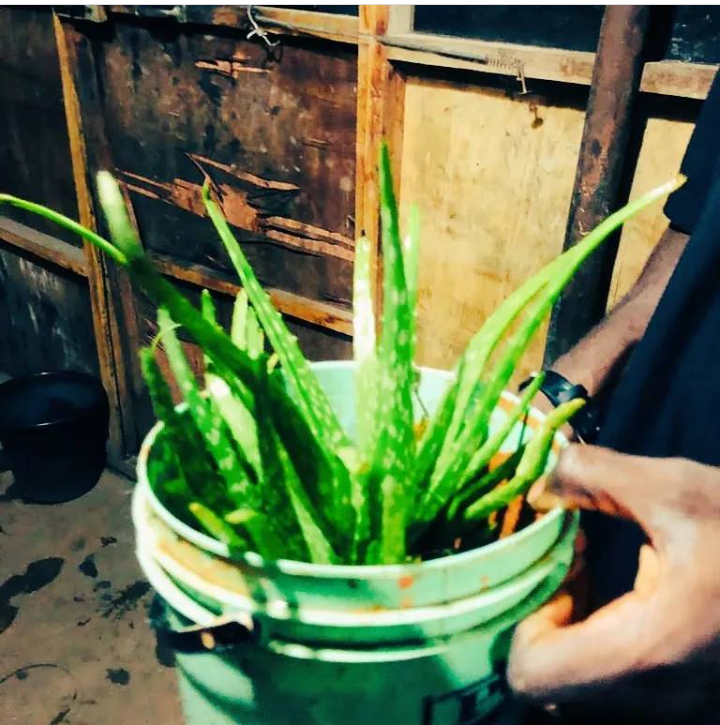
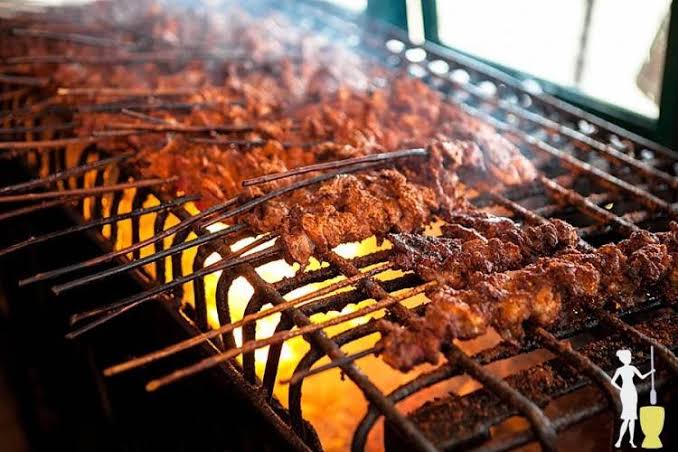
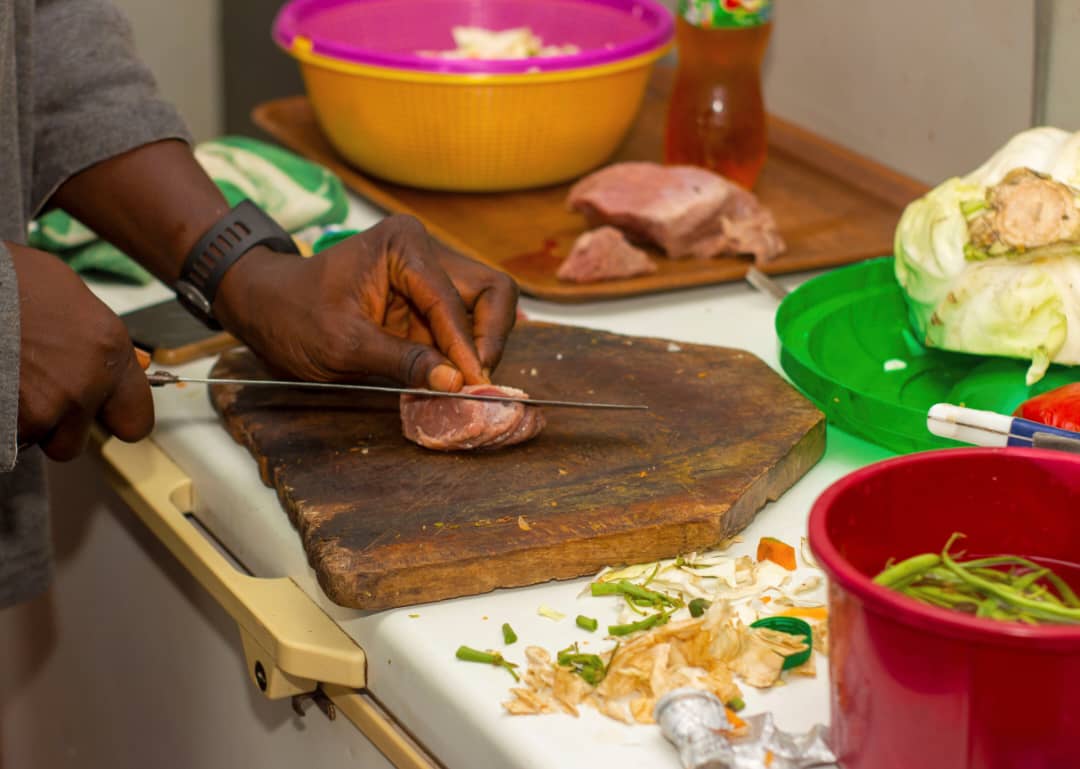
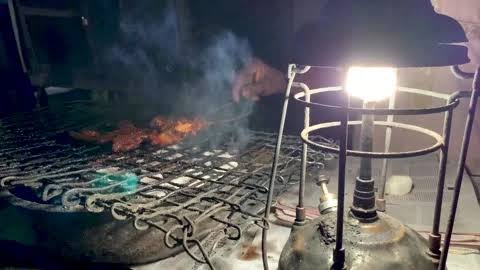
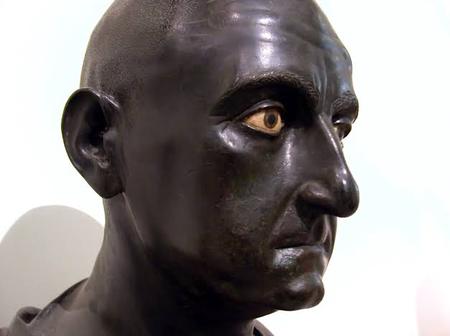

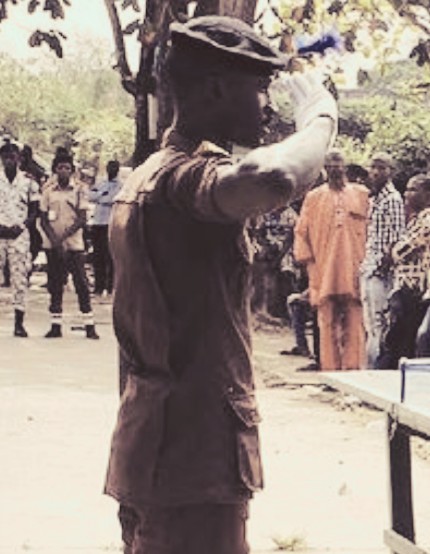

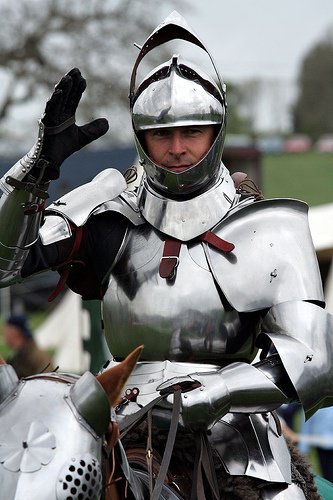
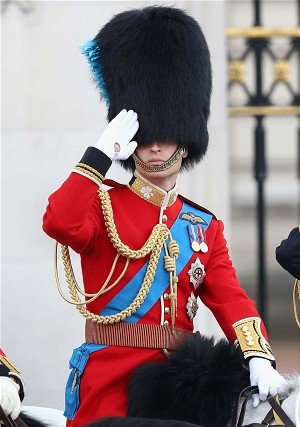
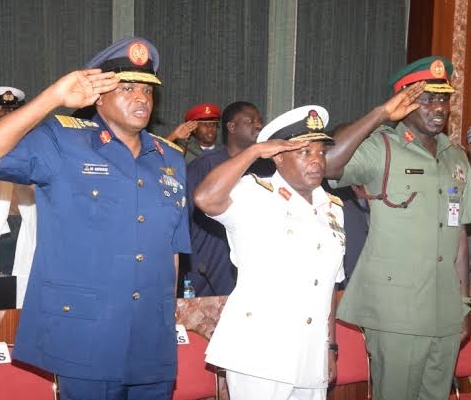

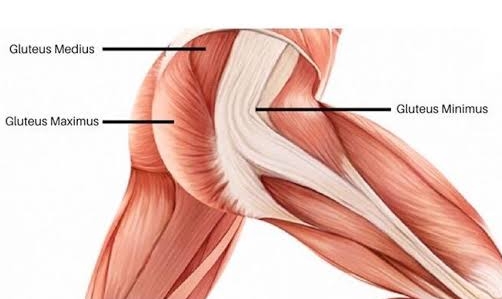



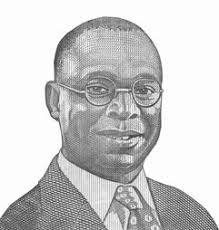
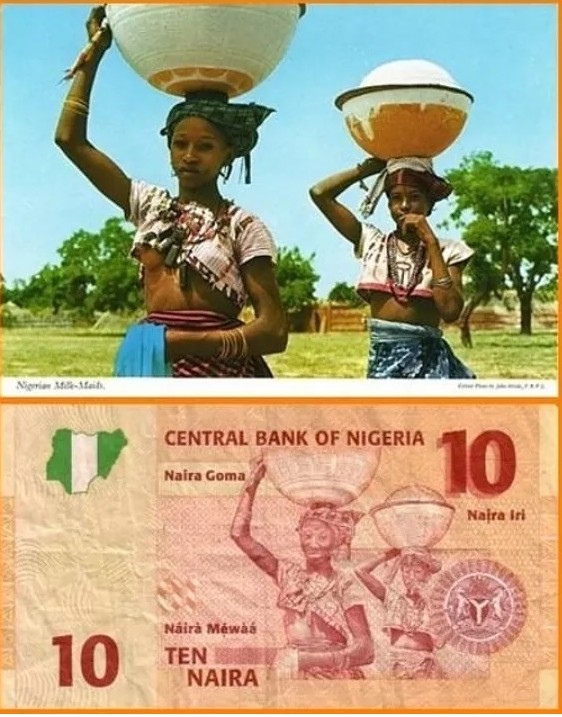
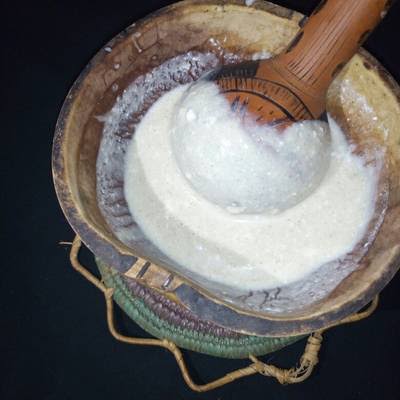
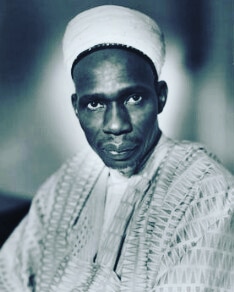
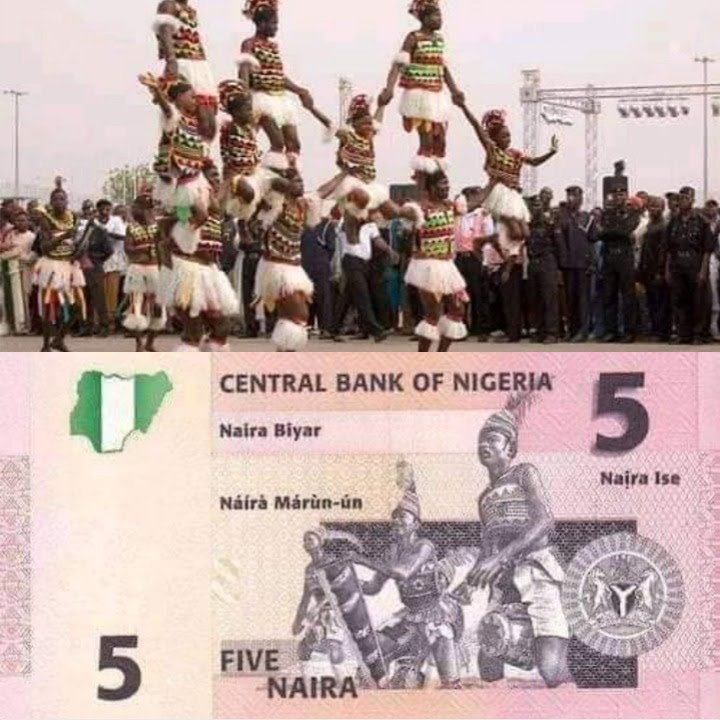


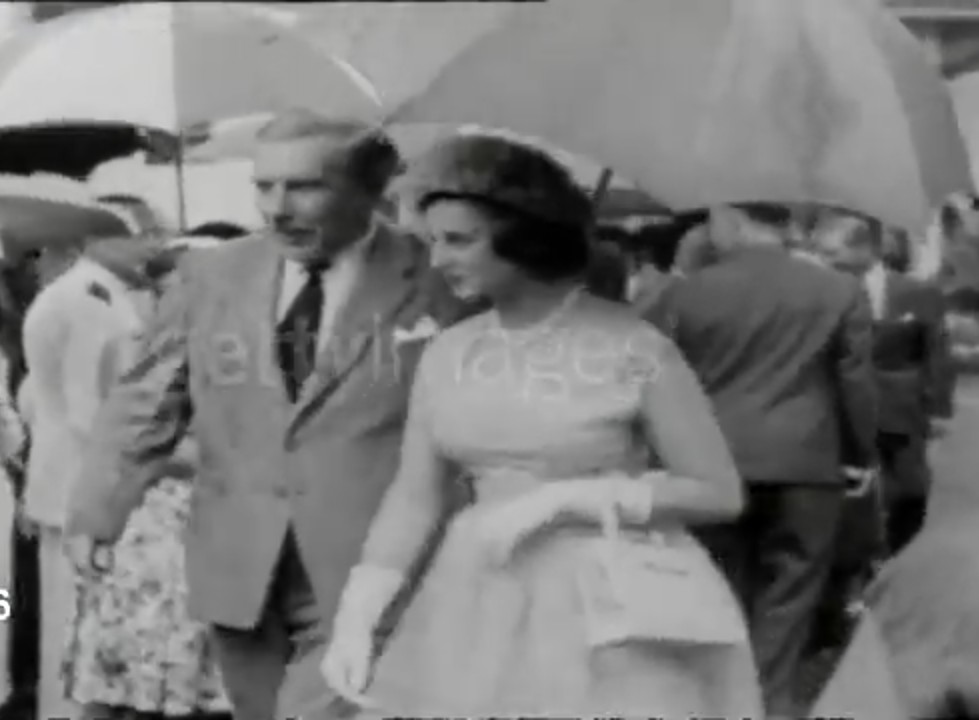
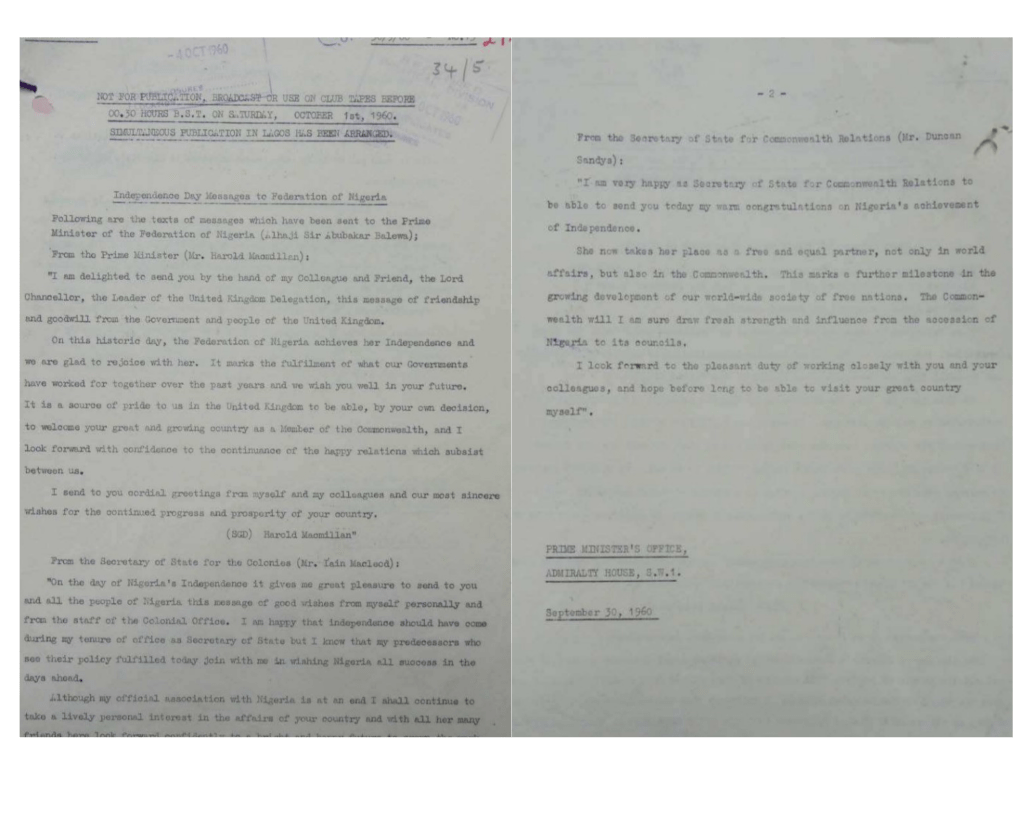
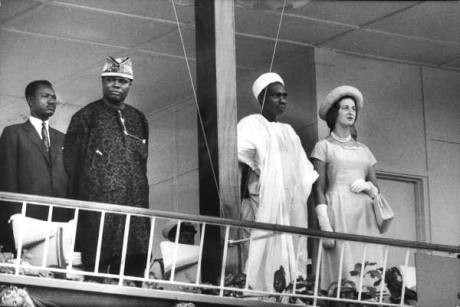
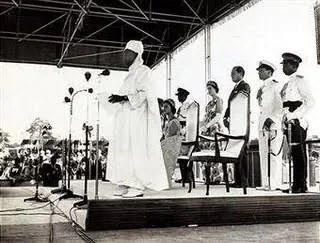
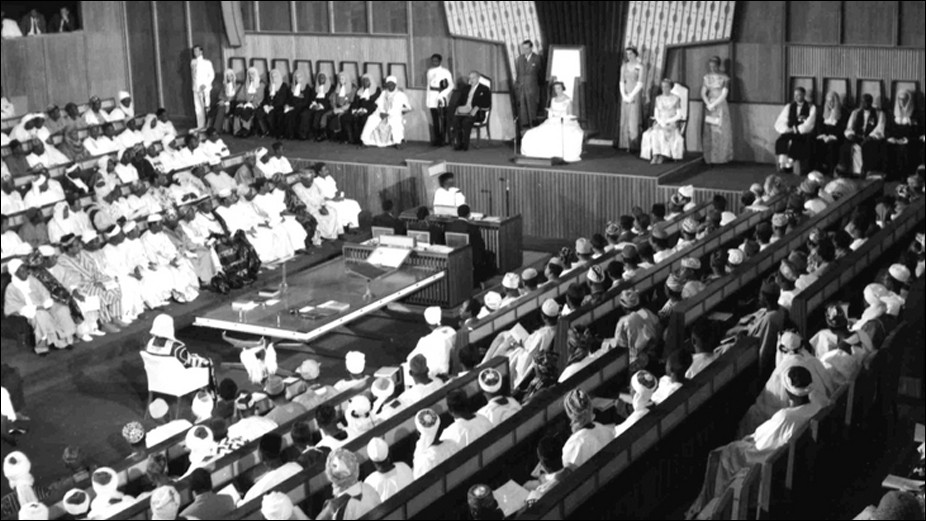
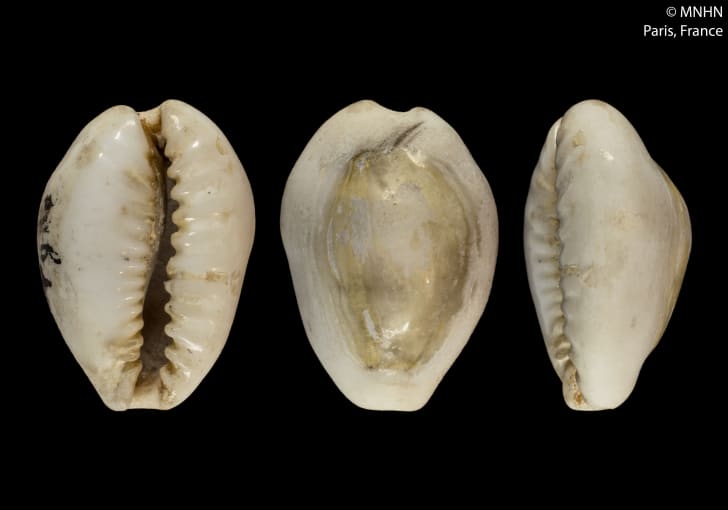
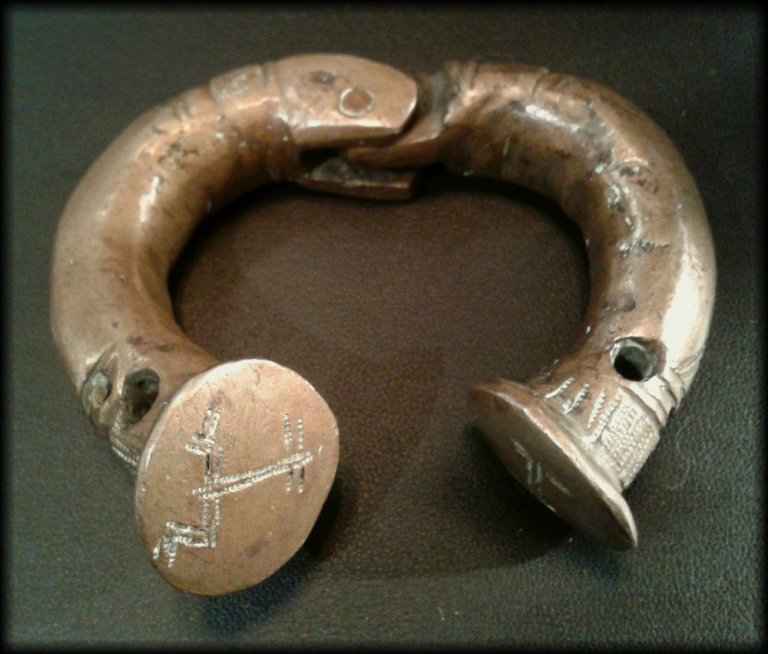
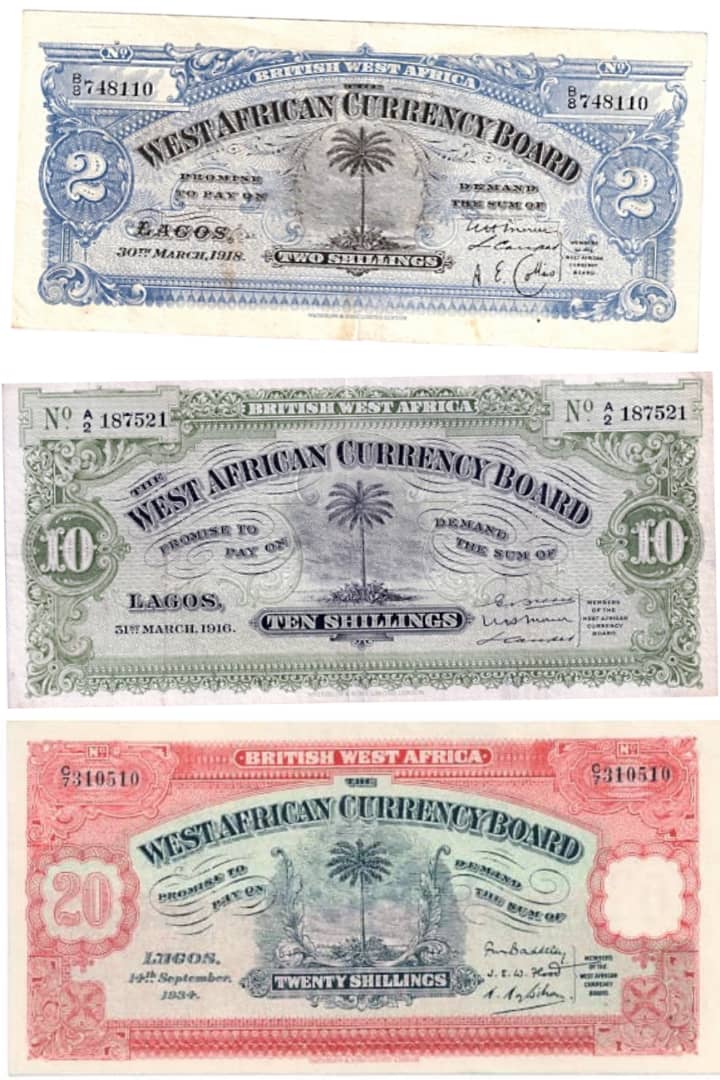
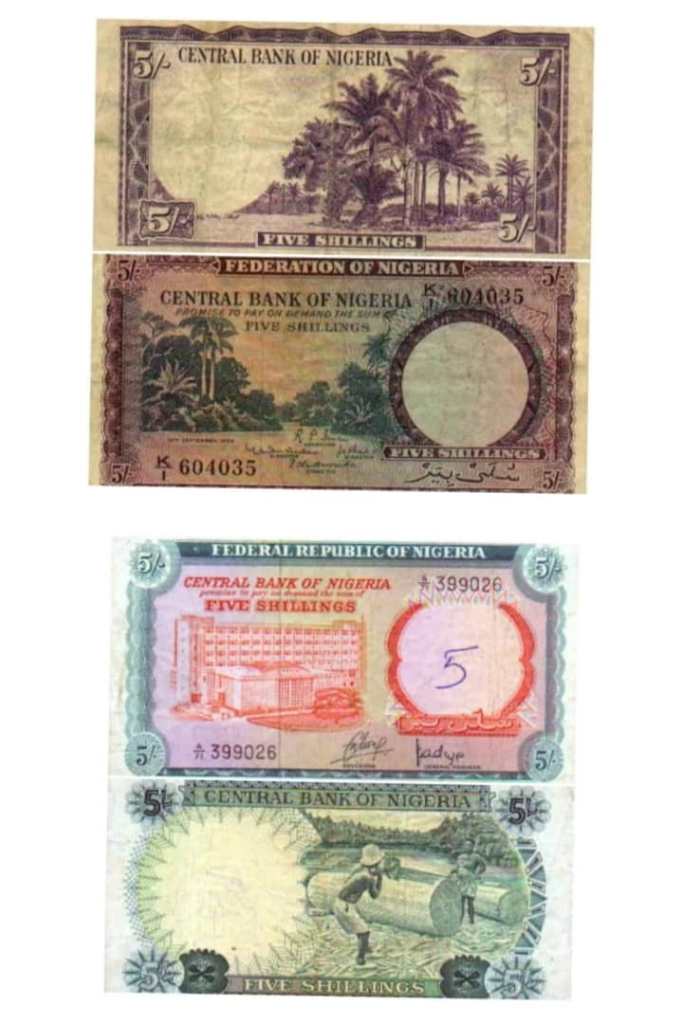
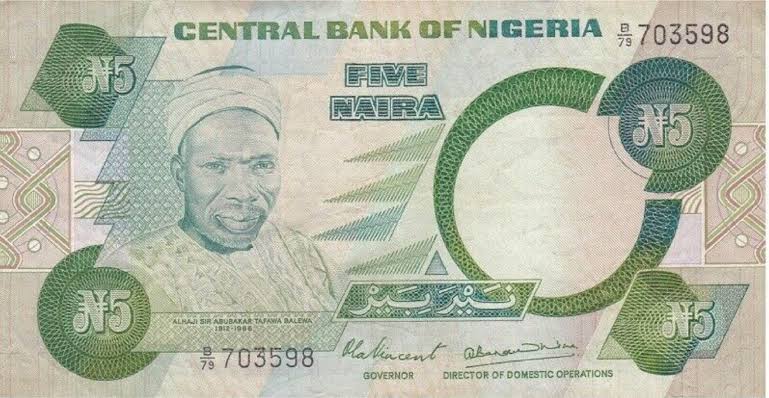

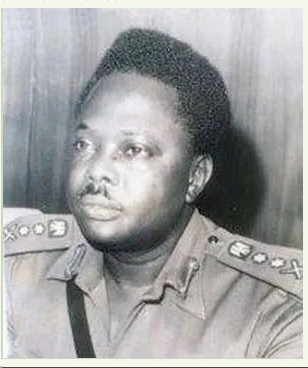
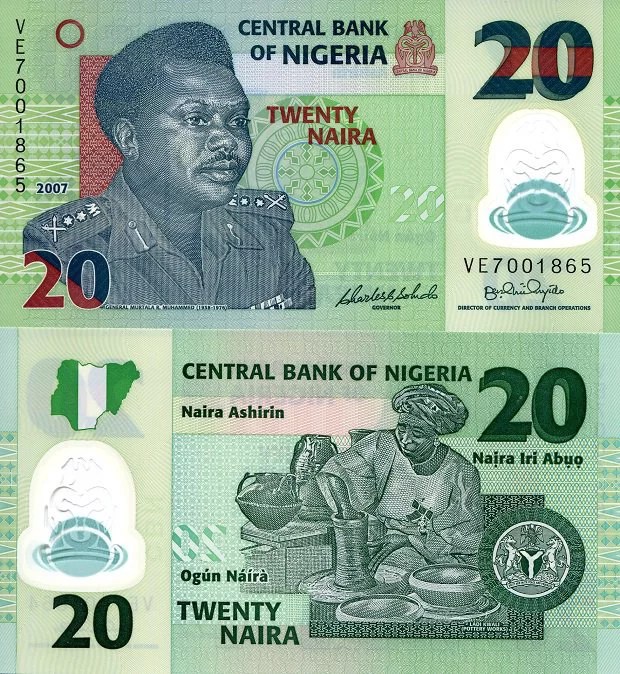
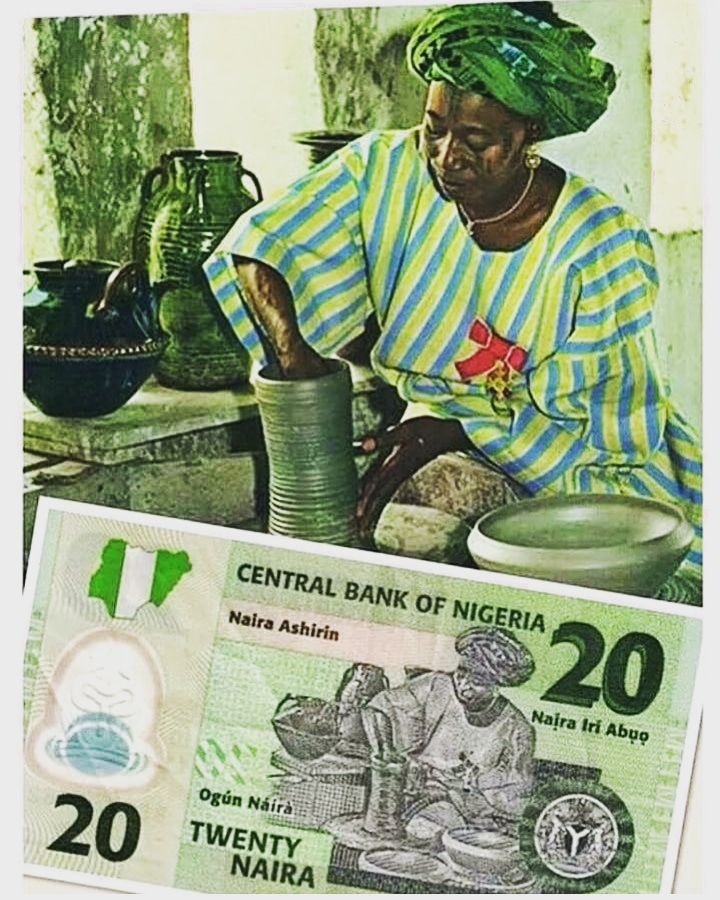
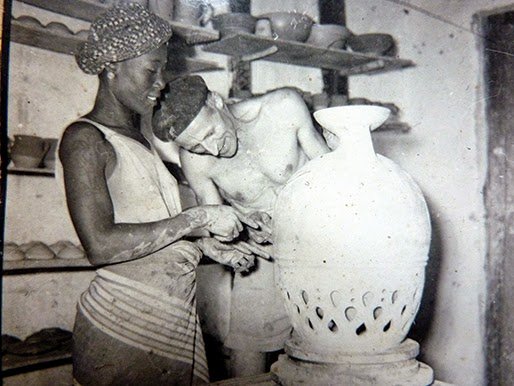
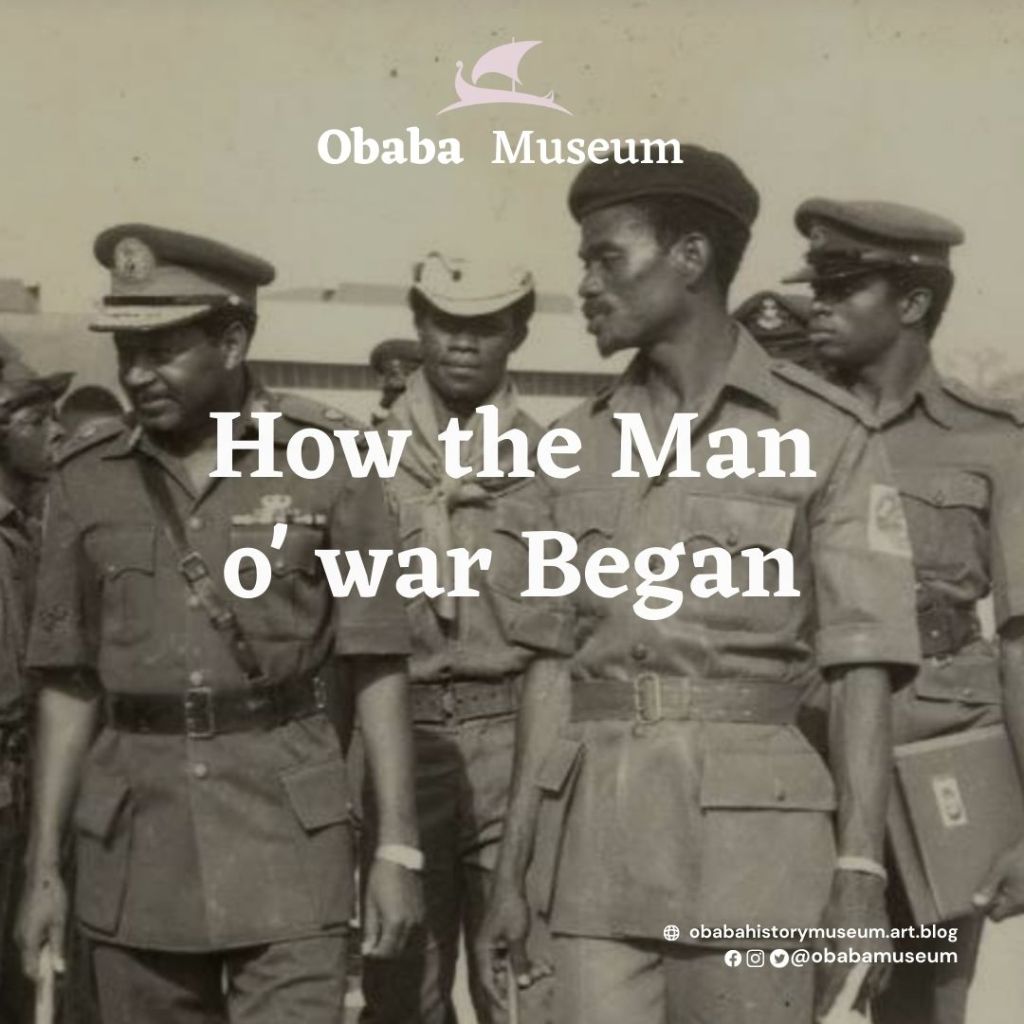
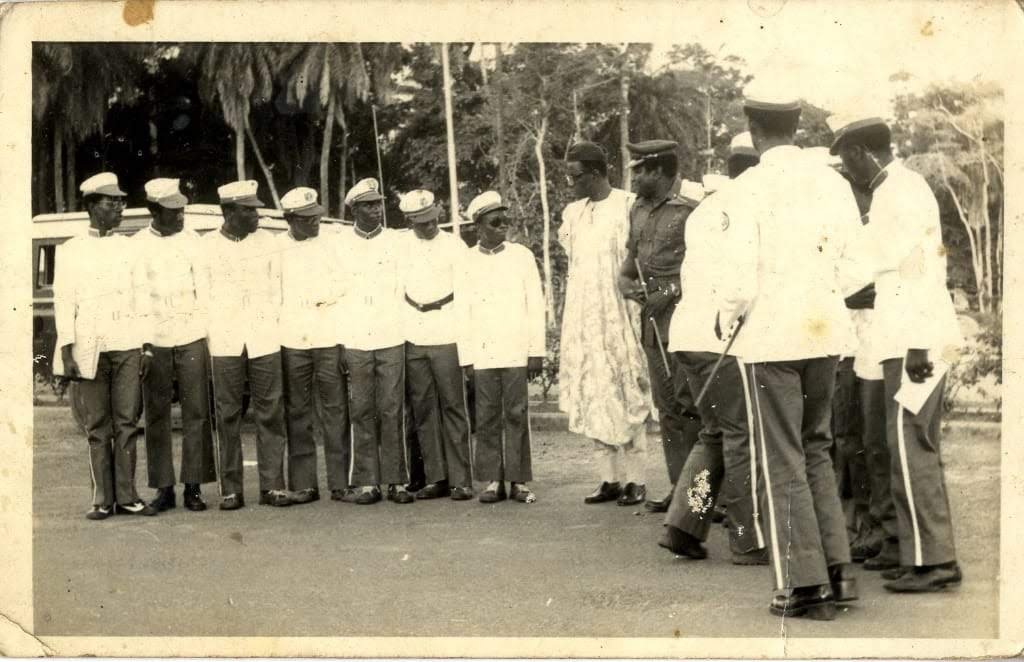
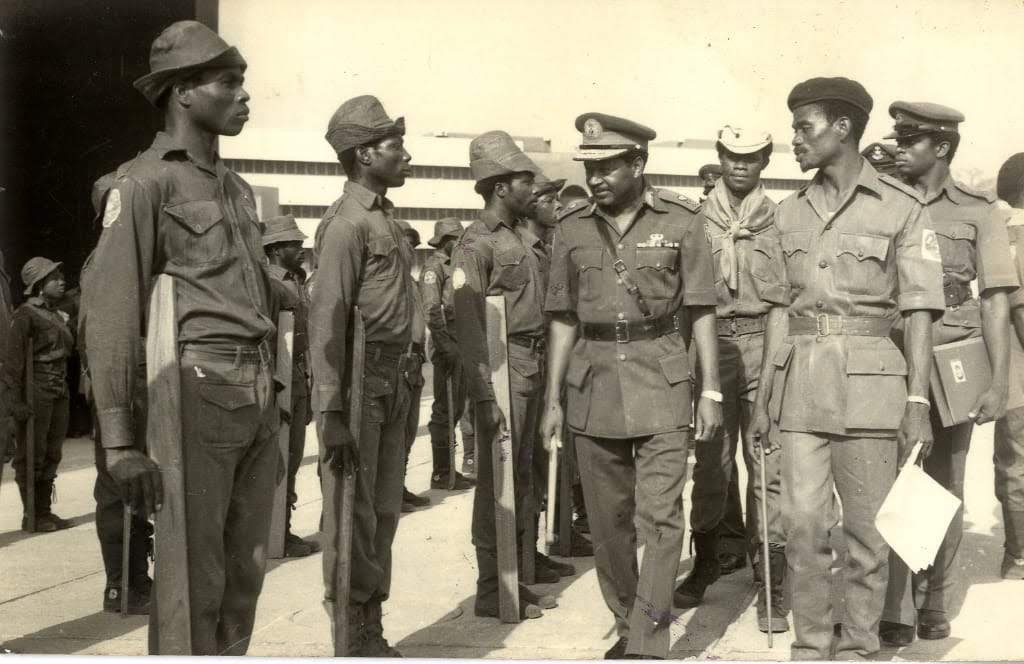
 Obaba Museum