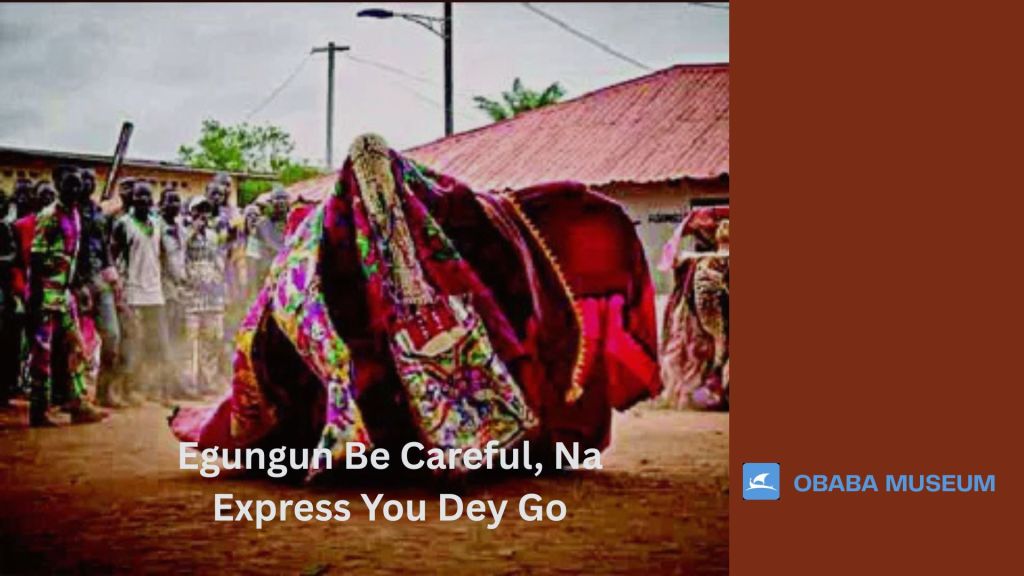
If you were scrolling social media in 2020, you probably couldn’t escape it
Obesere’s classic Fuji track suddenly became a viral sound, just like the Atassa trend. It was used everywhere as memes, sound effects on TikTok videos, and Instagram reels. In fact, people were singing it, joking about it, or using it to describe their own “na express” moments.
But behind the catchy beat and funny clips, the song actually carries a serious message rooted in Yoruba tradition.
What the Song Really Means
In Yoruba culture, Egungun isn’t just a masquerade but a representation of the ancestors. When an Egungun appears, people make way (you wouldn’t want to be flogged by one). It’s regarded as sacred, spiritual, and respected. But Obesere flipped it. He used the image to talk about pride, carelessness and overconfidence that make people forget themselves.
“Na express you dey go” — that part means you’re moving too fast, straight into trouble. It’s like saying, slow down before life humbles you.

Obesere later explained that the song was really about being cautious, especially in relationships – don’t act on impulse or ego. Even the mighty can fall if they don’t watch their steps.
When Obesere dropped Egungun Be Careful in the early 2000s, it was a solid Fuji jam. But in 2020, out of nowhere, it came back. The internet picked it up, and boom — it was trending everywhere.
Obesere himself was shocked. “This is beyond my imagination,” he told Vanguard Allure. “Even when I dropped the album years back, it was well accepted. But this? It’s God’s doing.”
He didn’t waste time though. He teamed up with Zlatan Ibile to do a remix”

Why did it trend again?
Here’s what I think, the reason Egungun Be Careful went viral wasn’t just because of the beat. It’s because it felt like life advice we could all laugh at. Nigerians are good at that. We turn pain and wisdom into jokes. I remember a lot of people used the sound to describe breakups, bad investments, failed stunts, anything that looked like a mistake waiting to happen. One viral version even added a line that wasn’t in the original:
“E don happen, I don tell am, motor don jam am, him family don carry am.”
It was dramatic, exaggerated, but that’s the point. It carried the same Yoruba lesson. Don’t let pride lead you into trouble.
What started as a streetwise Fuji warning became a proverb for a new generation.
The beat may have evolved, but the wisdom still hits the same.
 Obaba Museum
Leave a comment