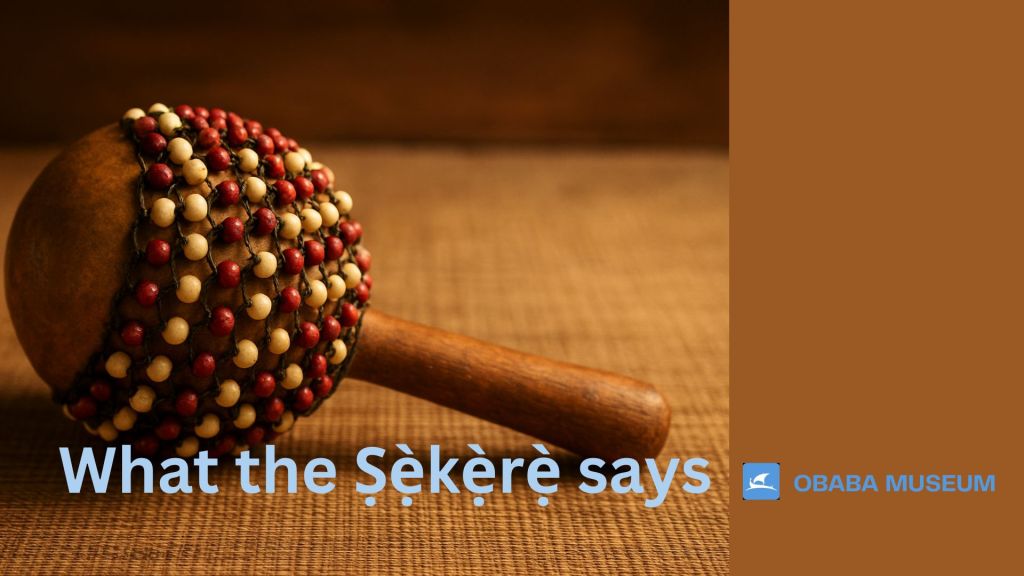
Across much of West Africa, the ṣẹ̀kẹ̀rẹ̀ is more than a musical instrument, it is a symbol of joy, community, and rhythm. Made from a dried gourd covered with beads or cowries, it’s one of those instruments that almost everyone recognises by sound. When you hear it, you know something good is happening.
Among the Yoruba people, the ṣẹ̀kẹ̀rẹ̀ is a staple in traditional music and ceremonies. It is rarely played in moments of sadness, such as funerals and definitely not during mourning, because it’s seen as a bringer of joy. Its rhythm is tied to celebration, thanksgiving, and togetherness. You’ll find it at weddings, naming ceremonies, festivals, and even in religious worship.
And this isn’t only in Yorubaland. Across Africa, there are instruments that look and sound like the sekere – in Ghana, it’s called axatse; in Senegal, chekere; and in some parts of East Africa, there are similar shakers made from gourds and seeds. However, they all share the same purpose: to keep rhythm and to keep people connected. The ṣẹ̀kẹ̀rẹ̀’s sound travels easily, crossing languages, borders, and emotions.
For me, the sound of the sekere brings back the village. I remember those mornings when my dad would take me along on his trips home. He was a generous man; everyone knew him for that. And most mornings started with music. You’d just hear the sound of the sekere from outside, women singing and laughing as they came around. In Igboland, they call them Umuada; in Yagbaland (where I hail from), the women would belong to an Egbe Obinrin (women’s group or club). But they often came as a group, celebrating, greeting, and, honestly, trying to make my dad “drop something.”
The sound filled the compound, warm, cheerful, and alive. It wasn’t just about the beats; it carried meaning. It said, ‘we’re here, life is good, let’s share it together’.
When I asked a friend what the sekere means to him, he said something that really stayed with me:
“The Yoruba have a saying that the sekere doesn’t go to a place of sadness, not to funerals or war. It’s an instrument of joy, peace, and celebration. The sekere brings melody and smiles to people’s faces. It’s often used at naming ceremonies and marriages, and even to encourage generosity. It lays the foundation for other instruments that rhythm that every other sound builds on. Without the sekere, the music feels incomplete.” – Adekunle
And that’s true. The sekere carries more than sound; it carries memory. It reminds us of what it means to live in rhythm with others, to share joy, to celebrate generosity, and to keep our traditions alive. For me, that sound will always mean home, community, laughter, and mornings when life felt simple and connected.
 Obaba Museum
Leave a comment