
The history of the Nigerian military could be traced back to the 19th century when British colonial forces first established a local presence in what is now Nigeria. In 1863, Lieutenant Glover of the Royal Navy took a significant step by selecting 18 individuals from the northern part of the country and organizing them into a local force known as the Glover Hausas. The primary responsibilities of these men who had just been freed from slavery included mounting punitive expeditions in the Lagos hinterland and protecting British trade routes in the Lagos region.
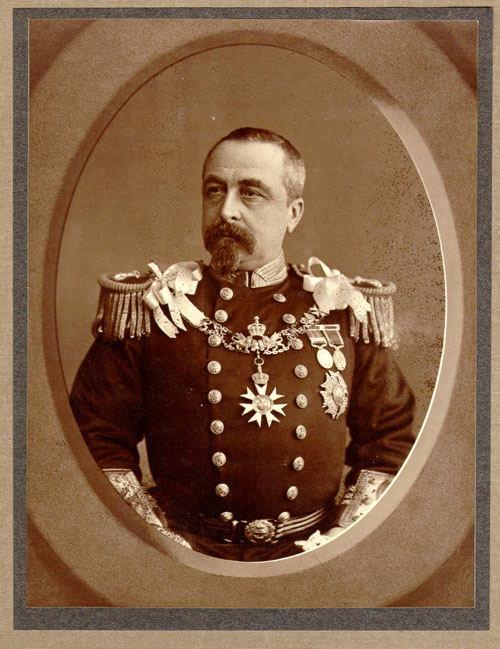
The force was essentially a paramilitary group with a dual role, serving both police and military functions. Two years later, in 1865, this local force was officially recognized and transformed into the Hausa Constabulary. As the name suggests, it continued to perform both policing and military duties under the governance of the Lagos colonial government. Subsequently, as part of a broader reorganization, the force’s name was changed to the Lagos Constabulary.
The formation of the West Africa Frontier Force (WAFF) in 1901 was a pivotal development, unifying various paramilitary units across British dependencies in West Africa. In Nigeria, this led to the emergence of two distinct regiments: the Northern Nigerian Regiment and the Southern Nigerian Regiment. The Southern Nigerian Regiment, under the leadership of Lieutenant C.H.P. Carter (1899-1901) and Colonel J. Wilcox (1900-1909), played a vital role in various expeditions during the annexation of Nigeria by Lord Lugard between 1901 and 1903. The amalgamation of Nigeria in 1914 necessitated the unification of the Northern and Southern Regiments, leading to the establishment of the Nigerian Regiments.
The Northern Nigerian Regiments were reorganized into what became known as the 1st and 2nd Battalions of the Nigerian Regiment, while the Southern Nigerian Regiment transformed into the 3rd and 4th Battalions of the Nigerian Regiments (NR). This consolidation aimed to create a unified military force for the entire nation, which was now under British colonial rule. As one would note, the military structure and organization were evolving in response to the changing political landscape and the needs of the colonial administration. This reorganization was a reflection of the broader administrative changes taking place during the colonial period. Additionally, it’s worth mentioning that the Mounted Infantry of the Northern Regiments underwent a transformation. After the Second World War, it transitioned into an ordinary Infantry Battalion, adapting to new roles and responsibilities.
Furthermore, a field artillery unit existed within the Northern Regiment, indicating the diversification of military capabilities and the ongoing efforts to modernize and adapt the Nigerian Regiments to meet various operational needs. These developments showcased the growing complexity and sophistication of the Nigerian military during the early to mid-20th century. The amalgamation and unification of regiments laid the foundation for a more integrated and nationally focused military force, setting the stage for further changes and evolution in the years to come.
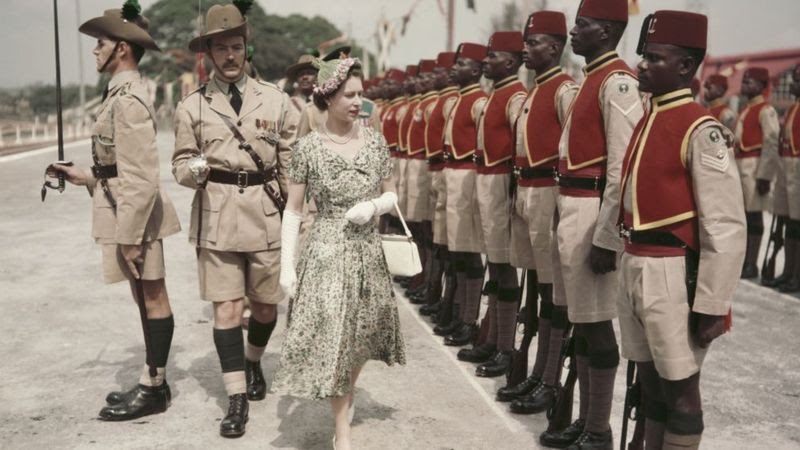
In 1956, a pivotal moment came with the visit of the newly crowned Queen Elizabeth of Britain. This visit prompted the renaming of the Nigerian Regiment to the Queen’s Own Nigerian Regiments (QONR), a gesture symbolizing the regiment’s connection to the British monarchy. Simultaneously, the West Africa Frontier Force (WAFF) underwent a significant restructuring. Each regional military force within the British West African colonies gained independence, marking a shift toward self-governance. The QONR, as part of Nigeria, was no exception. This restructuring led to the birth of the Nigerian Military Force (NMF), signifying Nigeria’s increasing control over its military affairs. It was a notable step toward autonomy in military governance.
On June 1st, 1958, another milestone was reached when the British Army Council in London relinquished control of the NMF to the Nigerian Government. This transfer of authority marked a significant stride toward Nigeria’s sovereignty over its armed forces. The year 1960 witnessed Nigeria’s attainment of independence from British colonial rule. In recognition of this historic achievement, the NMF was rebranded as the Royal Nigerian Army (RNA). This title acknowledged the British monarch’s continued ceremonial role as the head of state. However three years later, in 1963, Nigeria transitioned from a constitutional monarchy to a republic. Alongside this political shift, the RNA became the “Nigerian Army,” reflecting the nation’s republican status.
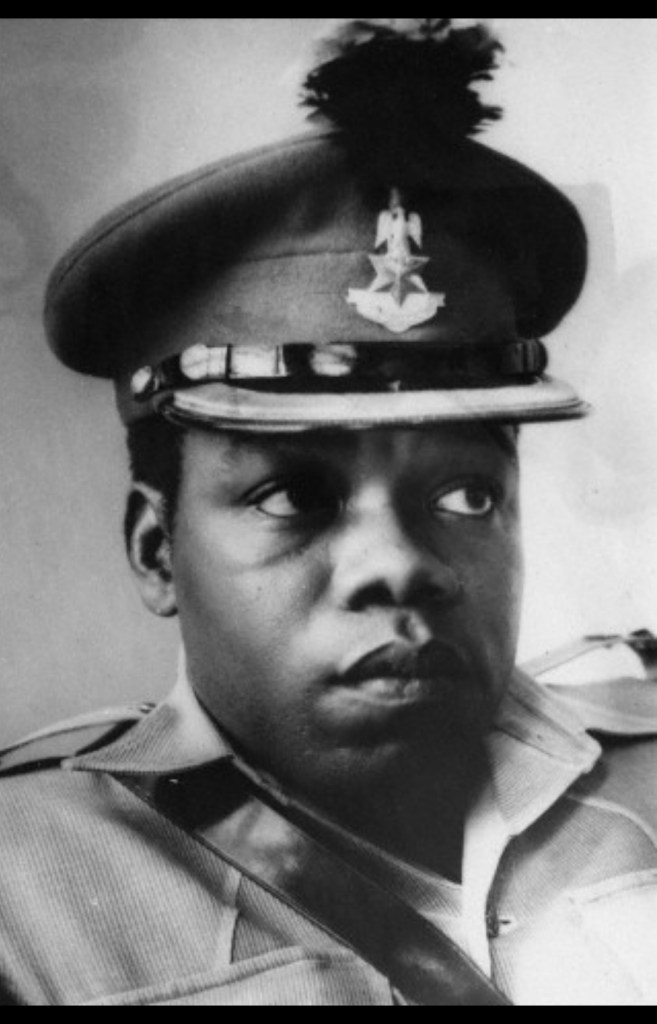
In this era of transformation, the Nigerian Army also made notable changes to its appearance. The traditional attire, rank structure, and instruments of the Royal West African Frontier Force (RWAFF) gave way to new ones. Most notably, the military adopted green khaki uniforms, emblematic of Nigeria’s commitment to forging its distinct identity on the global stage. These developments underscored the Nigerian military’s evolution from its colonial roots to an independent and nationally oriented force and this was presided by Lt. Col Odumegwu Ojukwu, the first indigenous Quarter-Master General of the Army. The changes in nomenclature, structure, and attire served as tangible markers of Nigeria’s growing sovereignty and the assertion of its unique identity in the world.
To appreciate the evolution of the Nigerian Armed Forces one must compare its colonial capabilities right from its inception with less than a Platoon to about 8 Divisions today. In essence, the Nigerian Army’s organizational journey embodies the nation’s transition from a colonial past to an independent and self-reliant future.
In the next episode we shall explain the organization of the Army explaining the composition of a division which will provide further insight into the military’s structure and capabilities as it continues to evolve to meet the nation’s defense needs and security challenges.
 Obaba Museum
Leave a comment