Thirty days hath September, April, June and November…
Why do some months have thirty days, others thirty one and one twenty nine days?
There used to be only ten months in a year and the first month of the year was March. A month was measured by how long it took to sight a full moon. This is exactly 29.5 days but it was counted as either 29 or 30 days.
So how’d they get their names? Like the days, these also have the myths to thank. At least the first four.
Did you know that Month was gotten from moon?
March - Mars, god of War 31 days
April - it is not definite. Probably Aphrodite or Aperio 30 days
May - Maia, goddess of fertility and growth.31 days
June - Juno, goddess of love and Marriage 30 days
July - originally Sextilis, changed after the death of Julius Caesar, 31 days
August - originally Quintilis, changed after the death of Augustus Caesar, 30 days
Septembre - seven 30 days
October - eight, 31 days
November - nine, 30 days
December - ten, 30 days
This were the original 10 months, six of them 30 days and four of them 31 days, giving us 304 days in a year. This was problematic because the main aim why the months and subsequently calendars were created was defeated.
Months were named and created in order to know the seasons for agriculture. To know the months to plant and when not to.
With this error in the number of days, the seasons usually fell out of sync and sometimes days had to be added in a process known as intercalation.
Our year is a Solar cycle that happens every 365 days, 5 hours, 48 minutes and 42 seconds. our months are lunar cycles that happens every 29.5 days.
With this 62 day difference two new months were added to balance up. January after the god, Janus. February, named after the Februalla festival, a feast of purification in some places and for promoting health and fertility in other places. These were the last months of the year.
January had 31 days and February had 29 days. All the months with 30 days were reduced to 29 days because odd numbers were considered lucky numbers in those days. February had lesser days because since it’s the month of purification, the evil spirits are given lesser time on the earth that way, consequently, sometimes it would have as little as 23 days based on this. Thus gave 355 day years
It was later on that 2 days were added to the months with 29 to make them 31 and give us 365 days.
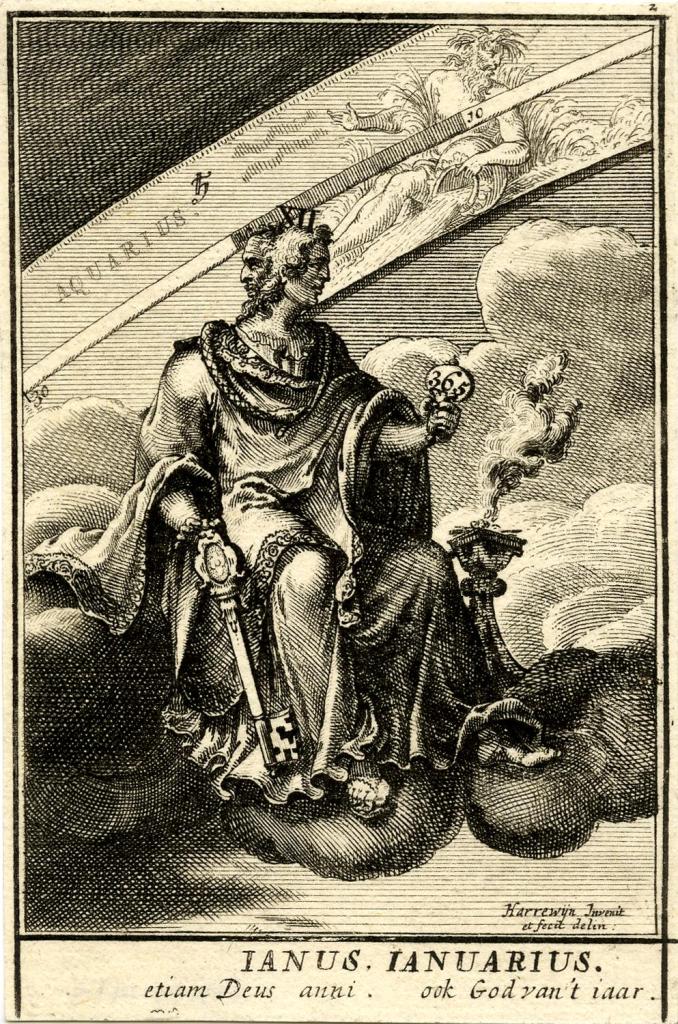
Remember January and February were the end of the religious year, later on January became the start of the Civil year. This was fitting since Janus is seen as the god of doorways having a face that could look both forward and backward.
This however didn’t catch on all over the world. Some European countries still started their years on March 25 coinciding with Anunciation Day.
It was in 1752 that all of Europe and their colonies recognized January 1st as the start of the year. We’ll learn know about calendars and years in a subsequent post.
Which ancient city’s calendars had 10 months and which one had occasional 13 months?
The answer to this might be in the next part of the series.
 Obaba Museum
Leave a comment