60 seconds make 1 minute
60 minutes make 1 hour
24 hours make 1 day
7 days make 1 week
4+ weeks make 1 month.
30(1) days make 1 month
12 months make 1 year
365(6) days make 1 year
That list up there, you’ve believed it your whole life, you’ve designed your future, goals, accomplishments and everything in your life around it. Aren’t you curious how it really came to be? What set the standard for this timeline?
What makes tik a second and tok another second, what makes day 12 hours and night 12 hours also? In the next series of post, we’ll discuss Time in its entirety. How it came to be, how man started calculating the passage of Time, months, years and seasons; which set the stage for the clocks and calendar that we have today.
If you asked twenty people the definition of time, the probability they’ll give twenty different answers is very high, but one thing is certain, time is a continuous passage with respect to event(s) and happenings. An astronomer might argue this.
Time wasn’t always as important to man as the days and seasons. The construct was developed to ensure uniformity in gatherings. The first time piece was our circadian rhythm. We have come to relegate this age long and most accurate timekeeper to the back seat, with clocks driving our lives. Humans used to eat when they felt hungry, sleep when they were dizzy, play when they feel like it, rest when they feel tired (don’t work only when you feel like it though except you’re ready to starve).
Where does the word hour come from?
This circadian rhythm controlled man’s routine but, if two people needed to meet or a community needed to meet at what time would it be slated? After person A’s meal time or after person B’s rest time? While there were similarities in the sleep, eat and rest routines of most people there wasn’t a fixed time for them (there still aren’t fixed times for these activities except in regimented institutions like boarding schools, military and the paramilitary).
So while Mr.A might wake up at the first break of dawn and eat his breakfast just after, Mr. B might wake up before sunrise and eat a late brunch. To curtail this the first unit of time was the Sun. The events were planned based on the location of the sun at certain places. We meet you when the sun is over the thatched house at the end of the village or We end our meeting at the first sighting of the moon. I just made a speculation about the moon, history doesn’t state that.
While this worked for a while, it still wasn’t definite as there could be discrepancies in the sighting depending on where you were. Babylonian astrologers provided a solution. The 12 hour day was chosen for it’s Zodiac convenience (it is divisible by 2, 3, 4 and 6).
It is noted that in some places during the middle ages, their days originally had 6 hours daytime and 6 hours night time – how they calculated that I do not know.
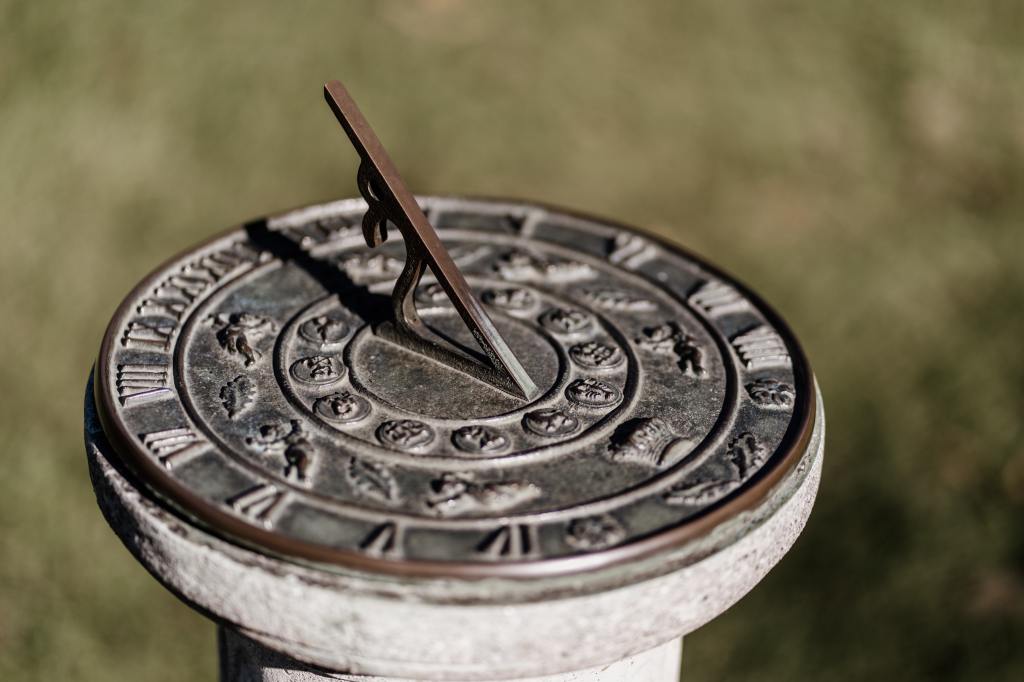
The Night time was usually measured with a Clepsydra (a water clock). This was devised from a Sundial. A Sundial had 12 marks and each mark represented an hour.

Other ways of calculating time without devices included;
- calculating the distance between your hands and the sun on the horizon.
- Using shadows of people or things.
- Daymark method (this was peculiar to Scandinavians due to their position on the globe)
- Using the stars at night.
We would teach how to check time (even to the minute) without a clock during the day and at night in a subsequent post.
The Scandinavians used the daymark method because during equinoxes and solstices, they could have night-time sunlight.
Our 12 hour system was picked for Zodiac convenience and the fact that the duodecimal (base 12) system was also being used then as opposed to out present decimal (base 10) system.
The minutes and seconds on the other hand – pun intended – were also based on a counting system, that is the sexagesimal (base 60). Let’s clap for the Babylonians once again here.
The person seen as the father of Geography, Erasthosthenes (Greek mathematician, Polymath and chief librarian at the Library of Alexandria) was the man who popularized the method when he divided a circle into sixty parts while drawing the latitudinal lines on a map.
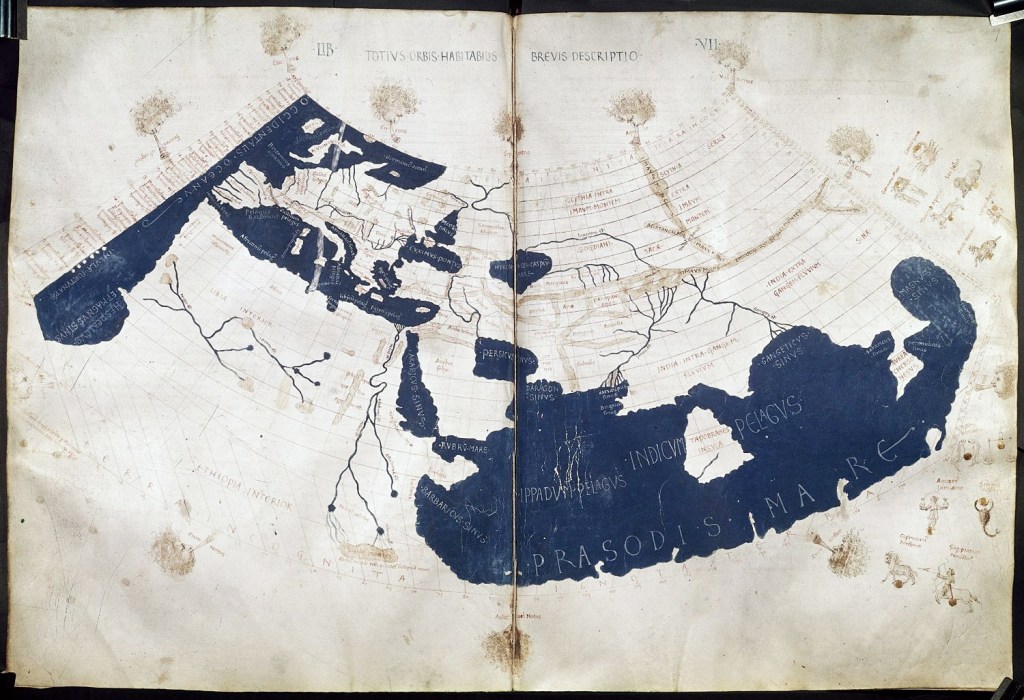
Hipparcus, another Greek then added sixty longitudinal lines. Each part of these lines were now divided into sixty parts each. These third divisions us how we got our minutes. Each minute was now further divided into sixty parts and we have our seconds. tik tok.
So let’s all give a standing ovation to the Babylonians, Egyptians and Greeks for helping us with the metrics of measuring time which now plagues our lives today. Follow this series to know the origin of days, weeks, months and years.
 Obaba Museum
Leave a comment