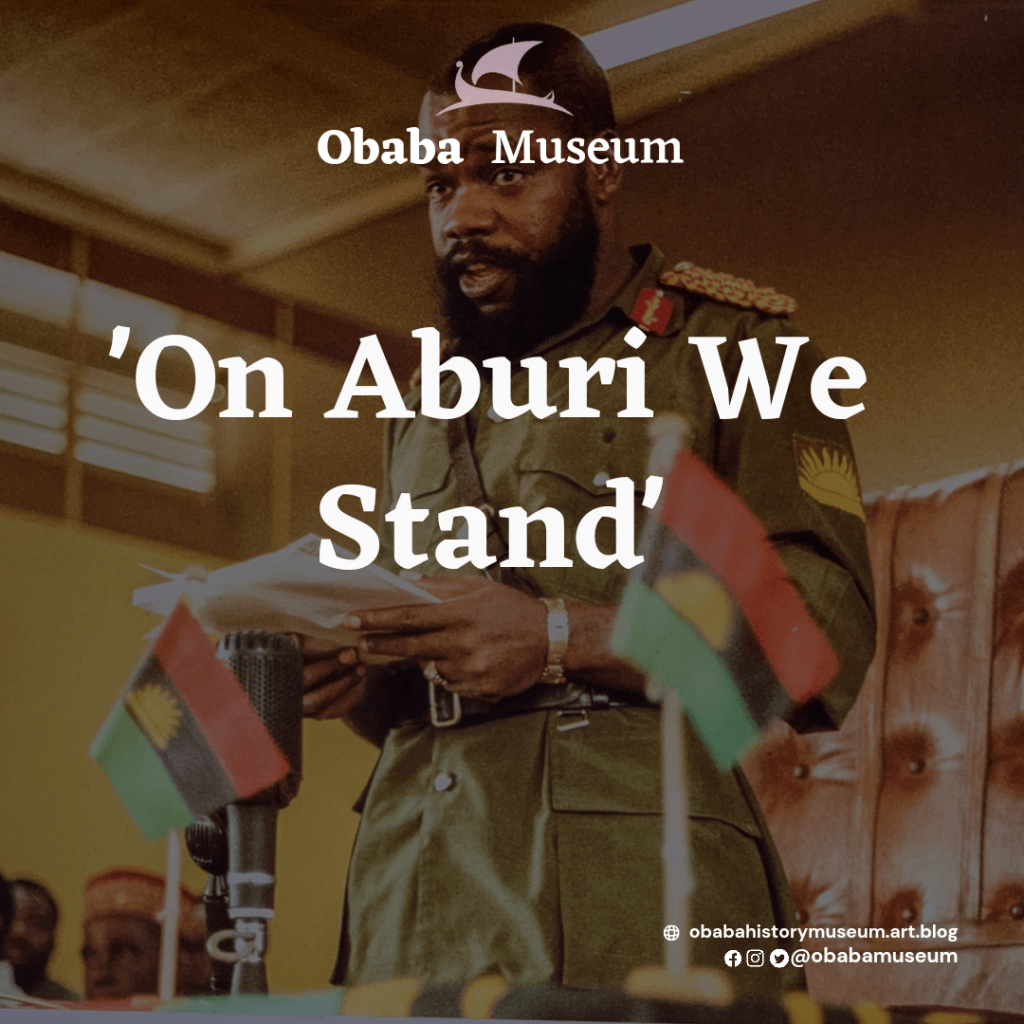
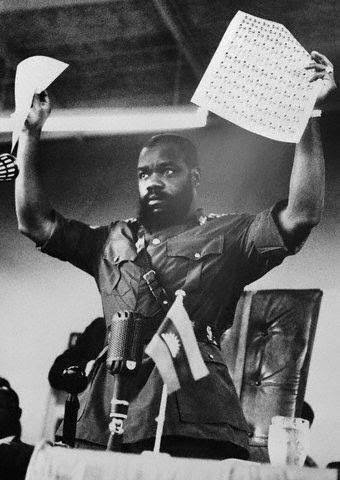
The phrase ‘On Aburi We Stand’ is very common amongst scholars and students of the Nigerian Civil War historiography. This phrase is often cited by supporters of the Biafran nation as it implied that Ojukwu had done a great job at Aburi, especially with the resolutions reached in the Accord. Gowon’s betrayal of the contents of the agreement could be regarded as the immediate cause of the war. By so doing, he demonstrated that, indeed, the fears of Ojukwu and the Igbo nation were genuine. Before we discuss the standoff that led to the phrase ‘On Aburi We Stand’, let’s quickly take a look at the resolutions reached at Aburi and how Gowon went against them.
In the previous article, I made it clear that the Aburi Peace Conference was a meeting of the Supreme Military Council of Nigeria. Below is the official minute of the resolutions reached.
FINAL ABURI COMMUNIQUE
The Supreme Military Council of Nigeria resumed its meeting in Ghana on the 5th
of January, and continued and concluded discussion of the remaining subjects on
the Agenda. The Council reached agreement on all the items.
On the powers and functions of the Federal Military Government, the Council
reaffirmed its belief in the workability of the existing institutions subject to
necessary safeguards.
Other matters on which agreements were reached included the following:
• Re-organisation, administration and control of the Army
• Appointments and promotions to the senior ranks in the Armed Forces, the Police, Diplomatic and Consular Services as well as appointments to super-scale
posts in the Federal Civil Service and the equivalent posts in the Federal Statutory
Corporations. On the question of displaced persons, the Supreme Military Council
agreed to set up a committee to look into the problems of rehabilitation and
recovery of property. In this connection, the Military Governor of the East assured
the Council that the order that non-Easterners should leave the Eastern Region would be reviewed with a view to its being lifted as soon as practicable.
Agreement was also reached that the staff and employees of governments and
statutory corporations who have had to leave their posts as a result of recent
disturbances in the country should continue to be paid their full salaries up to the
end of March 31, 1967, provided they have not found alternative employment.
The Council agreed that the Ad Hoc Committee on the constitutional future of the country should be resumed as soon as practicable and that the unanimous
recommendations of the committee in September 1966 will be considered by the
Supreme Military Council at a later meeting.
The Council unanimously agreed that future meetings of the Council should be
held in Nigeria at a venue to be announced later.
The entire members of the Supreme Military Council expressed profound regret for the bloodshed, which has engulfed the country in the past year and avow to do all
in their power to ensure there is no recurrence of the unhappy situation.
The members of the Supreme Military Council place on record their profound
appreciation and gratitude for the constructive initiative and assistance rendered by the Chairman of the National Liberation Council, the Government and people of Ghana.
Statement by the Supreme Council on the Reorganisation of the Army,
and the Approval of Senior Appointments, and its Declaration on the use of force
I. The Supreme Military Council now meeting in Ghana has agreed on the
following reorganisation of the Army:
• The Army is to be governed by the Supreme Military Council the Chairman of
which will be known as Commander-in-Chief and Head of the Federal Military
Government.
• There will be a Military Headquarters on which the Regions will be equally
represented and which will be headed by a Chief of Staff.
• In each Region, there shall be an Area Command under the charge of an Area
Commander and corresponding with the existing Regions.
• All matters of policy, including appointments and promotions of persons in executive posts in the Armed Forces and Police shall be dealt with by the Supreme
Military Council.
• During the period of the Military Government, Military Governors will have
control over their Area Commands in matters of internal security. The following
appointments must be approved by the Supreme Military
Council:
• Diplomatic and Consular posts.
• Senior posts in the Armed Forces and the Police.
• Super-scale Federal Civil Service and Federal Corporation posts.
• Any decision affecting the whole country must be determined by the Supreme
Military Council. Where a meeting is not possible such a matter must be referred
to Military Governors for comment and concurrence.
II. We the members of the
Supreme Military Council of Nigeria meeting at Accra on 4th day of January, 1967,
hereby solemnly and unequivocally: DECLARE that we renounce the use of force as a means of settling the present crisis in Nigeria, and hold ourselves in honour
bound by this declaration. REAFFIRM our faith in discussions and negotiation as
the only peaceful way of resolving the Nigerian crisis. AGREE to exchange
information on the quantity of arms and ammunition in each unit of the Army in
each Region, and also on the quantity of new arms and ammunition in stock.
If you take the time to read the minutes of the meeting, you will notice that Ojukwu was very prepared. He spoke at length each time he had the opportunity to speak and spoke quite intelligently. Obviously only himself knew the constitutional implications of the document they had signed. When it became clear that the Aburi Accord was a major victory for Ojukwu and the Eastern province, Gowon decided to abandon the agreement because, according to him, Ojukwu
went to Aburi prepared while others were not (yes, Gowon actually said that).
In response to Gowon, Lt. Colonel Odumegwu Ojukwu, Military Governor of the Eastern Region of Nigeria, declared that the region would no longer recognise Lt. Colonel Yakubu Gowon as Head of the Federal Military Government on March 2, 1967. Lt. Colonel Gowon assumed full powers as Commander-in-Chief of the armed forces and head of the military government on May 27, 1967. Lt. Colonel Gowon proclaimed a state-of-emergency on May 28, 1967. Lt. Colonel Odumegwu Ojukwu, Military Governor of the Eastern Region, declared the independence of the Republic of Biafra in Southern Nigeria on May 30, 1967. This began the 30-month long Civil War popularly known as the Biafran war.
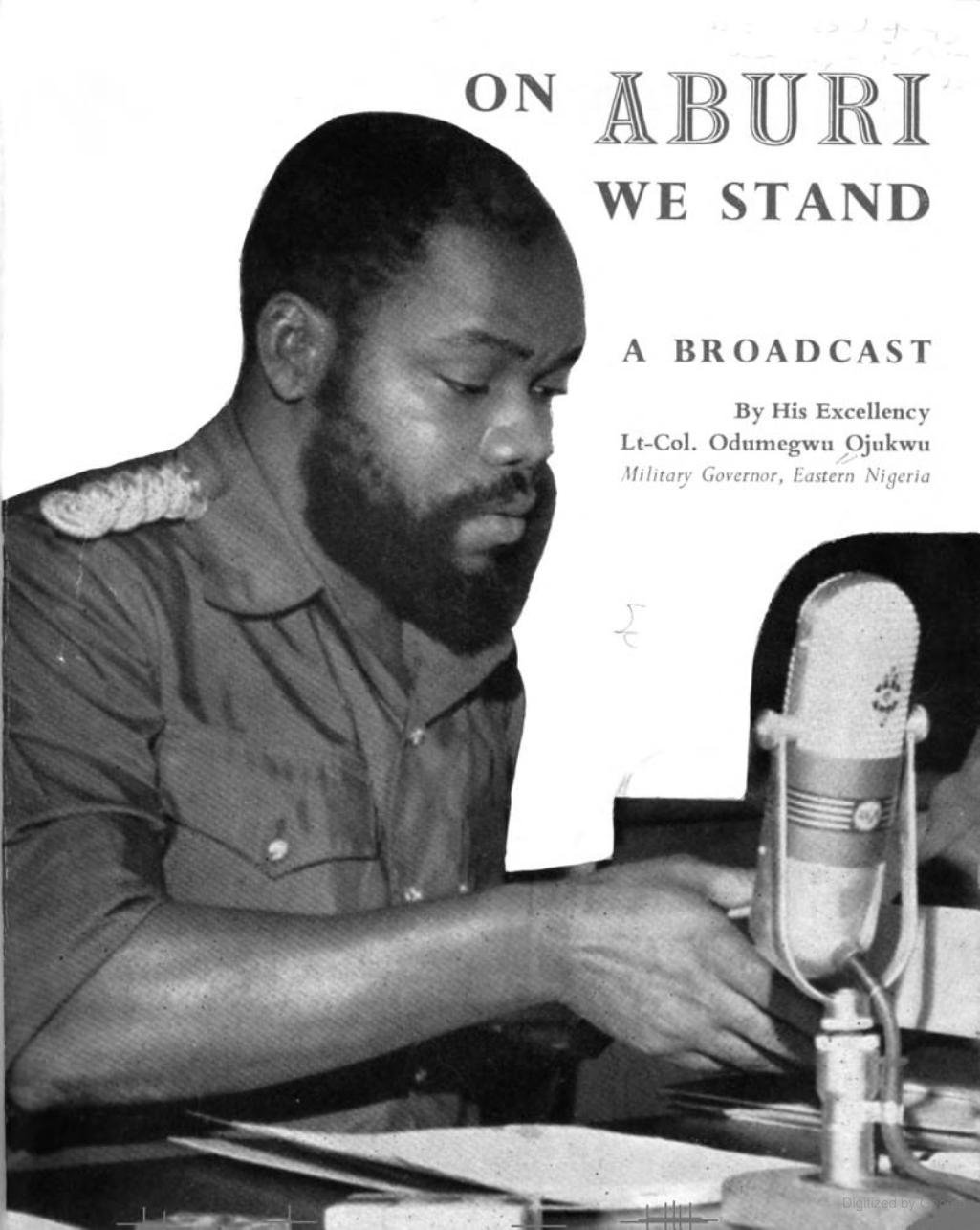

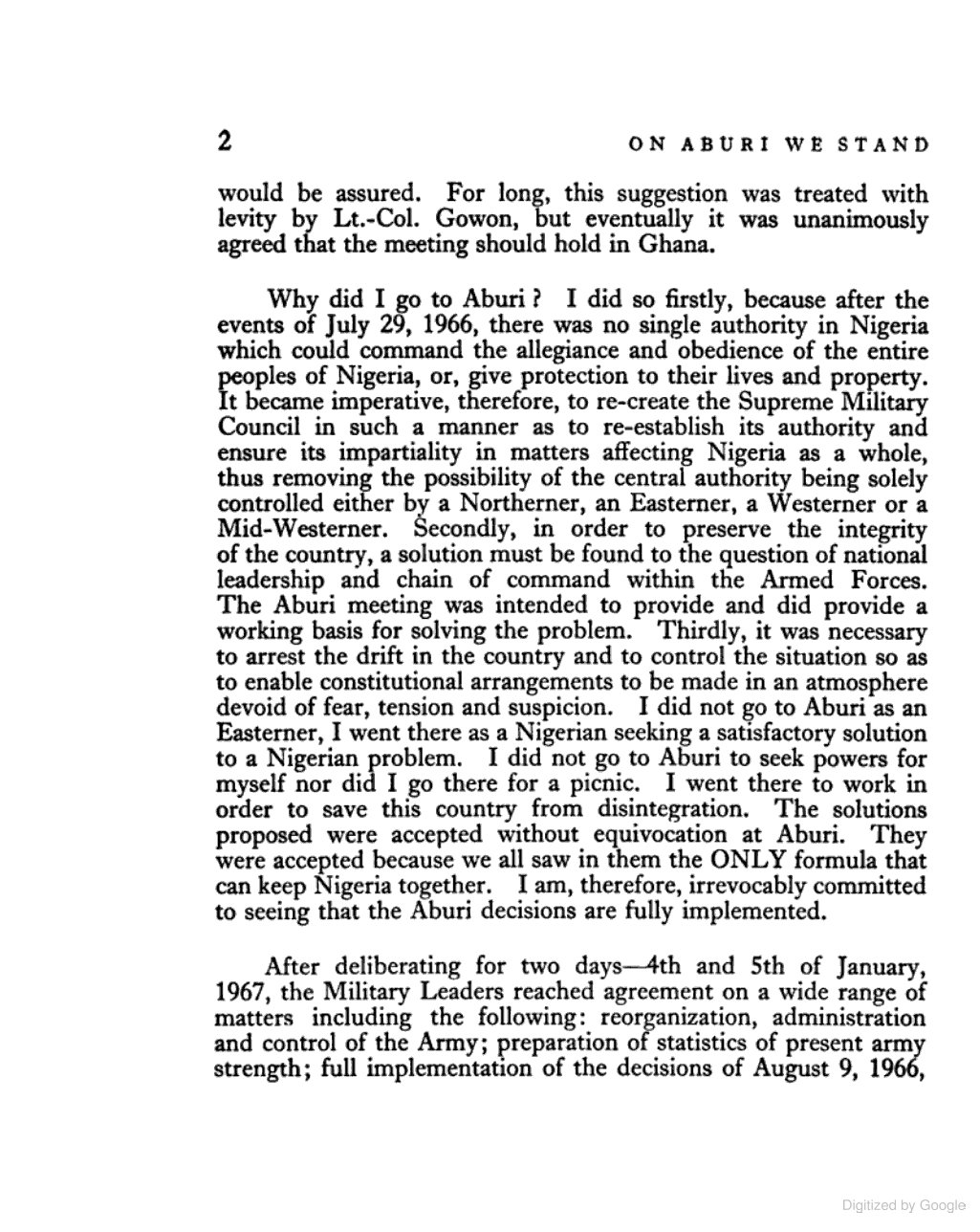
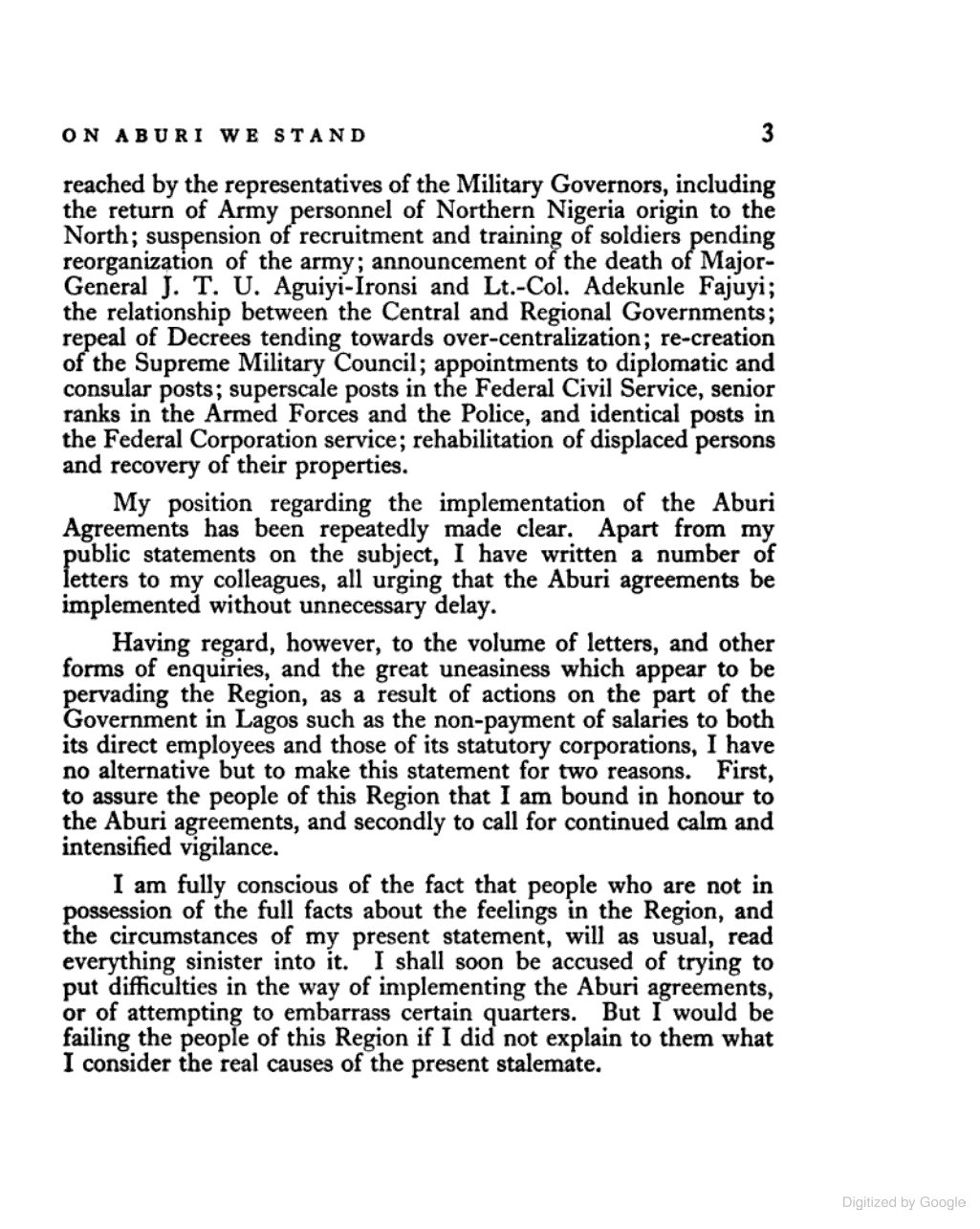
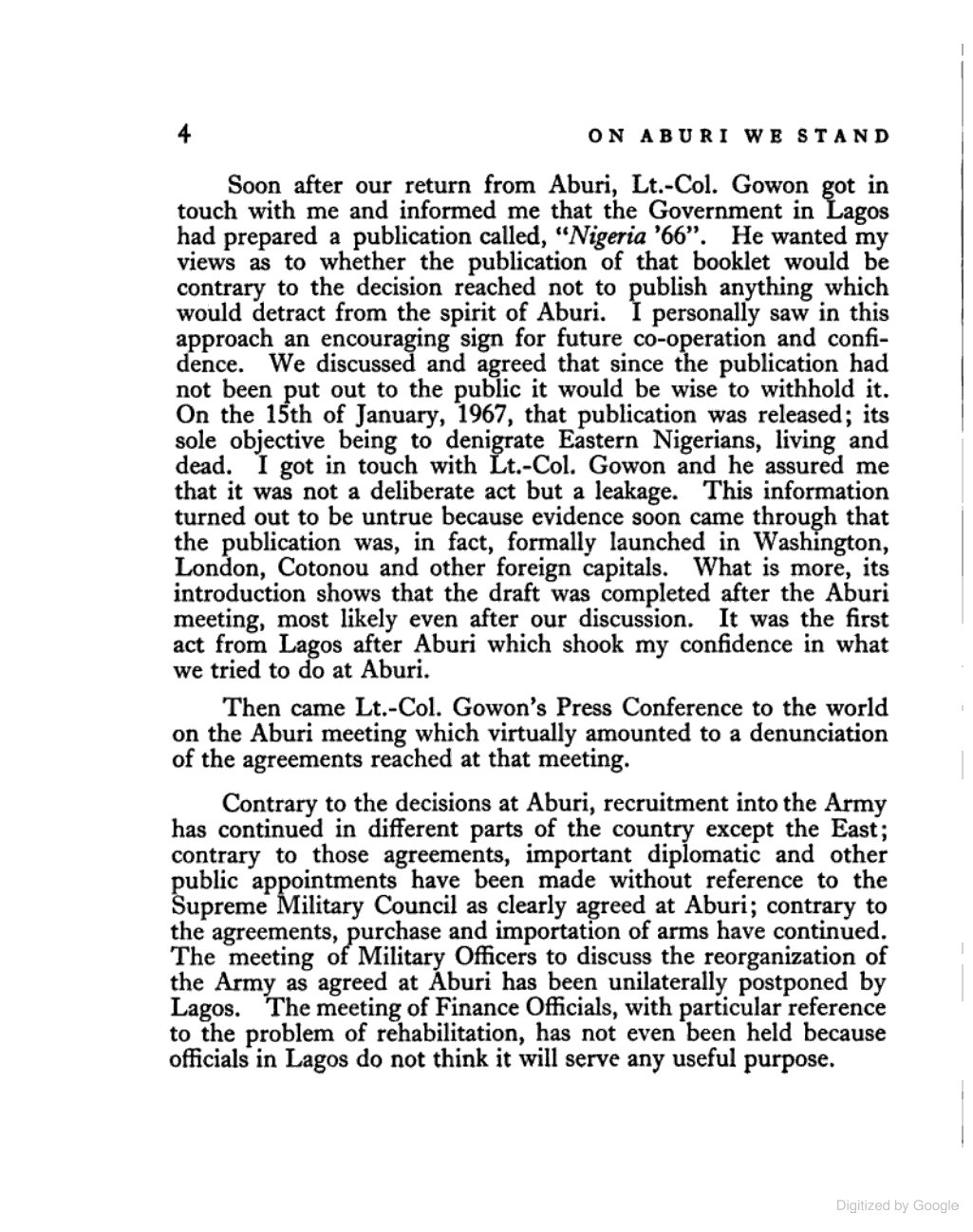
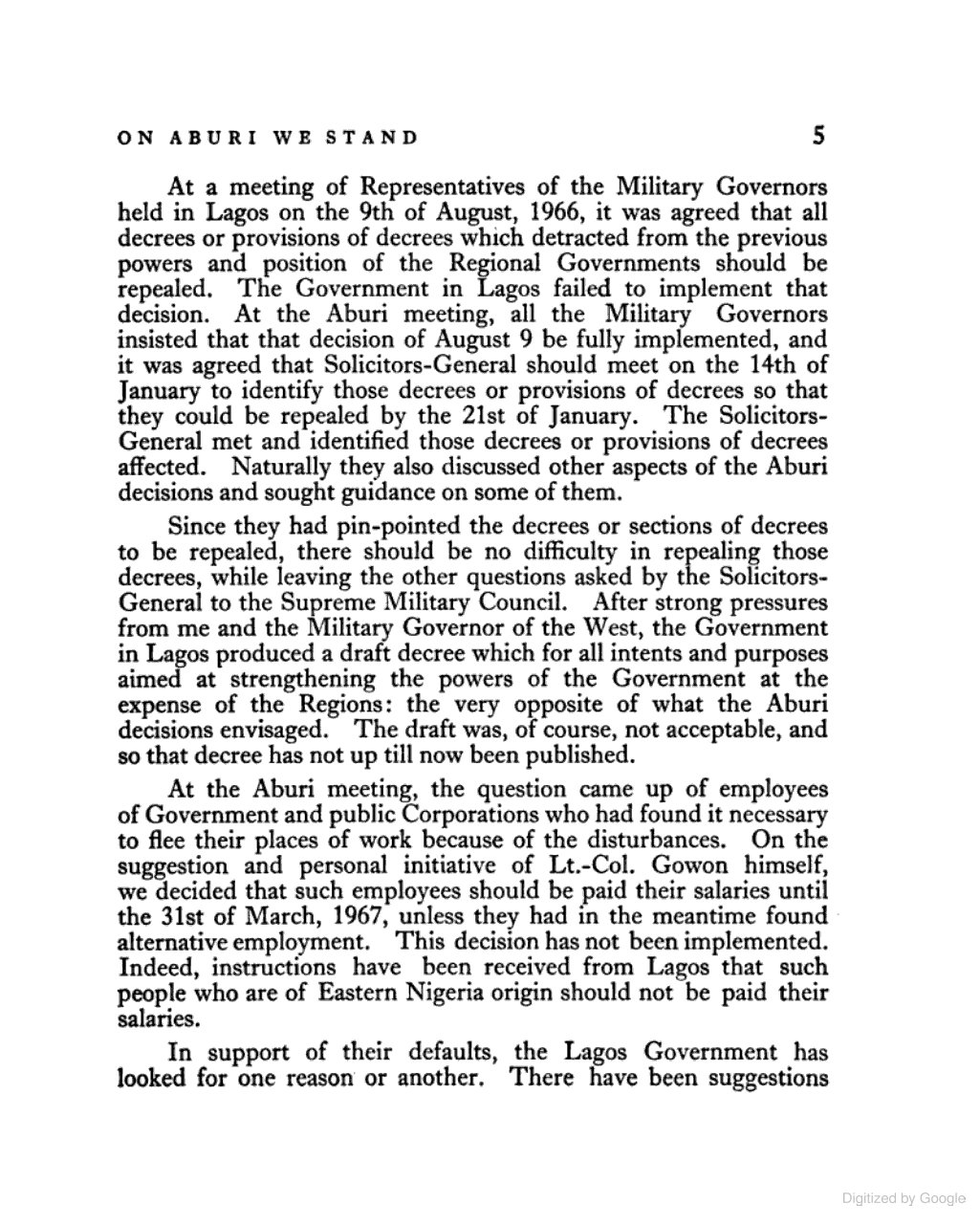
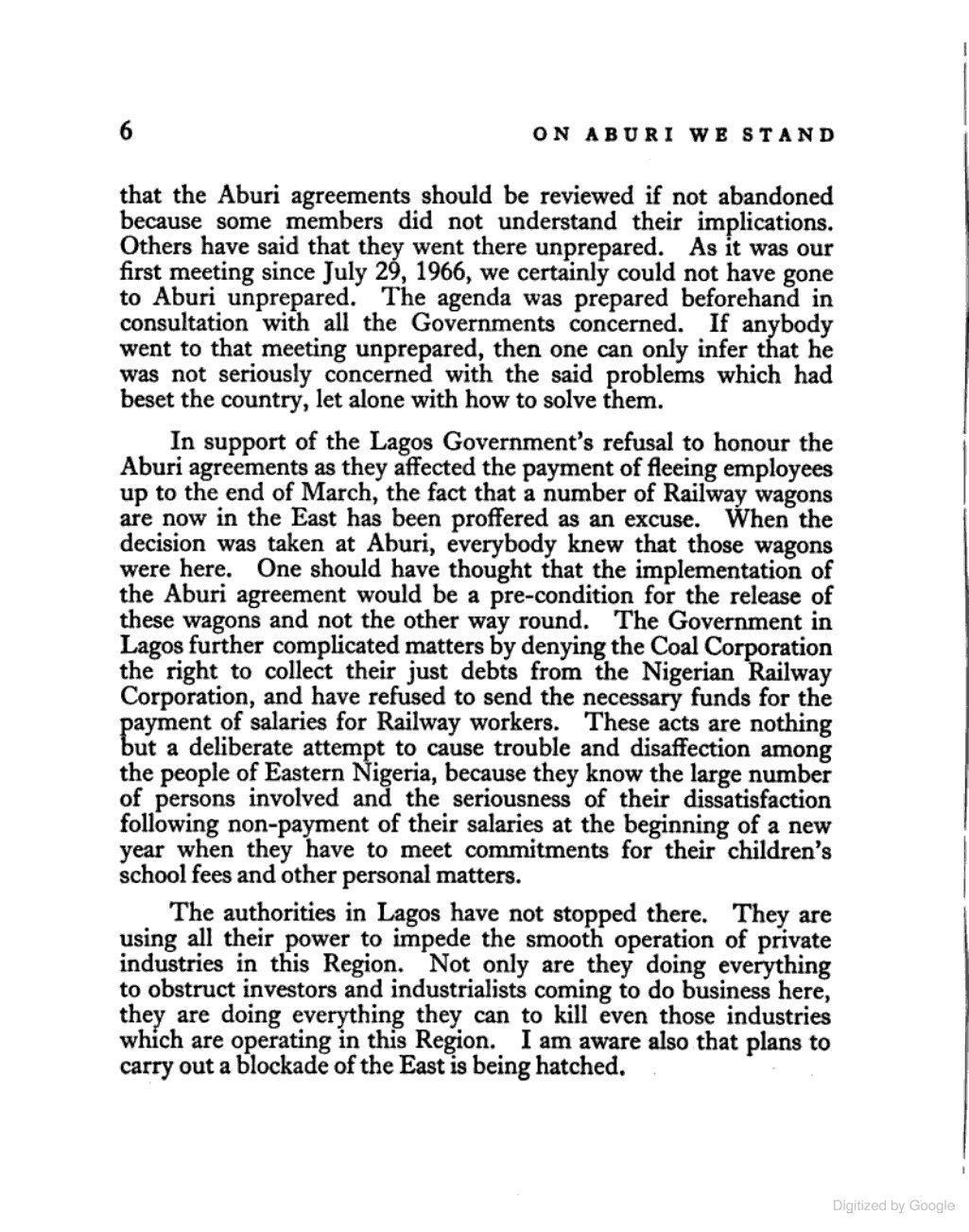
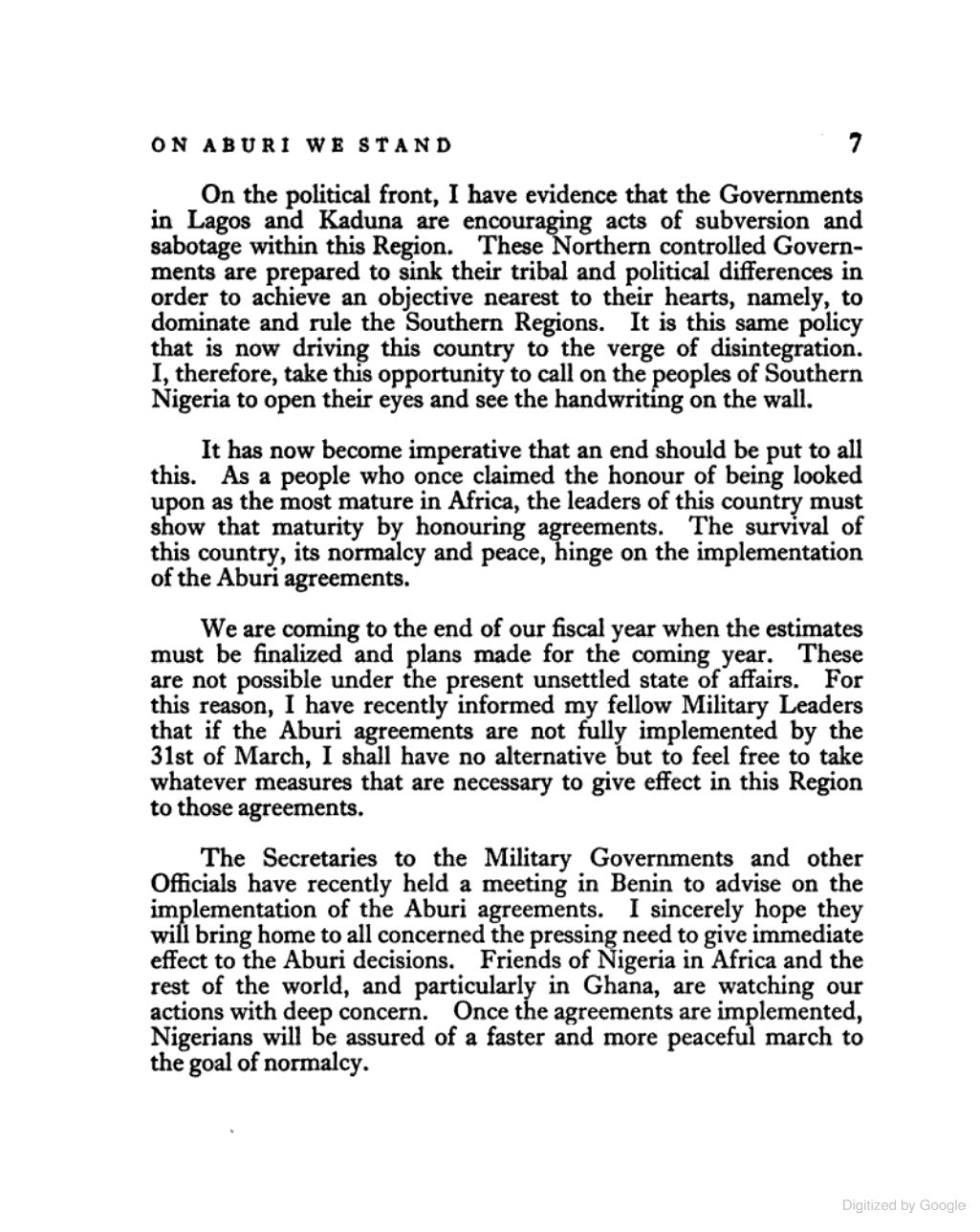
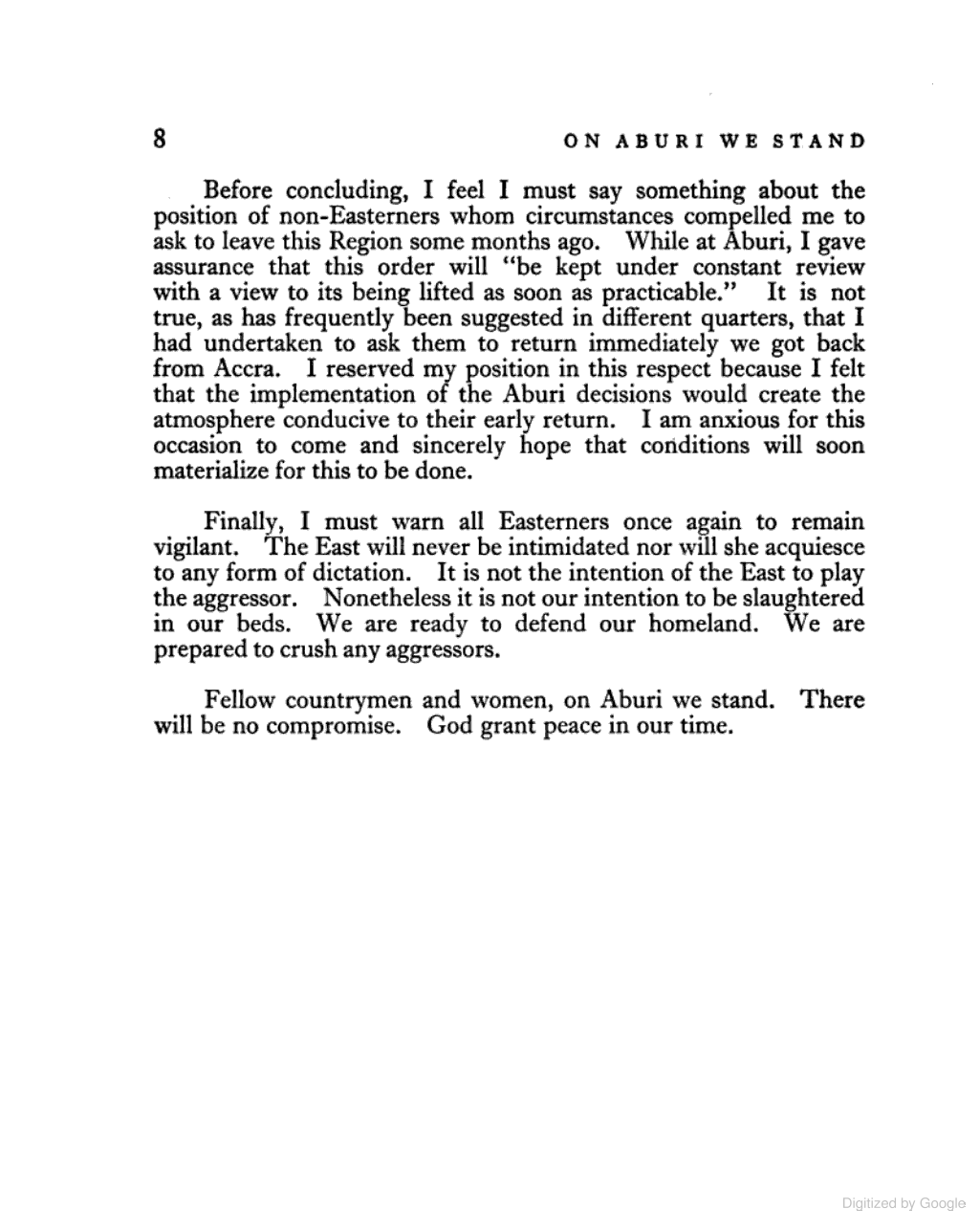
The phrase ‘On Aburi We Stand’, was the title of Ojukwu’s broadcast delivered on the 27th of February, 1967 (a month after the signing of the Accord). Thanks for reading throug&h. If you enjoyed this piece, kindly give us a like and comment below. Do have a lovely day.

 Obaba Museum
Leave a comment