“Not through speeches and majority decisions will the great questions of the day be decided—that was the great mistake of 1848 and 1849—but by iron and blood (Eisen und Blut).”
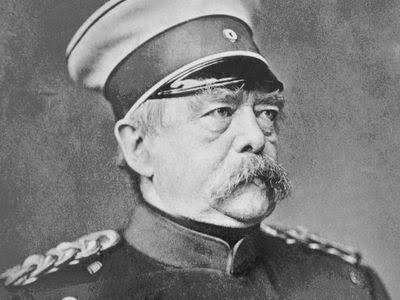
Otto Von Bismarck( September 1862)
In a bid to foster the unification of Germany, German Tactician and diplomat Otto Von Bismarck made this statement after he had assumed the office of minister president and Foreign Minister of Germany.
Whenever military power or force is being suggested in a parliament, this statement is often cited. In today’s post, we want to explore that statement and see how much development are really achieved – or like the Chancellor said ‘questions’ are really answered- by wars.
According to New York Times, humans have only been at peace for 8% of recorded history. With wars being so common, we’ll only be citing three events of wars for this post; the two world wars and the Nigerian civil war.
While this post doesn’t seek to glorify wars or trivialize the adverse effects on society, It aims to show that they are a necessary evil and as far as man stays on earth would most likely continue to occur.
The first war we will be using as a case study is the great war otherwise known as world war 1. This war was started as a result of brewing tensions between various European countries. The assassination of the Austrian Archduke and his wife by a Bosnian Serb could be seen as the official starter to the war. This war was named ‘The Great War’ as it was the war involving the most amount of nationalities known to man at that time.
As a result of this war, the map of Europe was changed forever. New countries, boundaries and territories were appeared. There was also quite a lot of development in science and even greater advancement in technology. Some of the changes include; tanks, aerial combat and traffic control, chemical and biological weapons, mobile X-Ray machines and many more in contrast to the traditional warfare characterized by swords, muskets, calvary and so on.
This was the war that also saw the declining influence of the British Empire as a world power and the birth of the United States. After the war, more people saw life as fleeting, hence, consumerism increased paving the way for more advertising agencies and research into consumer psychology.
Prior to the war, people were quite conservative and suspicious of technological advancement. However the war placed high urgency and necessity for rapid innovation in science and technology. The researches and technological developments made during the war allowed for a wider acceptance of innovations like KDKA the first commercial radio broadcast was now widely accepted.
The idea of daylight saving time is one interesting concept that became prominent and popularized by German soldiers who were able to increase military efficiency by saving more time.
The Second World War was even more popular than the first and wreaked more hovoc in Europe. In fact by the end of the war in 1945, the economy of Europe was in shambles. As a consequence Colonial rule could no longer be sustained, hence, many Asian and African countries became independent.
Despite the devastation in Europe, the Second World War brought even more Technological advancements than the first. Some of these were the foundations for modern day computers and mobile phone network. Among them are the Enigma machine, The Tunny, and the Lorenz Cypher which were developed by German engineers to share tactical information in codes. The Bombe, Turingery and Collosus were counter devices built by the British to decode and gain access to this intercepted German messages. The first officially recognized computer -The ENIAC- was also built for the war but wasn’t used as the war ended before it was fully developed. However it was used during the American- Vietnamese war.
In medicine, the world witnessed novel developments in vaccines and medication, some of which were the mass production and integration of Penicillin into medicine, utilization of blood plasma for medication in the major theatres of war.
In a bid to increase devastation and strike force of the military, various scientists were sponsored to carry out research on possible inventions such as Jet Engines, Controlled Nuclear Reactions (by Enrico Fermi while working on the atomic bomb),etc. The war also inadvertently gave birth to what would become known as Silicon Valley by two war time electrical engineers, Hewlett and Packard who subsequently established the the HP company. America’s role in the war also solidified her position as a new world power with the Soviet union also becoming a World Power.
The rise of both powers sparked mutual suspicion and competition which still characterise the America and Russia diplomacy today. Both nations have an advanced military and large stockpiles of nuclear weapons even as we speak today.
Industrially, the wartime period had the least unemployment rate as there were quite a ton of jobs. Don’t forget that this was a period of innovation in all fields due to the fact that it was in a bid to survive. In war situations, it could be the difference between life and death.
In Peace Keeping, the world learnt great lessons from the failures of The League of Nations. The United Nations succeeded the League which was not effective enough to prevent a second war. The European Union (firstly named European Coal and Steel community then the European Economics Community) was also formed to allow for an effective Balance of Power in Europe.
Another case study would be the Nigerian Civil War which began in 1967 and ended by January 1970. The war portrayed the speed with which a race could develop in wartime especially when it had more to lose from defeat. The Igbo people of Nigeria were one of the major players in this war and though they lost the war, they recorded laudable developments during that period. The knowledge and methods learnt then are still being applied and built upon not just in South-easterned Nigeria but even in Lagos, Nigeria’s major economic hub. This makes them one of the most innovative and industrially advanced tribe in Nigeria.
“Anyone who has ever looked into the glazed eyes of a soldier dying on the battlefield will think hard before starting a war.”
Otto Von Bismarck.
While I don’t agree with war, seeing that much of human existence has been plagued by it, I would say that it is still a necessary evil for human development. However, it can also be seen as a great way of ‘rebooting’ a country or even the world. Permit me to use this allusion for war; It is like a technological device or system which has been overloaded, working non-stop for a period of time then it shuts down unexpectedly or it freezes and has to be forcefully shutdown while multiple files are open and running. A lot of files, documents and programs would be closed and lost but when the system restarts, you can be assured that it would work better than it had before it was shutdown.
Like the system above, the outbreak of a war, be it accidentally or intentionally, is necessary as a reset for human systems as it closes down obsolete ones and opens up new ones. Sadly, a lot of lives, places and systems would be lost, however humans haven’t found a way to reset their structures and progress without it.


 Obaba Museum
Leave a comment