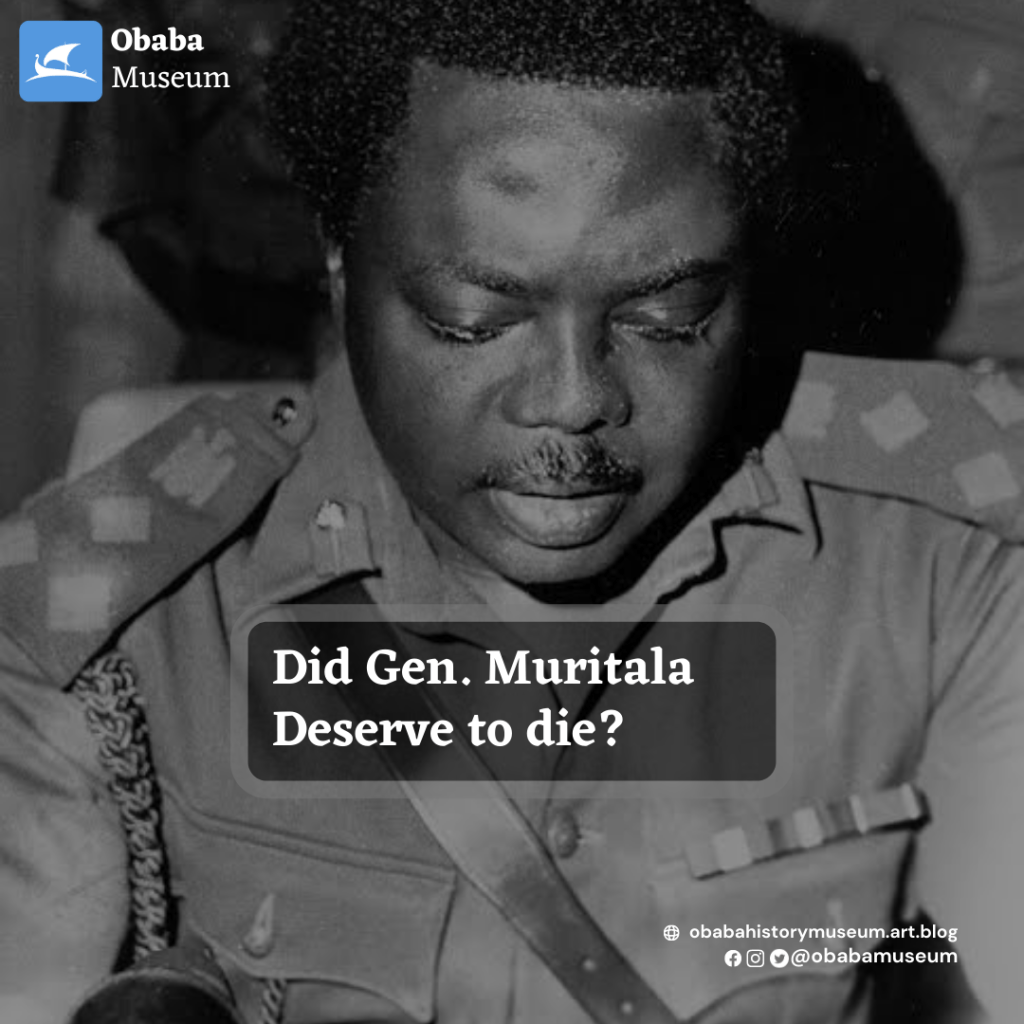
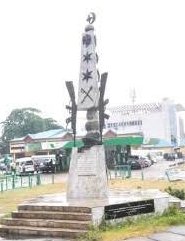
On the 13th of February 1976 (Forty six years ago) Nigeria’s Third military Head of State was assassinated on his way to work. It was a Friday morning just a day to valentine. He was without adequate security detail and was attacked while stuck in Lagos traffic. Today a national monument is erected at the exact spot where the General was shot. For those really familiar with Lagos, the small roundabout facing the old Federal Secretariat in Obalende, Lagos, circles a massive structure. This monument designed in the form of a military epaulette bears the rank of a four star general with two rifles below and the Islamic crescent above. This massive structure is called a cenotaph, commissioned over two decades ago at the spot of the gruesome act, to commemorate his assassination.
During his regime Nigeria presided over a period of rampant economic prosperity. He was one of the most charismatic figures in Post Civil War Nigeria; he was promoted to the rank of brigadier general in 1971, aged 33, becoming one of the youngest generals in Nigeria. In the coup d’état that brought him to power on July 29th 1975, he introduced the phrases ‘Fellow Nigerians’ and ‘with immediate effect’ to the national lexicon. Subsequent military coup address would be laced with these flowery lexicons.
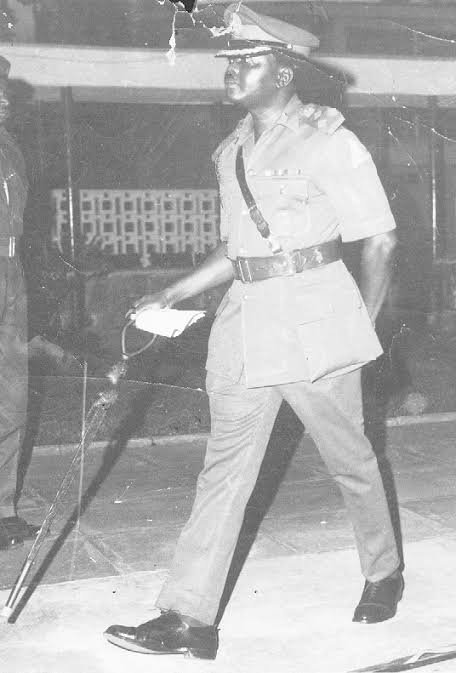
In a short time, Muritala Muhammed’s policies won him broad popular support, and his decisiveness gave him the status of a folk hero. He was in fact the most widely celebrated Military Head of State among the common man in Nigeria. At the same time, his regime transitioned from being authoritarian into consensus decision-making with himself as the leader of a military triumvirate, alongside Generals Olusegun Obasanjo (the Chief of Staff Supreme Headquarters) and Theophilus Danjuma (Chief of Army Staff). The dictatorship softened and Muritala unveiled plans for the demilitarization of politics.
On October 1, 1978, two years after his death, he was declared a national hero alongside Alvan Ikoku, Sir Tafawa Balewa and Sir Herbert Macaulay. His portrait adorned a new twenty naira note introduced by his successor, Gen. Olusegun Obasanjo.
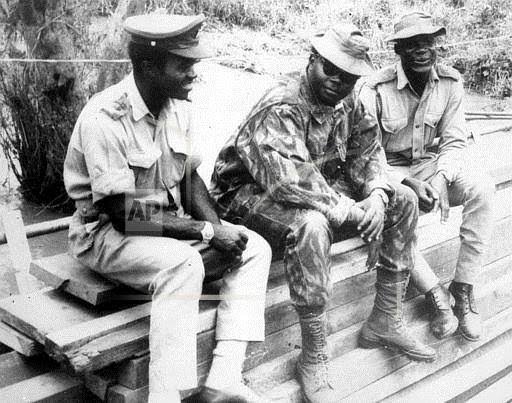
Muritala’s revolutionary personality is usually a topic for debate especially amongst the Igbo ethnicity, let me explain. Many Nigerians know him for his role in active leadership however there are few dark secrets you never got to know about him. One is his involvement in the Counter coup of July 29, 1966 alongside Theophilus Danjuma and other northern officers. The Federal troops under his command thundered into Asaba on the 5th of October 1967 to orchestrate what would later be known as the Asaba Massacre. The Biafrans had fallen back as the immediate commander, Col. Joe Achizia (a son of Asaba), opted to retreat to Onitsha rather than fight with nothing but a lorry load of cutlass. He blew up the Niger Bridge, paralyzing the battalion under Muritala’s command. Out of frustration and annoyance Federal troops gathered all male adults and teenagers to the village square for public execution. It turned horrendous on the 6th and became hellish on the 7th. It was regarded as a punishment for aiding Biafrans. About 1, 000 persons died in Asaba in those gruesome three days.
His involvement in the killings at Asaba severely betrayed his imperfection and lowered his cult-like status by many degrees.
Thanks for reading through, let’s know what you think in the comment section.

 Obaba Museum
Leave a comment