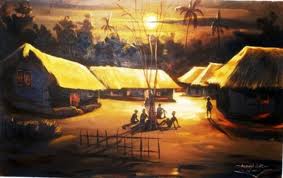
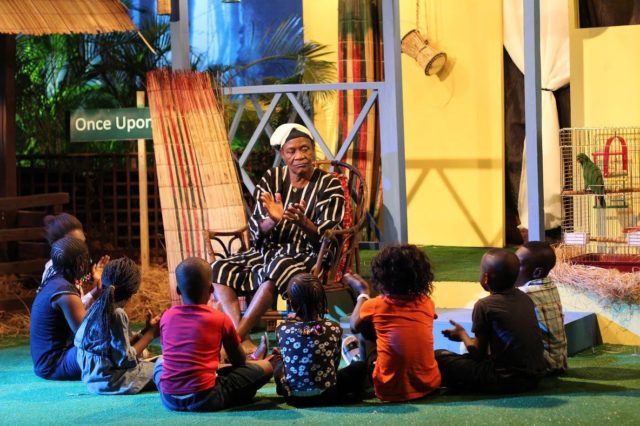
When you were a child, what was your favorite bedtime story? As a child, I remember watching Tales by the Moonlight 🌒 on NTA(Nigerian Television Authority) Anchored by aunty Nkem. The programme, which featured children in nursery and primary schools gathering around the elderly and wise Aunty Nkem was an attempt to rekindle and popularise the art of storytelling under the moonlight, in a typical Nigerian village setting. This was an art adopted by parents and elders of old, not only to entertain and educate but also to teach and inculcate morals in the young ones right from the cradle.
Before the advent of television and Internet which changed the way we live, relax and entertain, folktales were very interesting means of passing time. As a little boy, I remember sitting attentively with my kid sister in front of the veranda listening to the popular story of Tortoise and the birds and of course many other tales our mom used to tell us while we were waiting for dad to arrive from work or while we gathered outside to receive fresh air and view the moonlight.
Long before people could turn to books for instruction and amusement, they relied upon storytellers for answers to their questions about life. In fact religious priests and counsellors to the royal court often used storytelling to convey a difficult message or to communicate indirectly. Most African nations (kingdoms) had village historians who preserved and passed along cultural beliefs and experiences from one generation to the next. Many folktales were used to explain things that were difficult to understand, to discipline (or frighten) children, or to provide a moral lesson.
Today, with the assault of social media platforms like Facebook, Snapchat, tiktok WhatsApp and Instagram, the culture of moonlight Tales seems to be facing extinction. Today, the average teenager in Nigeria has probably never heard a folk tale featuring Ijapa (tortoise), the cunning one. Today’s social media generation neither gives a damn about Ijapa and his antics nor could they recount any of the folktales told after him. I recently stumbled on the Instagram page of Jimi Solanke, one of Nigeria’s greatest story tellers and was happy to see that Baba is still utilising the social media to tell stories to a wider audience. One great advantage of African folktales is that it is mostly didactic (it teaches morals) and warns about character weaknesses. In most cases, the protagonist, or main character, is jovial, kind, and overzealous but has a major flaw such as greed, naivety, and pride. These shortcomings soon become weaknesses often exploited by the antagonist, or main adversary, a trickster. In our own case, Tortoise fits this role perfectly. He usually had a reputation for leading the protagonist to his or her demise.
In some cases, we have situations of repercussions where the cunning tortoise paid dearly for his actions. I remember one of such fables about tortoise which practically all friends within my age range are familiar with. This story is about Tortoise and the birds and how a greedy act of his made him end up with an ugly rough shell. I’ll be featuring this wondrous story on my next post. Stay tuned 😜


 Obaba Museum
Leave a comment